Lula’s Victory in Brazil Is a Defeat for Trumpism

Read the original at TIME ↗
Cite

Carranca, A. (2026, October 26). Lula’s Victory in Brazil Is a Defeat for Trumpism. TIME. https://time.com/article/2026/10/26/lula-brazil-election-victory-bolsonaro-trump-defeat/

Dated from the outlet's own feed. Check the original for its byline.

TIME · collected 2026-10-26 · by Adriana Carranca

Quick Summary

Luiz Inácio Lula da Silva won Brazil's presidential election on October 25 with 51.79% of the vote, defeating Flávio Bolsonaro by nearly 4.4 million votes. The result marks a significant turnaround from Lula’s position three weeks earlier when he was trailing by 2.2 million votes in the first round. This victory is seen as a setback for right-wing politics and President Donald Trump's ambitions in Latin America, yet it also reflects widespread voter apathy, with over 33 million Brazilians abstaining from voting in the first round due to political disengagement.
Written locally by qwen2.5:14b on 2026-10-26, using this article's own text rather than the other coverage of the same event (that is the story summary below).

AI analysis runs on qwen2.5:14b, locally

Story summary

Luiz Inácio Lula da Silva Wins Brazilian Presidential Election

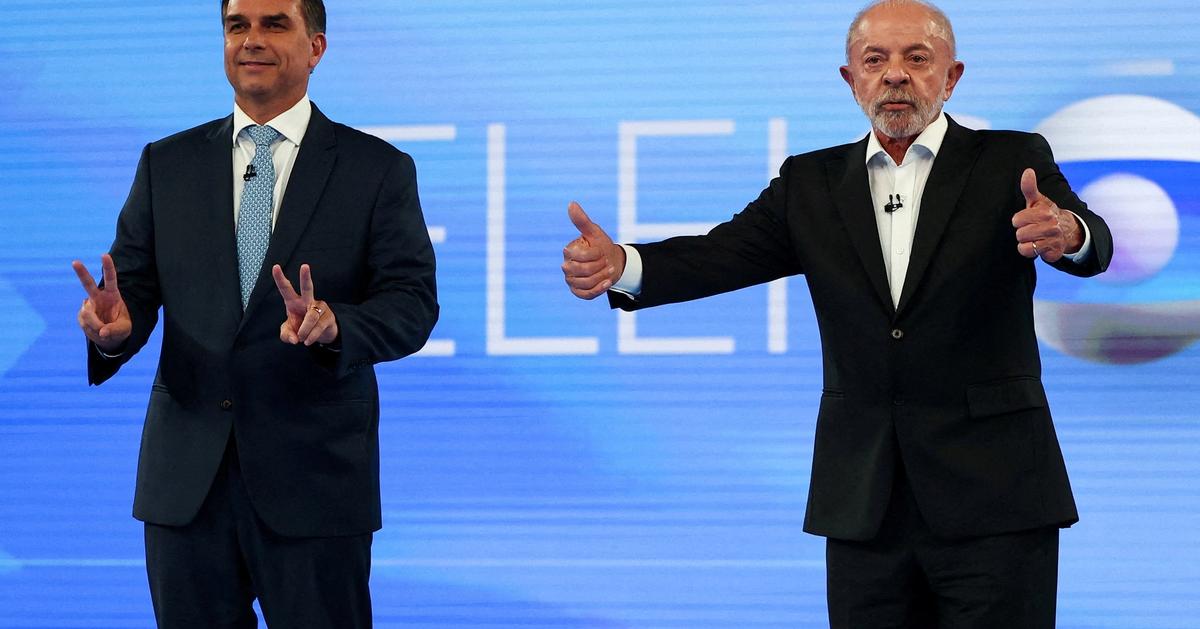
On October 25, 2026, Luiz Inácio Lula da Silva secured his historic fourth term as President of Brazil by defeating right-wing opponent Flávio Bolsonaro in the runoff election. With 64.2 million votes (51.79% of the total), Lula triumphed over Bolsonaro's 59.8 million votes (48.21%), marking a significant political comeback after trailing by 2.2 million votes in the first round.

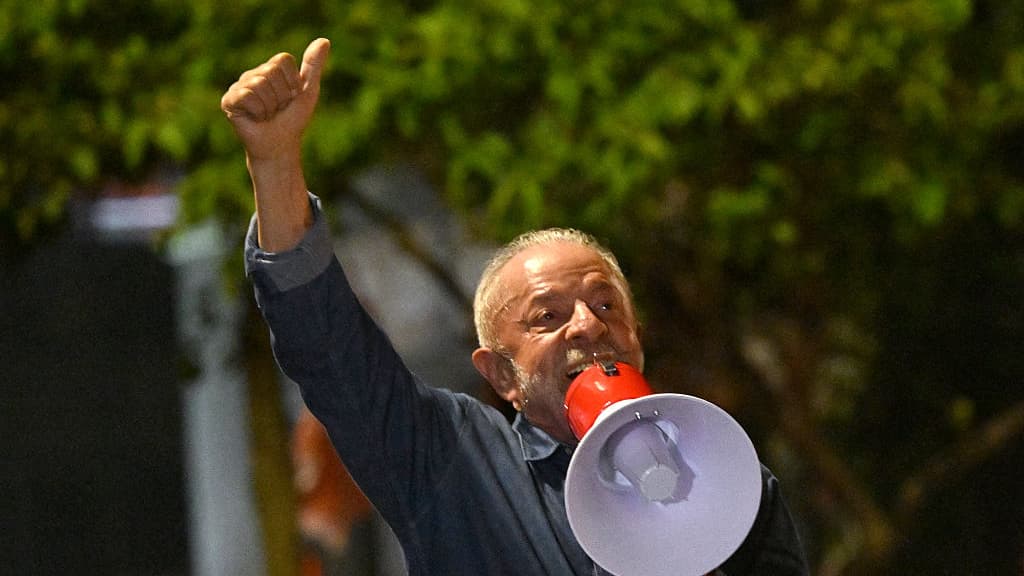
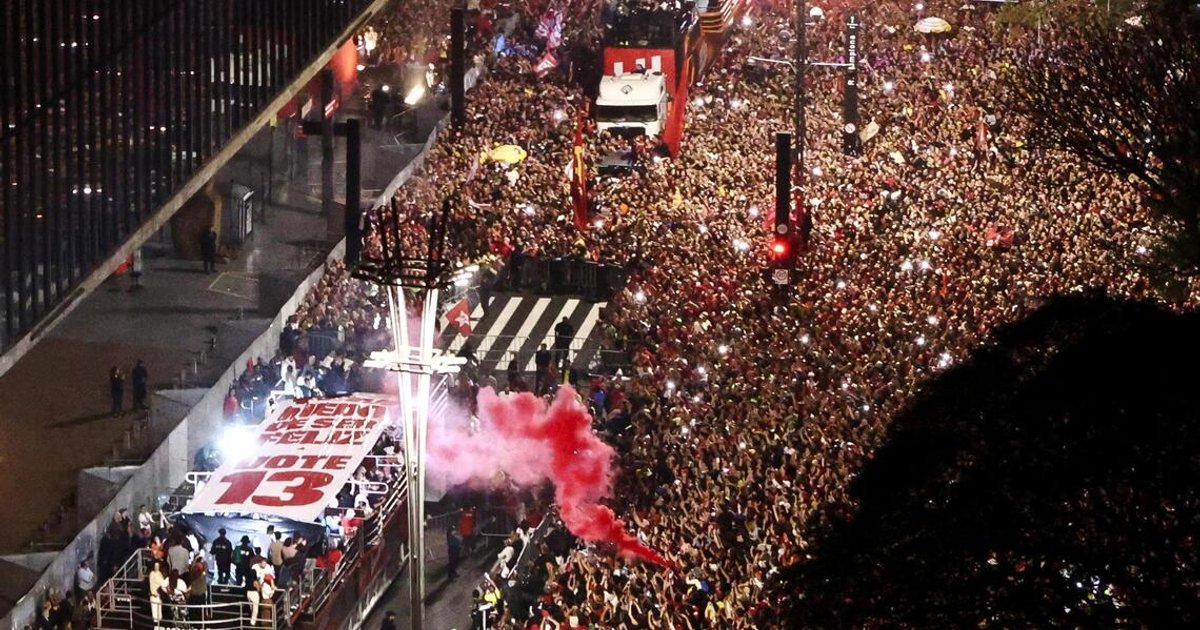
Lula, an 80-year-old left-wing leader, celebrated his victory with tens of thousands of supporters in São Paulo, declaring that "democracy always" and vowing to prevent any return to dictatorship or fascism. His win is seen as a major reversal for right-wing populism in Latin America, following a series of seven consecutive victories by conservative leaders.

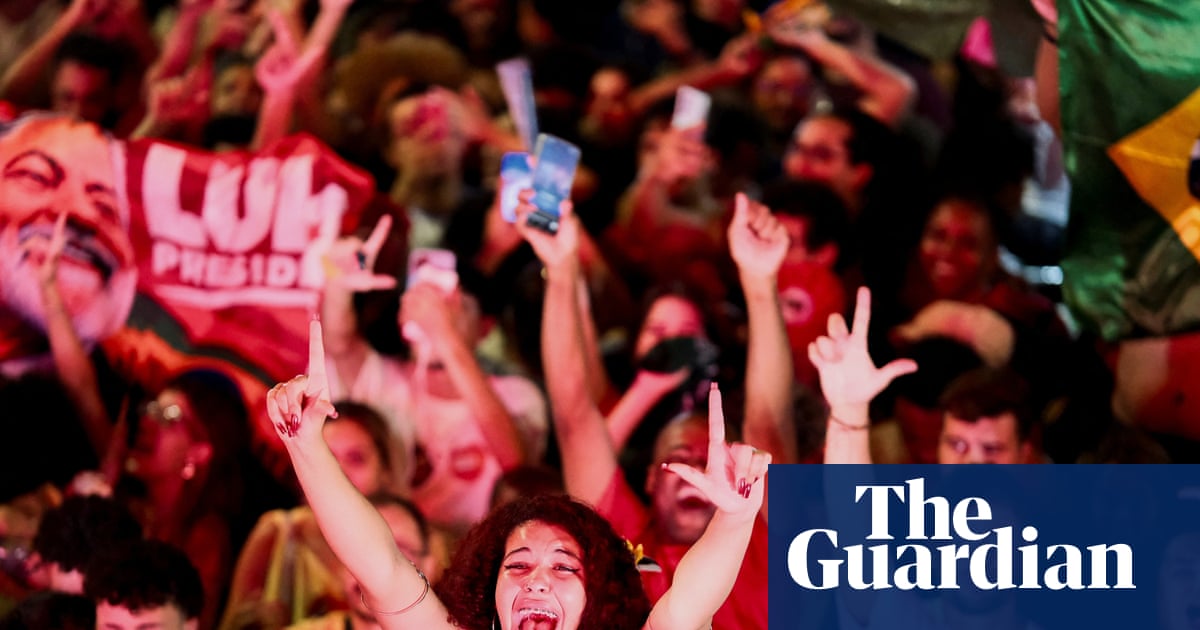
Despite Flávio Bolsonaro's call to annul the election, Lula’s victory has sparked widespread celebration across Brazil and optimism globally about the resilience of democracy. The high abstention rate—21.08%—in the first round highlights broader political disengagement among Brazilians but did not deter Lula from securing a decisive win in the runoff.

This outcome is viewed as a significant setback for President Donald Trump's ambitions to align Latin American governments with his policies, underscoring a shift towards more centrist and progressive leadership in the region. (Sources: The Guardian, Washington Examiner, TIME)

Written for “Brazil Presidential Election Runoff” on 2026-10-26, grounded in this article and the 38 other(s) covering the same event.
Why this leaning score
The article's own words the score was based on. Each is quoted verbatim and was checked against the article text before being stored, so you can find it in the original.
Reading Leans left (beta estimate) Confidence high
Leaning: leans left for article 108242 (high confidence, 2 verified quotes) · logged 2026-10-26

Story

📰 Brazil Presidential Election Runoff
Politics · 39 article(s) covering the same event. Compare every outlet's account →

Compared with similar articles

This article reads leans left and hedges 3% of its claims. Each row says how that neighbour differs.
Al Jazeera · 0.89 cosine similarity
⚖️ Leans left 🔴 10% hedged 5 of 50 📰 publisher trust 60
“Both articles describe President Luiz Inacio Lula da Silva winning the second round of Brazil's presidential election on October 25, 2026, defeating Flavio Bolsonaro.”
Global News · 0.88 cosine similarity
⚖️ Leans left 🔴 17% hedged 8 of 48 📰 publisher trust 63
“Both articles describe Luiz Inacio Lula da Silva winning Brazil's presidential election against Flavio Bolsonaro on October 25, 2026.”
Toronto Star
⚖️ Leans left 🔴 4% hedged 1 of 28 📰 publisher trust 64
“Both articles describe Luiz Inácio Lula da Silva winning the Brazilian presidential election against Flávio Bolsonaro on October 25, 2026.”
The Hindu
⚖️ Leans right further right than this 🔴 4% hedged 1 of 27 📰 publisher trust 77
“Both articles describe Luiz Inácio Lula da Silva winning Brazil's presidential election against Flávio Bolsonaro on October 25, 2026.”
Global News
⚖️ Leans left 🔴 3% hedged 1 of 37 📰 publisher trust 63
“Both articles describe Luiz Inácio Lula da Silva winning the Brazilian presidential runoff election against Flávio Bolsonaro on October 25, 2026.”
Dawn
⚖️ leaning not scored 🔴 3% hedged 1 of 29 📰 publisher trust 72
“Both articles describe Luiz Inacio Lula da Silva's victory over Flavio Bolsonaro in Brazil's presidential runoff election on October 25, 2026.”
Semafor
⚖️ Leans left 🔴 0% hedged 0 of 3 📰 publisher trust 60
“Both articles describe the same presidential runoff election in Brazil on October 25, 2026, involving Lula and Flávio Bolsonaro.”
Toronto Star
⚖️ Leans strongly left further left than this 🔴 0% hedged 0 of 4 📰 publisher trust 64
“Both articles describe Lula's election victory over Flávio Bolsonaro in Brazil on October 25, 2026.”
The Straits Times
⚖️ Leans strongly left further left than this 🔴 0% hedged 0 of 24 📰 publisher trust 68
“Both articles describe President Luiz Inacio Lula da Silva's election win on October 25, 2026, over Flavio Bolsonaro.”
The Guardian
⚖️ Leans left 🔴 10% hedged 9 of 91 📰 publisher trust 66
“Both articles describe Luiz Inácio Lula da Silva's victory in Brazil's presidential election on October 25, 2026.”
How this article was measured signals, leaning charts, publisher record, byline, topics and claims

Signals How these are calculated →

Claims extracted
72
sentences that state something as happening or true
Uncertain
3%
2 of 72 hedged ("reportedly", "may", "according to")
Leaning
Leans left
of the writing, not the subject · beta estimate
Publisher signals
59/100
TIME's corrections and hedging, across everything collected from it. Not a measure of accuracy.
Outlets on this story
39
Politics
Same framing elsewhere
1
articles that frame the event the way this one does
Analyzed 2026-10-26 · how these are computed

How this is being covered How these are calculated →

Article leaning vs. publisher reliability
Source leaning vs. consistency

Publisher

TIME · 716 article(s) · 2 correction(s) detected
Running correction rate · 2 correction(s)

Who wrote this

Adriana Carranca
1 article(s) here · 1 carrying a prediction
🔮 Brazil is the largest country and economy in Latin America, and the contest had become a test of whether the region’s rightward shift could be stopped.
2026-10-26 · assertive framing · Lula’s Victory in Brazil Is a Defeat for Trumpism
The only article under this byline in the corpus.

Topics

Brazil Brazilians Congress Liberal Party’s The International Monetary Fund

Subjects

Lula PERSON · 10× Brazil GPE · 8× Brazilians NORP · 3× Congress ORG · 1× Donald Trump PERSON · 1× Flávio PERSON · 1× Flávio Bolsonaro PERSON · 1× Jair Bolsonaro PERSON · 1× Liberal Party’s ORG · 1× Luiz Inácio Lula da Silva PERSON · 1×

Narrative

Flávio, whose father and former president Jair Bolsonaro is serving 27 years in prison for crimes against democracy, won the first round, with 2 million more votes than Lula, and his Liberal Party’s formidable showing in Congress in early October shocked the liberal world.
framing: assertive · carried by 1 article(s) · first seen 2026-10-26
🔮 Brazil is the largest country and economy in Latin America, and the contest had become a test of whether the region’s rightward shift could be stopped.
2026-10-26 · TIME
Lula’s Victory in Brazil Is a Defeat for Trumpism · assertive framing

Claims (72 extracted, 2 hedged)

On Oct. 25, Brazil’s president, Luiz Inácio Lula da Silva, won an unprecedented fourth term, defeating the far-right senator Flávio Bolsonaro with 51.79 % of the vote, a margin of nearly 4.4 million votes. asserted
president → win → votes
For the 80-year-old Lula, who had trailed his opponent by 2.2 million votes in the first round of elections just three weeks earlier, the victory was a remarkable comeback. asserted
victory → trail → elections
Brazil is the largest country and economy in Latin America, and the contest had become a test of whether the region’s rightward shift could be stopped. uncertain
shift → become → America
Lula’s victory interrupted that drift and dealt a setback to President Donald Trump’s ambition to build a hemisphere of governments aligned with his politics. asserted
victory → interrupt → politics
Yet interpreting the result as a triumph for the left would be a mistake. asserted
interpreting → interpret → left
Consider the first round of the elections in Brazil: more than 33 million Brazilians did not vote in the first round, an abstention rate of 21.08 %, the highest for a presidential election first round since 1998. asserted
Brazilians → consider → 1998
Millions more cast blank or invalid ballots. asserted
Millions → cast → ballots
Voting is optional for Brazilians aged 16 and 17 and for those 70 or older, but the scale of abstention points to a broader problem of political alienation. asserted
scale → point → alienation
The high rejection rates for both candidates suggest that, for many voters, the election was not about electing a president but to ensure his opponent is not elected. asserted
opponent → suggest → president
Flávio, whose father and former president Jair Bolsonaro is serving 27 years in prison for crimes against democracy, won the first round, with 2 million more votes than Lula, and his Liberal Party’s formidable showing in Congress in early October shocked the liberal world. asserted
showing → serve → world
He ran as his father’s proxy. asserted
He → run → proxy
He promised to pardon his father and his accomplices and to carry forward his political legacy. asserted
He → promise → legacy
The new expectations of Lula’s children It seemed puzzling that Lula needed such a dramatic comeback to win re-election when unemployment in Brazil stood at 5.3 %, near a historic low. asserted
unemployment → seem → low
The International Monetary Fund projected that Brazil would become the world’s eighth-largest economy in 2027. asserted
Brazil → project → 2027
Poverty in the country had fallen substantially during Lula’s third term, while real wages rose and food insecurity declined. asserted
insecurity → fall → term
Violent deaths had fallen to their lowest level in over a decade. asserted
deaths → fall → decade
Deforestation of the Amazon had fallen to its lowest level since records began in 1988. asserted
records → fall → 1988
Incumbents have been re- asserted
Incumbents → re → ?
The children of Lula’s social policies came of age in a rapidly changing world, and in a country where formal employment, labor unions, and traditional social protections have struggled to serve an increasingly informal workforce. asserted
employment → come → workforce
Some turned toward market-oriented politics. asserted
Some → turn → politics
Others found a sense of belonging in conservatism, part of a broader rightward turn among young men around the world. asserted
Others → find → world
Brazil’s left governed for much of their formative years. asserted
left → govern → years
Lula’s successor, Dilma Rousseff, was impeached in 2016 amid a bitter political crisis and corruption scandals that implicated political figures across party lines. asserted
that → impeach → lines
For many Brazilians, the political establishment became synonymous with impunity and self-preservation. asserted
establishment → become → impunity
They saw Lula’s Workers’ Party as the establishment. asserted
They → see → establishment
And while Lula’s earlier corruption convictions had been annulled, the allegations continued to shadow him. asserted
allegations → annul → him
Meanwhile, lethal violence had become a defining feature of everyday life. asserted
violence → become → life
Brazil had urbanized rapidly without addressing deep inequality or reforming a public-security system inherited from the military dictatorship. asserted
Brazil → urbanize → dictatorship
Overcrowded prisons became recruiting grounds for criminal factions. asserted
prisons → become → factions
In Rio de Janeiro, militias made up largely of serving and former police officers and other security personnel initially claimed to protect residents from drug traffickers. asserted
militias → make → traffickers
They evolved into criminal enterprises that extorted communities, struck deals with drug factions, and infiltrated local governments. asserted
that → evolve → governments
Yet responsibility for confronting them remained fragmented. asserted
responsibility → confront → them
State governments control most policing, leaving the federal government with limited direct authority over local law enforcement. asserted
governments → control → enforcement
Flávio understood how to exploit voters’ distrust and frustration. asserted
Flávio → understand → distrust
His promises of tougher security resonated with Brazilians desperate for protection. asserted
promises → resonate → protection
His campaign drew comparisons to the hardline model of President Nayib Bukele of El Salvador. asserted
campaign → draw → Salvador
Yet Bolsonaro Jr. also faced questions about his own associations with criminal figures in Rio, undermining his claim to offer a solution to the country’s security crisis. uncertain
Jr. → face → crisis
During the campaign, new revelations about his ties to Daniel Vorcaro, the disgraced banker and owner of Banco Master at the center of a vast financial scandal, added to those doubts, even as he denies wrongdoing. asserted
he → add → wrongdoing
Flávio's brother, Eduardo, had lobbied the Trump Administration to punish Brazil over the prosecution of their father. asserted
brother → lobby → father
Washington imposed tariffs on Brazilian exports, explicitly linking the measures to the prosecution of Jair Bolsonaro. asserted
Washington → impose → Bolsonaro
…and 32 more, not listed.

💬Give feedback
🕘History 🎫Support