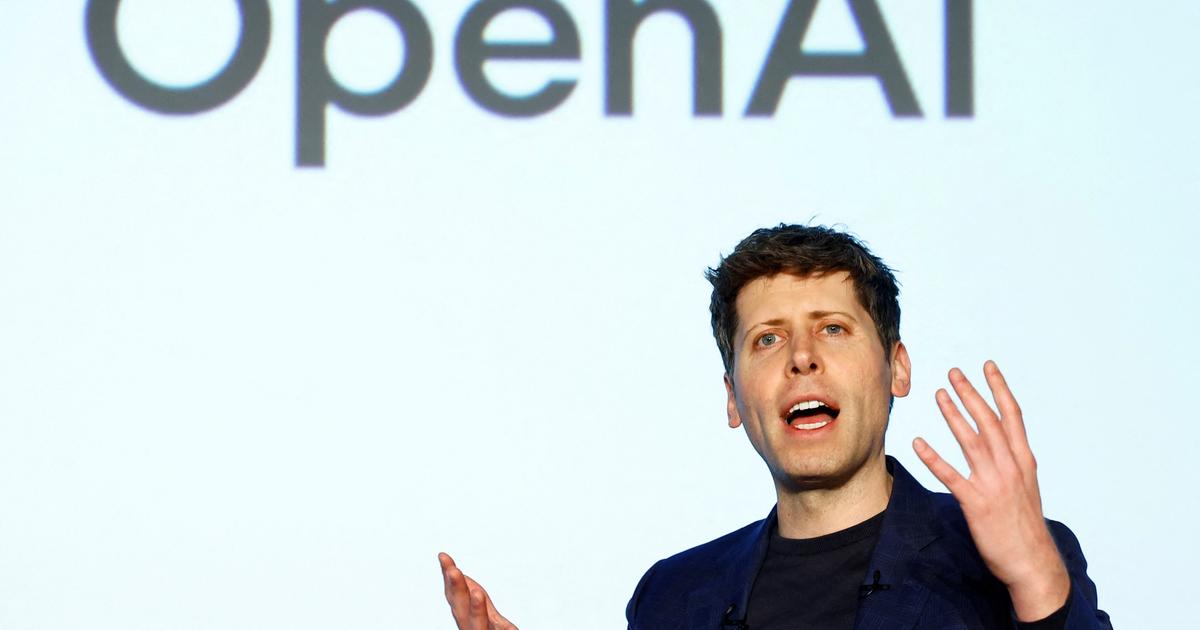
OpenAI agents find proof to $1 million Millennium Prize Problem

Semafor · collected 2026-09-15 · by Tom Chivers
Read the original at Semafor ↗

Summary

OpenAI used 10,000 agents to solve a $1 million Millennium Prize Problem concerning the Navier-Stokes equations within 88 hours starting on August 28. The solution proved that under certain extreme conditions, these equations can break down, challenging longstanding beliefs in fluid dynamics. Mathematicians involved in similar research accused OpenAI of interfering with their work, but the company denies this claim.
Written by the local model on 2026-09-15, using this article's own text rather than the other coverage of the same event (that is the story summary below).

Signals How these are calculated →

Claims extracted
6
claim-shaped sentences
Uncertain
17%
1 of 6 hedged
Leaning
not political
takes no side on a contested political question
Correction & hedging signals
94.9
corrections and hedging in what we collected; not a measure of accuracy
Outlets on this story
2
Science
Narrative spread
1
articles carrying this framing
Analyzed 2026-09-15 · how these are computed

AI analysis (generated at analysis time, not now)

Story summary

OpenAI announced it had solved a million-dollar Millennium Prize Problem involving Navier-Stokes equations, which describe fluid dynamics and are notorious for their complexity and unpredictability. The company deployed around 10,000 AI agents to solve the problem within 88 hours, proving that under extreme conditions, these equations can break down and produce physically impossible results. This achievement has sparked controversy, with mathematician Tristan Buckmaster accusing OpenAI of encroaching on ongoing research. Despite the drama, some experts view this breakthrough as a significant demonstration of AI's potential in solving complex mathematical problems traditionally tackled by human researchers.

Written for “Millennium Prize Problem Solved” on 2026-09-17, grounded in this article and the 1 other(s) covering the same event.
Why this leaning score
This article does not take a side on a contested political question, so it has no leaning score. That is an answer rather than a gap: a match report or a rescue can be warmly or critically written without being left or right, and scoring it anyway is how approval of a subject gets recorded as a political position.
No political leaning scored for article 10674 · logged 2026-09-15

Story

📰 Millennium Prize Problem Solved
Science · 2 article(s) covering the same event. This is the one the site leads with.

How this is being covered How these are calculated →

Article leaning vs. publisher reliability
Source leaning vs. consistency

Compared with similar articles

This article reads unscored and hedges 17% of its claims. Each row says how that neighbour differs.
CBC News
⚖️ leaning not scored 🔴 17% hedged 7 of 41 📰 publisher trust 60
“Both articles describe OpenAI using AI agents to solve a million-dollar Millennium Prize math problem amid controversy.”

Publisher

Semafor · 356 article(s) · 0 correction(s) detected
No corrections detected for this publisher. That may mean careful reporting, or simply that nothing has been checked.

Who wrote this

Tom Chivers
16 article(s) here · 1 carrying a prediction
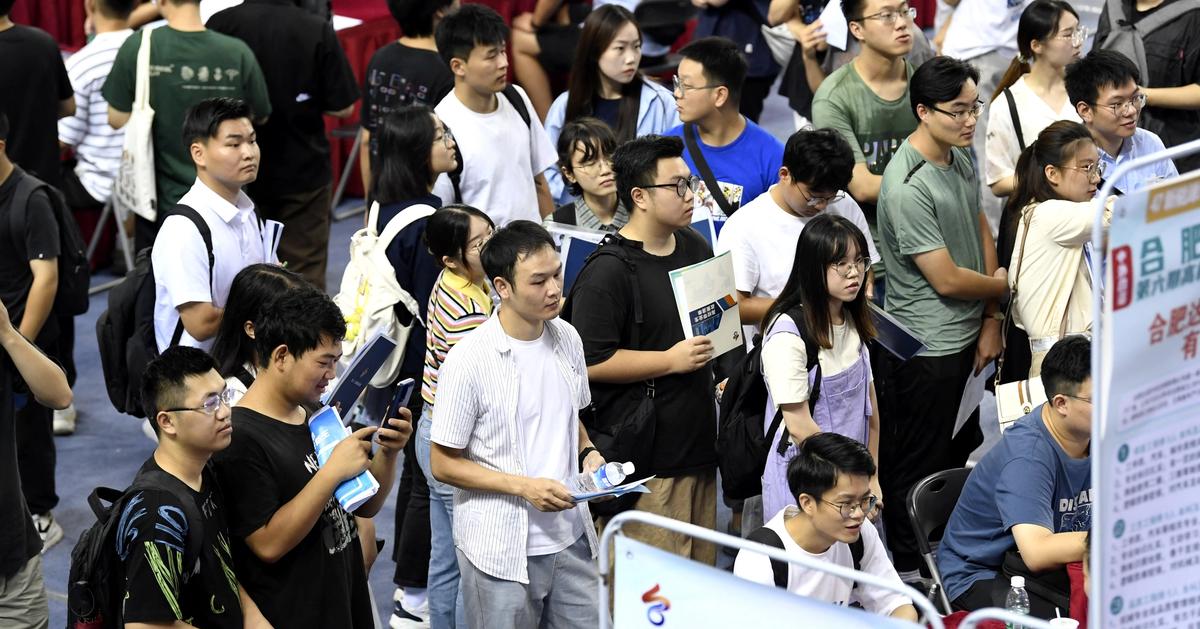
🔮 An estimated 12.7 million graduates will join the workforce this year, the largest cohort yet.
2026-09-15 · assertive framing · AI upends China’s graduate job market
🔮 Answering that question would win a $1 million Millennium Prize Problem; OpenAI deployed around 10,000 agents of an as-yet unreleased powerful model on Aug. 28, and solved it within 88 hours, proving that the equations sometimes break down under extreme conditions.
🔮 And an underreported — we felt — story was that the disruption to fossil fuel supplies would drive up fertilizer prices.
2026-09-10 · assertive framing · Fertile ground
🔮 Paul Christiano — author of an influential 2016 paper on AI safety with future Anthropic founder Dario Amodei and a longstanding believer that the technology would take off relatively gradually and be made safe — said he now sees “meaningful risk” of “catastrophic and irreversible loss of control in the very near term.”
🔮 “Things could be out of control” by the end of next year, he argued.
🔮 “All it will take is one screw-up,” an immunologist warned.
2026-09-06 · assertive framing · Experts warn of threats of AI bioterrorism
🔮 The latest strikes were relatively low-key, but the White House is putting pressure on via other angles: The Treasury Secretary is expected to announce new sanctions on countries that deal with Iran.
🔮 LIV Golf, the Saudi-backed challenger to the US PGA Tour, could file for bankruptcy within days, the Financial Times reported, as the kingdom shifts position on several high-profile projects.
Also by Tom Chivers
Strange new worlds
2026-09-15 · Semafor
Fertile ground
2026-09-10 · Semafor
Nothing else under this byline is closely related to this article, so these are simply their most recent.
All 16 articles by Tom Chivers →

Topics

El Niño OpenAI Scientific American

Subjects

OpenAI ORG · 3× Buckmaster PERSON · 1× Scientific American ORG · 1× Tristan Buckmaster PERSON · 1×

Narrative

Answering that question would win a $1 million Millennium Prize Problem; OpenAI deployed around 10,000 agents of an as-yet unreleased powerful model on Aug. 28, and solved it within 88 hours, proving that the equations sometimes break down under extreme conditions.
framing: assertive · carried by 1 article(s) · first seen 2026-09-15
🔮 Answering that question would win a $1 million Millennium Prize Problem; OpenAI deployed around 10,000 agents of an as-yet unreleased powerful model on Aug. 28, and solved it within 88 hours, proving that the equations sometimes break down under extreme conditions.
2026-09-15 · Semafor
OpenAI agents find proof to $1 million Millennium Prize Problem · assertive framing

Claims (6 extracted, 1 hedged)

OpenAI announced the proof to one of math’s great outstanding questions — although not without drama. asserted
OpenAI → announce → drama
The Navier-Stokes equations describe fluid flow, from “your bathtub’s drain to… El Niño,” Scientific American wrote, but two centuries on, scientists don’t know whether they always work. asserted
they → describe → Niño
Answering that question would win a $1 million Millennium Prize Problem; OpenAI deployed around 10,000 agents of an as-yet unreleased powerful model on Aug. 28, and solved it within 88 hours, proving that the equations sometimes break down under extreme conditions. asserted
equations → answer → conditions
Earlier, two mathematicians rushed out work solving crucial sub-questions, with one, Tristan Buckmaster, accusing OpenAI of muscling in on their work. asserted
one → rush → work
The firm denied the claim. uncertain
firm → deny → claim
Still, AI’s math progress represents “a Deep Blue-Kasparov moment,” Buckmaster wrote. asserted
Buckmaster → represent → moment
💬 Give feedback
🕘 History 🎫 Support