GOP Closes Campaign With Unapologetic Bigotry

Read the original at The Bulwark ↗
Cite

Cohn, J. (2026, October 25). GOP Closes Campaign With Unapologetic Bigotry. The Bulwark. https://www.thebulwark.com/p/gop-closes-campaign-with-unapologetic-bigotry-abdul-el-sayed-michigan-mike-rogers-sharia

Dated from the outlet's own feed. Check the original for its byline.

The Bulwark · collected 2026-10-25 · by Jonathan Cohn commentary

Quick Summary

Republicans in Michigan are running an attack ad against Democratic candidate Abdul El-Sayed, claiming he wants to impose sharia law. The article argues this tactic exemplifies a broader trend of political campaigns exploiting fear and hatred towards Muslims without regard for accuracy or civility. It cites similar instances from other states where Republicans use aggressive rhetoric about Islam in their campaigns.
Written locally by qwen2.5:14b on 2026-10-25, using this article's own text rather than the other coverage of the same event (that is the story summary below).

AI analysis runs on qwen2.5:14b, locally

Story summary

The GOP in Michigan closed its Senate campaign with an unapologetic attack ad targeting Abdul El-Sayed, the Democratic nominee. The ad falsely claims that El-Sayed wants to impose sharia law on America. This strategy began when El-Sayed won the Democratic nomination in early August, and Republicans started using his full name, "Abdulrahman," instead of just "Abdul." Despite El-Sayed addressing allegations about family ties to the Muslim Brotherhood by explaining his parents' divorce and his upbringing under his father’s care, the GOP continues its campaign without regard for accuracy or civility. This approach exemplifies a broader trend in American politics where Republicans abandon traditional standards of decency when discussing Muslims.

Written for “GOP Bigotry Campaign Close” on 2026-10-25, grounded in this article and the 0 other(s) covering the same event.
Why this leaning score
The article's own words the score was based on. Each is quoted verbatim and was checked against the article text before being stored, so you can find it in the original.
Reading Leans strongly left (beta estimate) Confidence high
Leaning: leans strongly left for article 105852 (high confidence, 4 verified quotes) · logged 2026-10-25

Story

📰 GOP Bigotry Campaign Close
Politics · 1 article(s) covering the same event.

Compared with similar articles

This article reads leans strongly left and hedges 14% of its claims. Each row says how that neighbour differs.
The Dispatch
⚖️ leaning not scored 🔴 0% hedged 0 of 2 📰 publisher trust 61
“The articles discuss different political ads targeting distinct candidates (Amy Acton/Williamson vs Abdul El-Sayed) for separate campaigns.”
The Guardian
⚖️ leaning not scored 🔴 3% hedged 1 of 36 📰 publisher trust 69
“The articles describe different aspects of the campaign for Abdul El-Sayed: one highlights a rally in support of him, while the other discusses negative campaigning against him.”
Mother Jones
⚖️ Leans strongly left 🔴 6% hedged 1 of 16 📰 publisher trust 95
“The articles discuss different political campaigns and incidents involving various candidates across multiple states, rather than a single specific event.”
Semafor
⚖️ Leans left further right than this 🔴 20% hedged 1 of 5 📰 publisher trust 60
“The articles describe different aspects and time periods of Abdul El-Sayed's campaign, one highlighting praise from conservatives and a new ad buy, while the other focuses on Republican attacks against him.”
Fox News
⚖️ leaning not scored 🔴 0% hedged 0 of 17 📰 publisher trust 67
“The articles describe different aspects of the campaign against Abdul El-Sayed, with Article A focusing on a specific debate incident and Article B discussing general campaign tactics.”
The Independent
⚖️ leaning not scored 🔴 8% hedged 2 of 25 📰 publisher trust 59
“Article A reports a specific incident where Trump mocks Abdul El-Sayed during a campaign in Iowa, while Article B discusses a broader pattern of GOP attacks on El-Sayed's Muslim identity over months.”
New York Post
⚖️ leaning not scored 🔴 6% hedged 1 of 18 📰 publisher trust 66
“The articles discuss different aspects of El-Sayed's campaign and interactions with media, not the same specific incident.”
How this article was measured signals, leaning charts, publisher record, byline, topics and claims

Signals How these are calculated →

Claims extracted
86
sentences that state something as happening or true
Uncertain
14%
12 of 86 hedged ("reportedly", "may", "according to")
Leaning
Leans strongly left
expected in commentary, which argues a position · beta estimate
Publisher signals
not measured
these signals count newsroom corrections; Commentary has none to count
Outlets on this story
1
Politics
Same framing elsewhere
1
articles that frame the event the way this one does
Analyzed 2026-10-25 · how these are computed

How this is being covered How these are calculated →

Article leaning vs. publisher reliability
Source leaning vs. consistency

Publisher

The Bulwark · 506 article(s) · 0 correction(s) detected
No corrections detected for this publisher. That may mean careful reporting, or simply that nothing has been checked.

Who wrote this

Jonathan Cohn
13 article(s) here · 1 carrying a prediction
🔮 But they may have hit a new low last week, with an attack ad that’s all over the internet and television.
2026-10-25 · assertive framing · GOP Closes Campaign With Unapologetic Bigotry
🔮 Obama, then a Senate candidate, was giving the primetime keynote address—an ode to hope, unity, and American pluralism that would go on to launch his career in national politics.
🔮 El-Sayed explains why he believes Obama made it possible for people like him to run for office, where he thinks Obama fell short on health care and other issues, and why Democrats need to stop assuming Republicans will negotiate in good faith.
2026-10-21 · assertive framing · Abdul El-Sayed Wants to Pick Up Where Obama Left Off
🔮 That’s why Democrats are talking about next steps for finally getting to truly universal coverage—which, in turn, has restarted old arguments about whether to seek a total health care sector reset with Medicare for All or to seek more incremental changes, some of which would still be highly ambitious and some of which would not.
🔮 Zacharia was referring to news over the summer that drug prices had fallen by 3.1 percent over the previous year, the largest decline in six decades—and asserting that Trump had caused this by negotiating deals with individual pharmaceutical companies and then creating a website, TrumpRx, where people buying drugs could get coupons to buy some of their products.
🔮 Mount Pleasant, Michigan A NEW CAMPAIGN AD FROM MIKE ROGERS says a lot about the kind of senator he would be for Michigan.
2026-10-11 · assertive framing · GOP Goes Scorched-Earth on Abdul El-Sayed
🔮 “I am proud to return your money to you,” the letter states, “and I will never stop fighting to put the American People FIRST, restore Affordability, protect your hard-earned money, and lower the Cost of Healthcare.”
2026-10-07 · assertive framing · Donald Trump Is Buying Votes at $500 a Pop
🔮 “It would be malpractice for a doctor to make a diagnosis, or to make a prescription, without at least checking AI,” Kennedy said at a MAHA Action conference in Washington.1 MAHA, of course, stands for “Make America Healthy Again,” the movement that Kennedy has been leading, which is known for its hostility to all things artificial.
🔮 Throw in the fact that Democratic nominee Abdul El-Sayed can draw on his credibility as a doctor and former public health director in Detroit, and it might seem like Rogers’s best bet would be to avoid health care altogether.
🔮 And it might not be such a threat if Robert F. Kennedy Jr. hadn’t spent so many years undermining faith in vaccines—or if, as health and human services secretary, he was treating the surge in cases like the big deal it is.
Also by Jonathan Cohn
Nothing else under this byline is closely related to this article, so these are simply their most recent.
All 13 articles by Jonathan Cohn →

Topics

GOP Islam Michigan Muslims REPUBLICANS

Subjects

El-Sayed PERSON · 9× Islam ORG · 4× Michigan GPE · 4× Muslims NORP · 4× REPUBLICANS NORP · 4× GOP ORG · 3× America GPE · 2× Islamic NORP · 2× Texas GPE · 2× Abdul El-Sayed PERSON · 1×

Narrative

It’s also fair to ask why he said he has no family ties to the Muslim Brotherhood, even though (as reported by the Free Beacon) his half-sister once tweeted that their mother, who is Egyptian, talked about her involvement with “MB” in college.2 But El-Sayed has now answered those questions—noting, among other things, that his parents divorced when he was just 3 and that it was his father and father’s family who raised him.
framing: assertive · carried by 1 article(s) · first seen 2026-10-25
🔮 But they may have hit a new low last week, with an attack ad that’s all over the internet and television.
2026-10-25 · The Bulwark
GOP Closes Campaign With Unapologetic Bigotry · assertive framing

Claims (86 extracted, 12 hedged)

REPUBLICANS KEEP SAYING their campaign against Abdul El-Sayed isn’t trying to exploit fear and hatred of Muslims. asserted
campaign → keep → Muslims
Then they keep doing things to prove that it is. asserted
it → keep → things
They’ve been at it for months—literally since the first hours after El-Sayed won the Democratic nomination in early August, when the GOP launched ads referring to him by his full first name, “Abdulrahman.” asserted
GOP → win → name
But they may have hit a new low last week, with an attack ad that’s all over the internet and television. uncertain
that → hit → internet
Its central claim is that El-Sayed wants to impose sharia law, the religious code of Islam, on the rest of America. uncertain
Sayed → want → America
The ad and the effort behind it are worth examining in detail, regardless of whether you care about Michigan’s Senate race—or, for that matter, how you feel about El-Sayed potentially becoming Michigan’s next senator. asserted
Sayed → examine → matter
That’s because the campaign against him is an example of a destructive, dangerous trend visible all over America: Republicans and their allies not even pretending to observe traditional standards of accuracy, civility, and basic decency in politics, especially when it comes to Muslims. asserted
it → ’ → Muslims
Those standards have never been particularly high, to be clear, and Republicans aren’t alone in twisting facts to suit their political agendas. asserted
Republicans → twist → agendas
But the freedom that they feel to describe Islam and its adherents as menaces—along with their willingness to exploit the truth-bending capabilities of social media—makes for an especially toxic mix. asserted
they → feel → mix
You can see it in Georgia, where a Republican candidate for lieutenant governor put out an AI-generated ad of Muslims invading a suburban neighborhood. asserted
Muslims → see → neighborhood
You can see it in Alabama, where a GOP candidate for attorney general proclaimed in a campaign spot that anybody who supports “radical Islam” can “Allahu Akbar your butt all the way back to the Middle East.” asserted
who → see → East
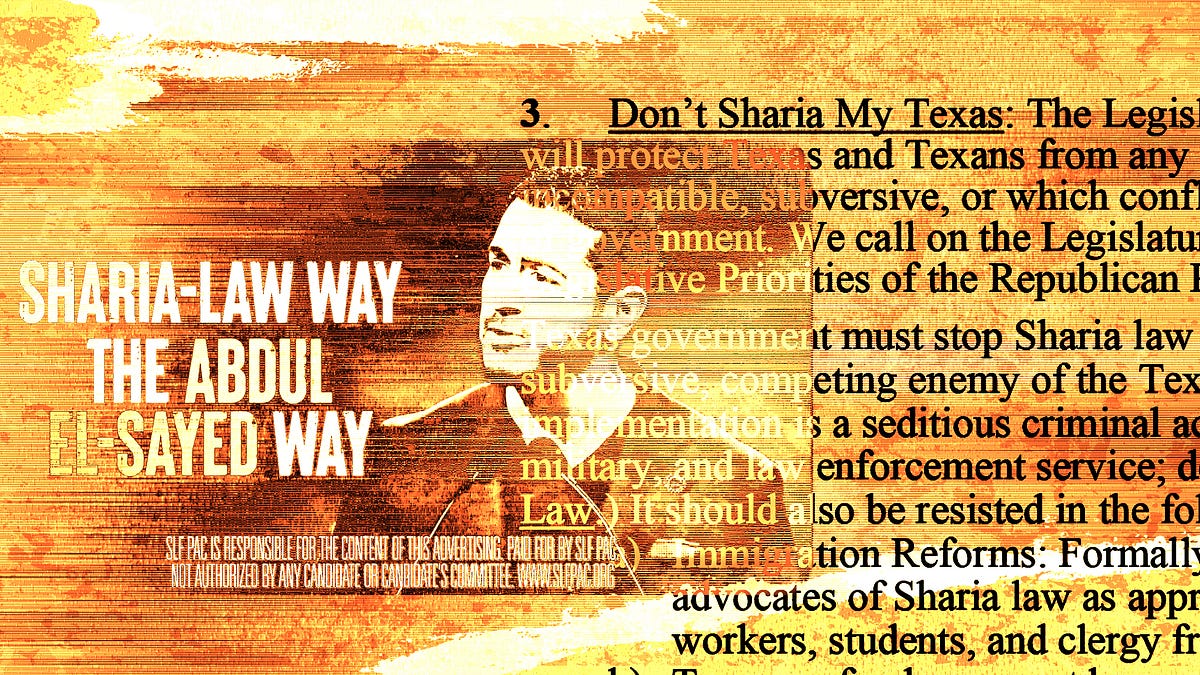
You can see it in Texas, where the state GOP platform literally calls for passing “Don’t Sharia My Texas” legislation. asserted
platform → see → legislation
The rhetoric and strategy are all over the U.S. Capitol, too, where some Republicans have formed a “Sharia-Free America Caucus.” asserted
Republicans → form → Caucus
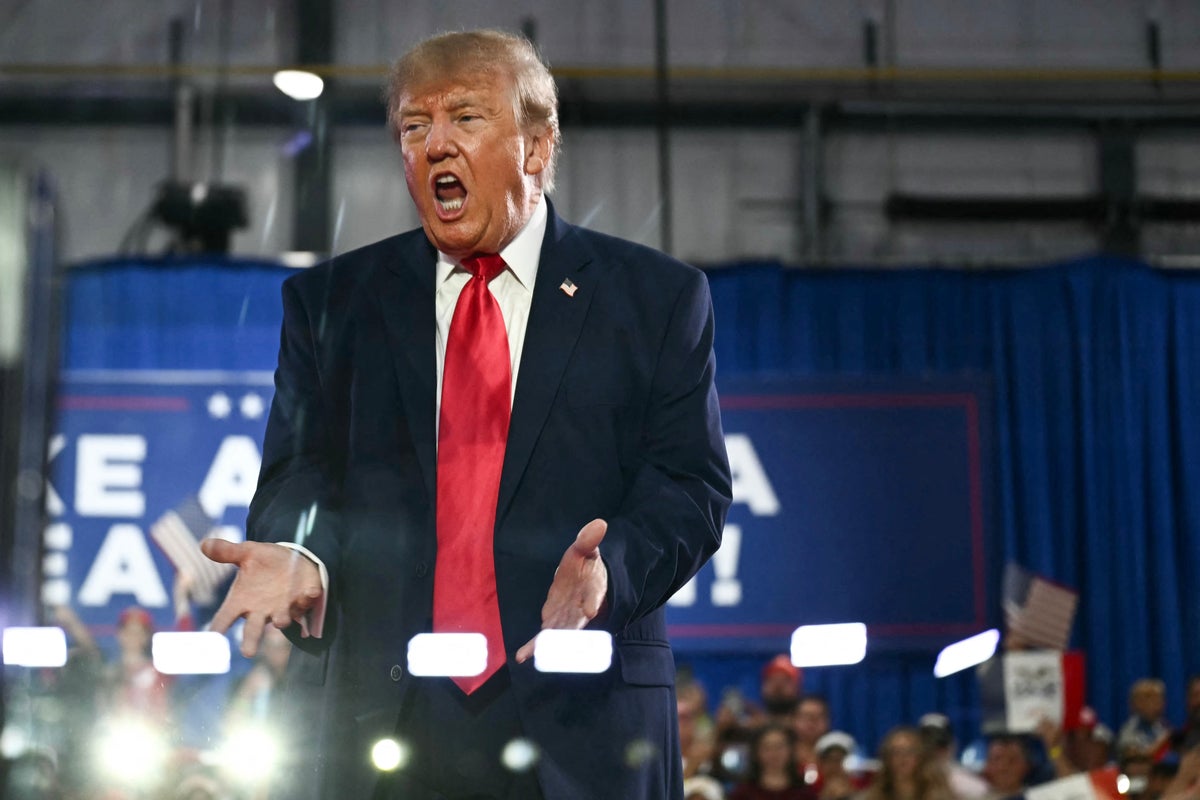
And that’s not to mention what you’ll hear from Donald Trump himself, who has repeatedly—including this past Friday—called El-Sayed “a violent, vicious jihadist.” asserted
who → ’ → Sayed
Trump and the others may actually believe El-Sayed is some kind of threat. uncertain
Sayed → believe → threat
Who knows. asserted
Who → know → ?
But this much is clear: Their willingness to bash Muslims and Islam shows they believe the strategy works, and they are sure to keep at it if the midterms go their way. asserted
midterms → bash → way
SO LET’S TALK ABOUT that Michigan ad, which you can watch here: asserted
you → let → which
The narrator begins by quoting something El-Sayed once told the New York Times: “When I die and I stand before God and go through everything I did in my life, I don’t want to say I did it the easy way instead of the Sharia-compliant way.” asserted
I → begin → it
Dark, intense music, the kind you’d expect from an overdramatized thriller or horror film, plays in the background while the narrator asks: “The Sharia law way: What’s that?” asserted
that → expect → way
Then comes the answer, words appearing in red and white against the backdrop of a woman in a black niqab: “Using government to dictate how women dress, requiring they have a guardian, or prohibiting women from filing for divorce. asserted
they → come → divorce
“The Sharia-law compliant way,” the narrator concludes. asserted
narrator → conclude → ?
It’s difficult to capture the full dishonesty of the ad. asserted
It → ’ → ad
But a good starting point is what El-Sayed was actually saying in that quote, and what he was not. asserted
he → say → quote
It comes from an interview El-Sayed gave seventeen years ago, to a reporter writing about a Michigan bank that offers customers a special kind of home loan for Islamic customers. asserted
that → come → customers
It tells the story of an Ann Arbor banker who learned from a customer that Islamic law forbids the charging or payment of interest. asserted
law → tell → interest
The banker, who is Catholic, adopted some alternative financial packages (like loans that build interest into the selling price) that made mortgages technically compliant with Muslim law. asserted
mortgages → adopt → law
El-Sayed appears briefly in the article—quoted once, near the end—because he had recently taken out one of those loans. asserted
he → appear → loans
When El-Sayed, then a 24-year-old medical student, said he wanted to conduct himself in “the sharia-compliant way,” he meant using the religious code as a guideline for his personal life. asserted
he → say → life
It’s similar to the way a Catholic might describe following the Church’s dogma and doctrine, as several scholars explained to me, or to the way a Jew might describe observing “Halakhah,” which covers everything from prayer to diet.1 uncertain
which → ’ → prayer
Here’s how Andrew March, professor of political science at the University of Massachusetts and a widely cited expert on Islam, put it to me in an email: asserted
March → ’ → email
Obviously, and this cannot be stressed enough, whenever an individual Muslim, particularly one living in a non-Muslim country, speaks about living a “shari’a-compliant life” he or she is speaking about their own personal morality and behavior. asserted
he → stress → morality
This could be not drinking alcohol or eating pork, not having sex outside of marriage, not taking out loans that scholars may regard as usurious, performing the pilgrimage when it is possible, being loyal to one’s parents, and other matters that pertain to an individual’s own behavior. uncertain
that → drink → behavior
Halakhah is an especially useful analogy here, because it too has a prohibition tied to financial transactions, though it applies only to loans between Jews. asserted
it → have → Jews
And as with sharia, there are financial workarounds—like structuring loans as business agreements—for those who observe. asserted
who → be → those
One other parallel to Jewish law is that there is no single, universally agreed-upon version. asserted
parallel → be → law
Jewish law is the product of an ongoing debate among rabbis, literally going back thousands of years, with interpretations today varying depending on which authority you trust. asserted
you → go → authority
And it’s the same way with Islam, as David Cook, a professor of religion and expert on Islam, told me in a phone interview. asserted
Cook → ’ → interview
“The people that are making the most blatant comments about sharia appear to present it as if it’s something unified, something like the U.S. Constitution that you could apply ‘sharia’—which, from a classical point of view, is really quite laughable,” Cook said. uncertain
Cook → make → view
Noah Feldman, a Harvard Law School professor who has written on Islamic law and public life, agrees. asserted
who → write → law
…and 46 more, not listed.

💬Give feedback
🕘History 🎫Support