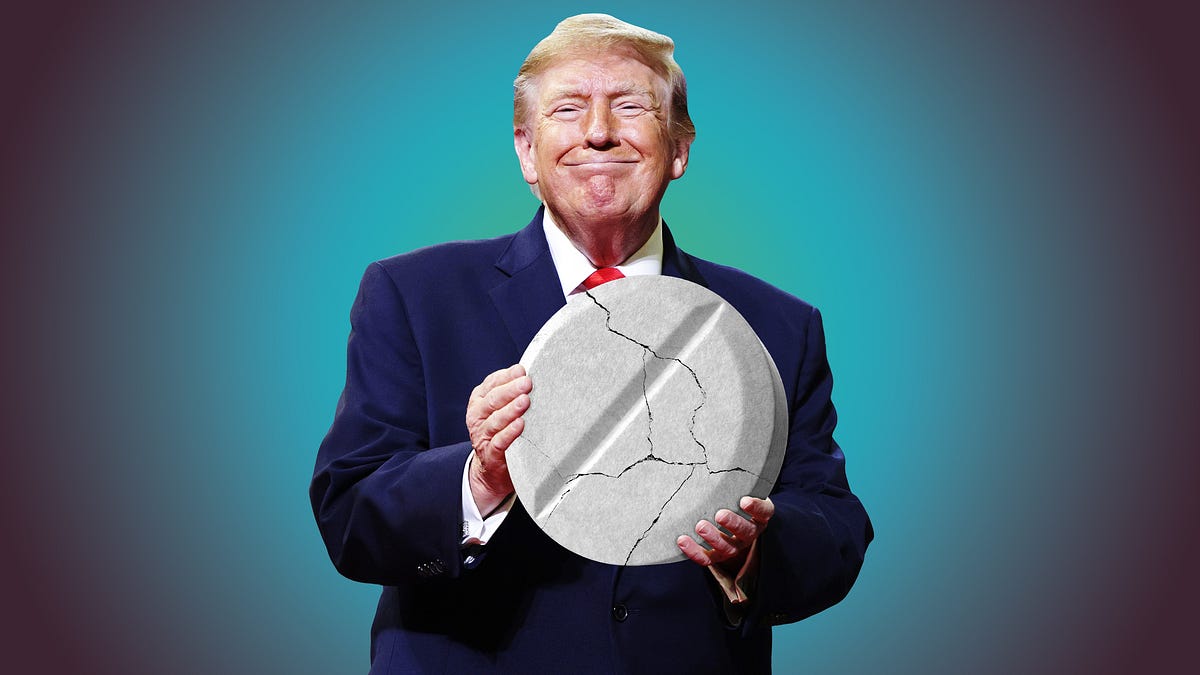
KATIE ZACHARIA’S DEBUT as White House press secretary came in for some rough reviews on Tuesday.
asserted
DEBUT → come → Tuesday
But she proved she’s got what it takes to perform at least one of her essential tasks: making absurd, wildly misleading statements about Donald Trump’s record, especially when it comes to health care.
asserted
it → prove → care
“President Trump is the first president in modern history to actually lower prescription drug prices,” Zacharia said, “delivering the biggest drop in sixty-three years.”
asserted
Zacharia → lower → years
Zacharia was referring to news over the summer that drug prices had fallen by 3.1 percent over the previous year, the largest decline in six decades—and asserting that Trump had caused this by negotiating deals with individual pharmaceutical companies and then creating a website, TrumpRx, where people buying drugs could get coupons to buy some of their products.
uncertain
people → refer → products
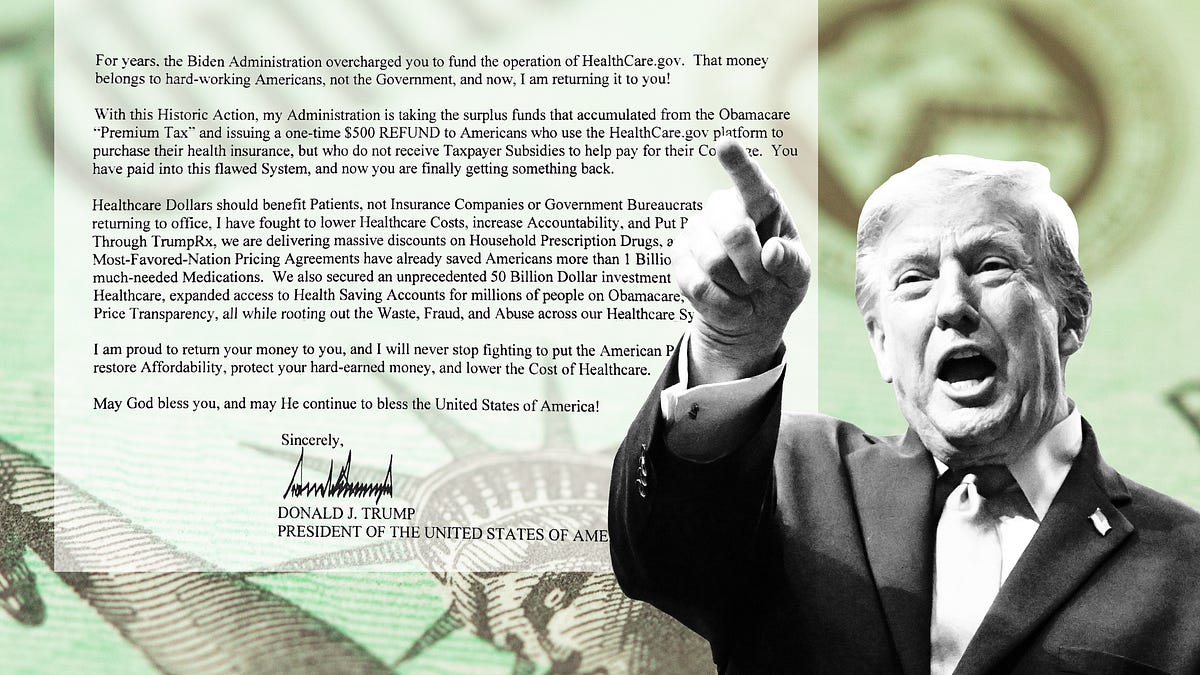
If the claim sounds familiar, that’s because Trump himself has been making it for a while, including during this year’s State of the Union address when he declared, “Other presidents tried to do it, but they never could.
uncertain
they → sound → it
. . . I got it done.”
asserted
it → get → ?
But the boast has extra political significance now, less than a month before the midterms, because it has figured prominently in the campaigns of Republicans like Roger Marshall, the incumbent Kansas senator battling for his seat, who earlier this year called Trump’s actions on prescription drugs “the biggest game changer this year for the cost of health care.”
asserted
who → have → care
The challenge facing GOP candidates like Marshall, Husted, and Rogers is that voters are angry about the high cost of living, which Trump promised to bring down.
asserted
Trump → face → which
Worse still, the Republican record includes a trillion dollars they took out of Medicaid to finance tax cuts—and, then, a refusal to renew a set of temporary, extra subsidies for Affordable Care Act coverage.
asserted
they → include → coverage
That refusal made insurance more expensive for roughly 20 million people.
asserted
insurance → make → people
Both decisions probably help explain why polls keep finding Democrats have a massive advantage on health care.
asserted
Democrats → help → care
If so, then one way Republicans can push back is to convince voters Trump has made meaningful headway on prescription drug prices.
asserted
Trump → push → prices
But there’s little reason to think he has, and even less reason to think he’s done more than his predecessors—including Joe Biden, who, as it happens, actually does have a claim to have made progress on drug pricing.
uncertain
it → ’ → pricing
And although the administration had been taking some steps to build on Biden’s progress, it now appears to have backed off that effort, leaving Trump with the same flimsy record as before.
asserted
it → take → record
TRUMP’S DEALS WITH THE DRUG COMPANIES have received much hype, with Trump bringing in the CEOs for the signing ceremonies.1
asserted
Trump → receive → CEOs
At those events, and in many other public remarks and social media posts, Trump has claimed the agreements mean that Americans now pay the same low prices for their drugs that the citizens of peer countries around the world do.
asserted
citizens → claim → world
“Americans deserve the best health care in the world, and we’re now getting the best health care at the lowest price,” Trump said in the Oval Office last November, while standing alongside CEOs for Eli Lilly and Novo Nordisk.2
Trump’s desire to match the prices makes sense given his belief that Americans are constantly getting screwed by other countries.
asserted
Americans → deserve → countries
And Trump was correct to observe that Americans pay more for name-brand pharmaceuticals than the citizens of other countries, though it’s not because those other governments are screwing Americans.
asserted
governments → observe → Americans
It’s because those governments negotiate prices directly with manufacturers.
asserted
governments → ’ → manufacturers
Would-be reformers in the United States have talked for decades about giving the federal government that sort of power.
asserted
reformers → talk → power
But proposals to do so kept stalling, in part because of opposition from conservatives who believed state-backed negotiation would distort market forces and stunt innovation—and in part because the pharmaceutical industry, correctly perceiving negotiation as a threat to its bottom line, used its considerable political influence to stop legislation from advancing.3
Trump during his first term promised to beat the drug companies into submission, touting his willingness to confront them as one of the ways he was different from the old, business-friendly Republican establishment.
asserted
he → keep → establishment
And he got a chance to follow through when House Democrats, after getting control of the chamber in 2019, passed a bill that would have let the federal government negotiate prices with drugmakers for certain drugs.
asserted
government → get → drugs
But instead of getting behind the legislation or some variant of it, Trump backed off, allowing his GOP allies who were still in control of the Senate to kill the bill.
asserted
who → get → bill
Democrats got a chance to take action on their own two years later, once they had control of the Senate and White House as well.
asserted
they → get → Senate
In 2022, they enacted the Inflation Reduction Act, which included several provisions giving the federal government new power to curb drug prices.
asserted
which → enact → prices
The provisions were a lot weaker than party leaders had hoped: With no votes to spare in the Senate, and one member of the caucus (Kyrsten Sinema of Arizona) opposed to robust action, Democrats had to water down the bill—which, among other things, limited government negotiating power to only the Medicare program.
asserted
which → hop → program
But those Biden-era negotiations are now moving forward, and have brought down the prices of several name-brand drugs for treating diabetes, high blood pressure, and other conditions.
asserted
negotiations → move → diabetes
One government estimate, cited by the AARP Public Policy Institute, has suggested the negotiations will end up saving beneficiaries about $1.5 billion in out-of-pocket costs this year.
uncertain
negotiations → cite → costs
That’s real money but, obviously, not nearly enough to make drug costs affordable for all or even most Americans.
asserted
costs → ’ → Americans
That deficiency is what Trump said he would address by finally bringing down drug prices through the individual deals he reached with the drug companies.
asserted
he → say → companies
NOW THAT THERE ARE SIGNS drug prices have dropped in the last year, Trump and his new press secretary—and all those campaigning Republicans—are saying it was their doing.
asserted
it → be → year
But it’s not entirely clear how much drug prices have actually fallen.
asserted
prices → ’ → ?
As STAT columnist Ed Silverman was quick to point out, the official Consumer Price Index for pharmaceuticals captures only part of the market, and doesn’t account for all of the complex rebates and backpayments that circulate among manufacturers, various middlemen, and consumers.
asserted
that → point → manufacturers
And to the extent the administration has revealed the details, it has said that those low, supposedly European-equivalent prices for drugs already on the market apply mainly to Medicaid, which by law already gets deep discounts.
asserted
which → reveal → discounts
The deals have some other provisions, including lower prices on GLP-1 drugs, but most of those are missing so many details it’s hard to say what kind of savings they really produce.
asserted
they → have → savings
In September, the watchdog organization Public Citizen published an analysis of two agreements it was able to obtain via public-records requests from the Department of Health and Human Services.
asserted
it → publish → Health
Despite extensive redactions that hid many of the most important details, Public Citizen was able to determine that the drugmakers had won exemptions from other initiatives to reduce drug prices, partly or totally offsetting whatever savings the agreements actually produce.
asserted
agreements → hide → savings
Public Citizen also confirmed what previous reporting in STAT had found: The deals expire when Trump leaves office.
asserted
Trump → confirm → office
“The bottom line is that the president gets to make big claims about reducing drug prices without the evidence to support those claims,” Ian Spatz, founder and principal of Rock Creek Policy Group, told me over e-mail.
uncertain
Spatz → get → mail
Spatz, who has deep experience with the pharmaceutical industry and with politicians, said he is accustomed to elected officials exaggerating the impact of their accomplishments.
asserted
officials → have → accomplishments
…and 31 more, not listed.
 The Aporia