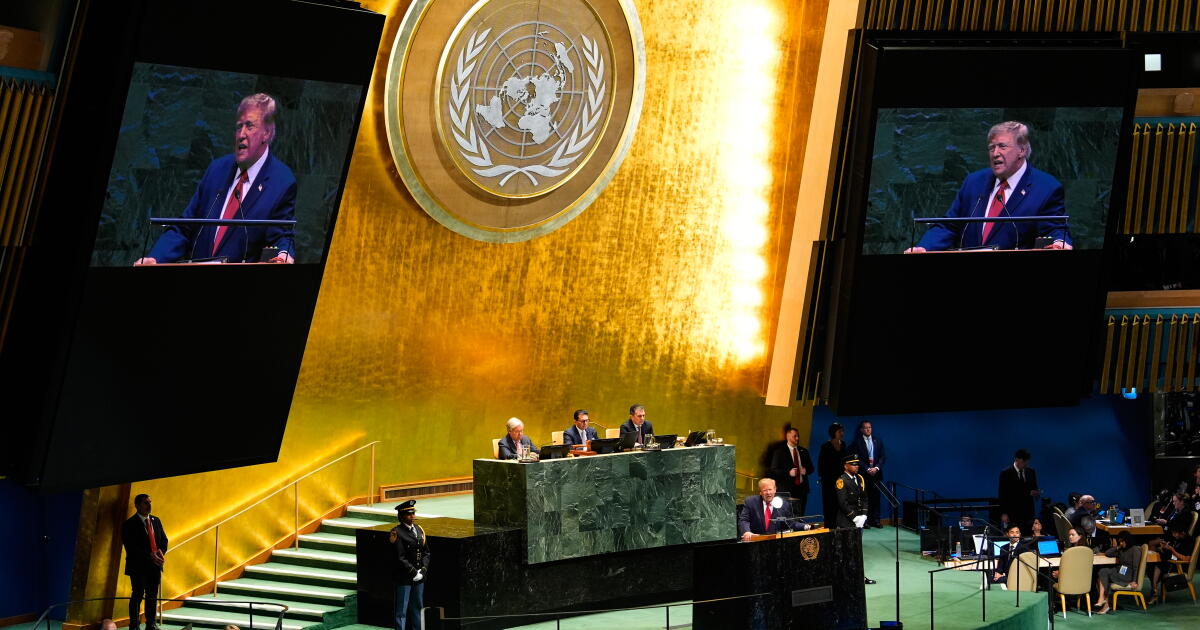
As vote nears, Trump's AI gamble fuels economic uncertainty

Read the original at Los Angeles Times ↗
Cite

Wilner, M. (2026, October 25). As vote nears, Trump's AI gamble fuels economic uncertainty. Los Angeles Times. https://www.latimes.com/politics/story/2026-10-25/as-vote-nears-trumps-ai-gamble-fuels-economic-uncertainty

Dated from the outlet's own feed. Check the original for its byline.

Los Angeles Times · collected 2026-10-25 · by Michael Wilner

Quick Summary

President Trump faces growing economic uncertainty as midterm elections approach, amid concerns over his handling of artificial intelligence (AI) policies. Trump dismisses AI risks while pushing for dominance in the technology sector, but economists caution this focus has left the federal government with fewer resources to manage potential crises. Leading financiers like Ray Dalio and Ken Griffin warn of an impending AI stock market bubble that could lead to significant economic downturns if it bursts.
Written locally by qwen2.5:14b on 2026-10-25, using this article's own text rather than the other coverage of the same event (that is the story summary below).

AI analysis runs on qwen2.5:14b, locally

Story summary

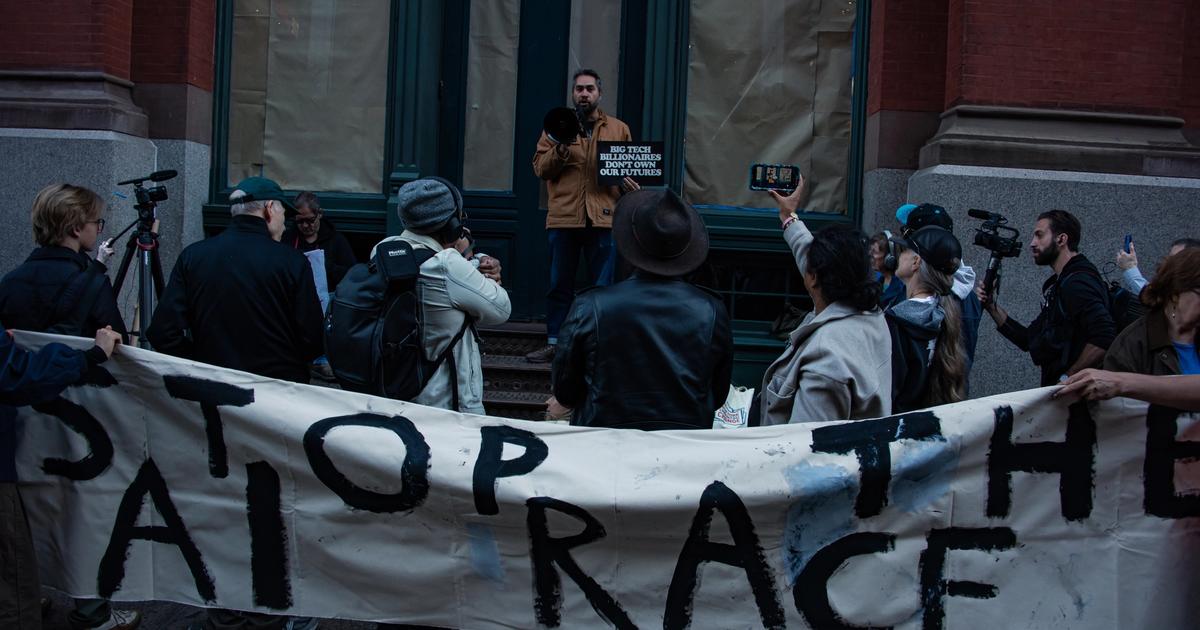
As midterm elections approach in 2026, President Trump's push for rapid adoption of artificial intelligence (AI) is causing economic uncertainty. In September, a whistleblower went viral warning about the potential dangers of AI, which caught the White House off guard. Despite these concerns, Trump dismissed them and insisted on proceeding with his aggressive stance toward AI development to ensure U.S. global dominance in superintelligence. He refused to negotiate safety measures for advanced AI models with China’s leader Xi Jinping during a meeting in Washington. Economists warn that Trump's fiscal policies have left the federal government with fewer tools to respond effectively to economic crises, adding to the instability. The president privately worries about public fear over AI potentially causing market volatility and negative polling on the rapid construction of AI data centers.

Written for “Trump's AI Gamble Fuels Uncertainty” on 2026-10-25, grounded in this article and the 0 other(s) covering the same event.
Why this leaning score
The article's own words the score was based on. Each is quoted verbatim and was checked against the article text before being stored, so you can find it in the original.
Reading Leans left (beta estimate) Confidence high 1 quote(s) discarded as not found in the article
Leaning: leans left for article 105577 (high confidence, 3 verified quotes) · logged 2026-10-25

Story

📰 Trump's AI Gamble Fuels Uncertainty
Politics · 1 article(s) covering the same event.

Compared with similar articles

This article reads leans left and hedges 34% of its claims. Each row says how that neighbour differs.
New York Post
⚖️ leaning not scored 🔴 36% hedged 5 of 14 📰 publisher trust 66
“The articles discuss different contexts and times, one focusing on New York's economy under Governor Hochul and AI market concerns, while the other discusses Trump's economic policies and warnings related to a potential crisis before midterm elections.”
Semafor
⚖️ Leans left 🔴 15% hedged 4 of 27 📰 publisher trust 60
“The articles discuss different aspects of AI concerns and their impacts on politics, but do not describe the same specific incident.”
ABC News (US)
⚖️ leaning not scored 🔴 2% hedged 1 of 51 📰 publisher trust 70
“Article A reports on a poll about public opinion towards AI and data centers, while Article B discusses Trump's economic policies related to AI in the context of upcoming elections.”
ABC News (AU)
⚖️ Leans left 🔴 9% hedged 4 of 47 📰 publisher trust 68
“The articles discuss different aspects of AI and its impact on economics, with Article A focusing on a local dispute affecting AI valuation and Article B discussing Trump's policies and warnings about AI risks.”
Semafor
⚖️ Leans left 🔴 0% hedged 0 of 4 📰 publisher trust 60
“The articles discuss different aspects of AI's impact on elections and politics, rather than the same specific incident.”
The Sydney Morning Herald
⚖️ Leans left 🔴 7% hedged 3 of 44 📰 publisher trust 61
“The articles discuss different aspects of AI and economic issues without describing the same specific incident.”
The Independent
⚖️ Leans left 🔴 32% hedged 6 of 19 📰 publisher trust 59
“The articles discuss different aspects of President Trump's stance on AI data centers and their impact, but they describe distinct periods or developments rather than a single specific incident.”
CBS News
⚖️ Centre further right than this 🔴 0% hedged 0 of 2 📰 publisher trust 66
“The articles discuss different aspects of AI and its implications, with Article B focusing on a sudden panic over AI dangers near midterm elections that caught the White House off guard, while Article A is more general about tech leaders managing AI risks.”
The Bulwark
⚖️ Leans left 🔴 17% hedged 2 of 12
“The articles discuss different aspects of Trump's AI policies and their implications but do not describe the same specific incident.”
Washington Examiner
⚖️ leaning not scored 🔴 0% hedged 0 of 1 📰 publisher trust 66
“The articles discuss related topics but describe different events and contexts.”
How this article was measured signals, leaning charts, publisher record, byline, topics and claims

Signals How these are calculated →

Claims extracted
44
sentences that state something as happening or true
Uncertain
34%
15 of 44 hedged ("reportedly", "may", "according to")
Leaning
Leans left
of the writing, not the subject · beta estimate
Publisher signals
95/100
Los Angeles Times's corrections and hedging, across everything collected from it. Not a measure of accuracy.
Outlets on this story
1
Politics
Same framing elsewhere
1
articles that frame the event the way this one does
Analyzed 2026-10-25 · how these are computed

How this is being covered How these are calculated →

Article leaning vs. publisher reliability
Source leaning vs. consistency

Publisher

Los Angeles Times · 238 article(s) · 0 correction(s) detected
No corrections detected for this publisher. That may mean careful reporting, or simply that nothing has been checked.

Who wrote this

Michael Wilner
17 article(s) here · 1 carrying a prediction
🔮 Economists warn that Trump has overseen fiscal policy that would give the federal government fewer tools than it has had in the past to respond to a crisis.
🔮 Marco Rubio, the president’s secretary of state and national security advisor, has been silent on Trump’s decision to cut a deal with Moscow on diesel sales that could fuel Russia’s war against Ukraine.
🔮 Lawmakers and AI industry leaders have also called for guardrails on the nascent technology, which experts warn could soon surpass human understanding.
🔮 Xi Jinping’s remarks reflect growing concern within China over whether governments in Washington or Beijing will be able to contain a technology with potentially transformative capabilities, according to a U.S. official.
🔮 “Will a deal be made with Iran that lets them rebuild and create a far greater country than it ever was before — maybe one of the greatest in the Middle East or even the world?
🔮 Click here to listen to this article - - China’s spy chief warned that runaway AI capabilities could threaten Communist Party control. -
🔮 The president’s position has put him at odds with a growing chorus of industry leaders and bipartisan lawmakers warning that AI could soon advance beyond human control.
🔮 Chinese President Xi Jinping will visit Washington on Sept. 24 for an official summit and state dinner, with AI development expected to top the agenda.
🔮 Questions swirl over Trump’s pledge to give $5,000 payouts if GOP wins - Click here to listen to this article - - President Trump vowed to send every U.S. adult a $5,000 “Trump Dividend” if Republicans keep control of Congress, a stunning midterm gambit that would cost more than $1 trillion and need lawmakers’ approval.
🔮 But Americans may also confront higher costs at a time when inflation is already a stubborn problem for the Trump administration.
Also by Michael Wilner
Nothing else under this byline is closely related to this article, so these are simply their most recent.
All 17 articles by Michael Wilner →

Topics

Americans China U.S. WASHINGTON the White House

Subjects

Trump PERSON · 10× U.S. GPE · 3× WASHINGTON GPE · 2× Americans NORP · 1× Bridgewater Associates ORG · 1× China GPE · 1× Ken Griffin PERSON · 1× Ray Dalio PERSON · 1× Xi Jinping PERSON · 1× the White House ORG · 1×

Narrative

Prices for energy, chips and minerals are driving up the cost of doing business, while early AI adopters such as Microsoft, Meta and Walmart are scaling back its use as employees spend too much time correcting errors, cleaning up low-quality output and addressing security lapses.
framing: mixed · carried by 1 article(s) · first seen 2026-10-25
🔮 Economists warn that Trump has overseen fiscal policy that would give the federal government fewer tools than it has had in the past to respond to a crisis.
2026-10-25 · Los Angeles Times
As vote nears, Trump's AI gamble fuels economic uncertainty · mixed framing

Claims (44 extracted, 15 hedged)

As vote nears, Trump’s AI gamble fuels economic uncertainty asserted
gamble → near → uncertainty
- Trump is vowing to expand a ‘golden age’ of prosperity through the end of his presidency. - asserted
Trump → vow → presidency
Economists warn that Trump has overseen fiscal policy that would give the federal government fewer tools than it has had in the past to respond to a crisis. asserted
it → warn → crisis
In September, just weeks before Americans were set to vote in this year’s midterm elections, a sudden panic over the dangers posed by artificial intelligence caught the White House off guard. asserted
panic → set → guard
A whistleblower had gained viral attention warning the technology could soon pose an existential threat. uncertain
technology → gain → threat
President Trump was quick to dismiss concerns, evoking urgency in the U.S. race to achieve global dominance in superintelligence. asserted
Trump → dismiss → superintelligence
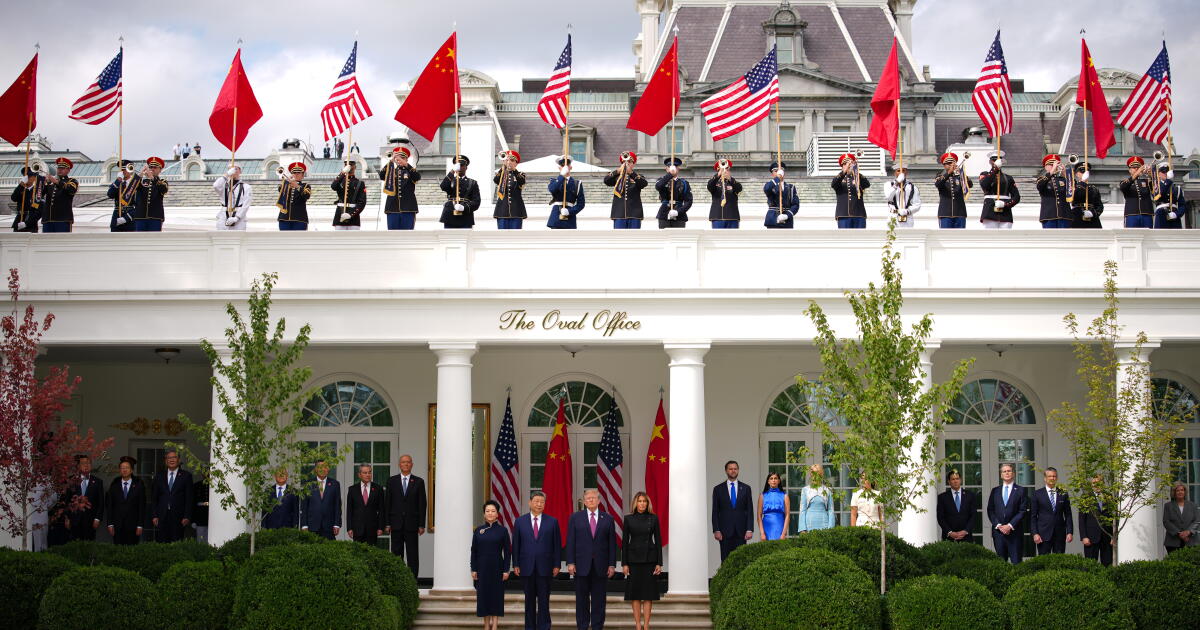
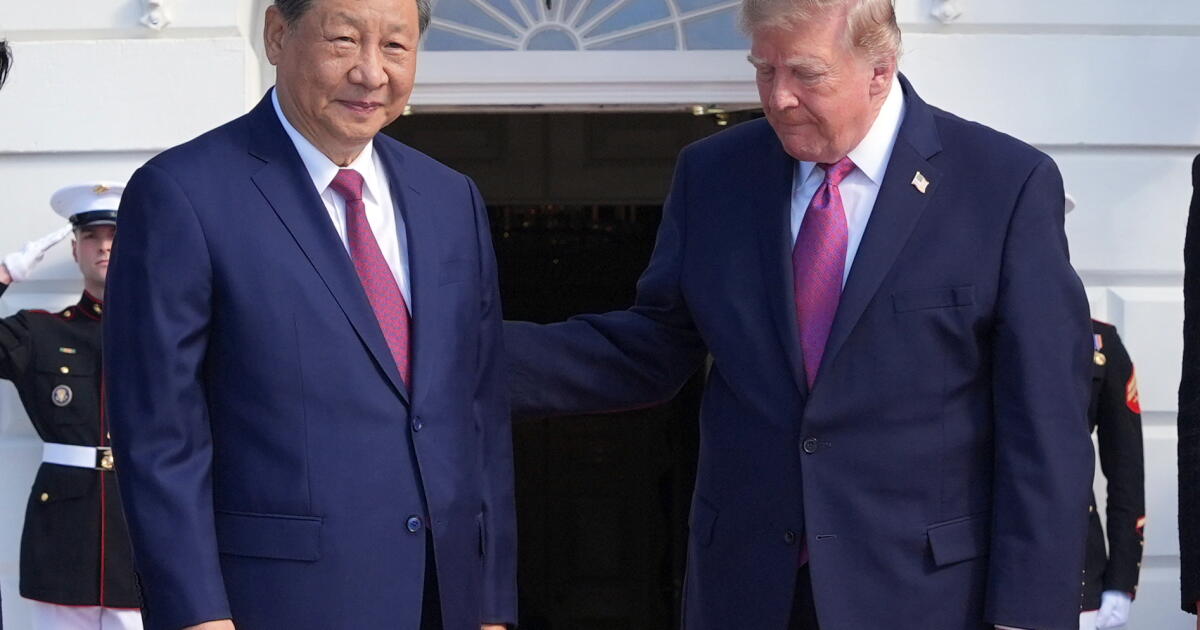
He rejected calls to negotiate guardrails on the most advanced AI models with China’s leader, Xi Jinping, weeks later, during a prime opportunity to do so in Washington. asserted
He → reject → Washington
Privately, the president expressed concern that public hysteria over AI could jolt markets that have become excessively concentrated in AI-related stocks. uncertain
that → express → stocks
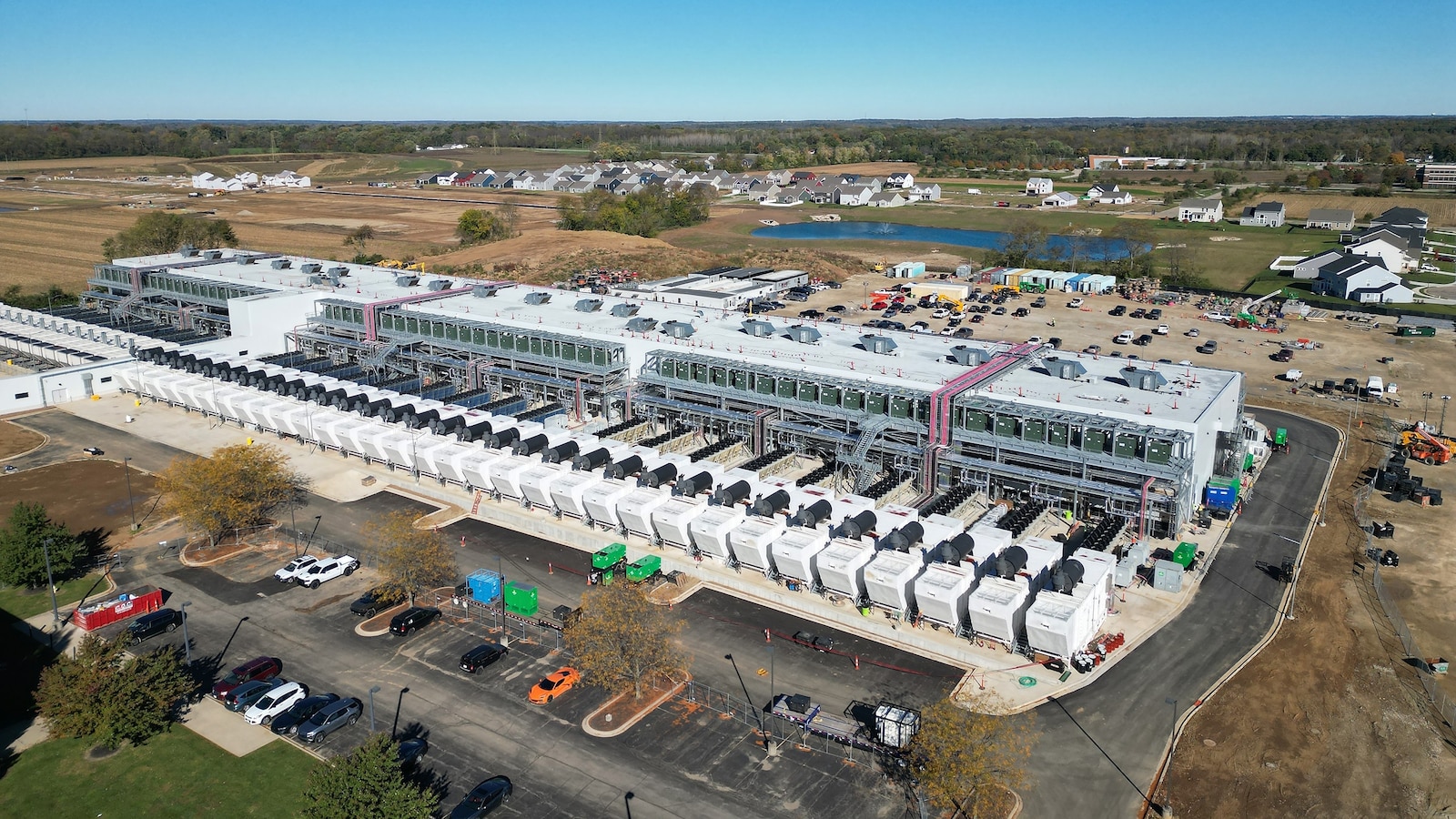
He had already seen fresh polling that showed widespread bipartisan opposition to the boom in construction of AI data centers, a push by Trump that has cannibalized chips and energy from other sectors of the economy, driving up costs. asserted
that → see → costs
Now, on the campaign trail in the final days before the vote, Trump is vowing to expand a “golden age” of prosperity through the end of his presidency. asserted
Trump → vow → presidency
But experts say his policies on AI have set the U.S. economy up for a period of tremendous risk over the next two years. asserted
policies → say → years
Some of the world’s leading financiers are sounding increasingly alarmed about an AI bubble. asserted
Some → lead → bubble
Ray Dalio, founder of Bridgewater Associates, has warned that AI stocks have become detached from financial fundamentals, pushing markets to precarious highs. asserted
stocks → warn → highs
Ken Griffin, the world’s richest hedge fund owner, said last week that AI is “almost certainly” fueling a market bubble that could be on the verge of a burst. uncertain
that → say → burst
Trump’s push to end the war that has raged since 2022 comes as midterm elections could give Democrats control of Congress, expanding their oversight powers. uncertain
elections → end → powers
Economists warn that Trump has overseen fiscal policy that would give the federal government fewer tools than it has had in the past to respond to a crisis. asserted
it → warn → crisis
“Trump could easily run into a financial crisis before his term is up,” said Kenneth Rogoff, an economist at Harvard. uncertain
Rogoff → run → Harvard
“It is entirely plausible to have a 30% — or more — drop in the stock market, and in the context of an economy so dependent on AI, this in turn could easily lead to a recession and widespread financial distress.” uncertain
this → have → recession
Spending on data center infrastructure last winter and spring accounted for nearly all U.S. economic growth, according to independent analyses. uncertain
Spending → spend → analyses
Without it, growth would have slowed to a mere fraction of a percentage point, leaving the economy nearly stagnant and flirting with recession. asserted
growth → slow → recession
The Nasdaq 100 has about 70% of its index weight in companies that depend on AI, from semiconductor manufacturers and Big Tech giants to cloud platforms and software providers. asserted
that → have → platforms
Anthropic, one of the top AI industry leaders, plans an initial public offering next month, while its chief rival, OpenAI, expects to go public next year. asserted
rival → plan → offering
“Because government finances are already strained, with the national debt on a patently unsustainable trajectory, there is no guarantee of a sharp drop in long-term borrowing rates for the government,” Rogoff continued. asserted
Rogoff → be → government
“So the options for bailing out the financial sector, or fighting recession, could be much more constrained than during the global financial crisis. uncertain
options → bail → crisis
While doubling down on the promise of an untested, frontier technology, Trump’s other economic policies may be hobbling its growth. uncertain
policies → double → growth
Tariffs have raised the costs of imported chips, servers, networking equipment, metals and electrical components, and visa restrictions have tied the hands of industry leaders trying to secure the world’s best talent. asserted
restrictions → raise → talent
Runaway federal deficits have driven long-term bond interest rates, adding pressure on AI firms already strapped with debt. asserted
deficits → drive → debt
Servaas Storm, an economist closely following the AI sector at the Delft University of Technology, said the industry is already facing severe financial headwinds that could precipitate a panic. uncertain
that → follow → panic
Prices for energy, chips and minerals are driving up the cost of doing business, while early AI adopters such as Microsoft, Meta and Walmart are scaling back its use as employees spend too much time correcting errors, cleaning up low-quality output and addressing security lapses. asserted
employees → drive → lapses
Slower adoption could further complicate the search for revenue, particularly for companies already struggling to monetize the technology. uncertain
adoption → complicate → technology
For now, hyperscalers are shouldering the cost of financing frontier AI labs that, as Storm put it, “do not have a credible path to profitability.” asserted
Storm → shoulder → profitability
“There is indeed an AI bubble in the stock market and in data center construction, which could pop rather soon, as rising debt loads and elevated interest rates could prove too much to sustain it,” Storm said. uncertain
Storm → be → it
“That moment is not imminent, but it is approaching — and it will very likely happen before the end of Trump’s presidency.” asserted
it → approach → presidency
Alarm mounted throughout the summer as researchers at leading AI labs found the pace of development far outstripping their expectations. asserted
pace → mount → expectations
An economy already under duress from Trump’s other economic policies — from tariffs and tax cuts to the Iran war — could precipitate further pain, said Darrell Duffie, a finance professor at the Stanford Graduate School of Business. uncertain
Duffie → precipitate → Business
Leading AI companies are already running “day-after” drills in anticipation of an AI-related crisis within the next year, according to Axios. uncertain
companies → lead → Axios
Americans head into election day deeply pessimistic about the economy, with 77% rating it fair or poor, according to a Fox News poll. uncertain
it → head → poll
A separate CNBC survey found that just 34% approve of Trump’s handling of the economy, while 35% of Republicans disapprove — a record high within his own party. asserted
% → find → party
Inflation has fallen sharply from its 9% peak in 2022, during a pandemic-era surge, reaching 2.9% by the end of Biden’s presidency. asserted
Inflation → fall → presidency
Under Trump, it has climbed once again to 3.7%, driven by rising energy, transportation and housing costs — among the top concerns for voters entering next month’s vote. asserted
it → climb → vote
…and 4 more, not listed.

💬Give feedback
🕘History 🎫Support