In his new history of Wikipedia, journalist Richard Cooke writes that we may be witnessing the “beginning of the end of the encyclopaedic age”.
uncertain
we → write → age
This was an age marked not only by a belief in the importance of knowledge, but in its civilising function.
asserted
This → mark → function
If we could just assemble enough facts and give them to enough people, we could create a better society.
uncertain
we → assemble → society
Two weeks ago, Cooke offered this bleak verdict to Crikey: “Wikipedia is the closest thing that’s ever existed to that universal encyclopaedia, and its effect on making things like public discourse more reasonable or more reason-driven is undetectable.
asserted
things → offer → discourse
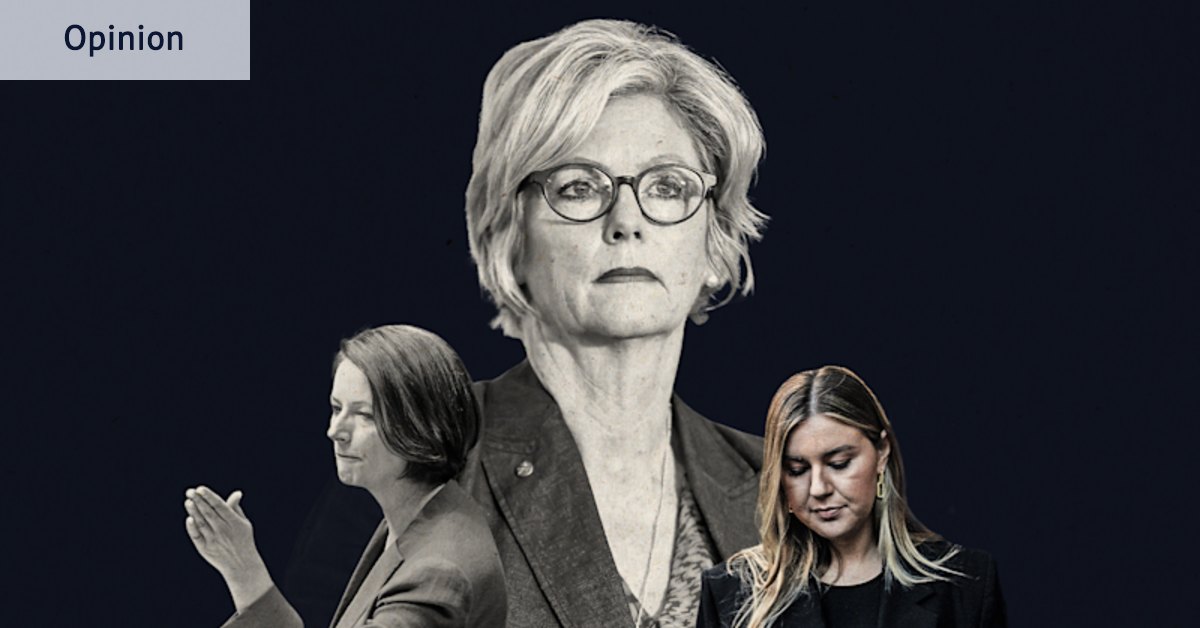
I helped launch that book last week, two days after Helen Haines was brutally attacked.
asserted
Haines → help → book
That is an event on which there is not yet agreement about facts, though this has not stopped widespread discussion of the political environment in which it took place.
asserted
it → be → place
And nor should it have.
asserted
it → have → ?
Such sudden, passionate, ubiquitous discussion is always worth paying attention to.
asserted
discussion → pay → attention
A similar phenomenon occurred in the aftermath of the Sydney Swans Pullman Hotel allegations, and in relation to the allegations about the students at Scots College who are accused of sexual assault.
asserted
who → occur → assault
Occasionally, you will hear the argument that this means we should refrain from such discussions until more is known.
asserted
more → hear → discussions
But such sudden eruptions of debate can point us to something important, something worth noticing for its own sake: a deep well of anger, frustration, fear.
asserted
eruptions → point → fear
Such events command national attention not only because of their intrinsic horror but because of the way they unearth such feelings, caused by significant problems in our society.
asserted
they → command → society
These feelings are all the stronger for the way they are usually pushed down.
asserted
they → push → way
The passion with which such events are met is a reaction to the complacency with which the topic areas into which they fall are usually met.
asserted
they → meet → which
To many women, in particular, it can seem as though there is a conspiracy to avoid significant discussion of violence against women.
asserted
it → seem → women
It seems that way because, for all intents and purposes, there is.
asserted
It → seem → intents
If this sounds like overreach, recall the absolute outpouring of the #metoo movement, those many, many voices: so powerful, so passionate, in part because they had been silenced for years.
asserted
they → sound → years
But this was only a temporary shattering of the status quo before great efforts resumed to return those voices to silence.
asserted
efforts → resume → silence
Recall the way defamation is increasingly used to silence women who have spoken up – an international phenomenon portrayed in the recent documentary Silenced.
asserted
who → recall → documentary
And think, too, of the ways both media campaigns and lawsuits act not only to silence those individual women but all the other women who might consider speaking in the future.
uncertain
who → think → future
Because, of course, this is the broadest danger of the attack on Haines: that women, who already face high barriers to participation in public life, will be further put off.
asserted
who → face → life
That there are other voices that will be silenced before they even begin to speak.
asserted
they → be → ?
As a political staffer, I witnessed both these strands in Parliament House – the repressed rage finally surfacing and the way such rage was immediately turned against the person feeling it – on the day when Julia Gillard stood and delivered what would become known as the misogyny speech.
asserted
what → witness → speech
The prime minister’s sincere and cutting words, full of fury at the way her gender had been turned against her for so long, resonated with so many.
asserted
gender → turn → many
Immediately, though, many journalists rejected those words as unimportant – and went further, too, using them as another piece of evidence in their catalogue of Gillard’s failings.
asserted
journalists → reject → failings
Or take Nationals leader Matt Canavan’s recent comments about boys being driven to interact with toxic masculinity by a curriculum focused on respectful relationships and consent.
asserted
boys → take → relationships
Again and again we see that if women demand respect, it is not long before men will find a way to blame men’s failure to show respect on the fact it was asked for in the first place – as experts such as Monash University’s professor Steven Roberts point out, a common manosphere manoeuvre.
asserted
experts → see → professor
There is no way out of this catch-22 logic: no action that women might take that will not later be twisted into an excuse for treating them worse.
uncertain
that → be → them
We should be wary, then, of assuming the attack on Helen Haines will change much.
asserted
attack → assume → much
If we assume that open discussion and debate will improve the situation, we can look to Cooke’s conclusion: the situation has only worsened.
asserted
situation → assume → conclusion
If we assume that a high-profile attack on a woman, universally decried, will shift things, we need only look at the history of violence against women.
asserted
we → assume → women
Even the more fundamental idea that violence is sufficiently shocking that it might act as an alarm that will wake up society is doubtful.
uncertain
that → act → society
German historian Philipp Ruch recently explained the Nazis’ success at the 1930 elections.
asserted
Ruch → explain → elections
At first, he said, people were repelled by violence – until the opposite occurred.
asserted
opposite → say → violence
“It’s hard to admit this from a modern perspective, but historical Fascism’s lust for violence didn’t make it repulsive but extremely attractive to a lot of German voters.
asserted
it → ’ → voters
It is possible that an attack like the one against Helen Haines will make us change our ways.
asserted
us → make → ways
But it is also possible that we live in a society in which violence is increasingly permissible, and in which violence only brings more violence.
asserted
violence → live → violence
Taken together, all this does not offer as bleak a prognosis as it might seem.
uncertain
it → take → prognosis
In fact, any genuine shift is only likely to begin with a recognition of the immense strength of the forces that work to keep us stuck where we are now.
asserted
we → begin → us
Those forces will never be beaten once and for all.
asserted
forces → beat → all
…and 3 more, not listed.
 The Aporia