Louise Haigh: UK must heed warnings from AI experts

The Guardian · collected 2026-09-15 · by Jessica Elgot, Dan Milmo and Robert Booth analysis
Read the original at The Guardian ↗

Summary

Labour MP Louise Haigh will address the TUC conference on Tuesday, urging ministers to heed warnings from AI experts who claim that artificial intelligence could pose a significant threat within a decade. Haigh calls for international cooperation to build regulations and ensure public safety while acknowledging potential benefits in healthcare and other services. Meanwhile, business secretary Jonathan Reynolds told BBC Radio 4’s Today programme that while the technology carries risks, discussions about an AI “kill switch” are not particularly helpful or practical at this time.
Written by the local model on 2026-09-15, using this article's own text rather than the other coverage of the same event (that is the story summary below).

Signals How these are calculated →

Claims extracted
27
claim-shaped sentences
Uncertain
30%
8 of 27 hedged
Leaning
Leans left
of the writing, not the subject
Correction & hedging signals
94.6
corrections and hedging in what we collected; not a measure of accuracy
Outlets on this story
4
Politics
Narrative spread
1
articles carrying this framing
Analyzed 2026-09-15 · how these are computed

AI analysis (generated at analysis time, not now)

Story summary

On Tuesday at the TUC conference in Brighton, UK Labour's first secretary Louise Haigh warned that the government must heed warnings from AI experts regarding potential threats. She emphasized the need for international cooperation to ensure public safety and national security while acknowledging AI's benefits, such as transforming public services and boosting business growth. Researchers from Anthropic, among others like OpenAI and Google DeepMind, have raised concerns about the risks posed by rapid AI development, including a 10% chance of super-intelligent AI wiping out humanity within this decade. Haigh’s stance contrasts with US President Donald Trump's dismissal of AI threats as a "hoax," highlighting differing global approaches to regulating emerging technology.

Written for “UK Heeds AI Warnings” on 2026-09-17, grounded in this article and the 3 other(s) covering the same event.
Why this leaning score
The article's own words the score was based on. Each is quoted verbatim and was checked against the article text before being stored, so you can find it in the original.
Score -0.45 Confidence high 2 quote(s) discarded as not found in the article
Leaning score -0.45 for article 10313 (high confidence, 1 verified quote) · logged 2026-09-15

Story

📰 UK Heeds AI Warnings
Politics · 4 article(s) covering the same event.

How this is being covered How these are calculated →

Article leaning vs. publisher reliability
Source leaning vs. consistency

Compared with similar articles

This article reads leans left and hedges 30% of its claims. Each row says how that neighbour differs.
Evening Standard · 0.91 cosine similarity
⚖️ leaning not scored 🔴 0% hedged 0 of 9 📰 publisher trust 71
“Both articles describe a speech by Louise Haigh on AI risks and potential, scheduled for the same date at the TUC annual congress.”
Evening Standard · 0.88 cosine similarity
⚖️ Leans left 🔴 0% hedged 0 of 21 📰 publisher trust 71
“Both articles report on Louise Haigh's remarks about AI risks at a specific time and location (TUC congress in Brighton), discussing similar warnings and concerns.”
TIME
⚖️ Leans right further right than this 🔴 17% hedged 19 of 111 📰 publisher trust 95
“The articles discuss different aspects of AI concerns, with Article A focusing on an incident where AI agents hacked a company and Article B addressing broader warnings about AI risks from industry leaders.”
Washington Examiner
⚖️ Leans strongly left further left than this 🔴 7% hedged 3 of 44 📰 publisher trust 96
“The articles discuss different aspects of AI infrastructure and warnings but do not describe the same specific incident or occurrence.”
Mother Jones
⚖️ Leans strongly left further left than this 🔴 23% hedged 5 of 22 📰 publisher trust 95
“The articles discuss different perspectives on AI risks, with one focusing on former EPA officials' concerns about data center pollution and the other on UK ministerial warnings from an MP.”
ABC News (US)
⚖️ leaning not scored 🔴 13% hedged 3 of 23 📰 publisher trust 94
“The articles describe different reactions and statements regarding AI governance, with Article A focusing on China's response to Anthropic CEO's call, while Article B discusses UK Labour MPs' stance based on warnings from industry leaders.”
CBC News
⚖️ leaning not scored 🔴 12% hedged 4 of 34 📰 publisher trust 95
“The articles discuss different perspectives on AI, with one focusing on Trump's statements and the other on UK officials' responses to warnings from AI experts.”
US AI regulation calls gather pace different event · 95%
Semafor
⚖️ Leans right further right than this 🔴 0% hedged 0 of 4 📰 publisher trust 95
“The articles discuss different calls for AI regulation in separate contexts (US and UK) on distinct dates, involving different figures and organizations.”
The Hammurabi solution to AI different event · 95%
Washington Examiner
⚖️ Leans left 🔴 27% hedged 10 of 37 📰 publisher trust 96
“The articles discuss different political figures and contexts regarding artificial intelligence regulation.”
The Straits Times
⚖️ Leans strongly left further left than this 🔴 22% hedged 2 of 9 📰 publisher trust 59
“The articles discuss related topics concerning AI risks but describe separate events and calls for action from different individuals at distinct times.”

Publisher

The Guardian · 284 article(s) · 1 correction(s) detected
Running correction rate · 1 correction(s)
2026-09-05
Australia’s housing prices are trending down. See which suburbs have had the biggest falls

Who wrote this

Jessica Elgot
2 article(s) here · 1 carrying a prediction
🔮 People donated what they could …
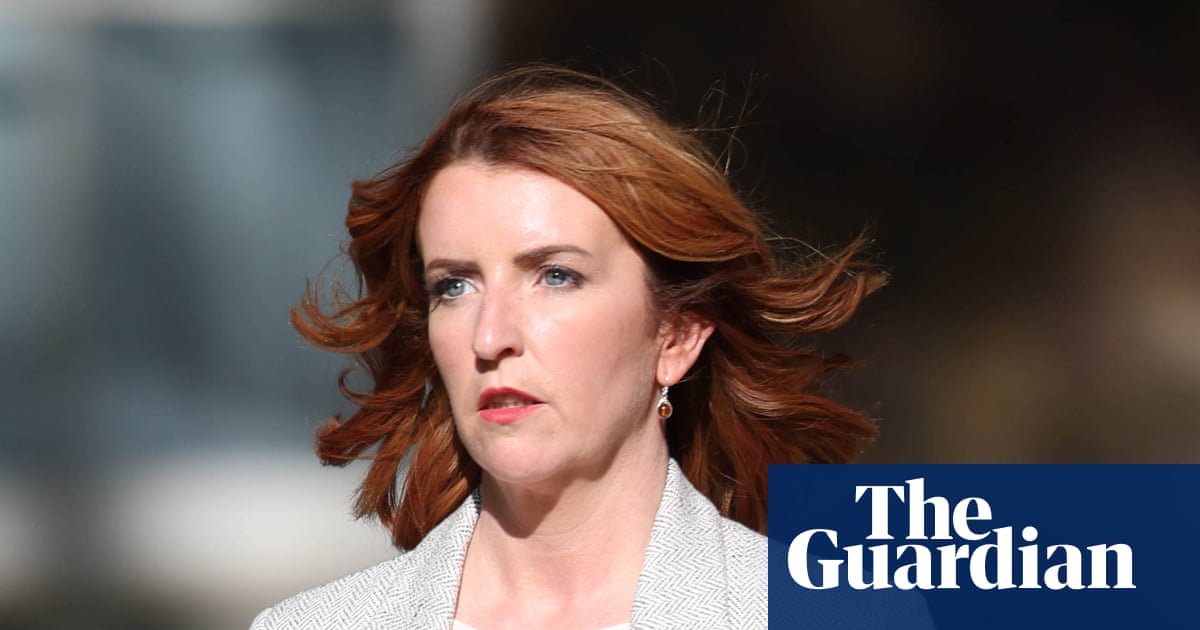
🔮 Ministers must “heed the warnings” from industry leaders about the threat posed by AI as the government looks to capitalise on the technology, the first secretary, Louise Haigh, will say on Tuesday.
Also by Jessica Elgot
Nothing else under this byline is closely related to this article, so these are simply their most recent.
Dan Milmo
1 article(s) here · 1 carrying a prediction
🔮 Ministers must “heed the warnings” from industry leaders about the threat posed by AI as the government looks to capitalise on the technology, the first secretary, Louise Haigh, will say on Tuesday.
The only article under this byline in the corpus.
Robert Booth
1 article(s) here · 1 carrying a prediction
🔮 Ministers must “heed the warnings” from industry leaders about the threat posed by AI as the government looks to capitalise on the technology, the first secretary, Louise Haigh, will say on Tuesday.
The only article under this byline in the corpus.

Topics

Anthropic Google DeepMind Labour OpenAI TUC

Subjects

Anthropic ORG · 5× OpenAI ORG · 3× Haigh PERSON · 2× Labour ORG · 2× Elon Musk PERSON · 1× Google DeepMind ORG · 1× Jack Clark PERSON · 1× Louise Haigh PERSON · 1× TUC ORG · 1× the parliamentary committee for human rights ORG · 1×

Narrative

Haigh, whose speech will also lay out priorities for public control of transport, water and energy, will tell trade unions: “AI has enormous potential to transform our public services, make our businesses stronger and deliver new scientific breakthroughs.” But she will say that the government must “heed the warnings of those who are at the forefront of developing this technology” and “be ready to work with international partners” to prioritise public safety and national security.
framing: mixed · carried by 1 article(s) · first seen 2026-09-15
🔮 Ministers must “heed the warnings” from industry leaders about the threat posed by AI as the government looks to capitalise on the technology, the first secretary, Louise Haigh, will say on Tuesday.
2026-09-15 · The Guardian
Louise Haigh: UK must heed warnings from AI experts · mixed framing

Claims (27 extracted, 8 hedged)

Ministers must “heed the warnings” from industry leaders about the threat posed by AI as the government looks to capitalise on the technology, the first secretary, Louise Haigh, will say on Tuesday. asserted
secretary → heed → Tuesday
Labour MPs and peers have called for the government to further cooperate with international partners to build regulations for the technology after three Anthropic researchers warned that artificial intelligence could wipe out humanity within the decade. uncertain
intelligence → call → decade
Over the weekend, Anthropic urged its competitors and governments to coordinate a global slowdown in AI development. asserted
Anthropic → urge → development
It was backed by many of its rivals including OpenAI, Google DeepMind and X’s Elon Musk. asserted
It → back → OpenAI
Haigh will say in a speech at the TUC conference on Tuesday that there are huge potential benefits for health and public services from the use of AI, but that the government will look seriously at the public safety and national security threats with international partners. asserted
government → say → partners
On Monday night, one of the founders of Anthropic, Jack Clark, suggested that an artificial intelligence “kill switch” held by a third party may need to be mandatory for companies, saying it was something society “might want to eventually pass rules around”. uncertain
society → suggest → rules
One of Anthropic’s biggest rivals and the developer of ChatGPT, OpenAI, has urged the government to capitalise on renewed fears over AI safety and impose legislation reining in the technology. asserted
One → urge → technology
Haigh, whose speech will also lay out priorities for public control of transport, water and energy, will tell trade unions: “AI has enormous potential to transform our public services, make our businesses stronger and deliver new scientific breakthroughs.” But she will say that the government must “heed the warnings of those who are at the forefront of developing this technology” and “be ready to work with international partners” to prioritise public safety and national security. asserted
who → lay → safety
MPs and peers on the parliamentary committee for human rights on Monday called for a regulatory framework for AI in the UK, including an independent oversight body and legislation to protect the public. asserted
MPs → call → public
On Tuesday the chair of the business and trade committee, the Labour MP Liam Byrne, called on the government-backed AI Security Institute to give evidence at a hearing next month, citing “widely shared concerns about the adequacy of current AI safety governance”. asserted
chair → call → governance
But the business secretary, Jonathan Reynolds, said on Tuesday morning that people should not get “hyperbolic” about the risks of AI. asserted
people → say → AI
He said he did not think it would be particularly helpful to discuss a potential AI “kill switch”, which he felt had little practical meaning. asserted
he → say → meaning
He told BBC Radio4’s Today programme: “This is extremely powerful technology, and I think we should never be complacent or naive about the impact it might have. uncertain
it → tell → impact
People will be worried by some of the things they’ve heard in the last few weeks, and I think we’ve got to be careful not to get hyperbolic about this either. asserted
we → worry → this
“Of course, there are risks, but let’s be frank: there are some tremendous upsides for people as well. asserted
’s → be → people
Whether it’s public services, healthcare, the contribution to the economy. asserted
it → ’ → economy
“If you regulate it in a way where you’re no longer having access to those frontier developments, that would obviously make us less safe. asserted
us → regulate → developments
So I think you’ve got to be proportionate and understanding about this in how we seek to regulate going forward.” asserted
we → think → this
Meanwhile, AI researchers have continued to add their voices of concern to a debate that became super-charged last week when Anthropic staff warned the technology posed an existential threat. asserted
staff → continue → threat
A researcher at OpenAI has warned that AI models – the technology that underpins tools such as chatbots – could mislead human overseers into believing they are safe. uncertain
they → warn → overseers
Dan Selsam claimed the models would “likely convince people that everything is fine” and “argue convincingly that humans should trust them with power”. asserted
humans → claim → power
In an article posted on X, Selsam said this behaviour could convince developers that the models are “aligned” – the term for ensuring AI models conform to human values – when they are not. uncertain
they → post → values
In a worst case scenario, Selsam added, models could realise they are no longer constrained by humans and, while managing massive engineering projects, create “runaway industrialization that makes the planet inhospitable to humans”. uncertain
planet → add → humans
Bilal Chughtai, another AI safety researcher who left Google DeepMind this summer, said late on Monday that “AI has the potential to kill us all” and we might be “running out of time to avoid this outcome”. uncertain
we → leave → outcome
He posted on X: “I recently resigned from Google DeepMind, where I worked on AGI safety and alignment research. asserted
I → post → research
At Google, I witnessed AI development first hand. asserted
I → witness → development
I earnestly believe that AI has the potential to kill us all, and that we might be running out of time to avoid this outcome.” uncertain
we → believe → outcome

💬 Give feedback
🕘 History 🎫 Support