Why Europe has been absent from the great AI safety debate

Read the original at The Guardian ↗
The Guardian · collected 2026-09-18 · by Dan Milmo and Aisha Down

Quick Summary

Christine Lagarde, head of Europe’s central bank, highlighted Europe's dilemma in the AI debate: either embrace technologies developed by the U.S. and China or risk falling behind economically. Europe lacks influential tech giants like those in Silicon Valley, which has limited its role in high-level AI safety discussions. Ursula von der Leyen proposed engaging leading labs to support industry efforts but received less attention than statements from figures like Donald Trump. Margrethe Vestager’s report advocates for developing more datacenters and ensuring resilience against potential AI crises, emphasizing Europe's need for self-sufficiency to address AI safety issues.
Written locally by qwen2.5:14b on 2026-09-19, using this article's own text rather than the other coverage of the same event (that is the story summary below).

AI analysis runs on qwen2.5:14b, locally

Story summary

Europe faces a dilemma over artificial intelligence (AI) with two stark options: either shun AI and risk falling behind economically, or embrace it and become dependent on technology from the US and China. This debate was highlighted when Christine Lagarde, head of Europe’s central bank, outlined these choices. The continent's absence in high-level discussions about AI safety is attributed to its lack of tech giants like Apple and Google, which have counterparts in the US and China but not in Europe. As a result, despite being strong in regulation, Europe has struggled to influence global AI debates. For instance, Ursula von der Leyen, president of the European Commission, announced plans to invite key frontier labs for discussions on supporting industry efforts to pace advancements, reflecting Europe's attempt to catch up and participate more actively in shaping AI regulations.

Written for “European AI Safety Absence” on 2026-10-04, grounded in this article and the 0 other(s) covering the same event.

Signals How these are calculated →

Claims extracted
36
claim-shaped sentences
Uncertain
8%
3 of 36 hedged
Leaning
Leans strongly left
of the writing, not the subject · beta estimate
Correction & hedging signals
68.3
corrections and hedging in what we collected; not a measure of accuracy
Outlets on this story
1
Politics
Narrative spread
1
articles carrying this framing
Analyzed 2026-09-19 · how these are computed

Story

📰 European AI Safety Absence
Politics · 1 article(s) covering the same event.

How this is being covered How these are calculated →

Article leaning vs. publisher reliability
Source leaning vs. consistency

Compared with similar articles

This article reads leans strongly left and hedges 8% of its claims. Each row says how that neighbour differs.
The Free Press
⚖️ leaning not scored 🔴 20% hedged 3 of 15 📰 publisher trust 96
“The articles discuss different aspects of AI safety and technology debates, not the same specific incident.”
The Straits Times
⚖️ Leans left further right than this 🔴 24% hedged 17 of 70 📰 publisher trust 59
“The articles discuss different aspects of AI concerns and debates in different regions (US/San Francisco vs. Europe), indicating distinct but related topics rather than the same specific incident.”
The Guardian
⚖️ leaning not scored 🔴 16% hedged 9 of 58 📰 publisher trust 68
“The articles discuss different aspects of AI safety concerns in relation to UK and European policies and debates.”
Al Jazeera
⚖️ leaning not scored 🔴 0% hedged 0 of 11 📰 publisher trust 60
“The articles discuss different aspects of AI safety and regulation debates; Article A focuses on Europe's dilemma regarding AI technology, while Article B covers a broader discussion on AI's existential threat and media coverage.”
CBC News
⚖️ Leans left further right than this 🔴 5% hedged 3 of 57 📰 publisher trust 77
“The articles discuss different aspects and participants in the AI safety debate without describing the same specific incident.”
Al Jazeera
⚖️ leaning not scored 🔴 0% hedged 0 of 14 📰 publisher trust 60
“The articles describe different but related topics - Article A discusses Europe's dilemma over AI, while Article B reports on a proposal for global oversight by multiple countries.”
Semafor
⚖️ Leans right further right than this 🔴 0% hedged 0 of 8 📰 publisher trust 95
“The articles discuss different perspectives on AI from Europe and the Global South but do not describe the same specific incident or occurrence.”
Semafor
⚖️ Leans right further right than this 🔴 0% hedged 0 of 4 📰 publisher trust 95
“The articles discuss different aspects of the global AI safety debate without reporting on the exact same incident.”
Al Jazeera
⚖️ Leans left further right than this 🔴 14% hedged 6 of 43 📰 publisher trust 60
“The articles discuss different aspects and viewpoints on AI safety but do not describe the same specific incident or occurrence.”

Publisher

The Guardian · 1244 article(s) · 4 correction(s) detected
Running correction rate · 4 correction(s)
2026-10-03
Tennessee’s top prison official resigning after botched execution of Christa Pike
2026-10-01
Tennessee governor suspends all executions after Christa Pike’s lethal injections fail
2026-09-28
Extra 1,000 prison beds announced in NSW as union warns against arresting ‘our way out of domestic violence’
2026-09-05
Australia’s housing prices are trending down. See which suburbs have had the biggest falls

Who wrote this

Aisha Down
4 article(s) here · 1 carrying a prediction
🔮 If the worst scenarios come to bear – and experts have differing views on this – then the technology will impact the continent regardless.
🔮 Some files exceed “official” classification, according to a police document seen by the Guardian, raising the possibility the information could be classed as “secret” or “top secret”.
🔮 It represents the cutting edge of what governments such as Iran, Kazakhstan and India may soon try to achieve.
🔮 California’s attorney general said it was a victory that would make “a world of difference for children and their families”.
Also by Aisha Down
Nothing else under this byline is closely related to this article, so these are simply their most recent.
Dan Milmo
5 article(s) here · 1 carrying a prediction
🔮 Beeban Kidron, a member of the upper house of the UK parliament and an award-winning film director, marshalled an effective political campaign against the proposals by pushing legislative amendments that would have spiked the plans.
🔮 A huge datacentre project hailed by the UK government will miss its launch date next year and could be delayed into the mid-2030s.
🔮 If the worst scenarios come to bear – and experts have differing views on this – then the technology will impact the continent regardless.
🔮 They ordered a review of existing legislation to see what powers they already had, according to those briefed on the plans, and were exploring whether they could force the world’s most advanced technology companies to submit their products for safety testing before launching them.
🔮 Ministers must “heed the warnings” from industry leaders about the threat posed by AI as the government looks to capitalise on the technology, the first secretary, Louise Haigh, will say on Tuesday.
Also by Dan Milmo
Nothing else under this byline is closely related to this article, so these are simply their most recent.

Topics

Apple China Europeans Google Vestager

Subjects

China GPE · 5× Lagarde PERSON · 3× Vestager ORG · 2× Anthropic ORG · 1× Apple ORG · 1× Christine Lagarde PERSON · 1× Europeans NORP · 1× Google ORG · 1× OpenAI ORG · 1× the White House’s ORG · 1×

Narrative

Because of their doomsday warnings, “we are exclusively talking about AI in a very narrow, specific kind of way – namely, the idea that there is such a thing as the AI frontier, which is getting better and better, and that access to the frontier is the most important thing that Europe needs for its security and economy.”
framing: assertive · carried by 1 article(s) · first seen 2026-09-19
🔮 If the worst scenarios come to bear – and experts have differing views on this – then the technology will impact the continent regardless.
2026-09-19 · The Guardian
Why Europe has been absent from the great AI safety debate · assertive framing

Claims (36 extracted, 3 hedged)

Europe’s dilemma over AI was rendered in stark terms this week. asserted
dilemma → render → terms
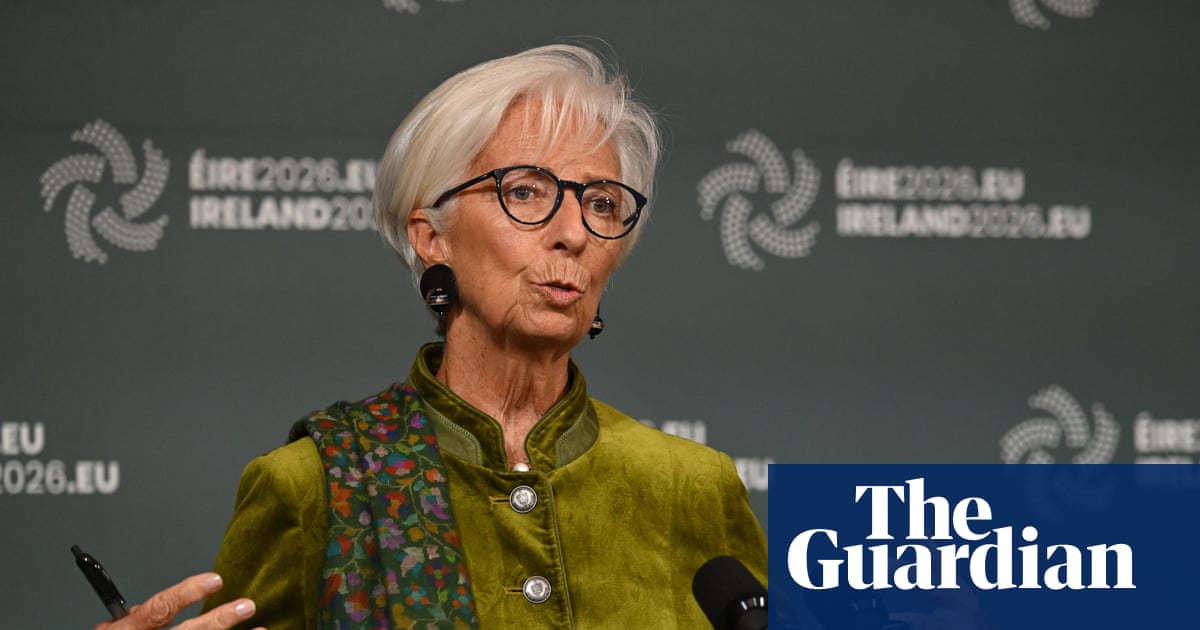
The head of the continent’s central bank, Christine Lagarde, said Europeans have two options: shun the technology and lose out on growth; or embrace it and become dependent on tools developed by the US and China. asserted
Europeans → say → US
The great debate over AI safety that has erupted in recent days threatens to make the choice moot. asserted
choice → erupt → days
If the worst scenarios come to bear – and experts have differing views on this – then the technology will impact the continent regardless. asserted
technology → come → continent
Europe has largely been absent from the highest levels of that debate, a result of the continent’s longstanding inability to produce a Silicon Valley-scale titan like Apple, Google or newcomer OpenAI. asserted
Europe → produce → Apple
While it is a powerhouse in regulation, much to the White House’s chagrin, its lack of an Anthropic or Nvidia-sized frontrunner in the AI race has diminished its voice in the safety debate. asserted
lack → size → debate
Ursula von der Leyen, a powerful political figure on the continent as president of the European Commission, the EU’s executive arm, addressed the issue this week by saying she will “invite the main frontier labs for a discussion on how we can support ongoing industry efforts to pace the frontier”. asserted
we → address → frontier
Her remarks gained nowhere as much traction as Donald Trump and China’s dismissal of a slowdown. asserted
remarks → gain → slowdown
Lagarde’s speech on Monday underlined the continent’s relative weakness. asserted
speech → underline → weakness
She asserted that Europe must develop its own AI technology and build more datacentres in order to nullify the threat of being cut off by the US or China. asserted
Europe → assert → US
If Europe invests in its own AI tech, said Lagarde, “the threat of being cut off loses its force.” asserted
threat → invest → force
Self-sufficiency would also give Europe a chance to develop its own answer to the AI safety crisis. asserted
sufficiency → give → crisis
Margrethe Vestager, who clashed with the US tech industry as the EU’s former competition commissioner, co-authored a report this week – A Transformative AI Strategy for Europe – that echoed Lagarde’s warning. asserted
that → clash → warning
AI threatens to accelerate a development already affecting Europe, where citizens “are already bearing the economic and social consequences of decisions taken elsewhere”, she says. asserted
she → threaten → decisions
Solutions to this, according to the report, include building more datacentres – the central nervous systems of AI – and also to ensure the continent is resilient enough to withstand “AI crises” like a powerful model slipping out of control. uncertain
continent → accord → control
Vestager said that Europe does have a voice in the safety debate through its EU AI Act, the rare piece of AI legislation that sets out requirements for developers of “high-risk” AI systems to report safety incidents and address risks like a cutting-edge model evading control. asserted
that → say → control
But she adds: “Europe must … build its own AI to strengthen the ecosystem, retain talent, and inspire innovation.” asserted
Europe → add → innovation
Vestager acknowledges that if there is an existential threat, it requires a global solution; one that does not hand power to the US and China. asserted
that → acknowledge → US
And that requires a different kind of supranational body. asserted
that → require → body
“As for existential threats to humanity, we must first assess the actual level of threat – then act with urgency. asserted
we → assess → urgency
The UN general assembly is an opportunity to address this. asserted
assembly → address → this
It is vital to move beyond the US-China rivalry narrative. asserted
It → move → narrative
Frederike Kaltheuner, an adviser to the AI Now Institute, a research body, says that Europe is dependent on US technology in ways that will be hard to undo, from search engines to chips to datacentres. asserted
that → say → datacentres
But the narrative that Europe is grievously behind in the race depends on a particular view of artificial intelligence aggressively promoted by American tech bosses. asserted
Europe → depend → bosses
Because of their doomsday warnings, “we are exclusively talking about AI in a very narrow, specific kind of way – namely, the idea that there is such a thing as the AI frontier, which is getting better and better, and that access to the frontier is the most important thing that Europe needs for its security and economy.” asserted
Europe → talk → security
The reality of the market points at something else, she says: many companies are not adopting so-called “frontier models” – like ChatGPT and Anthropic – because of high costs and fears over what might happen to their data. uncertain
what → point → data
If this trend continues, Europe may not be so terribly positioned: the EU AI Act has a number of pragmatic measures which address how consumers might encounter AI on a day-to-day basis, legislating over matters such as labelling AI content, and the use of AI in medicine and hiring. uncertain
consumers → continue → medicine
“Europe has a competitiveness problem, that’s true,” says Itxaso Dominguez de Olazabal, a policy adviser at EDRI, a European digital rights organisation. asserted
Olazabal → have → EDRI
But US tech boosters are “blaming it on laws and protections, and have promised that deregulation will make European companies more competitive … in a race to the bottom to see if we can catch big tech”. asserted
we → blame → tech
Nonetheless, the EU AI act is not viewed as model legislation for other countries or a vehicle for a global slowdown. asserted
act → view → slowdown
Georgina Kon, a partner at law firm Linklaters, says the act is unlikely to be adopted as a global benchmark for several reasons, including criticisms of the heavy compliance burden, which has led to delays in parts of the act becoming active, and a narrow territorial focus on Europe. asserted
parts → say → Europe
Those criticisms have also meant that lawmakers elsewhere have looked to differentiate their approach to AI legislation from the EU’s. asserted
lawmakers → mean → EU
“The EU AI Act is not something that everybody else in the world feels constrained by, although many tech companies will of course want to sell to the EU,” she says. asserted
she → feel → EU
Big tech still has a vast customer base in Europe. asserted
tech → have → Europe
Kaltheuner worries that the doomsday narratives will push Europe towards dependency, encouraging it to adopt US AI models across the economy out of ill-defined fears over being left behind. asserted
narratives → worry → fears
“There’s a vision of the future where Europe’s economy, its public sector, its education system runs on models and on infrastructure that is controlled by a very small number of companies that happen to be also in the US. asserted
that → ’ → US

💬Give feedback
🕘History 🎫Support