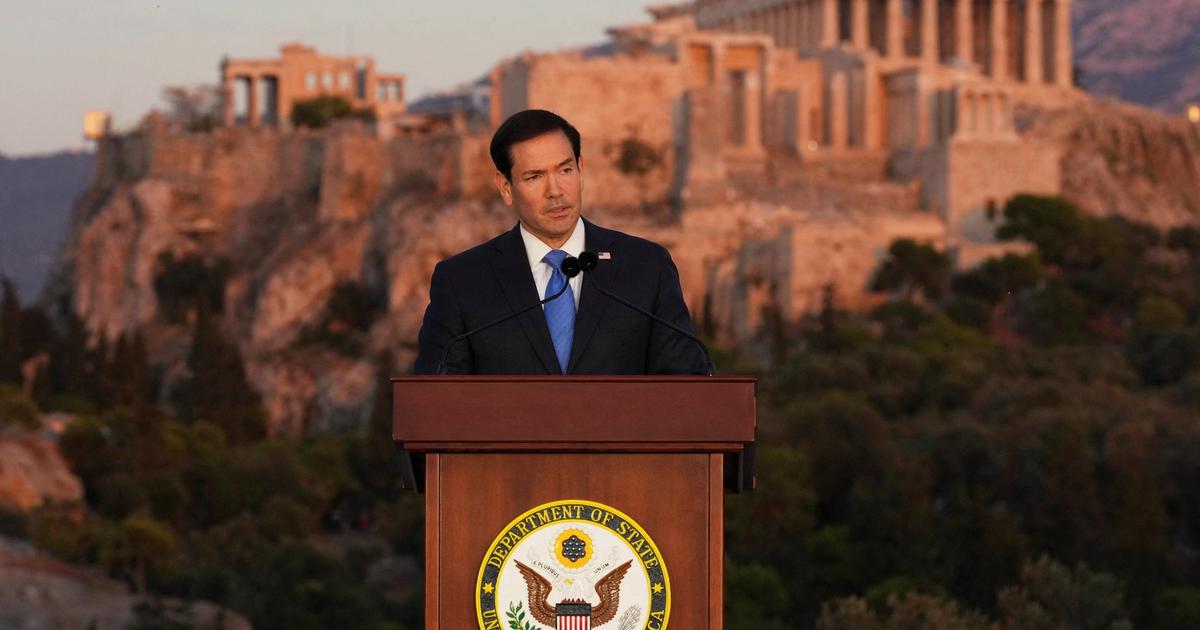
Photo via Washington Examiner

What Rubio gets wrong about the West

Read the original at Washington Examiner ↗
Cite

Carroll, C. (2026, October 9). What Rubio gets wrong about the West. Washington Examiner. https://www.washingtonexaminer.com/opinion/columnists/4761679/what-rubio-gets-wrong-about-the-west/

Dated when The Aporia collected the article, usually within hours of publication. Check the original for its exact date and byline.

Washington Examiner · collected 2026-10-09 · by Conn Carroll

Quick Summary

Marco Rubio delivered a speech in Greece emphasizing Western civilization's unique traits such as individuality and curiosity. However, the article critiques Rubio’s assertion by highlighting parallel examples from non-Western cultures like Buddha's pursuit of enlightenment, Genghis Khan's ambition, and Ibn al Haytham's scientific inquiries. The critique argues that while these qualities are not exclusive to the West, what truly distinguishes Greece—and by extension the West—is Solon’s political reforms in 595 B.C., which expanded democratic participation, setting a precedent for Western governance.
Written by AI on 2026-10-09, from this article's own text only (the story summary below draws on all the coverage).
See how they differ ↓

AI analysis

Story summary

On October 7, 2026, US Secretary of State Marco Rubio delivered a speech in Athens near the Acropolis, calling on Western nations to return to their founding democratic values and civilizational roots. Rubio emphasized historical themes like ancient Greek virtues, linking them to President Trump’s "America First" agenda and urging for renewed ambition and power against contemporary threats from Russia, China, and Iran. The State Department framed his speech as a major address on democracy's future. However, his rhetoric drew criticism both domestically and internationally; an article in the Washington Examiner argued that Rubio overstated ancient Greece's influence, while Iranian officials dismissed his civilizational narrative as irrelevant to their current political context. Additionally, historian Ted Widmer critiqued the speech for ignoring modern issues like climate change and scientific research funding. Despite these criticisms, Rubio highlighted recent defense spending commitments by NATO members and stressed the importance of a strong alliance in confronting today's global challenges. The speech sought to reinvigorate Western confidence but faced significant pushback over its historical interpretation and current relevance.

Written for “Rubio Speech Greece Western Values” on 2026-11-20, grounded in this article and the 16 other(s) covering the same event.

How they differ

11 outlets covered “Rubio Speech Greece Western Values”.

What each outlet says

One AI summary per outlet of its latest article on this story, written from that article alone and checked against it. Open the article for the outlet's own words.

Washington ExaminerThis outlet9 Oct

Marco Rubio delivered a speech in Greece emphasizing Western civilization's unique traits such as individuality and curiosity. However, the article critiques Rubio’s assertion by highlighting parallel examples from non-Western cultures like Buddha's pursuit of enlightenment, Genghis Khan's ambition, and Ibn al Haytham's scientific inquiries. The critique argues that while these qualities are not exclusive to the…

What Rubio gets wrong about the West (this article)2 articles from Washington Examiner on this story
New York Post8 Oct

Marco Rubio, serving as Secretary of State, delivered a speech at the Parthenon in Athens defending Western democratic principles against what he sees as internal and external threats to these values. He criticized those who support ideologies opposed to Western civilization and highlighted the importance of preserving the West’s contributions to human rights, scientific progress, and technological innovation. Rubio…

Rubio stands up for the West against enemies — both within AND without →4 articles from New York Post on this story
Evening Standard8 Oct

US Senator Marco Rubio, speaking in Portugal and Greece, emphasized the need for NATO countries to increase their defence spending without viewing it as hostile. He praised some nations like Germany for stepping up, while noting others are lagging behind. Rubio stressed that NATO's strength is crucial for deterring threats from Russia and China, urging all member states to contribute to the alliance’s military…

US calls for allies to hike defence spending ‘not a hostile thing’, says Rubio →2 articles from Evening Standard on this story
The Guardian12 Oct

In his October 7 speech in Athens, US Secretary of State Marco Rubio discussed the importance of rediscovering values tied to exploration and conquest to preserve Western civilization. Criticizing the decline of these values, he suggested they are crucial for avoiding irrelevance and decline. However, historian Ted Widmer critiques Rubio’s perspective, arguing it misrepresents historical figures like Jefferson and…

Marco Rubio is promoting troubling ideas about ‘Western civilization’ | Ted Widmer →2 articles from The Guardian on this story
The Hindu7 Oct

Secretary of State Marco Rubio plans to deliver a speech in Athens, Greece, on October 7, 2026, near the Acropolis, calling for Western nations to embrace their democratic roots and values that shaped global dominance. The speech aims to rally Americans and Europeans to renew their commitment to democracy amid concerns about declining adherence to traditional principles. Protesters, numbering around 1,500, organized…

Rubio, in Greece, set to call for the West to restore founding democratic principles and values →
The Straits Times7 Oct

On October 7, US Secretary of State Marco Rubio delivered a speech in Athens emphasizing ancient Greek values like heroism, honor, and duty to support President Donald Trump's "America First" policy. According to excerpts provided by the State Department, Rubio argued that prioritizing national interests is not selfish but necessary for maintaining Western dominance. He also highlighted the strategic alliance…

Rubio to link ancient Greek values to 'America First' speech in Athens →
Show 4 more outlets
BBC7 Oct

US Secretary of State Marco Rubio delivered a speech at the Acropolis in Athens, warning about the decline of Western civilization due to internal issues rather than external threats like terrorism or Iran's regime. He urged nations to revive ancient Greek values and rebuild alliances while maintaining national identities. Rubio emphasized the importance of patriotism and criticized contemporary trends such as…

Western civilisation at risk of 'atrophy, servitude and decline', Rubio says →
National Post8 Oct

U.S. Secretary of State Marco Rubio delivered a speech in Athens emphasizing America’s commitment to national power while urging Europe to increase its defense efforts. Speaking at Pnyx hill near the Acropolis, Rubio praised ancient Greece for its contributions to Western civilization but also warned that Western nations face a critical choice between asserting their power and facing decline. He highlighted…

Rubio praises U.S.’s ‘unapologetic pursuit of national power’, calls on Europe to ‘rekindle the fire’ →
Fox News8 Oct

Senator Marco Rubio delivered a speech in Athens at the Pnyx hillside, emphasizing the historical significance of ancient Greece to Western civilization. He argued that the West is facing critical decisions that will determine its future dominance or decline. Highlighting the contributions of classical Greek philosophy and governance, Rubio stressed the importance of qualities like individuality, curiosity, and…

SEC MARCO RUBIO: The West forgot what made it great. We must rediscover our roots before we lose them →
Al Jazeera10 Oct

US Secretary of State Marco Rubio delivered a speech in Athens invoking ancient Western civilization, comparing contemporary threats faced by modern nations to historical conflicts like the Greco-Persian Wars. His remarks were met with criticism and derision from Iranian officials who accused him of using an "America First" narrative to justify military actions against Iran. Iran’s Ministry of Foreign Affairs…

‘Anachronism’: Rubio’s civilisational rhetoric prompts pushback from Iran →

Where they agree and split

Agreed

AI · cited, from two or more outlets

  • Marco Rubio delivered a speech near the Acropolis in Athens on October 7, 2026.16
  • Rubio's speech invoked ancient Greek values and history to argue for Western nations' renewed commitment to democracy and national power.17

Disputed

Picked by our model, which is sometimes wrong

  • The Straits Times described Rubio as linking ancient Greek values to the 'America First' agenda, while The Guardian suggested his speech was not a defense of democracy like Pericles's.26

Framing

How the first headlines put it

  • The Hindu framed the event around restoring democratic principles and values, whereas Al Jazeera highlighted the anachronistic nature of Rubio’s civilisational rhetoric.15
  • The New York Post emphasized the inflection point in Western civilization, while The Guardian suggested that Rubio's ideas about 'Western civilization' are troubling.38
Attributed to a source3
Stated as fact6
The headlines (9)

Western civilisation at risk of 'atrophy, servitude and decline', Rubio says BBC · attributed to a source

Defence spending hike a sign ‘Europe can awaken from long slumber’, says Rubio Evening Standard · attributed to a source

US 'unapologetic' in 'pursuit of national power,' Rubio says Semafor · attributed to a source

Rubio, in Greece, set to call for the West to restore founding democratic principles and values The Hindu · stated as fact

Marco Rubio to call for the West to return to civilizational roots, restore founding democratic values New York Post · stated as fact

Rubio to link ancient Greek values to 'America First' speech in Athens The Straits Times · stated as fact

WATCH LIVE: Rubio speaks in Greece about Western civilization Washington Examiner · stated as fact

Rubio in Greece digs into past to tout Trump’s ‘America first’ approach The Guardian · stated as fact

Rubio praises U.S.’s ‘unapologetic pursuit of national power’, calls on Europe to ‘rekindle the fire’ National Post · stated as fact

The full story: what happened, how it changed, and all 17 articles →

Compared with similar articles

This article reads leans left and hedges 9% of its claims. Each row says how that neighbour differs.
New York Post
Leans right further right than this Hedges 0 of 65 claims Outlet record 66/100
National Post
Leans strongly right further right than this Hedges 1 of 20 claims Outlet record 60/100
Al Jazeera
Leans strongly left further left than this Hedges 2 of 44 claims Outlet record 60/100
The Guardian
Leans left Hedges 3 of 44 claims Outlet record 64/100
New York Post
Leans strongly right further right than this Hedges 5 of 35 claims Outlet record 66/100
BBC News
Hedges 0 of 18 claims Outlet record 65/100
The Guardian
Hedges 2 of 24 claims Outlet record 64/100
Semafor
Hedges 0 of 5 claims Outlet record 64/100
Fox News
Leans strongly right further right than this Hedges 2 of 41 claims Outlet record 67/100

Story

Rubio Speech Greece Western Values
Politics · 17 article(s) covering the same event. Compare every outlet's account →
How this article was measured signals, leaning charts, publisher record, byline, topics and claims

Signals How these are calculated →

Claims extracted
56
sentences that state something as happening or true
Uncertain
9%
5 of 56 hedged ("reportedly", "may", "according to")
Leaning
Leans left
of the writing, not the subject · beta estimate
Publisher signals
67/100
Washington Examiner's corrections and hedging, across everything collected from it. Not a measure of accuracy.
Outlets on this story
17
Politics
Same framing elsewhere
1
articles that frame the event the way this one does
Analyzed 2026-10-09 · how these are computed

How this is being covered How these are calculated →

Article leaning vs. publisher reliability
Source leaning vs. consistency

Publisher

Washington Examiner · 5185 article(s) · 11 correction(s) detected
Running correction rate · 11 correction(s)

Who wrote this

Conn Carroll
12 article(s) here · 1 carrying a prediction
At 7:30 p.m., Ohio’s polls close, giving us an early look at whether Sen. Jon Husted (R-OH) will overcome the odds to beat former Sen. Sherrod Brown (D-OH) and whether Republican Vivek Ramaswamy can defeat Democrat Amy Acton.
2026-11-03 · assertive framing · What to watch for and when on election night
“Here, in Athens, we found the first full realization of all the essential traits that would come to define the West,” Rubio claimed.
2026-10-09 · assertive framing · What Rubio gets wrong about the West
As politicians in Washington try to figure out how to regulate an industry they don’t understand, they may want to look back in time for a regulatory model.
2026-09-14 · mixed framing · The Hammurabi solution to AI
Recommended Stories But Arkansas would get its revenge.
2026-08-28 · assertive framing · Best college football names of 2026
Also by Conn Carroll
What to watch for and when on election night
2026-11-03 · Washington Examiner
Democrats simply don’t believe in America anymore
2026-10-31 · Washington Examiner
Nothing else under this byline is closely related to this article, so these are simply their most recent.
All 12 articles by Conn Carroll →

Topics

Athens China Greece Russia Western

Subjects

Solon PERSON · 8× Rubio PERSON · 4× Athens GPE · 2× China GPE · 2× Ekklesia ORG · 2× Greece GPE · 2× Islamic NORP · 1× Islamist NORP · 1× Russia GPE · 1× Western NORP · 1×

Narrative

The Church’s family policy — including a ban on polygamy, a ban on inheritance to illegitimate offspring, a ban on arranged marriages, and a ban on cousin marriages (which were often arranged as a means of keeping inherited property within the family) — weakened powerful kinship networks.
framing: assertive · carried by 1 article(s) · first seen 2026-10-09
“Here, in Athens, we found the first full realization of all the essential traits that would come to define the West,” Rubio claimed.
2026-10-09 · Washington Examiner
What Rubio gets wrong about the West · assertive framing

Claims (56 extracted, 5 hedged)

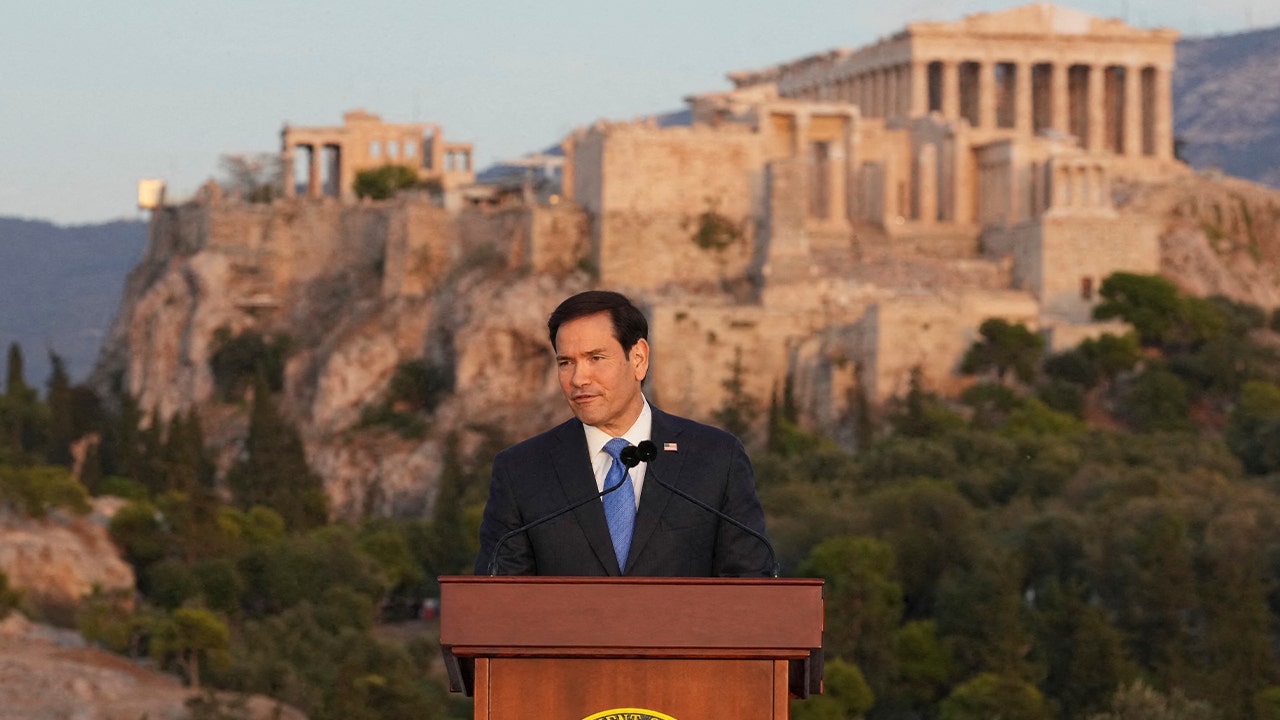
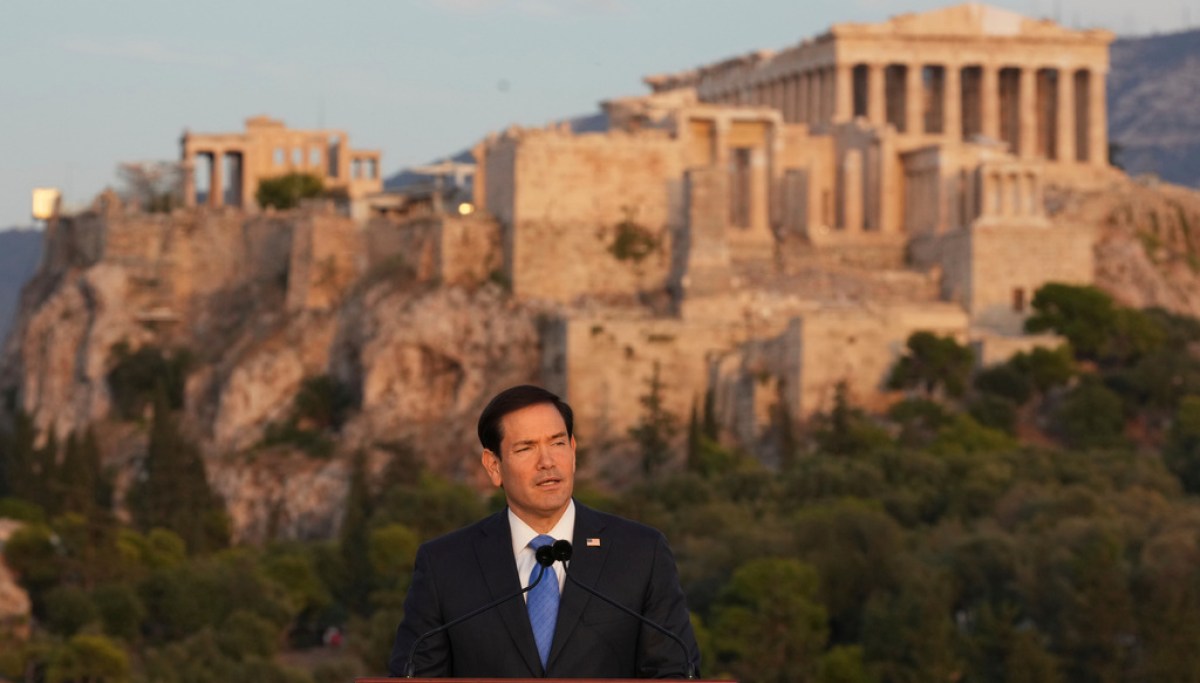
The backdrop was perfect: the Acropolis at sunset, bathed in golden light. asserted
backdrop → bath → light
And the goal was ambitious: to rekindle confidence in Western traditions and institutions as we confront authoritarian regimes in China and Russia, Islamic theocracies in the Middle East, and Islamist movements increasingly challenging those traditions within Europe itself. asserted
we → rekindle → Europe
Secretary of State Marco Rubio gave a great speech. asserted
Rubio → give → speech
But one paragraph fell short, at least for me. asserted
paragraph → fall → me
“Here, in Athens, we found the first full realization of all the essential traits that would come to define the West,” Rubio claimed. asserted
Rubio → find → West
An insatiable curiosity about the world and the principles by which it operates, a hunger to know the mysteries of nature and grasp the secrets of the cosmos. asserted
it → operate → cosmos
They were the characteristic of a people — expressed in their traditions, their stories, their imagination; in the qualities they demanded of their citizens; in the things they lived and fought and died for. asserted
they → express → things
After abandoning his wife and child to pursue spiritual enlightenment, he taught his later followers not to accept a belief simply because it came from tradition, scripture, or a respected teacher. asserted
it → abandon → tradition
Instead, they were to examine ethical questions using their own independent judgment. asserted
they → examine → judgment
Fierce individuality was hardly confined to the West. asserted
individuality → confine → West
As for relentless ambition, does anyone think Genghis Khan lacked it? asserted
Khan → think → it
After uniting the Mongol tribes, he launched conquests across northern China and Central Asia. asserted
he → unite → China
His successors extended those conquests still further. asserted
successors → extend → conquests
Alexander the Great may have conquered the Persian Empire, but he hardly had a monopoly on ambition. uncertain
he → conquer → ambition
Then there is Ibn al Haytham, the 11th-century Muslim scholar whose investigations transformed the understanding of light and vision. asserted
investigations → be → light
His work embodied precisely the curiosity about “the world and the principles by which it operates” that Rubio celebrates. asserted
Rubio → embody → that
The desire to uncover nature’s secrets is a human impulse, evident wherever people tinker with their surroundings and ask how things work. asserted
things → uncover → surroundings
And the uniqueness did start in Greece. asserted
uniqueness → start → Greece
But Rubio never identifies it. asserted
Rubio → identify → it
In 595 B.C., a statesman named Solon was put in charge of the Athenian army during a war with the rival city-state of Megara. asserted
statesman → name → Megara
After defeating the Megarians, Solon was named archon of Athens, and he swiftly enacted wide-ranging reforms that changed the course of history. asserted
that → defeat → history
On the political front, Solon expanded membership in the citizen assembly, known as the Ekklesia, to all but the poorest citizens. asserted
Solon → expand → citizens
The Ekklesia had the power to declare war, select military leaders, pass general legislation, and hold public officials accountable at public trials. asserted
officials → have → trials
Under Solon’s new rules, the small farmers who equipped themselves as hoplites for war could now be part of this ruling body regardless of family ancestry. uncertain
who → equip → ancestry
Solon further weakened the aristocracy by ending the practice of debt slavery and canceling all mortgages. asserted
Solon → weaken → mortgages
This allowed many small farmers to avoid losing their land to wealthy families. asserted
farmers → allow → families
But the most important of Solon’s reforms had to do with marriage. asserted
important → have → marriage
Previously, wealthy aristocrats could keep as many concubines as they wanted and adopt the offspring from those women as they pleased. uncertain
they → keep → women
Solon did not make sex outside of marriage illegal, but he did attach real penalties to fathering children with women other than a citizen’s wife. asserted
he → make → wife
Under Solon’s law, only legitimate children produced within marriage could become citizens, thus preventing wealthy men from adopting their own illegitimate children from their concubines. “By attaching legal disabilities to bastardy, Solon’s laws effectively discouraged aristocrats and the wealthy from producing excessively large families,” University of Southern California classics professor Susan Lape writes. uncertain
Lape → produce → California
“In so doing, the legislation foreclosed a source of elite power. asserted
legislation → do → power
It was no longer possible to convert material resources or economic power into reproductive power and hence into political power.” asserted
It → convert → power
More importantly, Solon’s reforms created a new spirit of equality among all citizens that paved the way for democracy. asserted
that → create → democracy
“By attaching privileges to legitimacy and disabilities to bastards, Solon’s laws put every citizen on the same reproductive footing. asserted
laws → attach → footing
Every man, no matter how wealthy or how poor, could only father legitimate children with one woman, his legitimate wife,” Lape writes. uncertain
Lape → father → woman
“For this reason, the norms of family membership can be correlated to an egalitarian ethos for citizen men. asserted
norms → correlate → men
Before Solon’s laws, people in Athens didn’t think of themselves as belonging to a political entity; they thought of themselves as being part of a lineage or family dynasty. asserted
they → think → lineage
By strengthening the conjugal family and creating a clear line between citizens and noncitizens, Solon furthered the emergence of a new Athenian political identity that transcended family ties. asserted
that → strengthen → ties
The Greeks, and the Romans after them, did not practice monogamy as we understand it today. asserted
we → practice → it
Women were expected to be virgins before marriage and were forbidden from having sex with anyone who wasn’t their husband, but the story was very different for men. asserted
story → expect → men
…and 16 more, not listed.
Give feedback · no sign-in needed

No sign-in needed for now. Your note is sent without a name, so it cannot be answered.

History Support