Photo via Times of India

Ancient school where Aristotle taught Alexander the Great has been unearthed by archaeologists in Greece

Read the original at Times of India ↗
Cite

TOI Science Desk. (2026, September 29). Ancient school where Aristotle taught Alexander the Great has been unearthed by archaeologists in Greece. Times of India. https://timesofindia.indiatimes.com/science/archaeology/a-2400-year-old-ancient-school-where-aristotle-taught-alexander-the-great-has-been-unearthed-by-archaeologists-in-greece/articleshow/134557194.cms

Dated when The Aporia collected the article, usually within hours of publication. Check the original for its exact date and byline.

Times of India · collected 2026-09-29 · by TOI Science Desk

Quick Summary

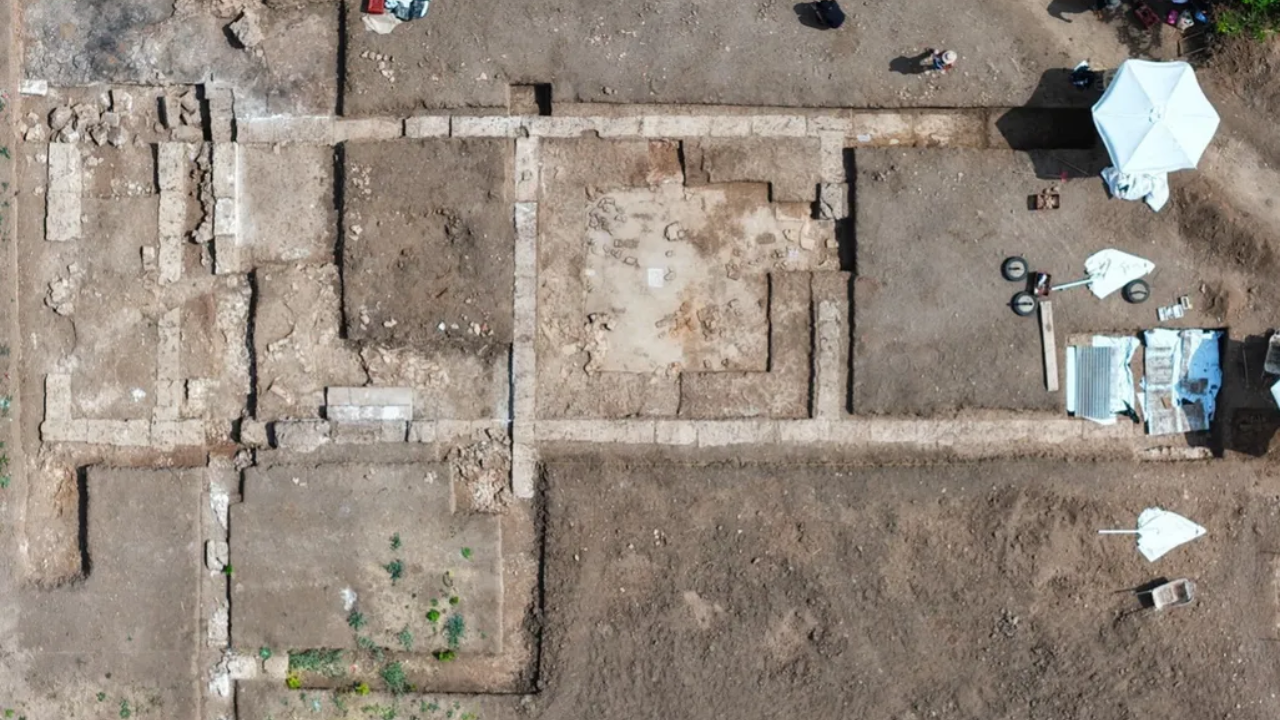
Archaeologists in northern Greece have unearthed parts of what is believed to be Alexander the Great's school where he was taught by Aristotle. This discovery includes ornate halls and teaching spaces within the 30-acre gymnasium complex at Mieza. The findings, part of a three-year excavation project led by Angeliki Kottaridi, director emerita with the Hellenic Ministry of Culture, reveal a large area called the Didaskaleion, featuring stone desks and styluses used for instruction. Adjacent banquet halls suggest social education was integral to the curriculum, mirroring aspects of Philip II’s palace at Aigai.
Written by AI on 2026-09-29, from this article's own text only (the story summary below draws on all the coverage).
See how they differ ↓

AI analysis

Story summary

In northern Greece, archaeologists have unearthed a significant site linked to Alexander the Great's early education. The excavations at Mieza, near the royal gymnasium complex, suggest this was where Aristotle taught young Alexander and other Macedonian nobles in the fourth century B.C. Greek officials announced findings of ornate halls with mosaic decorations and lecture rooms equipped with stone benches, indicating an educational center for future leaders. The three-year project has uncovered a 30-acre site including a palaestra (wrestling ring) and a xystus (covered walkway), providing new insights into the training and education of young Macedonian elites before Alexander's rise to power.

Written for “Ancient School of Alexander the Great” on 2026-11-22, grounded in this article and the 1 other(s) covering the same event.

How they differ

2 outlets covered “Ancient School of Alexander the Great”.

What each outlet says

One AI summary per outlet of its latest article on this story, written from that article alone and checked against it. Open the article for the outlet's own words.

Times of IndiaThis outlet29 Sep

Archaeologists in northern Greece have unearthed parts of what is believed to be Alexander the Great's school where he was taught by Aristotle. This discovery includes ornate halls and teaching spaces within the 30-acre gymnasium complex at Mieza. The findings, part of a three-year excavation project led by Angeliki Kottaridi, director emerita with the Hellenic Ministry of Culture, reveal a large area called the…

Ancient school where Aristotle taught Alexander the Great has been unearthed by archaeologists in Greece (this article)
New York Post29 Sep

New discoveries at Mieza, an ancient Macedonian city in Greece, reveal remains of a royal complex where young Macedonians, including possibly Alexander the Great, studied and trained. The Hellenic Ministry of Culture announced these findings in early September, with archaeologists uncovering evidence of expansive lecture rooms and dining areas dating back to Philip II’s reign in the fourth century B.C. This year's…

School tied to Alexander the Great discloses clues about his life before his rise to power →

Compared with similar articles

This article reads unscored and hedges 50% of its claims. Each row says how that neighbour differs.
New York Post
Hedges 2 of 23 claims Outlet record 66/100

Story

Ancient School of Alexander the Great
Education · 2 article(s) covering the same event. See how they differ ↑
How this article was measured signals, leaning charts, publisher record, byline, topics and claims

Signals How these are calculated →

Claims extracted
22
sentences that state something as happening or true
Uncertain
50%
11 of 22 hedged ("reportedly", "may", "according to")
Leaning
not political
takes no side on a contested political question
Publisher signals
58/100
Times of India's corrections and hedging, across everything collected from it. Not a measure of accuracy.
Outlets on this story
2
Education
Same framing elsewhere
1
articles that frame the event the way this one does
Analyzed 2026-09-29 · how these are computed

How this is being covered How these are calculated →

Article leaning vs. publisher reliability
Source leaning vs. consistency

Publisher

Times of India · 5589 article(s) · 7 correction(s) detected
Running correction rate · 7 correction(s)

Who wrote this

TOI Science Desk
338 article(s) here · 1 carrying a prediction
A string of amber flashes gives it away The first sighting was recorded on May 15, 2026, when an observer named Aljoscha Nern spotted male similar fireflies flashing over a meadow in Virginia.
What might look like a particularly crowded beach day is, in fact, a matter of survival for one of the Arctic's largest marine mammals.
Its vertebrae could have belonged to a prehistoric snake, an early relative of crocodiles or a young dinosaur.
The world today is such that we are able to track everything, from the flight of our loved ones to how long it would take for our food to arrive.
Under the project, the California Department of Fish and Wildlife along with the Yosemite Rivers Alliance will carve out four acres of new side channels and reconnect another sixteen acres of historic floodplain to the river.
They will be coming in raw excavated form with a lot of work still remaining to be done on them.
And while most people might hesitate before bringing home one rescued animal, Cramer once found herself looking after more than 600 baby turtles at once.
The study, conducted by the Beaver Trust and the University of Exeter, confirmed 349 territories and identified 56 more that may be occupied, bringing the total to as many as 405.
Although its external lettered dials could still turn, nobody had managed to find the correct combination since its discovery.
It states that, while they may be small, they are still extremely venomous, and that its experienced reptile team is handling them under the highest safety and care protocols.
Wire or desk byline, not an individual reporter.
Also by TOI Science Desk
Nothing else under this byline is closely related to this article, so these are simply their most recent.
All 338 articles by TOI Science Desk →

Topics

Greece Greek La Brújula Verde Macedonian Mieza

Subjects

Alexander GPE · 7× Aristotle PERSON · 4× Macedonian NORP · 4× Mieza GPE · 4× La Brújula Verde ORG · 3× Alexander the Great PERSON · 2× Philip II PERSON · 2× Alexander the Great's PERSON · 1× Greece GPE · 1× Greek NORP · 1×

Narrative

Kottaridi said that she believes these similarities are no coincidence; rather, they confirm that the complex at Mieza was expressly built by Philip II “for the education of his son Alexander and the children of the noble Macedonians.
framing: mixed · carried by 1 article(s) · first seen 2026-09-29
The vast halls or lavish seats where they may have sat as teacher and student?

Claims (22 extracted, 11 hedged)

History takes both of their names with great reverence and passes on their tales through generations. asserted
History → take → generations
But have you ever wondered exactly where this iconic duo shared their knowledge? asserted
duo → wonder → knowledge
The vast halls or lavish seats where they may have sat as teacher and student? uncertain
they → sit → teacher
During ongoing excavation in northern Greece, archaeologists have unearthed something that sheds light on the early years and education of Alexander the Great and his mentor, Aristotle. asserted
that → unearth → Alexander
In a recent statement, Greek officials announced that archaeologists working at the historical site of the royal gymnasium of Mieza have uncovered ornate, mosaic-decorated halls that may have formed part of Alexander's school. uncertain
that → announce → school
The recent discoveries are the latest in a three-year project that has been peeling back the layers of Mieza, where scholars claim Aristotle taught a teenage Alexander, according to a report by La Brújula Verde. uncertain
Aristotle → peel → Verde
Previous excavations revealed that the 30-acre gymnasium complex housed a palaestra or wrestling ring; a stadium; arcades and a xystus, a covered, 200-meter-long running track where athletes could train regardless of the weather. uncertain
athletes → reveal → weather
However, their most recent discovery may have been the most revealing yet, offering a previously unknown insight into the specifics of Alexander the Great's education. uncertain
discovery → offer → education
In the first century C.E., the ancient writer Plutarch wrote in his biography The Life of Alexander that Alexander’s father, the ruling king Philip II, had a school built for his son and other nobles in the Macedonian town of Mieza. asserted
school → write → Mieza
Although the complex is called a gymnasium, the ancient Greeks used these buildings for much more than just physical training, according to a report by Live Science. uncertain
Greeks → call → Science
A team of archaeologists led by Angeliki Kottaridi, director emerita of antiquities with the Hellenic Ministry of Culture, has uncovered a large area called the Didaskaleion, or “place of teaching,” where students learned using styluses and stone desks, according to La Brújula Verde. uncertain
students → lead → Verde
Archaeologists also uncovered two banquet halls adjacent to the teaching area: lavish rooms with mosaic tile floors and intricate finishes that mirror those of Philip II's palace at Aigai. asserted
that → uncover → Aigai
Kottaridi said that she believes these similarities are no coincidence; rather, they confirm that the complex at Mieza was expressly built by Philip II “for the education of his son Alexander and the children of the noble Macedonians. asserted
complex → say → Macedonians
The school’s layout also offers a glimpse into the structure and values of elite Macedonian education during the fourth century B.C.E., as per a report by the Greek Reporter. asserted
layout → offer → Reporter
It said the complex’s size and structure—combining athletic and instructional spaces—reveal the Mieza gymnasium’s status as a Macedonian educational institution. asserted
size → say → institution
The formal nature of the banquet halls, once fitted with reclining couches, suggests that social education played a central role in the schooling of Alexander and his peers, La Brújula Verde reported. uncertain
Verde → fit → Alexander
As they prodded the limits of Aristotelian logic and pushed the boundaries of physical strength, they also practised the refined mores necessary to host and attend “symposia,” the dining parties of the Macedonian elite. asserted
they → prod → elite
Earlier discoveries at the complex found pieces of pottery, old coins and assorted antiquities along with four bronze writing styluses that may have been used by Aristotle's students, potentially even by Alexander himself. uncertain
that → find → Alexander
Archaeologists also found fragments of containers meant to hold sacred olive oil from Athens, suggesting that students at the Mieza complex had access to one of the most valuable products in the Hellenic world. asserted
students → find → world
While the findings may not conclusively prove that the gymnasium is where Alexander learned his lessons, researchers are confident in the clues archaeologists have already amassed and hope more of such will turn up soon. uncertain
more → prove → such
“All the evidence suggests this is the school Philip provided for Aristotle to tutor the young Alexander and his fellow students,” Jeanne Reames, director of the ancient Mediterranean studies program at the University of Nebraska at Omaha, who was not involved in the research, told Live Science. uncertain
who → suggest → Science
As the excavation continues, she believes it will “shed more light on elite education in Macedonia in the second half of the fourth century B.C.E.” asserted
it → continue → B.C.E.
Give feedback · no sign-in needed

No sign-in needed for now. Your note is sent without a name, so it cannot be answered.

History Support