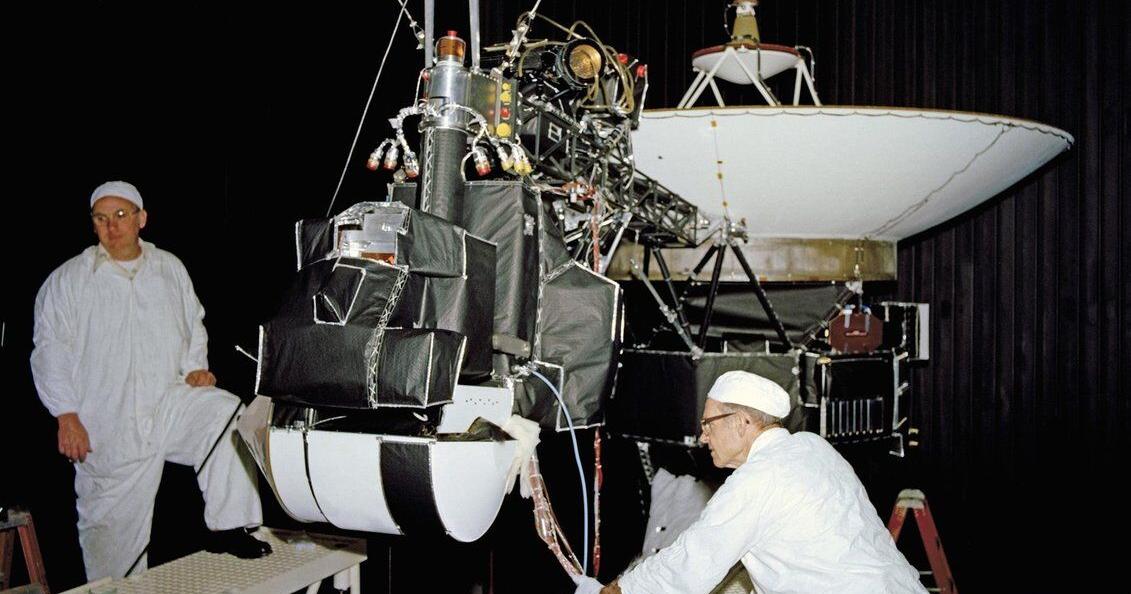
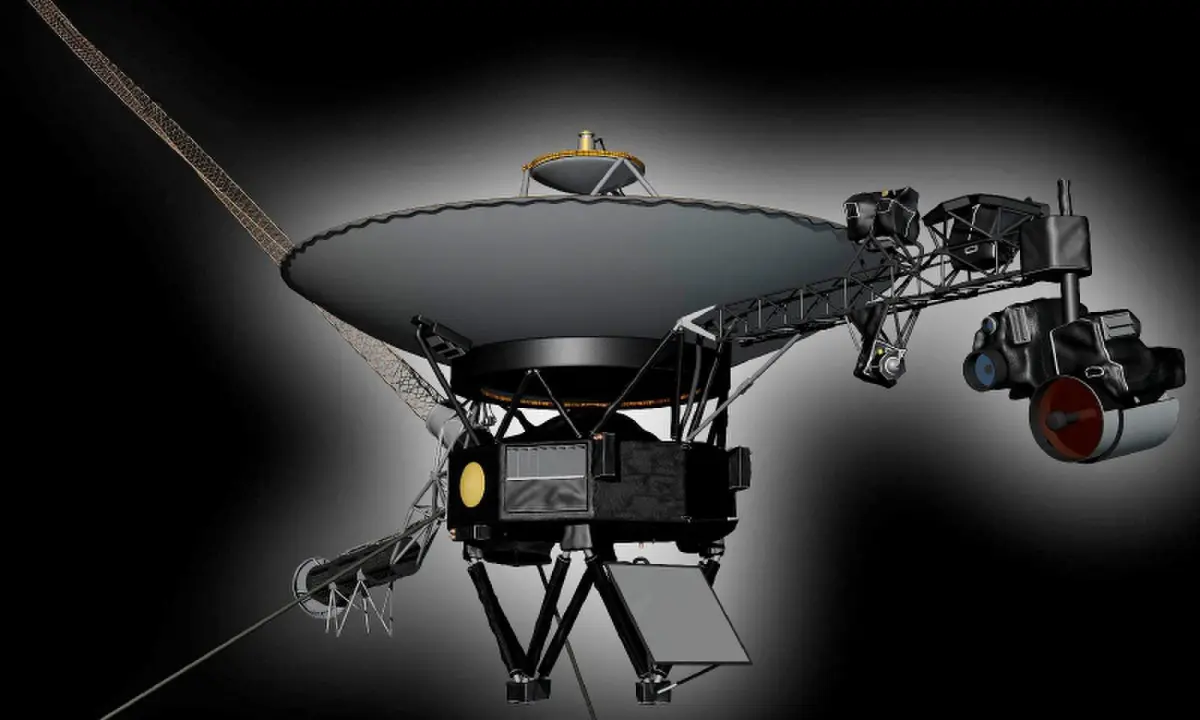
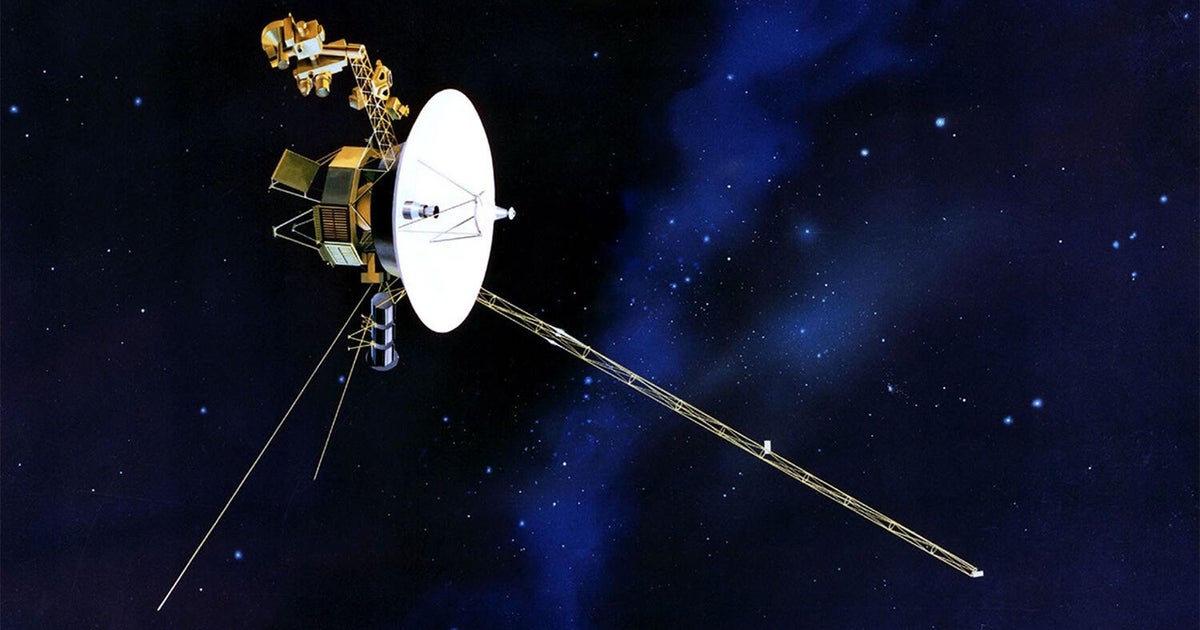
NASA's Voyager 1 probe, launched nearly a half century ago in 1977 to provide the first close-up views of Jupiter, Saturn and their assortment of moons, reached a distance from Earth early Wednesday of one light day — more than 16 billion miles — the farthest any human artifact has ever ventured from the home planet.
asserted
artifact → launch → planet
Its sister ship Voyager 2, on a different trajectory, added Uranus and Neptune to the outer planets "Grand Tour" before following its sibling out of the solar system and into interstellar space in 2018, six years after Voyager 1.
asserted
ship → add → Voyager
Both spacecraft continue to beam back data about the magnetic fields, charged particles and plasma waves in the space between the stars as their power steadily declines and their signals grow weaker and weaker.
asserted
signals → continue → stars
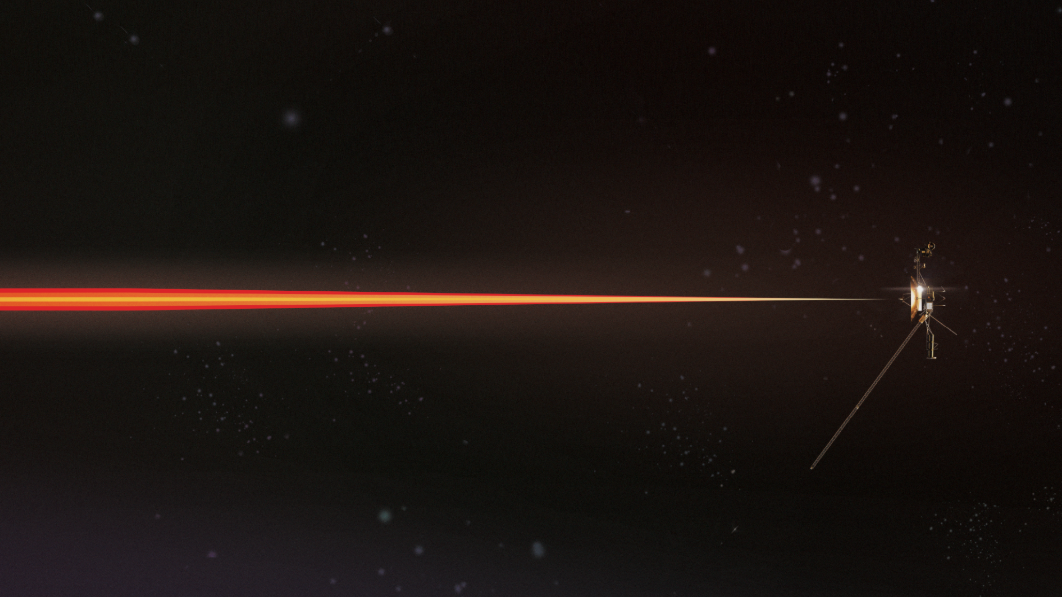
As of 5:16 a.m. EST Wednesday, Voyager 1, sailing through space at nearly 38,000 mph, was expected to pass the one-light-day milestone, so far away that radio signals, traveling at 186,000 miles every second, need 24 hours to reach flight controllers at NASA's Jet Propulsion Laboratory.
asserted
signals → sail → Laboratory
That means the 13-member team will have to wait until Thursday for Voyager 1's first post-light-day signal to confirm the achievement.
And what an achievement it is: No other space agency in the world has matched or even attempted a mission rivaling Voyager, one that many believe ranks with the Apollo moon landings as one of the greatest feats of American space flight.
asserted
many → have → flight
"It's difficult to describe, difficult to put into words," said Voyager Interstellar Mission Manager Kareem Badaruddin, one of just three full-time team members keeping the aging Voyagers healthy and their antennas aimed at Earth.
asserted
antennas → describe → Earth
"I feel like this mission is one of the great things that people have ever done, that humans have ever done.
asserted
humans → feel → that
"All of us, every person, whether they've worked on this mission or not, can take some some pride in it and can feel like this is a part of what our civilization has accomplished."
It's not known how long the Voyagers will continue to function as the plutonium in their nuclear power packs steadily decays.
asserted
plutonium → work → packs
With luck and clever management, engineers hope to keep the data flowing for several more years before the signals finally stop.
asserted
signals → hope → years
Voyager 1 started out with about 470 watts of power.
asserted
Voyager → start → power
That's down to a little more than 210 watts now, enough to run just two of its 10 instruments while keeping the spacecraft properly oriented so it can beam magnetometer and plasma wave data back to Earth.
asserted
it → run → Earth
Voyager 2 has a slightly more powerful generator and is operating on a bit more than 230 watts, enough to keep three instruments running.
asserted
Voyager → have → instruments
But even after the power is exhausted, both Voyagers will continue on their way, expected to remain roughly intact, if powerless, for a billion years or more, almost certainly outlasting human civilization.
asserted
Voyagers → exhaust → civilization
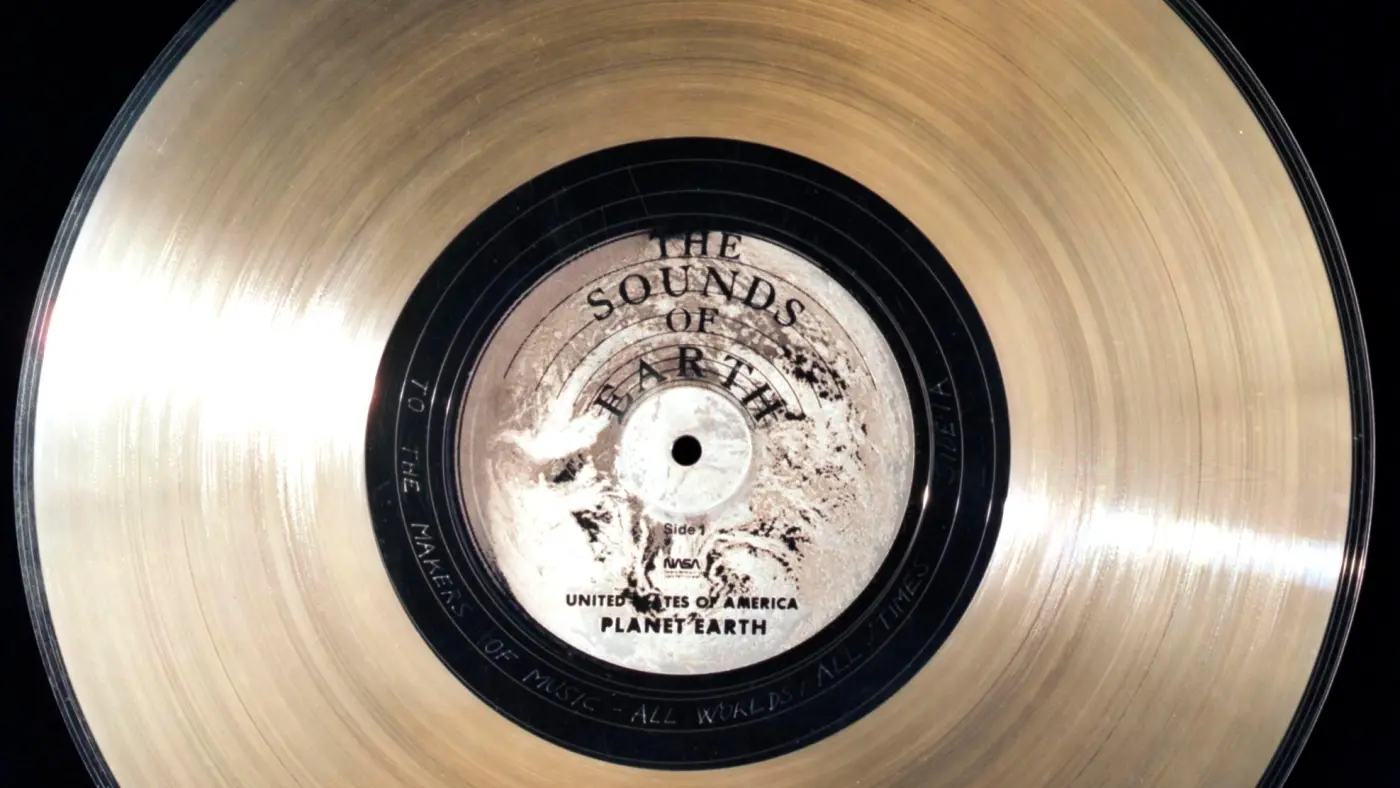
On the remote chance any aliens might one day stumble upon a Voyager in the cold reaches between the stars, both spacecraft are carrying what amount to messages in a bottle, gold phonograph records encoded with the sights and sounds of planet Earth.
uncertain
what → stumble → Earth
The records include greetings in 55 languages, 115 photos of Earth's people, wildlife and technology, representative natural sounds and carefully selected art and music from multiple cultures, everything from J.S. Bach to Navajo chants to Chuck Berry singing "Johnny B. Goode."
asserted
Berry → include → Goode
"If Voyager should, sometime in its distant future, encounter beings from some other civilization in space, it bears a message, a phonograph record ... with instructions for use," Carl Sagan, the late astronomer who led the golden record project, said in the 1980 "Cosmos" television series.
"
asserted
who → encounter → series
Now beyond the confines of Earth's solar system, the stream of ones and zeros describing the interstellar environment leave Voyager 1's 12-foot-wide dish antenna with less than half the power used by a typical 40-watt refrigerator bulb.
asserted
stream → describe → bulb
By the time the signal reaches Earth 24 hours later, its strength is a tiny fraction of a trillionth of a watt, vastly less than the power needed to run a wristwatch — a signal so weak that giant 230-foot-wide antennas in NASA's globe-spanning Deep Space Network are needed to pull in the faint whispers.
asserted
antennas → reach → whispers
Commands from flight controllers at JPL now take a full day to reach the spacecraft with another 24 hours required to find out if the commands were received and acted upon.
asserted
commands → take → spacecraft
Fixing a problem is a glacial, nail-biting affair.
asserted
Fixing → fix → problem
"If you want to say 'hello' to Voyager, you send your message and then you go home and you wait two days before you finally get a response," Suzanne Dodd, the Voyager project manager at JPL, said in a web posting.
asserted
Dodd → want → posting
Voyager 1 and Voyager 2 are powered by electricity generated through the decay of radioactive plutonium 238 in compact nuclear power plants known as radioisotope thermoelectric generators, or RTGs.
asserted
Voyager → power → generators
Both spacecraft have slowly but steadily lost power as the plutonium in their RTGs has decayed.
asserted
plutonium → lose → RTGs
Flight controllers closely manage the available power and the resulting heat needed to keep fuel lines from freezing so thrusters can fire when needed to keep the spacecraft -- and their dish antennas -- locked onto Earth.
asserted
thrusters → manage → Earth
Badaruddin said the small flight control team feels the weight of responsibility for keeping the Voyagers alive.
asserted
team → say → Voyagers
"If ever you get that sense that oh, I made a mistake, I'm the one who caused a problem for the spacecraft, that's crushing," he said.
asserted
he → get → spacecraft
"Every one of the team members feels they're committed to doing everything in our power to do our best for these spacecraft.
asserted
they → feel → spacecraft
We're doing everything we can to keep them going for as long as we can."
asserted
we → do → them
Two are retirees who worked on the project at launch and came back to help during the interstellar voyage while the rest split their time between Voyager and other projects.
asserted
rest → work → Voyager
"I've been at JPL for 32 years, and everybody loves their spacecraft, and everybody feels like it's a family member and gives everything they've got for it," said Badaruddin.
asserted
Badaruddin → love → it
And these two retirees have come back and given a tremendous amount of effort and time."
The Voyager program was approved in the early 1970s when the outer planets were lined up in a way that would permit a so-called "Grand Tour" of them, enabling spacecraft to make velocity-boosting flybys to jump from one planet to the next, shaving years off the time needed to explore them all.
But to reduce costs, the project was only funded for flybys of Jupiter and Saturn.
asserted
project → come → Jupiter
Voyager 1 followed on Sept. 5.
asserted
Voyager → follow → Sept.
Voyager 1 was on a faster trajectory and reached Jupiter first as planned, flying past the giant planet in 1979, sending back spectacular images of its Great Red Spot — a storm that has been churning for centuries, the planet's turbulent atmosphere and its major moons, including detailed looks at Europa, where an icy crust is thought to shield a global ocean, and Io, found to be the most volcanic world in the solar system.
asserted
crust → reach → system
It then flew on to Saturn, wowing astronomers with fantastically detailed photos of the solar system's most spectacular planet, sending back never-before-seen views of its rings, small moons that shepherd the ring particles along, the planet's atmosphere and, as it departed, cloud-shrouded Titan.
asserted
it → fly → particles
With the successful Titan flyby and the completion of the mission's major objectives, NASA approved sending Voyager 2 on a gravitational slingshot past Saturn and on to Uranus and Neptune in 1986 and 1989, respectively.
asserted
NASA → approve → 1986
On Valentine's Day 1990, Voyager 1's cameras were used a final time to take a family portrait of the six largest planets -- Venus, Earth, Jupiter, Saturn, Uranus and Neptune -- from a distance of 3.7 billion miles.
asserted
cameras → use → miles
Earth appeared as little more than a blue dot in the pinkish glow of reflected light within the camera.
asserted
Earth → appear → camera
That's us," Sagan said of the photo.
asserted
Sagan → say → photo
"On it everyone you love, everyone you know, everyone you ever heard of, every human being who ever was, lived out their lives ... on a mote of dust suspended in a sunbeam."
asserted
who → love → sunbeam
He concluded by saying "there is perhaps no better demonstration of the folly of human conceits than this distant image of our tiny world.
asserted
He → conclude → world
…and 11 more, not listed.
 The Aporia