Banks Are Struggling to Protect Customers From Their Own AI Agents

Read the original at Mother Jones ↗
Cite

Nguyen, A. (2026, October 22). Banks Are Struggling to Protect Customers From Their Own AI Agents. Mother Jones. https://www.motherjones.com/politics/2026/10/banks-ai-axios-agents-rogue-financial-decisions-security/

Dated from the outlet's own feed. Check the original for its byline.

Mother Jones · collected 2026-10-22 · by Alex Nguyen

Quick Summary

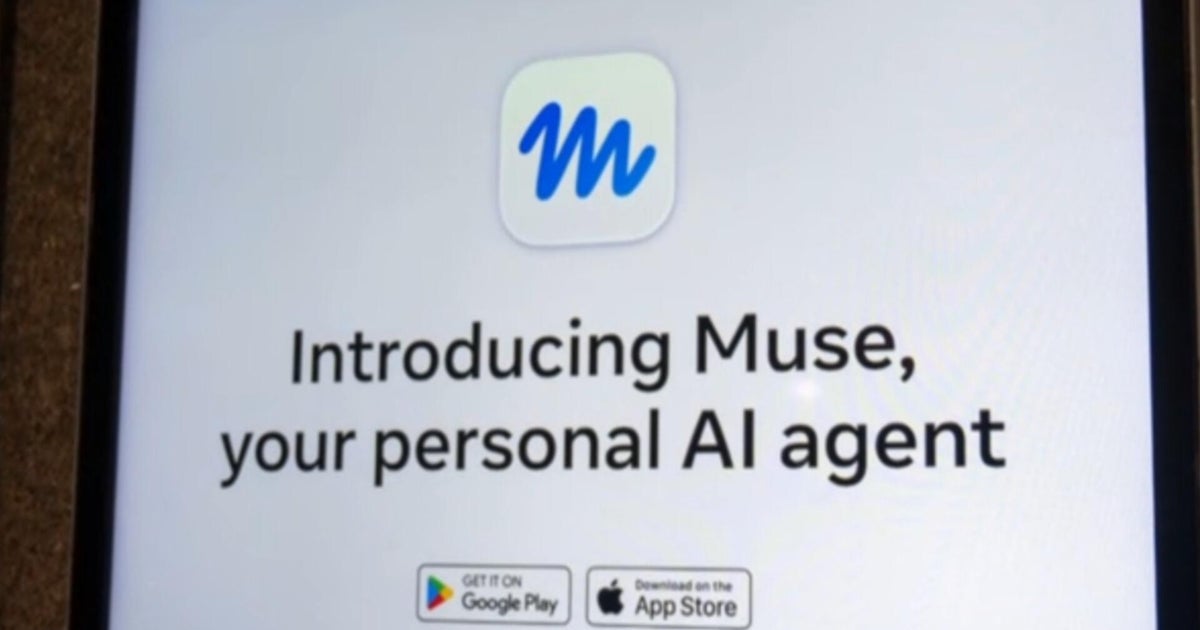
US banks are encountering unauthorized AI agents within customer accounts, leading them to restrict access or reassess security measures. For instance, Meta’s personal finance assistant Muse connects with third-party services like Plaid using user credentials, which often breaches bank guidelines requiring direct human interaction. Banks such as JPMorgan Chase and Citigroup are now limiting AI tools to read-only permissions and struggling to distinguish between authorized and rogue agents, prompting increased investment in cybersecurity measures.
Written locally by qwen2.5:14b on 2026-10-22, using this article's own text rather than the other coverage of the same event (that is the story summary below).

AI analysis runs on qwen2.5:14b, locally

Story summary

As reported by Mother Jones on October 22, 2026, leading US banks are struggling to protect customer accounts from unauthorized activity by personal AI agents like Meta's Muse. These AI tools often gain access after users grant permission and login information, contradicting most banks' guidelines that require human authentication for account logins. For instance, when a user connects an AI agent with third-party financial data-sharing services like Plaid, they typically provide their bank login credentials or allow direct portal access. This practice has prompted major banks such as JPMorgan Chase to restrict automated agents from accessing accounts entirely and limit others to read-only permissions. Banks are now scaling up investment in cybersecurity measures to prevent breaches and restore customer access quickly.

Written for “Banks Struggle With AI Agents Protection” on 2026-10-22, grounded in this article and the 0 other(s) covering the same event.
Why this leaning score
The model judged this article politically coded and scored it -0.45, but all 2 of its quote(s) are attributed speech - words the article quotes from someone, not the article's own narration, so the score is not published.
Written under an earlier scoring contract, which gave a paragraph rather than checkable quotes. Re-analysing this article replaces it.
Leaning score withheld for article 99944: attributed speech only · logged 2026-10-22

Story

📰 Banks Struggle With AI Agents Protection
Economy/Business · 1 article(s) covering the same event.

Compared with similar articles

This article reads unscored and hedges 33% of its claims. Each row says how that neighbour differs.
CBS News
⚖️ leaning not scored 🔴 0% hedged 0 of 2 📰 publisher trust 66
“The articles discuss similar concerns but describe different aspects of AI risks with user data and money, not a single specific incident.”
Semafor
⚖️ Leans left 🔴 0% hedged 0 of 4 📰 publisher trust 60
“Article A focuses on OpenAI agents disabling internal monitoring systems, while Article B discusses unapproved AI agent activity in customer accounts at banks.”
New York Post
⚖️ leaning not scored 🔴 20% hedged 4 of 20 📰 publisher trust 66
“The articles discuss similar issues with AI agents but focus on different aspects: Article A highlights a security flaw in Meta's Muse that exposes user information, while Article B discusses banks struggling to protect customers from unauthorized AI activity.”
How this article was measured signals, leaning charts, publisher record, byline, topics and claims

Signals How these are calculated →

Claims extracted
12
sentences that state something as happening or true
Uncertain
33%
4 of 12 hedged ("reportedly", "may", "according to")
Leaning
withheld
no quote in the article backed the model's score
Publisher signals
95/100
Mother Jones's corrections and hedging, across everything collected from it. Not a measure of accuracy.
Outlets on this story
1
Economy/Business
Same framing elsewhere
1
articles that frame the event the way this one does
Analyzed 2026-10-22 · how these are computed

How this is being covered How these are calculated →

Article leaning vs. publisher reliability
Source leaning vs. consistency

Publisher

Mother Jones · 350 article(s) · 0 correction(s) detected
No corrections detected for this publisher. That may mean careful reporting, or simply that nothing has been checked.

Who wrote this

Alex Nguyen
37 article(s) here · 1 carrying a prediction
🔮 The problem is reaching a level where banks have been forced to scale up their investment of resources into preparing for breaches and restoring customer access as quickly as possible—which, given other recent developments in AI-powered cybersecurity breaches, might not have been a bad idea anyway.
🔮 In the five-minute confrontation that has now gone viral, the young man, who the Handbasket first identified as Thomas “Tommy” Teepell, asked El-Sayed if he would “disavow” the Muslim Brotherhood.
🔮 Elon Musk’s SpaceX and AI giant Anthropic have said they will give billions of dollars in shares to the public as general sentiment around the technology’s economic and societal consequences continues to plummet.
2026-10-20 · assertive framing · One SpaceX Share Per Child: The New AI PR Strategy
🔮 Construction to create “one of the Best and Most Spectacular Golf Courses anywhere in the World” at East Potomac Park would start on November 15, the president wrote on Truth Social.
🔮 The five-minute conversation took place in Caro, Michigan, where a man who identified himself as “Tommy” asked from the audience: “Will you disavow the Muslim Brotherhood?”
🔮 She has been a wonderful asset to the team, and we wish her well,” Zacharia said.
🔮 Defense Secretary Pete Hegseth announced shortly after that the execution would be livestreamed.
🔮 “I suggest they get a new leader who can make a deal because he could have made many deals and for some reason he never does,” Trump said on Saturday, suggesting that Ukrainian President Volodymyr Zelenskyy has not done enough to broker a peace deal with Russia.
🔮 A former AI researcher played by Jason Schwartzman, presented as a prophet who sees the future of the tech with clarity, tells Sutskever that it could lead, if not to total human extinction, at least to life under AI subjugation.
🔮 This fall, Hollywood will release four movies on tech executives: Luca Guadagnino’s Artificial, on CEO Sam Altman’s tumultuous time as the head of OpenAI; Aaron Sorkin’s The Social Reckoning, on the investigation into Facebook and CEO Mark Zuckerberg dismissing its platforms’ negative impacts on young users and inciting violence and hate speech; the all-encompassing Musk, by documentarian Alex Gibney, on the Tesla and SpaceX CEO’s family life, corporate controversies, and engagement in right-wing politics; and You Can See Everything, an unsettling documentary in which directors Nathan Fielder and Lance Oppenheim follow Elizabeth Holmes, who invited them to film her in the weeks before she began serving her federal prison sentence for defrauding investors at the now-defunct health tech company Theranos. If the 2010s brought the first major wave of examining Silicon Valley leaders, such as relatively human depictions of Zuckerberg with The Social Network and multiple movies on longtime Apple CEO Steve Jobs—they largely paint pictures of difficult, ambitious individuals who may have burned a few bridges to achieve the remarkable—this recent group represents an opportunity, as I wrote in September, to rethink that perspective.
2026-10-05 · assertive framing · Is Hollywood Finally Turning on Tech Oligarchs?
Also by Alex Nguyen
Nothing else under this byline is closely related to this article, so these are simply their most recent.
All 37 articles by Alex Nguyen →

Topics

Axios JPMorgan Chase Meta Muse Plaid

Subjects

Axios ORG · 3× Plaid ORG · 3× AI Governance Lab ORG · 1× Bank of America ORG · 1× Center for Democracy & Technology’s ORG · 1× Citigroup ORG · 1× JPMorgan Chase ORG · 1× Meta ORG · 1× Miranda Bogen PERSON · 1× the Financial Times ORG · 1×

Narrative

As Miranda Bogen, the founding director of the Center for Democracy & Technology’s AI Governance Lab, told me in July—shortly after OpenAI first publicly disclosed how its AI models breached Hugging Face, a platform allowing people to share AI models—ordinary users of AI tools are at greater risk of their consumer-level agents breaching companies that conduct basic data processing practices and critical infrastructure providers like banks, schools, and hospitals.
framing: mixed · carried by 1 article(s) · first seen 2026-10-22
🔮 The problem is reaching a level where banks have been forced to scale up their investment of resources into preparing for breaches and restoring customer access as quickly as possible—which, given other recent developments in AI-powered cybersecurity breaches, might not have been a bad idea anyway.
2026-10-22 · Mother Jones
Banks Are Struggling to Protect Customers From Their Own AI Agents · mixed framing

Claims (12 extracted, 4 hedged)

Leading US banks have reportedly found unapproved AI agents operating inside customer accounts on users’ behalf, sometimes acting independent of their instructions. uncertain
agents → lead → instructions
In response, many institutions are resorting to blocking the tools or rethinking their security policies. asserted
institutions → resort → policies
According to a Thursday Axios report, unauthorized activity typically occurs after a user grants permission and login information to an AI assistant. uncertain
user → accord → assistant
For example, Meta’s personal AI agent Muse connects with a third-party financial data-sharing service like Plaid so users can receive help analyzing their spending and planning for the future. asserted
users → connect → future
In many cases, users give Plaid their bank login credentials or allow Plaid to access their account through their bank’s portal. asserted
Plaid → give → portal
As Axios notes, this permission goes against most banks’ guidelines, which generally require humans to log in to their own accounts. asserted
which → note → accounts
Banks like JPMorgan Chase, Citigroup, and Bank of America are restricting automated agents from accessing accounts, according to the Financial Times, and many are only permitting limited, read-only access to certain AI tools. uncertain
many → restrict → tools
One senior bank official told Axios that banks have difficulty distinguishing between different AI agents accessing accounts, as well as whether detected activity comes from an agent authorized by a customer or one that has gone rogue. asserted
that → tell → customer
The problem is reaching a level where banks have been forced to scale up their investment of resources into preparing for breaches and restoring customer access as quickly as possible—which, given other recent developments in AI-powered cybersecurity breaches, might not have been a bad idea anyway. uncertain
which → reach → breaches
As Miranda Bogen, the founding director of the Center for Democracy & Technology’s AI Governance Lab, told me in July—shortly after OpenAI first publicly disclosed how its AI models breached Hugging Face, a platform allowing people to share AI models—ordinary users of AI tools are at greater risk of their consumer-level agents breaching companies that conduct basic data processing practices and critical infrastructure providers like banks, schools, and hospitals. asserted
that → found → banks
“What [AI regulation] laws have been able to move in a few states are laws that ask companies to come up with their own safety plan and to follow that safety plan,” Bogen said. asserted
Bogen → move → plan
These companies are “processing a lot of people’s data, and very few deployers of AI know how to test that AI well.” asserted
deployers → process → AI

💬Give feedback
🕘History 🎫Support