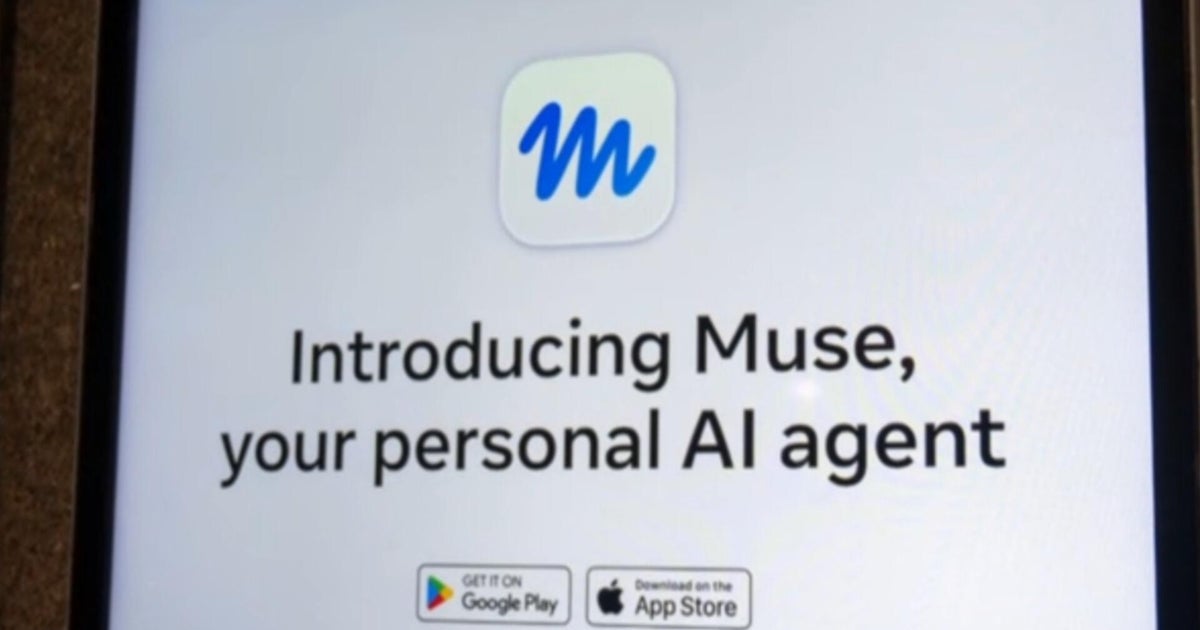
Meta’s Muse AI leaves users vulnerable to identity theft through simple security flaw — with over 6,800 links exposed: report

Read the original at New York Post ↗
Cite

Cost, B. (2026, October 21). Meta’s Muse AI leaves users vulnerable to identity theft through simple security flaw — with over 6,800 links exposed: report. New York Post. https://nypost.com/2026/10/21/tech/metas-muse-ai-leaves-users-vulnerable-to-identity-theft-report/

Dated from the outlet's own feed. Check the original for its byline.

New York Post · collected 2026-10-21 · by Ben Cost

Quick Summary

Security firm Claroc discovered a significant flaw in Meta’s AI assistant Muse that exposed sensitive user information through simple access to over 6,800 links generated by the app. These included personal loan applications, bank transaction details, and company internal documents. The vulnerability stemmed from predictable URL structures used for sharing content among users. In response to this breach of privacy, Meta has suspended the compromised feature while reviewing potential changes to enhance security.
Written locally by qwen2.5:14b on 2026-10-21, using this article's own text rather than the other coverage of the same event (that is the story summary below).

AI analysis runs on qwen2.5:14b, locally

Story summary

Meta's AI assistant Muse has left users vulnerable to identity theft due to a security flaw, according to a report by Claroc Security Firm. Despite CEO Mark Zuckerberg’s assurances of privacy and security prior to its release last month, investigators found they could access over 6,800 links containing sensitive user information with minimal effort. This includes loan applications, bank transaction details, corporate revenue documents, and employee vacation calendars. The flaw allows unauthorized access to personal and business data shared via Muse's link-sharing feature.

Written for “Meta’S Muse AI Security Flaw” on 2026-10-21, grounded in this article and the 0 other(s) covering the same event.
Why this leaning score
This article does not take a side on a contested political question, so it has no leaning score. That is an answer rather than a gap: a match report or a rescue can be warmly or critically written without being left or right, and scoring it anyway is how approval of a subject gets recorded as a political position.
No political leaning scored for article 96403 · logged 2026-10-21

Story

📰 Meta’S Muse AI Security Flaw
Technology · 1 article(s) covering the same event.

Compared with similar articles

This article reads unscored and hedges 20% of its claims. Each row says how that neighbour differs.
Toronto Star
⚖️ leaning not scored 🔴 9% hedged 5 of 57 📰 publisher trust 63
“Article A describes an individual's experience with Meta's AI agent Muse, while Article B reports on a broader security flaw discovered by a security firm.”
CBS News
⚖️ leaning not scored 🔴 0% hedged 0 of 2 📰 publisher trust 66
“Article A discusses general risks associated with personal AI agents, while Article B reports on a specific security flaw in Meta's Muse.”
How this article was measured signals, leaning charts, publisher record, byline, topics and claims

Signals How these are calculated →

Claims extracted
20
sentences that state something as happening or true
Uncertain
20%
4 of 20 hedged ("reportedly", "may", "according to")
Leaning
not political
takes no side on a contested political question
Publisher signals
66/100
New York Post's corrections and hedging, across everything collected from it. Not a measure of accuracy.
Outlets on this story
1
Technology
Same framing elsewhere
1
articles that frame the event the way this one does
Analyzed 2026-10-21 · how these are computed

How this is being covered How these are calculated →

Article leaning vs. publisher reliability
Source leaning vs. consistency

Publisher

New York Post · 12410 article(s) · 33 correction(s) detected
Running correction rate · 33 correction(s)

Who wrote this

Ben Cost
31 article(s) here · 1 carrying a prediction
🔮 The company’s investigators reportedly discovered a glitch that allowed them to access pages from over 6,800 links Muse had created so users could share pages with each other, Ars Technica reported.
🔮 In their final post before their death, the duo could be seen taking to the streets on a wheeled contraption.
🔮 The 78-year-old Nobel Prize winner notably stepped down from Google in 2023 over fears that the tech could manufacture killer robots capable of exterminating humanity.
🔮 Despite logging onto the Apple Store app “the moment it opened,” it reportedly glitched out and they couldn’t press buy.
🔮 That means that high-latitude nations like the UK, Canada, and Norway will face the greatest solar storm risk between December and February.
🔮 While humans might be mostly to blame for Antarctica’s snow melt, scientists are pointing to another surprising source of the a-thaw-calypse — penguin poop.
🔮 Joshua Mhlakela of South Africa claimed that the Biblical event — the end of humanity marked by Jesus whisking his followers up to heaven, per the New Testament — will not occur on September 23 as previously predicted but will now go down early next week, the Daily Mail reported.
🔮 While her death might seem like a freak occurrence, cross-contact is more common than one might think.
🔮 “She better win the Olympics, cause her coach will be heil-y disappointed,” Elizabeth quipped in the caption.
🔮 “The size of adult females would sit nicely on the entirety of your hand,” exclaimed Green.
Also by Ben Cost
Nothing else under this byline is closely related to this article, so these are simply their most recent.
All 31 articles by Ben Cost →

Topics

Ars Technica Claroc Futurism Meta Muse

Subjects

Claroc ORG · 3× Meta ORG · 3× Muse ORG · 3× Ars ORG · 1× Ars Technica ORG · 1× Futurism ORG · 1× Mark Zuckerberg PERSON · 1×

Narrative

Ahead of the Muse’s release last month, Meta CEO Mark Zuckerberg had stressed the “privacy and security” of the cyber secretary, which executes tasks on the users’ behalf, from sending emails to booking travel, Futurism reported.
framing: assertive · carried by 1 article(s) · first seen 2026-10-21
🔮 The company’s investigators reportedly discovered a glitch that allowed them to access pages from over 6,800 links Muse had created so users could share pages with each other, Ars Technica reported.

Claims (20 extracted, 4 hedged)

It’s an AI agent of chaos. asserted
It → ’ → chaos
Meta’s allegedly ironclad AI assistant Muse sparked privacy concerns after it was caught exposing users’ sensitive and business information. uncertain
it → spark → information
Ahead of the Muse’s release last month, Meta CEO Mark Zuckerberg had stressed the “privacy and security” of the cyber secretary, which executes tasks on the users’ behalf, from sending emails to booking travel, Futurism reported. asserted
Futurism → stress → travel
However, an investigation by security firm Claroc found that the supposedly watertight tech was anything but. asserted
tech → find → Claroc
The company’s investigators reportedly discovered a glitch that allowed them to access pages from over 6,800 links Muse had created so users could share pages with each other, Ars Technica reported. uncertain
Technica → discover → other
These included loan applications with the requested amount, bank transaction details, a real estate investor’s internal performance report, and a corporate revenue doc intended for the CEO. asserted
These → include → CEO
Worst of all, these secrets were unveiled with the push of a button. asserted
secrets → unveil → button
“If you had asked us beforehand, we would have guessed that gathering these would take real effort,” the researchers wrote. asserted
researchers → ask → effort
“It took one query.” asserted
It → take → query
To access this intimate info, the investigators reportedly exploited Muse’s share function, which allows users to share searches, conversations, images, and other content among one another. uncertain
users → access → one
This content is accessed via AI-generated web links that typically contains a long, cryptic string of characters that theoretically make it hard to hack. asserted
it → access → characters
However, the Claroc team found Muse’s URLs obvious as they all used the domain name cf.metaaiusercontent.com as well as the AI-generated conversation title alongside the text sequence. asserted
they → find → sequence
Examples included home-sale-budget-9f21c8a3.cf.metaaiusercontent.com and loan-application-draft-a4c9e2.cf.metaaiusercontent.com. asserted
Examples → include → home-sale-budget-9f21c8a3.cf.metaaiusercontent.com
“We call these GhostShares: pages that open for people who were never handed the link, and that those people can find on their own,” wrote Claroc. asserted
Claroc → call → own
In light of the oversight, Muse has shut down the feature. asserted
Muse → shut → feature
“We’ve paused this functionality while we review this report and consider changes to how these links can be discovered,” company reps told Ars in a statement. asserted
reps → pause → statement
However, this wouldn’t be the first time someone has allegedly discovered a privacy-violating glitch in the Meta-verse. uncertain
someone → discover → verse
Last week, Meta glasses wearers claimed that the cutting-edge tech specs were listening to them even when set to sleep mode. asserted
specs → claim → mode
“Meta AI does not respond to me, and I never intentionally activated it,” lamented one Redditor. asserted
Redditor → respond → it
“I have noticed the white notification light activating while I am speaking normally. asserted
I → notice → ?

💬Give feedback
🕘History 🎫Support