Photo via Washington Examiner

Two alliances just failed Saudi Arabia. Then they called Trump

Read the original at Washington Examiner ↗
Cite

Gelashvili, E. (2026, September 15). Two alliances just failed Saudi Arabia. Then they called Trump. Washington Examiner. https://www.washingtonexaminer.com/op-eds/4725326/mecca-defense-pact-saudi-arabia-houthis/

Dated when The Aporia collected the article, usually within hours of publication. Check the original for its exact date and byline.

Washington Examiner · collected 2026-09-15 · by Emzari Gelashvili

Quick Summary

The article reports that Saudi Arabia's recent security pact with Pakistan and Turkey, known as the Mecca Joint Defense Agreement, failed to provide effective support when Yemeni Houthi rebels launched attacks in September. The Houthis seized several strategic islands in the Bab el-Mandeb Strait, a crucial maritime route for global trade. While Pakistani officials initially suggested potential military action under the agreement, they ultimately declined to intervene militarily. Instead, Saudi Arabia sought diplomatic channels through Pakistan to request Iran's influence over the Houthis, but Iran denied controlling the rebels and celebrated their gains publicly.
Written by AI on 2026-09-15, from this article's own text only (the story summary below draws on all the coverage).

AI analysis

Story summary

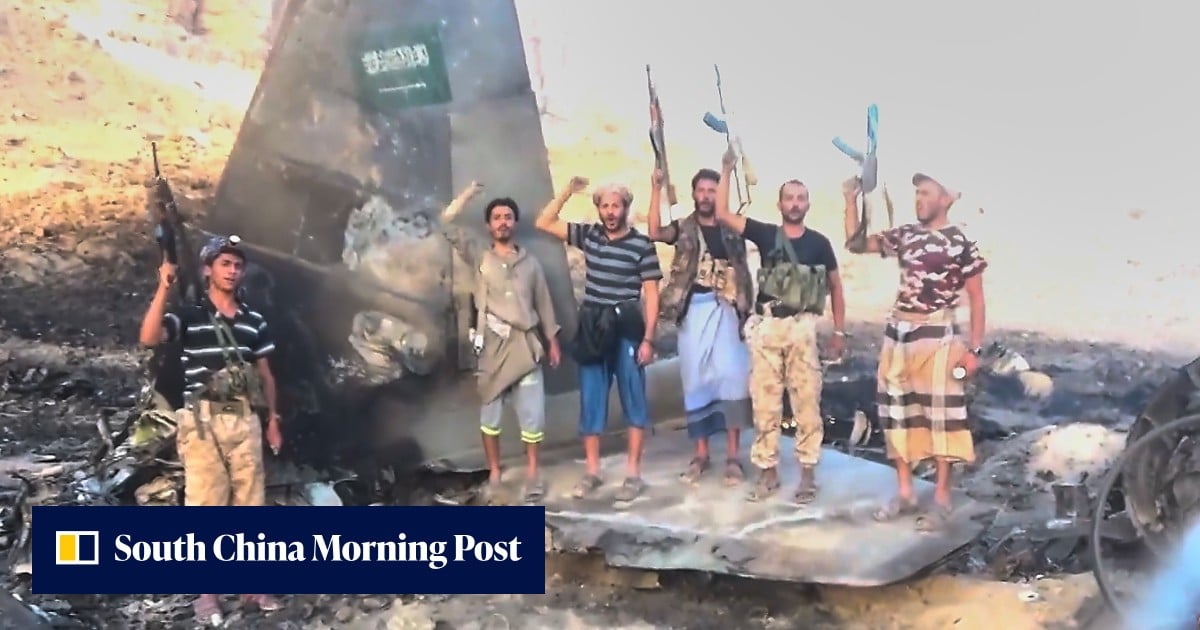
Saudi Arabia recently faced significant challenges from Houthi rebels, who made substantial territorial gains in Yemen by taking control of strategic islands and cities, including Mokha and Dhubab, effectively controlling the Bab el-Mandeb strait. The Houthis' actions included missile strikes on four Saudi cities, wounding 73 civilians and disrupting energy operations. Despite the Mecca Joint Defense Agreement signed in late August between Saudi Arabia, Pakistan, and Turkey to mutual defense against threats, none of these countries intervened effectively during this crisis. The United Nations reported that at least 46,000 people were displaced due to the conflict. This situation underscores the strategic importance of the Bab el-Mandeb strait, through which roughly a tenth of global seaborne trade and a third of Europe’s oil imports pass. As the crisis deepens, Saudi Arabia is now calling for U.S. President Trump's intervention to address this security threat.

Written for “Saudi Arabia Allies With Trump” on 2026-11-01, grounded in this article and the 0 other(s) covering the same event.

Story

📰 Saudi Arabia Allies With Trump
World · 1 article(s) covering the same event.

Compared with similar articles

This article reads unscored and hedges 2% of its claims. Each row says how that neighbour differs.
Dawn
Hedges 3 of 36 claims Outlet record 72/100
“Article A describes the broader context of the Mecca Joint Defense Agreement and details of recent Houthi attacks, while Article B focuses specifically on Pakistan's commitment to defend Saudi Arabia through statements made by an official.”
Al Jazeera
Hedges 2 of 15 claims Outlet record 60/100
“Article A describes a sequence of events involving attacks by Houthis on Saudi Arabia and the response from allied countries, while Article B focuses on Turkey's foreign minister stating support for Saudi Arabia amid escalating Houthi attacks. The articles cover related developments but different specific moments.”
Dawn
Hedges 1 of 30 claims Outlet record 72/100
“Article A discusses the nature and expansion of the Makkah Defence Alliance, while Article B describes a series of attacks by Houthis on Saudi Arabia that tested the alliance's response.”
South China Morning Post
⚖️ Leans right Hedges 0 of 6 claims Outlet record 64/100
“Article A describes specific attacks on Saudi Arabia by Houthi rebels, while Article B discusses Saudi Arabia's efforts to seek allies' help due to running low on missile defenses. Although related, they describe different aspects of the conflict.”
Dawn
Hedges 2 of 17 claims Outlet record 72/100
“While both articles discuss military alliances and attacks by Houthis on Saudi Arabia, Article A details the initial attacks and territorial gains made by Houthis in September, while Article B reports Turkey's reaction to these events a week later.”
Dawn
Hedges 0 of 7 claims Outlet record 72/100
“Article A describes the attacks by Houthi rebels on Saudi Arabia and their territorial gains, while Article B is about Pakistan's commitment to a defense pact with Saudi Arabia in response to these tensions.”
Dialogue needed Different event
Dawn
⚖️ Leans strongly left Hedges 2 of 22 claims Outlet record 72/100
“Article A describes military attacks and territorial gains by Houthis, while Article B discusses Pakistan's diplomatic stance on the conflict.”
Euronews
Hedges 2 of 17 claims Outlet record 60/100
“Article A describes a series of attacks by Houthis on Saudi Arabia, while Article B reports US embassies issuing security alerts due to those attacks. They are related but describe different aspects of the same situation.”
Times of India
Hedges 2 of 36 claims Outlet record 59/100
“Article A describes the sequence of events following the Mecca Joint Defense Agreement, including Houthi attacks and territorial gains. Article B is about Pakistan's commitment to the agreement after a reported drone attack near Mecca.”
Al Jazeera
⚖️ Leans right Hedges 7 of 65 claims Outlet record 60/100
“Article A describes specific recent military actions by Houthis against Saudi Arabia, while Article B discusses a broader context of geopolitical shifts in Gulf politics following an agreement between Saudi Arabia and Iran.”
How this article was measured signals, leaning charts, publisher record, byline, topics and claims

Signals How these are calculated →

Claims extracted
88
sentences that state something as happening or true
Uncertain
2%
2 of 88 hedged ("reportedly", "may", "according to")
Leaning
not political
takes no side on a contested political question
Publisher signals
70/100
Washington Examiner's corrections and hedging, across everything collected from it. Not a measure of accuracy.
Outlets on this story
1
World
Same framing elsewhere
2
articles that frame the event the way this one does
Analyzed 2026-09-15 · how these are computed

How this is being covered How these are calculated →

Article leaning vs. publisher reliability
Source leaning vs. consistency

Publisher

Washington Examiner · 3864 article(s) · 7 correction(s) detected
Running correction rate · 7 correction(s)

Who wrote this

Emzari Gelashvili
8 article(s) here · 1 carrying a prediction
🔮 On Oct. 9, President Donald Trump announced that Russian President Vladimir Putin would release Russian diesel to the world market, 300,000 tons at once and millions more to follow.
🔮 Americans might read the two events as one fight.
🔮 At the United Nations, he said he expected a deal after the midterm elections; Iran’s president, Masoud Pezeshkian, would prefer one before.
🔮 During the offensive those advisers were “present at all levels” — planning tactical maneuvers, working with front-line commanders, analyzing communications and satellite intelligence the Houthis could not process on their own.
🔮 The pause On Jan. 21, at the World Economic Forum in Davos, Switzerland, Trump said he would not use force to take Greenland.
🔮 Among them, due at the U.N. podium on Sept. 24, is Israeli Prime Minister Benjamin Netanyahu, whom New York Mayor Zohran Mamdani has called a war criminal and once vowed to have arrested.
🔮 I started drafting this when Mokha had fallen, and Perim had not, and wrote that at that pace the Houthis would need two more days and nights to reach the strait.
Also by Emzari Gelashvili
Nothing else under this byline is closely related to this article, so these are simply their most recent.
All 8 articles by Emzari Gelashvili →

Topics

Houthis Iran Pakistan Saudi Arabia Yemen

Subjects

Houthis NORP · 6× Iran GPE · 6× American NORP · 4× Yemen GPE · 4× Mokha GPE · 3× Pakistan GPE · 3× Reuters ORG · 3× Riyadh GPE · 3× Tehran GPE · 3× Trump PERSON · 3×

Narrative

From 1996 to 2008, he served as a senior official across Georgia’s Ministry of State Security, Ministry of Defense, and Ministry of Internal Affairs, with a counterintelligence career focused on Russian and Iranian intelligence operations, and he was a member of the Georgian Parliament from 2008 to 2012.
framing: assertive · carried by 2 article(s) · first seen 2026-09-15
🔮 I started drafting this when Mokha had fallen, and Perim had not, and wrote that at that pace the Houthis would need two more days and nights to reach the strait.
2026-09-15 · Washington Examiner
Two alliances just failed Saudi Arabia. Then they called Trump · assertive framing
2026-09-19 · Washington Examiner
His staff reads the threat file. Mamdani only gets the summary · assertive framing

Claims (88 extracted, 2 hedged)

Five weeks ago, Saudi Arabia, Pakistan, and Turkey signed the Mecca Joint Defense Agreement. asserted
Arabia → sign → Agreement
An armed attack on one, the text says, is an attack on all. asserted
text → say → all
Commentators called it an Islamic NATO. asserted
Commentators → call → it
This week it was tested. asserted
it → test → ?
On Sept. 8, Houthi missiles and drones hit four Saudi cities, wounding 73 civilians and halting operations at energy facilities. asserted
missiles → hit → facilities
Two days later, the Houthis took Mokha, their largest territorial gain since the 2022 truce. asserted
Houthis → take → truce
On Friday, they took Dhubab and crossed to Perim, the island splitting the Bab el-Mandeb at its narrowest point. asserted
they → take → point
A military official told AFP they also took Greater and Lesser Hanish, leaving all four of the strait’s strategic islands in their hands, and that the takeover of the Bab el-Mandeb was complete. asserted
takeover → tell → Mandeb
Tareq Saleh, deputy chairman of Yemen’s Presidential Leadership Council, acknowledged losing Mokha and said Iran had planned and backed the attack. asserted
Iran → acknowledge → attack
The United Nations counted at least 46,000 people displaced. asserted
people → count → ?
Roughly a tenth of the world’s seaborne trade and a third of Europe’s imports cross that strait, and Saudi Arabia has leaned on it as traffic through Hormuz has collapsed — IMF PortWatch counted six transits there on Sept. 6 against a pre-crisis norm of near 85 a day. asserted
PortWatch → cross → 85
Brent settled near $108 on Thursday; American diesel passed $6 a gallon. asserted
diesel → settle → 6
I started drafting this when Mokha had fallen, and Perim had not, and wrote that at that pace the Houthis would need two more days and nights to reach the strait. asserted
Houthis → start → strait
That was wrong; it took about one. asserted
it → take → one
The rest of what I wrote that morning held — only the clock was off, and in the direction that flatters nobody. asserted
that → write → nobody
I record the error rather than the forecast, because the direction of travel was easy to read off a map. asserted
direction → record → map
Harder to read was the rest of the page. asserted
rest → read → page
In the same 48 hours, the American and European press were consumed by Trump’s Dallas promise of a $5,000 dividend to every adult citizen if Republicans hold both chambers of Congress, and by a joint statement from eight governments welcoming Britain’s ban on imports from Israeli settlements. asserted
Republicans → consume → settlements
One had been under missile fire the day before, would lose a port the day after, and the strait the day after that. So what did the pact produce? asserted
pact → lose → what
The night the missiles landed, Pakistan’s defense minister said a spillover from Yemen would mean “definitely the Mecca agreement will become operational.” asserted
agreement → land → Yemen
Two days later, his foreign ministry said no military response was under discussion: “When time comes (we) will act under the agreement.” asserted
we → say → agreement
Turkey condemned the attacks in the strongest terms. asserted
Turkey → condemn → terms
Pakistani sources told Reuters their country would not enter Yemen at all. asserted
country → tell → Yemen
What the pact delivered was a courier. asserted
delivered → deliver → What
Pakistan carried Riyadh’s message to Tehran, asking it to rein in the Houthis. asserted
Pakistan → carry → Houthis
Tehran’s reply: “Iran does not control the Houthis.” asserted
Iran → control → Houthis
Then, on Friday, Mohammad Mokhber, an adviser to Iran’s supreme leader, posted on X: “Congratulations on this resounding victory, Ansar Allah.” asserted
Mokhber → post → victory
Iran’s first vice president welcomed “the victories of the heroic nation of Yemen.” asserted
president → welcome → Yemen
Reuters, citing five Yemeni military sources and intercepted communications, reported that Iran’s Revolutionary Guards directed the coastal campaign; Tehran denies it. asserted
Tehran → cite → it
A government that says it does not control the Houthis does not usually congratulate them by name. asserted
it → say → name
Note what Riyadh did once the pact had answered. asserted
pact → note → what
On Thursday, as Mokha fell, Crown Prince Mohammed bin Salman called President Trump twice — the second time to ask for American strikes, Axios first reported, with Reuters citing three sources and CBS two of its own. asserted
CBS → fall → own
Trump declined. asserted
Trump → decline → ?
His directive is to keep American forces on Iran and Hormuz rather than open a second front; Washington offered intelligence sharing and targeting support instead, and Adm. Brad Cooper, who leads U.S. Central Command, flew to the kingdom for what Axios called urgent meetings. asserted
Axios → keep → what
In July, Riyadh had said it could handle the Houthis alone. uncertain
it → say → Houthis
The same day, the kingdom was hit from the other direction. asserted
kingdom → hit → direction
Its foreign ministry said the East-West oil pipeline — built to carry crude to the Red Sea and bypass Hormuz — was struck by drones launched from Iraq and shut as a precaution. asserted
pipeline → say → precaution
Riyadh said it would not respond “at this stage,” at the request of Iraq’s prime minister, who confirmed the launches came from Iraqi territory. asserted
launches → say → territory
Trump said Saturday that Iran was “probably” behind it. asserted
Iran → say → it
Saudi Arabia answered the two fronts differently. asserted
Arabia → answer → fronts
…and 48 more, not listed.

💬Give feedback
🕘History 🎫Support