Minnesota couple’s $27,000 neighbour dispute ends with $20,000 privacy award reversed

Read the original at Times of India ↗
Cite

TOI World Desk. (2026, October 22). Minnesota couple’s $27,000 neighbour dispute ends with $20,000 privacy award reversed. Times of India. https://timesofindia.indiatimes.com/world/us/in-2020-a-minnesota-couple-bought-a-home-reached-through-a-neighbours-gravel-driveway-a-feud-over-trees-and-a-security-camera-led-to-27000-in-damages-but-an-appeals-court-reversed-the-20000-privacy-award/articleshow/135112821.cms

Dated from the outlet's own feed. Check the original for its byline.

Times of India · collected 2026-10-22 · by TOI World Desk

Quick Summary

A dispute between neighbors in Forest Lake, Minnesota, over property access and maintenance led to legal action resulting in a $27,000 damages judgment against Dominic and Melissa Stahley. On October 19, 2026, the Minnesota Court of Appeals reversed part of this ruling, specifically overturning a $20,000 privacy award granted to Leonard and Sandra Ruby due to insufficient evidence of unlawful intrusion. The court sent the privacy claim back for further proceedings while reducing damages related to tree removal.
Written locally by qwen2.5:14b on 2026-10-22, using this article's own text rather than the other coverage of the same event (that is the story summary below).

AI analysis runs on qwen2.5:14b, locally

Story summary

On October 19, 2026, the Minnesota Court of Appeals reversed part of a $27,000 damages judgment in Leonard Ruby v. Dominic Stahley, reducing the privacy award from $20,000 to zero and sending it back for further proceedings. The dispute began when the Stahleys bought a neighboring property in 2020 that could only be accessed through a gravel driveway on the Rubys' land in Forest Lake, Minnesota. A written easement agreement required the Stahleys to seek permission before removing trees or making changes to the driveway. In June 2025, after a trial, the court awarded the Rubys $27,000: $20,000 for invasion of privacy, $6,000 in trebled nominal damages for unlawful tree removal, and $1,000 for breach of the easement agreement and trespass. The appeals court reduced the damages for unlawful tree removal but sent the privacy claim back to be reconsidered.

Written for “Neighbor Dispute Privacy Award Reversed” on 2026-10-22, grounded in this article and the 0 other(s) covering the same event.
Why this leaning score
This article does not take a side on a contested political question, so it has no leaning score. That is an answer rather than a gap: a match report or a rescue can be warmly or critically written without being left or right, and scoring it anyway is how approval of a subject gets recorded as a political position.
No political leaning scored for article 98937 · logged 2026-10-22

Story

📰 Neighbor Dispute Privacy Award Reversed
Crime & Law · 1 article(s) covering the same event.

Compared with similar articles

Nothing to compare against. No article is close enough to this one for the pipeline to have linked or judged the pair.
How this article was measured signals, leaning charts, publisher record, byline, topics and claims

Signals How these are calculated →

Claims extracted
38
sentences that state something as happening or true
Uncertain
32%
12 of 38 hedged ("reportedly", "may", "according to")
Leaning
not political
takes no side on a contested political question
Publisher signals
59/100
Times of India's corrections and hedging, across everything collected from it. Not a measure of accuracy.
Outlets on this story
1
Crime & Law
Same framing elsewhere
1
articles that frame the event the way this one does
Analyzed 2026-10-22 · how these are computed

How this is being covered How these are calculated →

Article leaning vs. publisher reliability
Source leaning vs. consistency

Publisher

Times of India · 3092 article(s) · 2 correction(s) detected
Running correction rate · 2 correction(s)

Who wrote this

TOI World Desk
1111 article(s) here · 1 carrying a prediction
🔮 Buyers would need to assess these details before deciding what changes to make.
🔮 According to the court’s opinion, published by Justia, the conflict began after Dominic and Melissa Stahley bought a neighbouring property in 2020 that could only be accessed through a gravel driveway on Leonard and Sandra Ruby’s land.
🔮 "Bad news," he predicted, and it was.
🔮 The Frankfurt Kitchen was designed as part of ‘Neues Frankfurt,’ a municipal housing programme launched to address the housing shortage after World War I. Architect and urban planner Ernst May led the programme, and Schütte-Lihotzky joined his team in 1925.
🔮 Her complete ownership of the business meant she could make the decision without negotiating with outside equity investors.
🔮 Those figures would depend on factors such as household use, weather conditions and system performance.
🔮 The bank alleged that the couple defaulted by failing to make monthly payments due from May 1, 2009, onwards.
🔮 A century ago, a private home on Peachtree Street became the starting point for what would grow into one of the American South’s most significant cultural institutions.
🔮 The incident has raised questions among residents about whether earlier action could have prevented the encounter, with neighbours saying they had repeatedly alerted authorities to concerns about the coyote.
🔮 However, completing the ambitious project has become increasingly difficult, and moving the massive steel structure out of his yard will require heavy machinery.
Wire or desk byline, not an individual reporter.
Also by TOI World Desk
Nothing else under this byline is closely related to this article, so these are simply their most recent.
All 1111 articles by TOI World Desk →

Topics

Forest Lake Justia Minnesota the Minnesota Court of Appeals

Subjects

Rubys PERSON · 9× Stahleys PERSON · 7× Dominic Stahley PERSON · 2× Leonard Ruby PERSON · 2× Melissa Stahley PERSON · 2× Minnesota GPE · 2× Dominic PERSON · 1× Justia ORG · 1× Leonard PERSON · 1× the Minnesota Court of Appeals ORG · 1×

Narrative

Following a damages trial in June 2025, it awarded the Rubys $27,000: $20,000 for invasion of privacy, $6,000 in trebled nominal damages for unlawful tree removal and $1,000 for breach of the easement agreement and trespass.
framing: mixed · carried by 1 article(s) · first seen 2026-10-22
🔮 According to the court’s opinion, published by Justia, the conflict began after Dominic and Melissa Stahley bought a neighbouring property in 2020 that could only be accessed through a gravel driveway on Leonard and Sandra Ruby’s land.

Claims (38 extracted, 12 hedged)

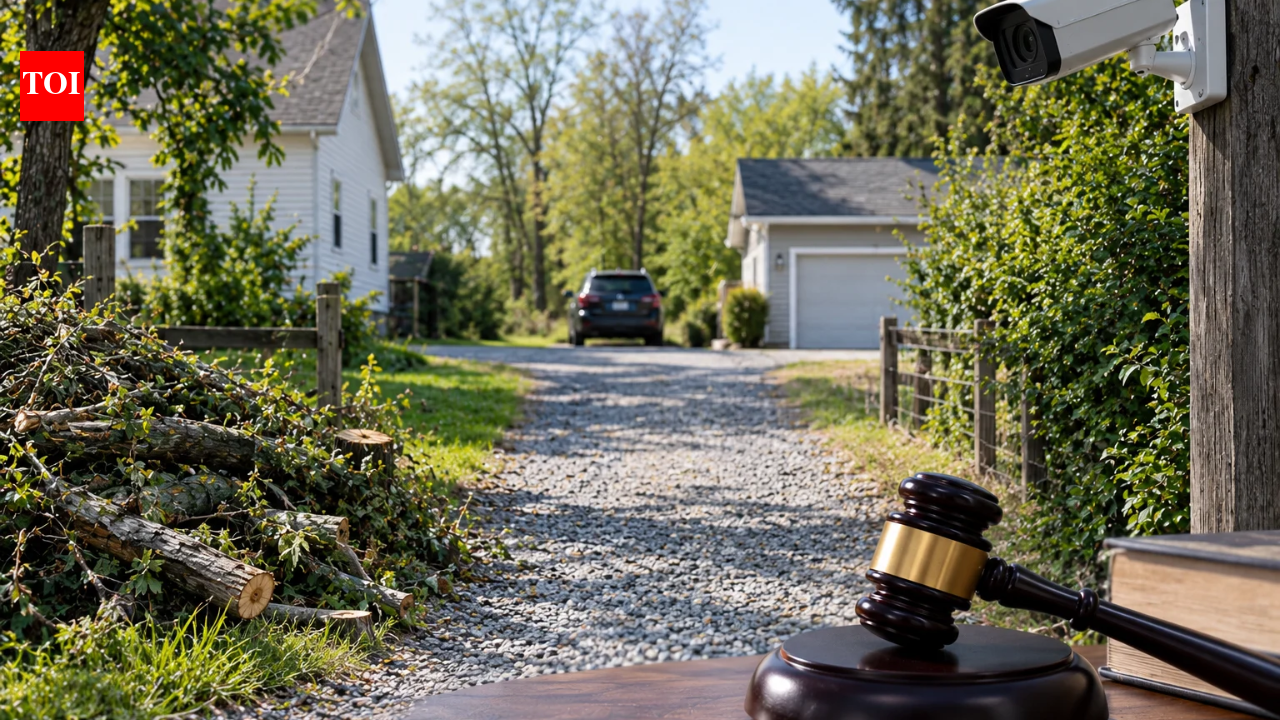
A dispute between two Minnesota couples over a shared driveway, tree removal and a security camera has taken another turn after an appeals court reversed a $20,000 privacy award. asserted
court → share → award
On October 19, 2026, the Minnesota Court of Appeals reversed part of a $27,000 damages judgment in Leonard Ruby v. Dominic Stahley. asserted
Court → reverse → Stahley
According to the court’s opinion, published by Justia, the conflict began after Dominic and Melissa Stahley bought a neighbouring property in 2020 that could only be accessed through a gravel driveway on Leonard and Sandra Ruby’s land. uncertain
that → accord → land
The court sent the privacy claim back for further proceedings while reducing damages for unlawful tree removal. uncertain
court → send → removal
A shared driveway sparks a neighbourhood feud The Rubys bought their property in Forest Lake, Minnesota, in 2014. asserted
Rubys → share → 2014
Four years later, the Stahleys purchased the neighbouring property, whose only access to a public road was through a gravel driveway crossing the Rubys’ land. asserted
access → purchase → land
A written easement agreement from 2014 allowed the Stahleys to use the driveway but required them to seek written permission before undertaking maintenance. asserted
Stahleys → write → maintenance
It also prohibited removing trees from the easement area without the Rubys’ written consent. asserted
It → prohibit → consent
In 2020, the Stahleys notified their neighbours that they intended to mow grass, clear brush, trim branches, remove trees and repair the driveway. asserted
they → notify → driveway
The Rubys permitted snow removal but refused permission for the other work. asserted
Rubys → permit → work
The Stahleys nevertheless carried out maintenance activities between 2020 and 2024, worsening the dispute. asserted
Stahleys → carry → dispute
Security camera leads to a privacy lawsuit asserted
camera → lead → lawsuit
The neighbours also accused each other of inappropriate behaviour. asserted
neighbours → accuse → behaviour
Melissa Stahley alleged that the Rubys intimidated the family, verbally abused them and obstructed their access to the property. asserted
Rubys → allege → property
Dominic Stahley installed a motion-activated camera on another neighbour’s property, with the owner’s permission, to document the alleged conduct. asserted
Stahley → instal → conduct
In January 2024, the Rubys sued the Stahleys for breach of the easement agreement, trespass, unlawful tree removal and intrusion upon seclusion, a legal claim involving invasion of privacy. uncertain
Rubys → sue → privacy
The Stahleys filed counterclaims for trespass, quiet title and intentional infliction of emotional distress. asserted
Stahleys → file → distress
The district court ruled in the Rubys’ favour on their claims and dismissed the counterclaims. uncertain
court → rule → counterclaims
Following a damages trial in June 2025, it awarded the Rubys $27,000: $20,000 for invasion of privacy, $6,000 in trebled nominal damages for unlawful tree removal and $1,000 for breach of the easement agreement and trespass. asserted
it → follow → agreement
Appeals court reverses the $20,000 award asserted
court → reverse → award
The Stahleys challenged the privacy ruling, arguing that the evidence did not establish an unlawful intrusion. asserted
evidence → challenge → intrusion
The appeals court agreed that the claim required further consideration. uncertain
claim → agree → consideration
To establish intrusion upon seclusion, a claimant must show an intentional intrusion that is highly offensive and concerns a matter in which there is a legitimate expectation of privacy. asserted
that → establish → privacy
The court examined images captured by the camera. asserted
court → examine → camera
They showed the shared driveway, vehicles parked on the Rubys’ property, Leonard Ruby clearing snow and the outline of the home behind trees. asserted
Ruby → show → trees
However, the evidence did not show that the camera was aimed directly at the home’s windows or could record its interior. uncertain
camera → show → interior
The court noted that the area captured was visible to people lawfully using the driveway. asserted
area → note → driveway
It concluded that reasonable people could differ on whether the camera constituted a highly offensive intrusion into a private area. uncertain
camera → conclude → area
Therefore, the district court should not have decided the privacy claim through summary judgment. uncertain
court → decide → judgment
The appeals court reversed the finding of liability and the $20,000 award, remanding the matter for further proceedings. asserted
court → reverse → proceedings
This does not mean the camera was definitively found lawful; the privacy claim remains unresolved. uncertain
claim → mean → ?
Tree damages reduced, other claims rejected The appeals court also ruled that the district court had incorrectly tripled the $2,000 in nominal damages awarded for unlawful tree removal, producing a $6,000 award. uncertain
court → reduce → award
Under Minnesota law, treble damages for unlawfully cutting or damaging trees must be calculated from actual damages, rather than nominal damages awarded when the precise financial loss has not been established. asserted
loss → cut → damages
The court therefore reduced this award to $2,000. asserted
court → reduce → 2,000
It upheld the district court’s decision to award nominal rather than actual damages for the property-related claims, finding no abuse of discretion. uncertain
It → uphold → discretion
It also affirmed the dismissal of the Stahleys’ counterclaims, concluding that the evidence did not establish the extreme and outrageous conduct required for an emotional-distress claim or sufficient grounds for their other claims. uncertain
evidence → affirm → claims
The ruling leaves the privacy dispute open while clarifying that tree-related damages cannot be tripled without proof of actual loss. asserted
damages → leave → loss
It also underscores how disagreements over shared access, property maintenance and surveillance can become complicated legal battles when neighbours dispute both their rights and the boundaries of their properties. asserted
neighbours → underscore → properties

💬Give feedback
🕘History 🎫Support