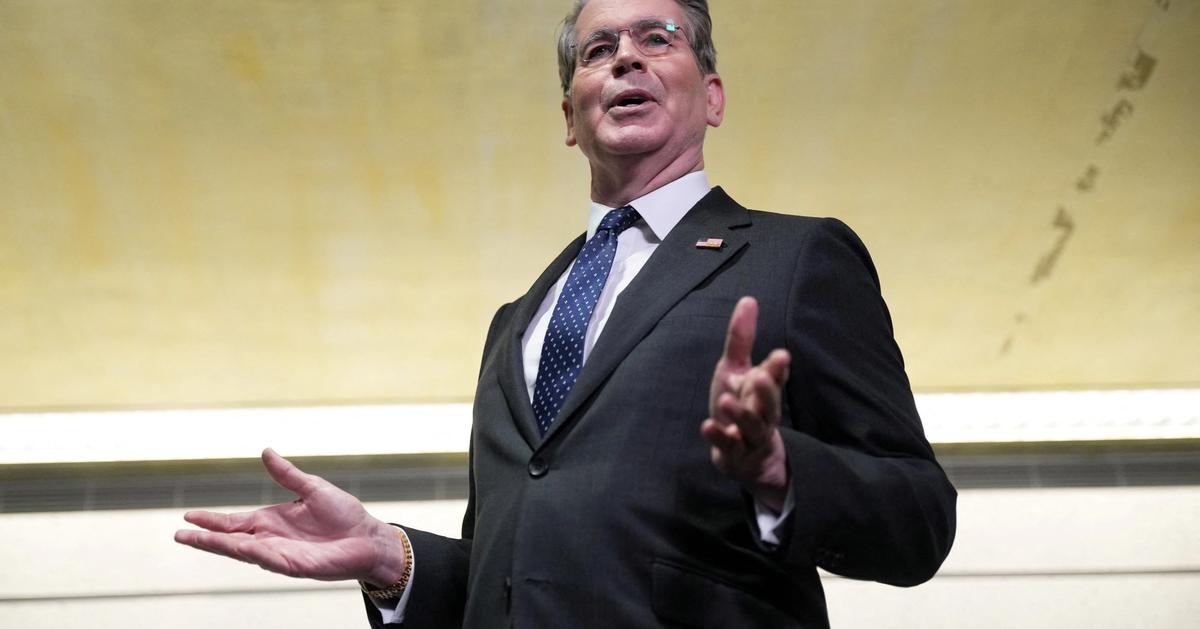
As President Donald Trump continues buying government stakes in private companies, the rest of Washington is starting to appreciate the power of his new tool.
asserted
rest → continue → tool
The Trump administration has so far announced 43 equity stakes in firms producing everything from minerals to semiconductors, 36 of which were negotiated without explicit legal authority — and more are yet to come.
asserted
more → announce → authority
The administration may be negotiating even more stakes under the radar, since SEC filings for unrelated deals mention the possibility of warrants.
uncertain
filings → negotiate → warrants
Unwinding the administration’s investments would prove legally and politically difficult — but Democrats likely won’t want to, at least not right away.
asserted
Democrats → unwind → investments
They’re already weighing how to use equity stakes for their own ends, signaling that Trump’s government intervention in the private sector may be the start of a permanent trend.
uncertain
intervention → weigh → trend
“The Trump administration’s approach to government equity stakes has completely lacked transparency and accountability,” Sen. Chris Van Hollen, D-Md., told Semafor.
asserted
Hollen → lack → Semafor
“While this is something future administrations may want to consider, it’s clear that to actually serve Americans, it would require a totally different approach.
uncertain
it → want → approach
Thanks to the precedent Trump has set, a future Democratic president could reap multiple benefits from equity stakes in private companies.
uncertain
president → set → companies
Among them, as former Biden administration officials suggested: reining in the AI industry, shrinking defense spending, boxing China out of critical sectors, and pressuring gun and oil companies.
uncertain
officials → suggest → companies
Even demanding an equity stake as a condition for government assistance — whether it’s a loan, grant, or other federal permit — is a powerful tool that’s now more readily at the White House’s disposal, no matter which party controls it.
asserted
party → demand → it
“We’re through the looking glass,” said Democratic strategist and former Biden administration official Doug Farrar.
asserted
Farrar → ’re → glass
Van Hollen isn’t the only 2028 Democratic contender who’s focusing on overseeing Trump’s deals rather than discontinuing them.
asserted
who → focus → them
In a statement to Semafor, California Gov. Gavin Newsom trolled Trump as “THE LEADING SOCIALIST OF OUR TIME,” crediting him with unlocking “A BOLD NEW ERA OF GOVERNMENT-RUN BUSINESS … WITH HIS GLORIOUS GOVERNMENT TAKEOVERS.”
The next president may well also have more power to purchase equity stakes; legislation moving through the Senate would give the Pentagon explicit legal authority to do so.
uncertain
legislation → troll → authority
“The sky’s the limit, because the pattern’s been set,” said Tad DeHaven, who helps track the equity stakes at the Cato Institute.
asserted
who → ’ → Institute
Know More
Some Republicans don’t want any administration making forays into the private sector with public money.
asserted
administration → know → money
Sen. Jon Husted, R-Ohio, recently introduced legislation that would require the government to dissolve any equity stakes after eight years.
asserted
that → introduce → years
“Whether it’s President Trump or somebody else like Bernie Sanders who might be president someday, I don’t trust the federal government being a long-term investor in American companies,” Husted told Bloomberg TV.
uncertain
Husted → ’ → TV
But no one else has signed on to his bill.
asserted
one → sign → bill
And some progressives are already embracing taking stakes.
asserted
progressives → embrace → stakes
New York City Mayor Zohran Mamdani announced this month that his Economic Development Corporation, helmed by Biden’s former FTC chair, Lina Khan, would invest $30 million in a quantum technology lab in exchange for 15% of its profits.
asserted
Corporation → announce → profits
Already, “the [Trump] administration keeps gaining footholds in the industries that make up the supply chain for the AI buildout,” said Farrar, who worked for Khan at the FTC.
asserted
who → gain → FTC
“That could be an important point of leverage for a future president of either party — but especially a Democrat who wants to seriously regulate this industry.”
uncertain
who → want → industry
Sanders, one of the left’s leading critics of the AI industry, went a step beyond profit-sharing by suggesting this summer that its companies surrender half of their stock to the government.
asserted
companies → lead → government
“The Trump administration has opened up Pandora’s box with this approach to state capitalism,” said Bloomberg economist Chris Kennedy, who served on the National Security Council during the Biden and Trump administrations.
asserted
who → open → administrations
Some Democrats fear Trump could sell off his equity stakes following the next presidential election.
uncertain
Trump → fear → election
Others pray their party, as it prepares to take back at least some power in Washington, can dig into Trump’s equity stakes without creating too much pressure for a selloff after he leaves office.
asserted
he → pray → office
Any future Democratic president would seek to “figure out a way of imposing some sort of governance scheme over all of these equity interests that strikes the right balance,” said Bharat Ramamurti, the former deputy director of the Biden White House’s National Economic Council.
asserted
Ramamurti → seek → Council
“I hope there is not an overreaction to one of [Trump’s equity stakes] not panning out, especially because many of the other ones may end up being quite successful for taxpayers,” Ramamurti added.
uncertain
Ramamurti → hope → taxpayers
“And you’ll be making a losing financial decision if you decide to cut all of that off.”
asserted
you → make → that
Given that Trump has built three campaigns around his skills as a dealmaker, the White House has plenty of reason to argue that his opponents won’t use his playbook.
asserted
opponents → give → playbook
In a statement to Semafor, White House spokesperson Matthew Middleton appeared skeptical that a Democrat would hang onto Trump’s existing stakes.
asserted
Democrat → appear → stakes
“Through voluntary equity investments in willing companies, the Trump administration has partnered with the private sector to rebuild America’s industrial base,” Middleton said, adding that “it’s justifiable to doubt that Democrats will want to build on President Trump’s legacy to revitalize American industry and strengthen our economic independence.”
asserted
Democrats → partner → independence
It’s easy to envision a future Democratic president using Trump’s model to advance a more progressive agenda, as Mamdani already has in New York.
asserted
Mamdani → ’ → York
But one Republican asset that Democrats will have trouble replicating is the man who’s largely responsible for the Pentagon’s investments: Deputy Defense Secretary Steve Feinberg.
asserted
who → have → investments
The Cerberus cofounder has faced remarkably few obstacles in Trump’s Washington, where the GOP-controlled House, Senate, and White House have stayed mostly out of his way.
asserted
House → face → way
As one former Pentagon official who worked on its equity stakes put it to me: “It is extraordinarily unlikely that [a Feinberg analog] exists in Democratic politics and that they will have that level of political capital.”
asserted
they → work → capital
 The Aporia