Laila Atamneh, 19, remembers her parents arguing at the dinner table every time Israel would hold an election.
asserted
Israel → remember → election
Among the rare Palestinian Jerusalemites who are Israeli citizens and eligible to vote, her father would make the case for casting a ballot for an Arab-led electoral list.
asserted
father → vote → list
Her mother, by contrast, always abstained.
asserted
mother → abstain → contrast
“She thinks it feeds into the idea that Israel is a democracy and Palestinians have the same rights here – only to get extremely humiliated, and then get one of the worst governments ever, and be surrounded by fascists,” said Atamneh, who hails from the neighbourhood of Beit Hanina.
asserted
who → think → Hanina
On October 27, the 19-year-old will vote for the first time in Israel’s general election.
asserted
old → vote → election
She sees it as a responsibility to the millions of Palestinians in the occupied West Bank and the Gaza Strip, who will have no say in the next Israeli government but, she believes, bear the brunt of its occupation, ethnic cleansing and genocide.
asserted
she → see → occupation
“I feel like I have to be these people’s voice,” said Atamneh.
asserted
Atamneh → feel → ?
“Not that one person is really capable of that much – but if this gives them one percent hope, then I will do it.”
asserted
I → give → it
But Atamneh, who speaks Arabic, said she struggles to follow election coverage in Hebrew.
asserted
she → speak → Hebrew
“I personally feel excluded from everything, that we’re not even a part of the discussion,” she added.
asserted
she → feel → discussion
“It feels like none of the parties really address our generation of first-time Palestinian voters.”
asserted
none → feel → voters
Her mixed feelings capture the mood among Palestinian citizens of Israel – about a fifth of its population – ahead of the election.
asserted
feelings → capture → election
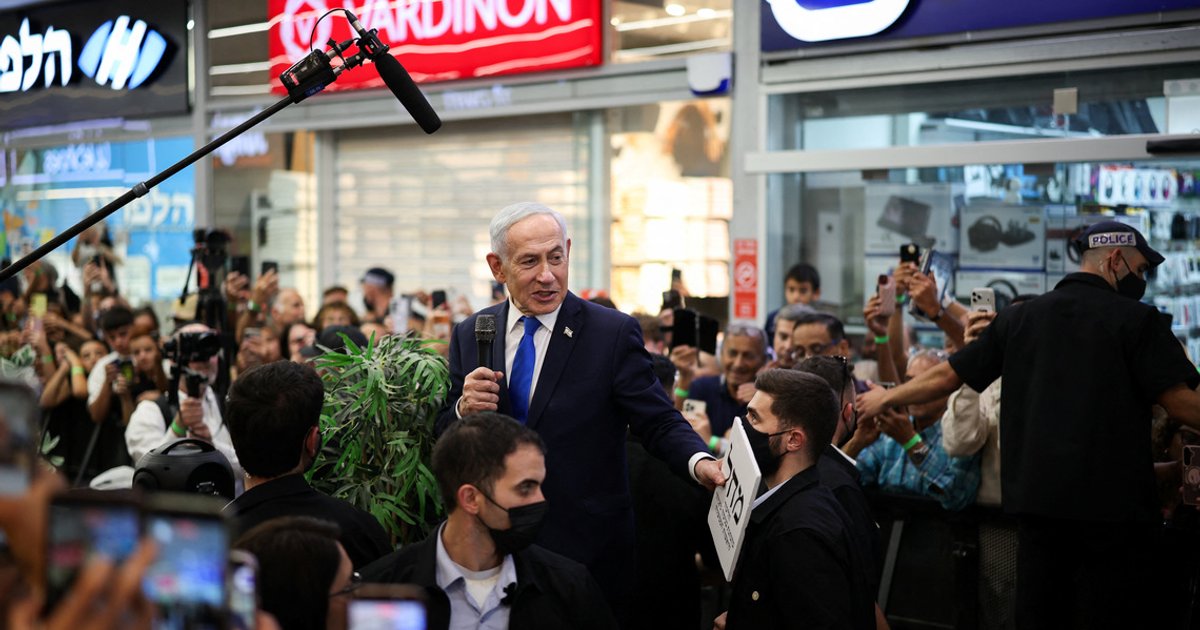
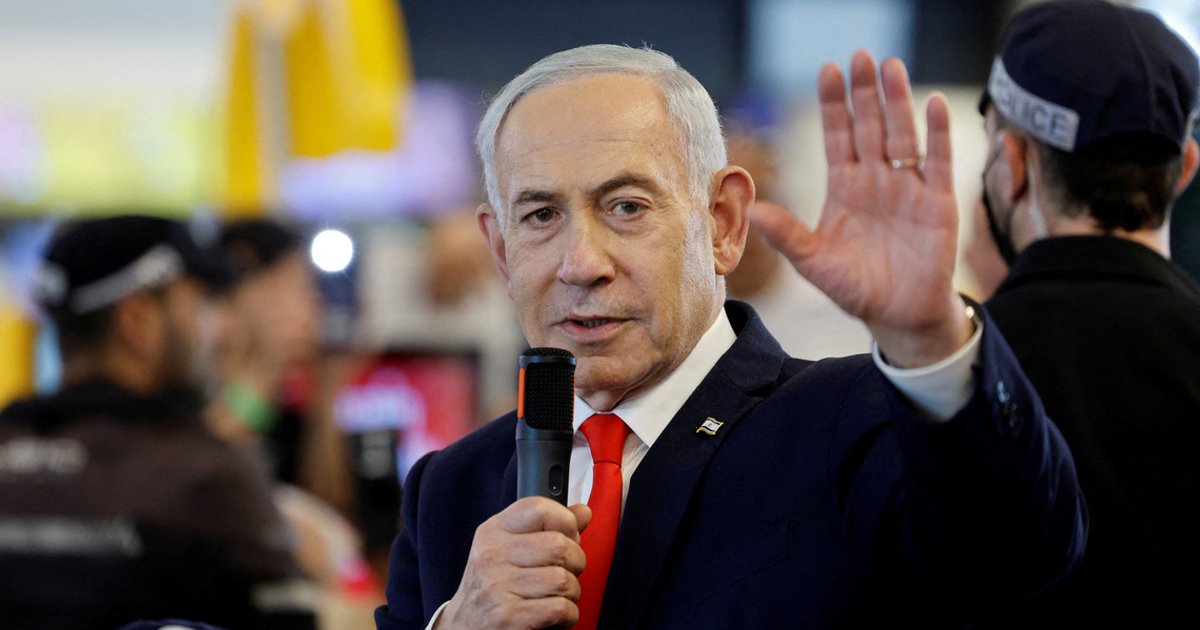
Few believe the system will serve them, but many fear another government led by Benjamin Netanyahu, Israel’s longest-serving prime minister, who has overseen Israel’s genocidal war against Palestinians in the Gaza Strip since 2023.
asserted
who → believe → 2023
Whether fear outweighs disillusion may decide a contest in which opinion polls suggest neither Netanyahu’s far-right-led bloc nor the self-styled Zionist opposition alliance will be able to govern without Ra’am and the Joint List, the two Arab-led parties.
uncertain
bloc → outweigh → Ra’am
And if no one can form a majority in the 120-seat Knesset, new elections will be called – keeping the current Netanyahu government, the most hard right in Israel’s history, in place until then.
Voting in the shadow of genocide
For Palestinian citizens of Israel, the animating force of the election is the acceleration of the hard-right assault on Palestinian rights, livelihoods and land in recent years.
“This election comes in the context of the genocide and the ethnic cleansing in the West Bank, and the harsh state policies towards Palestinians in Israel,” said As’ad Ghanem, a political scientist at the University of Haifa.
asserted
Ghanem → form → Haifa
For Hanan, a 36-year-old Palestinian Christian in a Druze village in the Galilee, it feels like the danger keeps coming closer to her doorstep.
asserted
danger → feel → doorstep
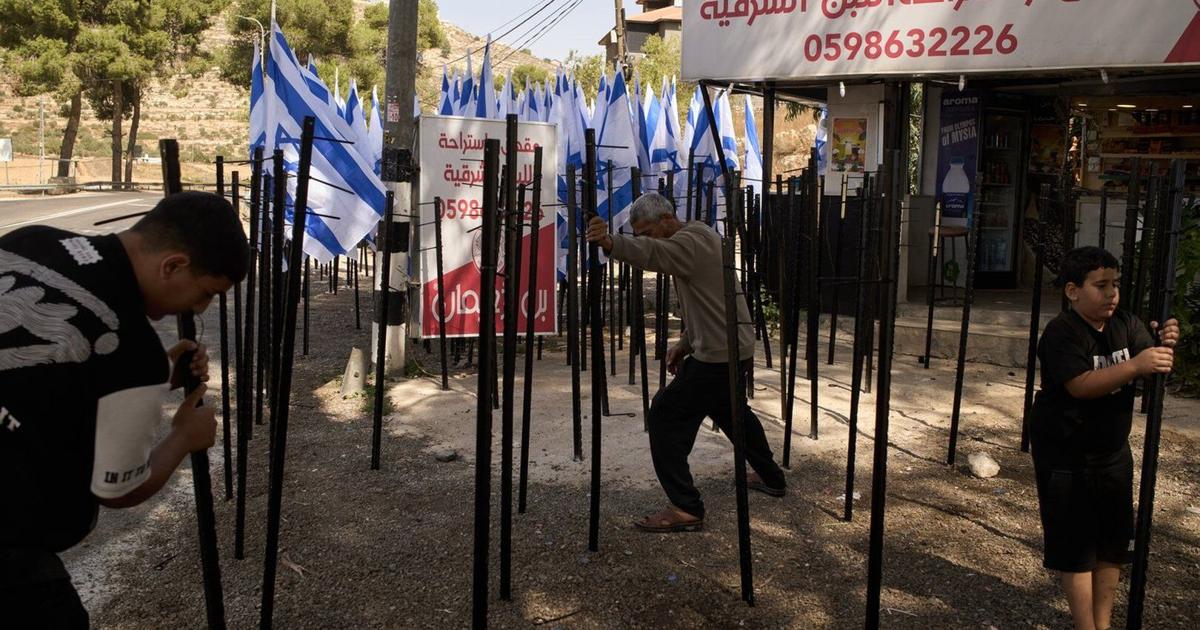
Israeli settlers residing in illegal settlements in the West Bank last month tried to build an illegal outpost near Majd al-Krum, a Palestinian community in the Galilee.
asserted
settlers → reside → Galilee
Then, Israel’s far-right Finance Minister Bezalel Smotrich released an AI-generated campaign video, in which a Palestinian from the West Bank frantically calls his relative in the Galilee to tell him that “the Jews are coming” to “do to you what they did to us”.
asserted
they → release → us
“Acts like these make me more afraid that the settlers will get worse and try to take more Palestinian land,” said Hanan.
asserted
Hanan → make → land
“This makes me want to vote more, and want to encourage other people to vote.”
asserted
me → make → people
On September 23, Israel’s Central Elections Committee voted to disqualify Ra’am and the Joint List – an alliance of the Hadash, Balad and Ta’al parties – before the Supreme Court overturned the decisions.
asserted
Court → vote → decisions
However, Balad’s Sami Abu Shehadeh withdrew his candidacy after the court indicated that a majority of justices supported upholding his disqualification.
asserted
majority → withdraw → disqualification
Many Palestinians saw this as confirmation that the system is illegitimate; some said the attempt to disqualify the parties was further reason to mobilise either way.
asserted
attempt → see → parties
“We feel that we are under attack,” said Thabet Abu Rass, an expert on Arab-Jewish relations.
asserted
Rass → feel → relations
“This is why we will cast our vote in a higher percentage.”
asserted
we → cast → percentage
Voter turnout among Palestinian citizens of Israel ranged from roughly 45 to 65 percent over the past five elections, reaching about 53 percent in the last polls in 2022.
asserted
turnout → range → 2022
A Palestinian campaign operative cited surveys estimating about 62 percent of Palestinian citizens plan to vote next week; he said the aim is 70 to 75 percent, last reached in 1999, when a 75 percent Palestinian turnout helped PM Ehud Barak beat Netanyahu.
asserted
Barak → cite → Netanyahu
“We want to take it there,” he said, noting that a high turnout could keep smaller right-wing parties like Amcha Yisrael and The Reservists from clearing the 3.25 percent electoral threshold, shifting the entire balance of power.
uncertain
turnout → want → power
The potential voter surge comes despite Palestinians’ limited, ossified choices.
asserted
surge → come → choices
“Every election, I tell myself that this year I’m not going to vote, because in reality we don’t feel that the Arab members do much,” said Hanan, bemoaning the lack of female representation or new political voices.
asserted
Hanan → tell → representation
“But in the end, I always go and vote, because I feel that maybe this time it will help.”
asserted
it → go → end
Despite people’s misgivings, Ghanem, the political scientist, dismissed the potential for a mass boycott as “a small point of view” by now.
asserted
Ghanem → dismiss → view
“We are under a real danger,” he said, “and we can contribute to ending this government’s term.”
asserted
we → say → term
Hanan said, “I know that voting is like admitting that there is an Israeli country, but it’s here.
asserted
it → say → ?
The campaign operative added: “The only day that we have the right to be equal with the Jews … is the day of elections.”
asserted
we → add → elections
Kingmakers without a seat at the table
The question is what Jewish Israeli parties in the anti-Netanyahu camp will do with the Arab-led lists.
asserted
parties → do → lists
Opinion polls have consistently left both Zionist blocs short of the 61 seats needed to form a government – with the Arab parties making the difference.
asserted
parties → leave → difference
On paper, that should make the Joint List and Ra’am kingmakers in the election.
asserted
List → make → election
Yet opposition leader Naftali Bennett has said “The Arab parties are not Zionist, and therefore we will not rely on them.”
asserted
we → say → them
Former army chief and potential prime ministerial candidate for the opposition Gadi Eisenkot has also expressed refusal to partner with the Arab parties, batting back attempts by Netanyahu to link him to them: “There is no Gadi [Eisenkot] without [Ahmad] Tibi”
asserted
chief → express → Tibi
…and 26 more, not listed.
 The Aporia