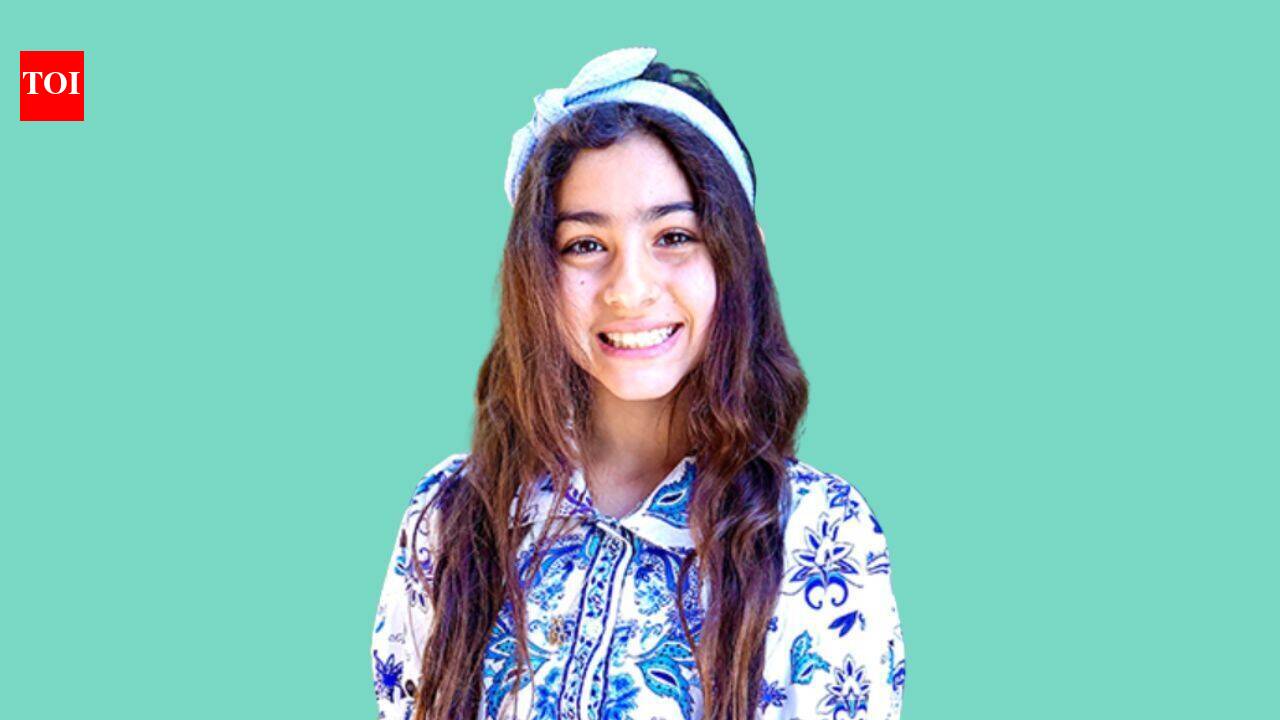
When Alekha Goldberg’s older brother suffered a traumatic brain injury during a violent attack in Washington, D.C., she saw how deeply the injury changed his everyday life.
asserted
injury → suffer → life
He faced long-term problems with memory, thinking and brain fatigue, difficulties that affected both his work and daily routines.
asserted
that → face → work
Rather than simply feeling helpless, the California seventh grader turned her concern into a science project that examined whether an existing medication could protect the brain after injury.
uncertain
medication → feel → injury
Her research has now placed her among 30 finalists in the 2026 Thermo Fisher Scientific Junior Innovators Challenge, a national middle school STEM competition organised by Society for Science and Thermo Fisher Scientific, as per their website.
asserted
research → place → website
According to Society for Science, Alekha, a student at Peak to Peak Mountain Charter School in Pine Mountain Club, California, focused on traumatic brain injury, or TBI, and particularly on the damage that can continue after the first impact.
uncertain
that → accord → impact
Her project tested methylene blue, a medication she learned may have neuroprotective properties, using fruit flies as a research model.
uncertain
she → test → model
In her experiment, injured flies that received the highest dose of methylene blue climbed better and were more likely to survive for 24 hours after the injury.
asserted
that → injure → injury
Why fruit flies became her research model
A traumatic brain injury can happen after a blow, jolt or penetrating injury to the head, and its effects are not always limited to the moment of impact.
asserted
effects → become → impact
Alekha became especially interested in secondary TBI, the further damage that can develop after the original trauma.
asserted
that → become → trauma
She also learned that 67 percent of veterans have experienced TBI, which strengthened her desire to explore a treatment that could reduce the lasting consequences of brain injury.
uncertain
that → learn → injury
Fruit flies may seem an unusual choice for studying the human brain, but they are widely used in biological research because scientists can control their environment, observe large groups and study nervous-system responses relatively quickly.
uncertain
scientists → seem → responses
Alekha used Drosophila hydei, a species of fruit fly, to create what she described as a novel in vivo model for testing methylene blue after traumatic brain injury.
asserted
she → use → injury
The approach allowed her to test whether the compound changed survival and movement after repeated head impacts.
asserted
compound → allow → impacts
Her experiment began with 350 fruit flies.
asserted
experiment → begin → flies
One group served as a control, while four other groups received methylene blue at doses of 2, 4, 6 and 8 milligrams per kilogram of body weight for five days.
asserted
groups → serve → days
This design let her compare untreated injured flies with injured flies that had received different amounts of the compound before the trauma.
asserted
that → let → trauma
Simulating brain injury in the laboratory
To mimic the kind of sudden force associated with a car accident, Alekha used a device called a High-Impact Trauma device.
asserted
Alekha → simulate → device
The equipment uses a spring to strike vials containing the flies against a pad, delivering repeated impacts in a controlled laboratory setting.
asserted
equipment → use → setting
Each fly received three hits, allowing Alekha to study the effects of multiple traumatic impacts rather than a single injury.
asserted
Alekha → receive → injury
After the injuries, she measured two important outcomes.
asserted
she → measure → outcomes
The first was climbing ability, assessed through a climbing assay that showed how well the flies could move upward after the trauma.
uncertain
flies → assess → trauma
The second was survival over the following 24 hours, a measure that helped her understand whether methylene blue appeared to offer protection after injury.
asserted
blue → follow → injury
The results gave her a clear pattern.
asserted
results → give → pattern
Flies treated with methylene blue climbed higher after injury than untreated injured flies.
asserted
Flies → treat → flies
More strikingly, the group receiving the highest dose, 8 milligrams per kilogram, climbed the highest and had the greatest likelihood of surviving the next 24 hours.
asserted
group → receive → hours
Methylene blue is not a new substance, but Alekha’s interest lay in its possible role as a neuroprotectant, meaning a compound that may help protect nerve cells from damage.
uncertain
that → lie → damage
Her project did not claim that the medication can cure traumatic brain injury in people.
uncertain
medication → claim → people
Instead, it asked a more focused scientific question: could methylene blue reduce some of the harmful effects that follow repeated brain trauma in a living animal model?
uncertain
that → ask → model
The findings are promising at the level of her experiment, but they remain early-stage research.
asserted
they → remain → experiment
Fruit flies are useful for generating clues, yet their biology is very different from that of humans, and a result in flies cannot automatically be translated into a safe or effective treatment for people.
asserted
result → generate → people
Further studies in more complex animal models, followed by carefully controlled human research, would be needed before methylene blue could be considered a treatment for traumatic brain injury.
uncertain
blue → follow → injury
Even so, the project shows how a personal experience can lead to rigorous scientific curiosity.
asserted
experience → show → curiosity
Alekha did not begin with an abstract question about brain injury.
asserted
Alekha → begin → injury
She began with her brother’s lasting struggles and then designed a testable experiment to explore whether an accessible compound might make a difference after trauma.
uncertain
compound → begin → trauma
Recognition among young innovators
Alekha is one of 30 finalists in the 2026 Thermo Fisher Scientific Junior Innovators Challenge, which Society for Science describes as the premier STEM research competition for middle school students in the United States.
asserted
Society → describe → States
The finalists are scheduled to travel to Washington, D.C. from October 23 to 28 for Finals Week, where they will be judged on their research projects as well as collaboration and critical-thinking skills during team challenges.
asserted
they → schedule → challenges
All finalists receive a 500 dollar cash award and compete for more than 100,000 dollars in prizes.
asserted
finalists → receive → prizes
The competition highlights projects across a wide range of subjects, from dementia research and atmospheric water generation to wildfire prevention, microplastic removal and antibiotic resistance.
asserted
competition → highlight → prevention
Alekha’s brain-injury study stands out because it connects a deeply personal family experience with a carefully structured laboratory investigation.
asserted
it → stand → investigation
Her work also reflects a broader point about early scientific research: meaningful questions do not always require enormous laboratories or advanced equipment.
asserted
questions → reflect → laboratories
…and 7 more, not listed.
 The Aporia