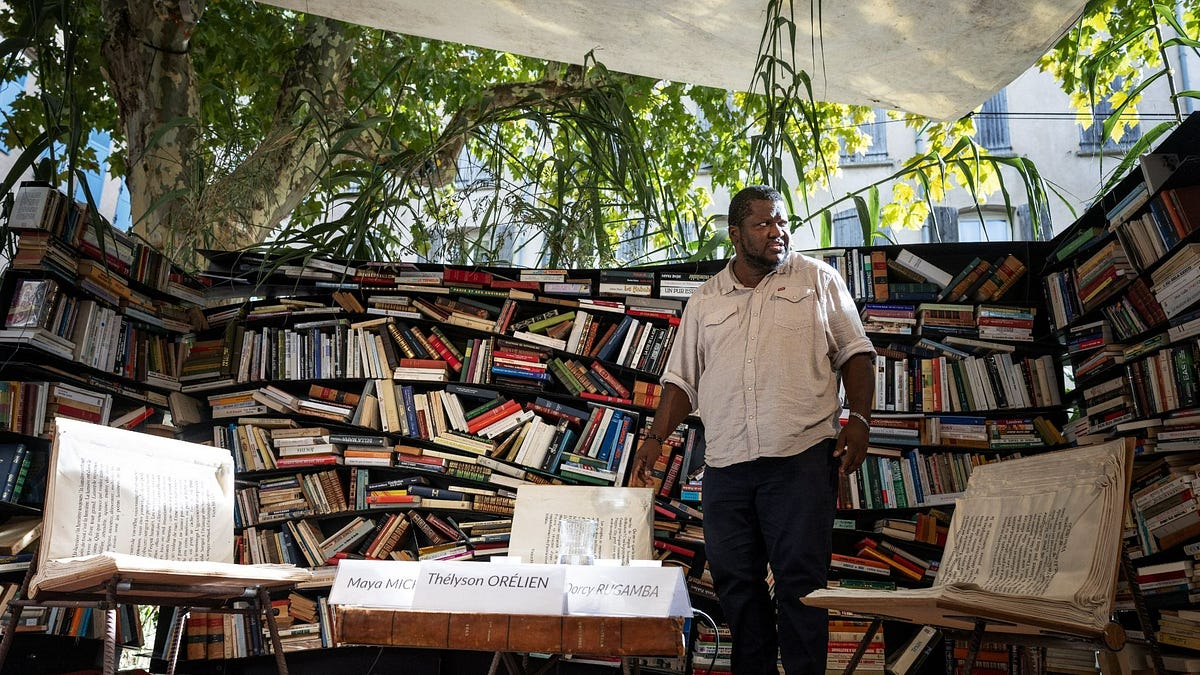
A Quebec publishing house is cutting ties with author Thélyson Orélien after saying it found evidence he used artificial intelligence to write his debut novel.
asserted
he → cut → novel
Les Éditions du Boréal said in a press release that analysis of some documents’ metadata indicated AI was used while writing the book.
asserted
AI → say → book
The publisher said it will not reprint the book or publish more books by Orélien.
asserted
it → say → Orélien
Orélien did not respond to The Canadian Press’ request for comment.
asserted
Orélien → respond → comment
The allegations of AI use in his book, “C’était ça ou mourir” (“It was either that or dying”), emerged on social media in September.
asserted
It → die → September
An account using the name “Balance ton Claude” alleged that, according to the Pangram software, excerpts of Orélien’s novel had been written “almost entirely by artificial intelligence.”
uncertain
excerpts → use → intelligence
The novel explores a Haitian refugee’s journey to Quebec.
asserted
novel → explore → Quebec
The story is based on Orélien’s own experience leaving Haiti after the 2010 earthquake, the author has said.
asserted
author → base → earthquake
Initially, the publisher and Orélien said they were working on gathering a detailed record to prove the book had not been written using AI.
asserted
book → say → AI
But a few weeks later, the publisher said the author had decided to end the process.
asserted
author → say → process
“While we do not, now or in the future, accept to play the role of investigator in relation to our authors, this extraordinary situation made it clear we could not simply leave matters as they were,” the publisher wrote Wednesday in its press release.
uncertain
publisher → accept → release
It decided to lead its own investigation and order an external analysis of the different versions of the manuscript, which revealed traces of “AI markers,” said the publisher.
asserted
publisher → decide → markers
Get breaking National news
“We still do not know to what extent AI was used in the creation of ‘C’était ça ou mourir,’ and we will likely never have a definitive answer,” it wrote.
asserted
it → get → answer
The publisher said this case raises a fundamental question on the trust between authors and publishers.
asserted
case → say → authors
“We chose this book because it moved us deeply, long before its success in bookstores and awards.
asserted
it → choose → bookstores
We understand the disappointment felt by some, and we share it,” it wrote.
asserted
it → understand → it
The book was set for a new printing this week.
asserted
book → set → printing
The author has denied using AI to write the book, saying he started working on it in 2017 and finished the first draft in 2019.
asserted
he → deny → 2019
He said he had used AI for research.
asserted
he → say → research
“What I am going through is cruel,” he wrote in an Oct. 13 press release.
asserted
he → go → release
“By attributing a text, one that is mine … to a machine, they have not only called into question my status as a writer but also my humanity.”
asserted
they → attribute → writer
Separately, he admitted plagiarism in some of his early work after media reported resemblances — or, in some cases, near-identical paragraphs — between some of Orélien’s texts and other books or news reports.
asserted
media → admit → texts
The author apologized for what he described as unacceptable mistakes of his youth, while maintaining that no sentence in his novel was generated by a machine.
asserted
sentence → apologize → machine
Before the controversy, the novel won the Prix du Roman Fnac and earned nominations for several major French literary awards.
asserted
novel → win → awards
Since the allegations emerged, it has been removed from the running for France’s prestigious Prix Goncourt.
asserted
it → emerge → Goncourt
Boréal suspended promotional activities surrounding the novel in September, citing concerns for the author’s well-being.
asserted
Boréal → suspend → being
Floriane Claveau, spokesperson for the major Quebec bookstore chain Renaud-Bray, told The Canadian Press Boréal’s decision to cut ties with the author would not make a big difference for the bookstores — until his book runs out.
asserted
book → tell → bookstores
“If a book is available and there is demand, we simply keep it available.
asserted
we → be → it
We don’t position ourselves as judges or censors of content,” she said.
asserted
she → position → content
She said the book sold out in several Renaud-Bray libraries.
asserted
book → say → libraries
Pierre-Yves Villeneuve, president of the Quebec writers’ union, praised the publisher’s decision.
asserted
Villeneuve → praise → decision
“We’ve just declared clearly that this type of work doesn’t have its place on our shelves,” he said in an interview.
asserted
he → declare → interview
He denounced how the publisher’s previously ambiguous information on possible AI use in Orélien’s book put the burden on readers to decide whether to buy the book.
asserted
information → denounce → book
“It’s a situation that was completely unfair, because the reader didn’t have any information to know whether this book was really written by Thélyson (Orélien),” said Villeneuve.
asserted
Villeneuve → ’ → Thélyson
While he is happy with the publisher’s decision, he called on Boréal to release more details on the evidence they found indicating AI use.
asserted
they → call → use
This information could help readers better understand the situation and provide a possible road map for industry professionals in similar situations.
uncertain
readers → help → situations
“They had promised us a detailed record, and they did not deliver,” said Villeneuve.
asserted
Villeneuve → promise → record
This report by The Canadian Press was first published Oct. 21, 2026.
asserted
report → publish → Press
 The Aporia