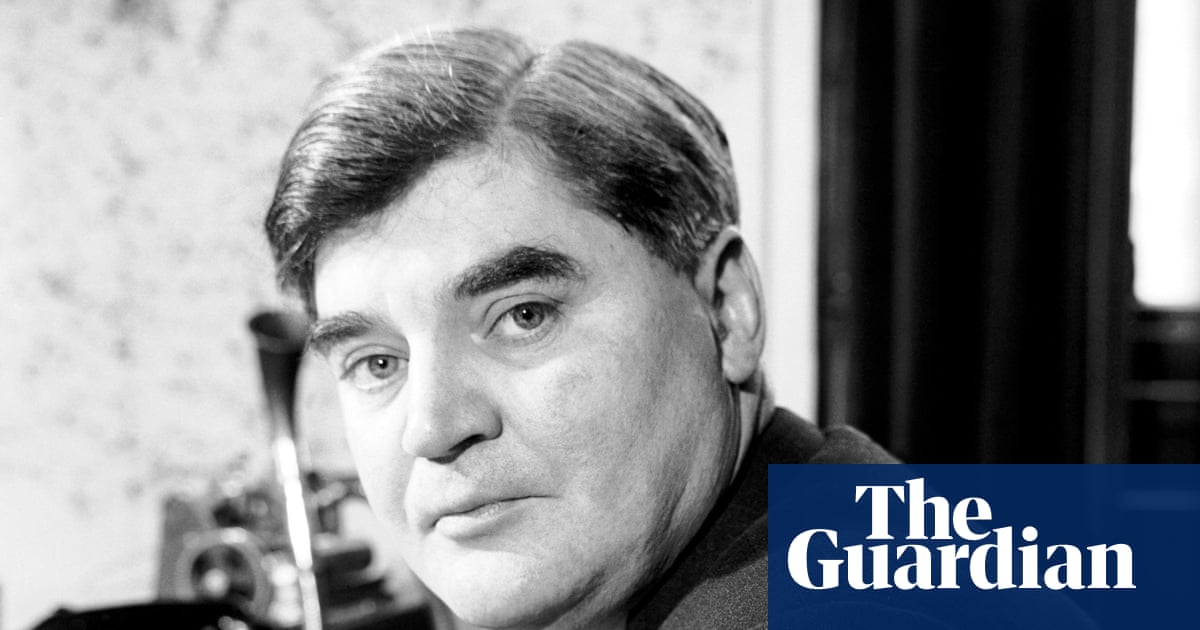
The man who created the National Health Service, revered Labour politician Aneurin 'Nye' Bevan, was being watched by MI5 in case he had Soviet sympathies, security files reveal today.
asserted
files → create → sympathies
Mr Bevan is a hero of the Labour movement who went down in history as the 'father of the NHS' for giving birth to Britain's cradle-to-grave service when he was Minister for Health in 1948.
asserted
he → go → 1948
Yet for more than 20 years – even when he was a serving Cabinet minister – Mr Bevan was kept under suspicion by MI5, according to papers released to the National Archives today.
uncertain
Bevan → serve → Archives
He came to the attention of the security service in the 1930s as a firebrand left-wing backbencher amid concern about his links with prominent communists.
asserted
He → come → communists
Alarm bells rang when Mr Bevan addressed a rally in Montreal in 1934 in which he pictured the overthrow of the Nazi regime and 'a united Europe under Soviet rule'.
asserted
he → ring → rule
In 1943, Roger Hollis, a future MI5 director-general, said the security service did not monitor MPs 'unless we had very good reason to believe that their activities were prompted by subversive motives'.
asserted
activities → say → motives
At one stage, MI5 became so concerned about his links to a known Russia spy that he went to see prime minister Clement Attlee in No 10 to warn him.
asserted
he → become → him
Nye Bevan at his desk in 1945 as he planned his greatest creation: the NHS.
asserted
he → plan → creation
Unknown until now, MI5 suspected he had Soviet sympathies and spies monitored him for more than 20 years
asserted
spies → suspect → years
Ironically, one of MI5's secret reports on Bevan in the files was even addressed to a Captain A F Blunt - otherwise known as Anthony Blunt, himself later unmasked as a Soviet spy.
asserted
one → address → spy
Agents kept tabs on Mr Bevan for decades and one report, from 1954, recounted how he met the Soviet ambassador over lunch at the Polish embassy in London but it 'went off very badly' because the Russian had difficulty in understanding Mr Bevan's Welsh accent.
asserted
Russian → keep → accent
But some agents wondered why MI5 was bothering to monitor Mr Bevan at all when, as one noted in 1943, he 'makes exactly the same remarks in the Houses of Parliament pretty frequently'.
asserted
he → wonder → Parliament
Mr Bevan himself complained to colleagues in 1956: 'They were not spying on Hitler, they were spying on me.'
asserted
they → complain → me
Although Bevan was never accused of being a spy, some of his comrades almost certainly were, including Morpeth MP William Owen, the files chronicle.
asserted
chronicle → accuse → Owen
Owen's treachery saw him selling defence secrets to Soviet-controlled Czechoslovakia in return for cash, cigars and wine.
asserted
him → see → cash
The Labour MP was nicknamed 'Dedek' - Czech for 'old man' – by his handlers at the notorious Prague-based spy agency StB.
He dropped off files stamped 'secret' in parked cars on London streets - which the agents from the Czechoslovakian embassy had duplicate keys to.
asserted
agents → nickname → keys
MI5 files released to the National Archives reveal how Owen, an MP for 16 years until 1970, was regarded by 1969 as the StB's 'most valuable agent in the UK', passing on documents from the defence select committee including details of the British Army on the Rhine.
asserted
Owen → release → Rhine
William Owen pictured with wife Ann in their suburban garden after he was cleared of passing British secrets beyond the Iron Curtain - but the taxman soon wiped the smile from his face
asserted
taxman → picture → face
When the Americans found out, they complained bitterly about secrets of 'utmost importance' being 'given away to the Soviet Union'.
asserted
secrets → find → Union
Owen, 69, was arrested at his modest semi in Carshalton in Surrey in January 1970 and put on trial at the Old Bailey.
asserted
Owen → arrest → Bailey
He admitted taking money – allegedly trousering £500 (£10,000 in today's money) stuffed into envelopes every month, but claimed he had 'never given them anything of real value'.
uncertain
he → admit → value
The former miner was acquitted of breaching the Official Secrets Act, but still lost his job as an MP – after the Inland Revenue noticed he had not paid tax on all his backhanders from the Czech spies.
asserted
he → acquit → spies
He was forced to pay the taxman £7,000, the equivalent of £150,000.
asserted
He → force → 150,000
A Czech spy who defected to the West, Josef Frolik, who had exposed Owen, recalled the grasping MP was 'always demanding free holidays in Czechoslovakia' and 'pocketed as many cigars as possible whenever he came to the embassy for a party'.
asserted
he → defect → party
Despite convincing the Old Bailey jury he only ever chatted about politics to his handlers, intelligence historian Christopher Andrew said Owen 'was almost certainly guilty as charged'.
asserted
Owen → convince → handlers
He died in 1981.
asserted
He → die → 1981
Labour Party riddled with Communists
The Labour Party in the Sixties was so riddled with communists that its leaders begged MI5 spies to purge them, the files reveal.
asserted
files → riddle → them
Party leader Hugh Gaitskell feared 'quite a lot of' his own MPs were pretending to be Labour members but were really under the direction of the Communist Party of Great Britain.
asserted
lot → fear → Britain
Some of them turned out to be agents of the Kremlin.
asserted
Some → turn → Kremlin
Hugh Gaitskell who, as Labour leader in 1961, secretly asked MI5 to help him get rid of more than a dozen of his own MPs he thought might be communist traitors, new files reveal
Mr Gaitskell, then the Leader of the Opposition (Harold Macmillan was Prime Minister), authorised his shadow home secretary Gordon Walker to discreetly ask for the might of the British security services to be turned on their own party.
uncertain
might → ask → party
He met MI5's deputy director general Graham Mitchell who wrote in a note dated September 9, 1961: 'The leadership wanted to purge the Parliamentary party of some of its communists.
asserted
leadership → meet → communists
They wondered if we could help them.
uncertain
we → wonder → them
He added: 'Gordon Walker may have gathered from my expression that his project was not meeting with much enthusiasm.'
uncertain
project → add → enthusiasm
Before leaving empty-handed, Walker handed the spy chief Labour's own list of suspects with 25 handwritten names of its MPs, some of whom were 'too stupid to do much harm' but one at least was 'a sinister figure'.
asserted
one → leave → harm
The list included William Owen and Tom Driberg, both of whom were accused of being agents of the Kremlin.
asserted
both → include → Kremlin
British composer 'was Trotskyist revolutionary'
Sir Michael Tippett – one of the most celebrated British composers of the 20th century and a famed pacifist – was monitored by MI5 as a suspected Trotskyist revolutionary, the files show.
asserted
files → fame → revolutionary
Following the outbreak of the Second World War, Sir Michael, a contemporary of Benjamin Britten, was briefly jailed as a conscientious objector and subsequently went on to compose his anti-war masterpiece, A Child Of Our Time.
asserted
Michael → follow → Time
One of the most important British composers of the past century, he was suspected of being a revolutionary by MI5 agents
In 1934, the security service intercepted a letter he had written to a Communist Party organiser in London, complaining of the difficulties of trying to combine his work in a communist 'cell' with his life as a music teacher living in rural Surrey.
asserted
he → suspect → Surrey
However the MI5 files suggest he was peculiarly unconvincing as a violent revolutionary.
asserted
he → suggest → revolutionary
Hapless spies only managed to turn up information such as 'When at home, he appears only to wear short khaki shorts and shoes.
asserted
he → manage → shorts
…and 3 more, not listed.
 The Aporia