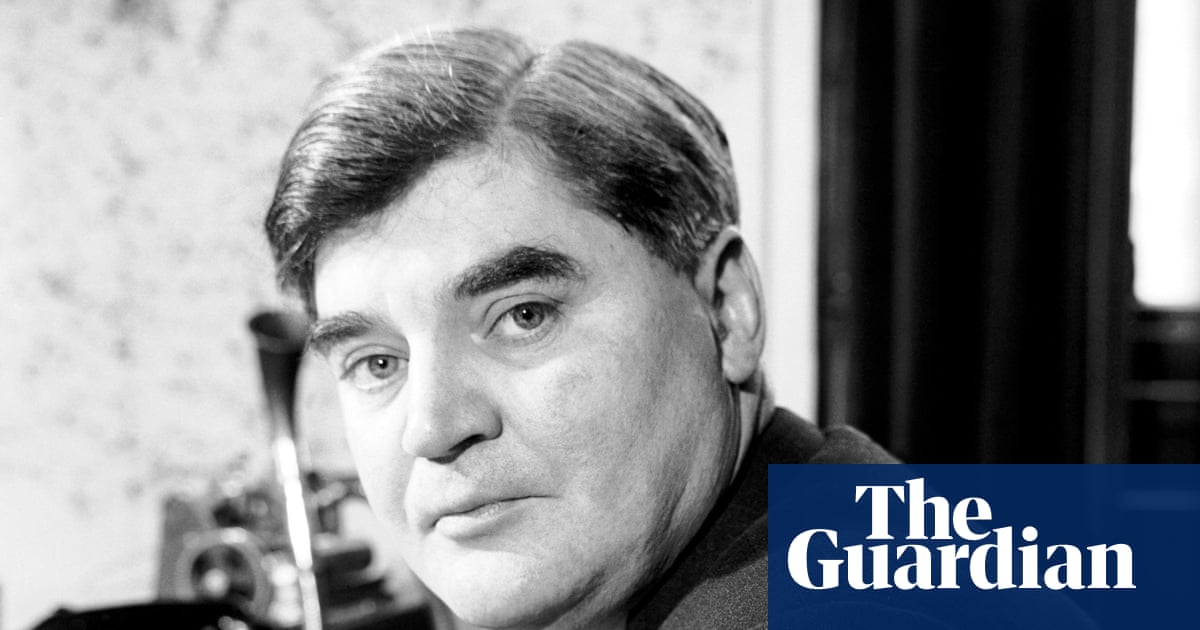
Aneurin Bevan’s personal security file was ‘remarkably tame’ – National Archives

Read the original at The Guardian ↗
Cite

Davies, C. (2026, October 21). Aneurin Bevan’s personal security file was ‘remarkably tame’ – National Archives. The Guardian. https://www.theguardian.com/politics/2026/oct/22/aneurin-bevans-personal-security-file-was-remarkably-tame-national-archives

Dated from the outlet's own feed. Check the original for its byline.

The Guardian · collected 2026-10-21 · by Caroline Davies

Quick Summary

Aneurin Bevan’s security file, released by the National Archives, reveals that he was monitored by British intelligence services for over two decades starting in 1933 due to concerns about his communist affiliations. Despite initial worries and a brief investigation into his friendship with convicted Russian spy Wilfred Macartney, MI5 found little evidence of Bevan’s involvement in subversive activities after the war, leading one officer to describe the file as “remarkably tame” upon reviewing it after Bevan's death in 1960.
Written locally by qwen2.5:14b on 2026-10-21, using this article's own text rather than the other coverage of the same event (that is the story summary below).

AI analysis runs on qwen2.5:14b, locally

Story summary

Aneurin "Nye" Bevan, the Welsh Labour politician known as the "father of the NHS," was monitored by MI5 for over two decades from the early 1930s until his death in 1960, according to recently declassified documents released by the National Archives. Despite concerns about his links with communists and a Russian spy, MI5 files describe Bevan's security dossier as "remarkably tame." The agency never intercepted Bevan’s mail or tapped his phone, and some officers questioned why he was under scrutiny given that his parliamentary statements were often similar to those in public records like Hansard. Bevan came to prominence during World War II as a vocal critic of the government and continued to be monitored even after becoming Minister for Health in 1948 and establishing the NHS.

Written for “Miw Five Spied On NHS Founder Bevan” on 2026-10-22, grounded in this article and the 2 other(s) covering the same event.
Why this leaning score
This article does not take a side on a contested political question, so it has no leaning score. That is an answer rather than a gap: a match report or a rescue can be warmly or critically written without being left or right, and scoring it anyway is how approval of a subject gets recorded as a political position.
No political leaning scored for article 97738 · logged 2026-10-21

Story

📰 Miw Five Spied On NHS Founder Bevan
Politics · 3 article(s) covering the same event. Compare every outlet's account →

Compared with similar articles

This article reads unscored and hedges 17% of its claims. Each row says how that neighbour differs.
Daily Mail · 0.92 cosine similarity
⚖️ Leans left 🔴 12% hedged 5 of 43 📰 publisher trust 64
“Both articles describe the release of National Archives files revealing MI5's decades-long monitoring of Aneurin 'Nye' Bevan for Soviet sympathies.”
The Straits Times · 0.87 cosine similarity
⚖️ Leans left 🔴 0% hedged 0 of 9 📰 publisher trust 68
“Both articles discuss the release of secret documents by the National Archives revealing MI5's surveillance of Aneurin Bevan over several decades.”
How this article was measured signals, leaning charts, publisher record, byline, topics and claims

Signals How these are calculated →

Claims extracted
30
sentences that state something as happening or true
Uncertain
17%
5 of 30 hedged ("reportedly", "may", "according to")
Leaning
not political
takes no side on a contested political question
Publisher signals
66/100
The Guardian's corrections and hedging, across everything collected from it. Not a measure of accuracy.
Outlets on this story
3
Politics
Same framing elsewhere
1
articles that frame the event the way this one does
Analyzed 2026-10-21 · how these are computed

How this is being covered How these are calculated →

Article leaning vs. publisher reliability
Source leaning vs. consistency

Publisher

The Guardian · 2246 article(s) · 6 correction(s) detected
Running correction rate · 6 correction(s)

Who wrote this

Caroline Davies
8 article(s) here · 1 carrying a prediction
🔮 “In fact he makes exactly the same remarks in the Houses of Parliament pretty frequently, as any copy of Hansard will show, and it would not therefore be possible to do anything positive.”
🔮 Speaking to GQ magazine in New York, Prince Harry said of his complicated relationship with William and King Charles that from a family perspective it was a “massively relatable issue for so many people”.
🔮 It's another dramatic escalation in the standoff between the former prime minister's supporters and Pakistan's state - and one that some fear could lead to more instability, not less.
🔮 The children's grandfather has said her siblings will retain their British citizenship so they can choose to return to the UK if they wish.
🔮 She fears that dream could now be over and that she could be sent back to Afghanistan.
🔮 Earl Spencer also says he believed Buckingham Palace wanted William and Harry and himself to walk behind Diana’s coffin because the then Prince Charles was “adamant” he was going to walk and palace officials feared “members of the public might shout abuse at him”.
🔮 The timing of the post suggests it may be in response to an official letter to UK senior government and military officials on behalf of Charles that reiterated the Duke and Duchess of Sussex were not working royals and would not use their HRH styles.
Also by Caroline Davies
Nothing else under this byline is closely related to this article, so these are simply their most recent.
All 8 articles by Caroline Davies →

Topics

Labour MI5 NHS Welsh communist

Subjects

MI5 ORG · 10× Bevan PERSON · 9× communist NORP · 5× Labour ORG · 3× Macartney PERSON · 3× NHS ORG · 2× Welsh NORP · 2× communists NORP · 2× Aneurin “Nye” Bevan PERSON · 1× the National Archives ORG · 1×

Narrative

Although there is nothing in the files to indicate that MI5 ever tapped his phone or intercepted his mail, one officer wrote in 1943: “I do not think that Bevan’s activities are a matter in which we, the Security Service, should be involved.
framing: assertive · carried by 1 article(s) · first seen 2026-10-21
🔮 “In fact he makes exactly the same remarks in the Houses of Parliament pretty frequently, as any copy of Hansard will show, and it would not therefore be possible to do anything positive.”

Claims (30 extracted, 5 hedged)

Aneurin “Nye” Bevan, the Welsh Labour firebrand who spearheaded the creation of the NHS, was monitored by security services for more than two decades, though his personal file was “remarkably tame”, according to official files released to the public. uncertain
file → spearhead → public
Bevan came to MI5’s attention in the 1930s over concerns about his links with known communists, papers released to the National Archives show. asserted
papers → come → Archives
Monitoring continued even after he became a minister in the postwar Labour government that created the NHS. asserted
that → continue → NHS
At one point, his links to a known Russian spy led to the then director general of MI5 approaching prime minister Clement Attlee to warn him. asserted
general → know → him
However, the papers show, some in the security services questioned why Bevan was of interest. asserted
Bevan → show → interest
Although there is nothing in the files to indicate that MI5 ever tapped his phone or intercepted his mail, one officer wrote in 1943: “I do not think that Bevan’s activities are a matter in which we, the Security Service, should be involved. asserted
we → be → which
“In fact he makes exactly the same remarks in the Houses of Parliament pretty frequently, as any copy of Hansard will show, and it would not therefore be possible to do anything positive.” asserted
it → make → anything
Reviewing the file after his death in 1960, another MI5 officer noted: “Considering what a controversial character Nye Bevan was, the file is remarkably tame.” asserted
file → review → 1960
MI5 first opened a personal file on the backbench Labour MP for Ebbw Vale in South Wales in 1933. asserted
MI5 → open → 1933
He was described in one entry to have “inherited the evangelical fervour of his Welsh forebears and knows how to use it in the communist cause.” asserted
He → describe → cause
He was also noted to have been “in close touch” with Harry Pollitt, general secretary of the Communist party of Great Britain, and others in the party who backed his plan to organise “workers’ freedom groups” to defend against “capitalists”. asserted
who → note → capitalists
Bevan fell out with his communist allies who had complained he was not interested in workers’ unity and was intent on building “a movement of his own”. asserted
he → fall → own
But by 1936 they had reconciled, with Bevan supporting an application by the Communist party to affiliate with the Labour party. asserted
Bevan → reconcile → party
In 1949, MI5 became concerned about Bevan’s friendship with Wilfred Macartney, who had been convicted of spying for Russia in 1928. asserted
who → become → 1928
Recordings of Macartney’s conversations suggested he was passing on information obtained by Bevan to Pollitt. uncertain
he → suggest → Pollitt
It led the director general Sir Percy Sillitoe to approach Attlee, who dismissed Macartney’s claims as a “tissue of lies” but agreed to “warn” Bevan about Macartney. uncertain
who → lead → Macartney
The file was finally closed in 1975, 15 years after Bevan died. asserted
Bevan → close → 1975
Other newly released papers show MI5 feared communists could attempt to disrupt the coronation of King George VI, with Communist party activists closely watched before the Westminster Abbey ceremony in 1937. uncertain
activists → release → 1937
While the party prepared a propaganda drive and printed a million anti-monarchist leaflets to be distributed during coronation week, members were warned to avoid antagonising a largely pro-royalist public. asserted
members → prepare → public
One MI5 report from April 1937 noted that a “comrade” in Manchester had been “severely censured” for proposing a series of demonstrations as it would be “playing into the hands of the fascists and police”. asserted
it → note → fascists
“It has been pointed out that members will be ‘going against the stream’ in doing this and they must be careful to speak in such a way that they do not make themselves unpopular with their neighbours.” asserted
themselves → point → neighbours
Sir Michael Tippett, a leading British composer of the 20th century and a famed pacifist, was also monitored by MI5 as a suspected Trotskyist revolutionary, according to the files. uncertain
Tippett → lead → files
MI5 believed he joined first the Communist party and then the Trotskyists in the 1930s, and remained an active supporter until the end of the second world war. asserted
he → believe → war
The files suggest, however, he was unconvincing as a revolutionary. asserted
he → suggest → revolutionary
In one intercepted letter to a Communist party organiser in London, he complained of the difficulties of trying to combine his work as a communist with his life as a music teacher living in rural Surrey. asserted
he → intercept → Surrey
His evening commitments meant that it was “quite impossible” for him to attend “cell” meetings in London, he complained. asserted
he → mean → London
A report from 1955 noted that Tippett “has not come to notice in connection with communist or Trotskyist affairs”. asserted
Tippett → note → affairs
However, his radical past meant that as late as 1959 he was blocked from taking up a Foreign Office-sponsored lectureship in Germany, and it was only in the 1960s that MI5 were prepared to give him a clean bill of health. asserted
MI5 → mean → health
In 1966, he was knighted for services to music. asserted
he → knight → music
He died in 1998 aged 93. asserted
He → die → 1998

💬Give feedback
🕘History 🎫Support