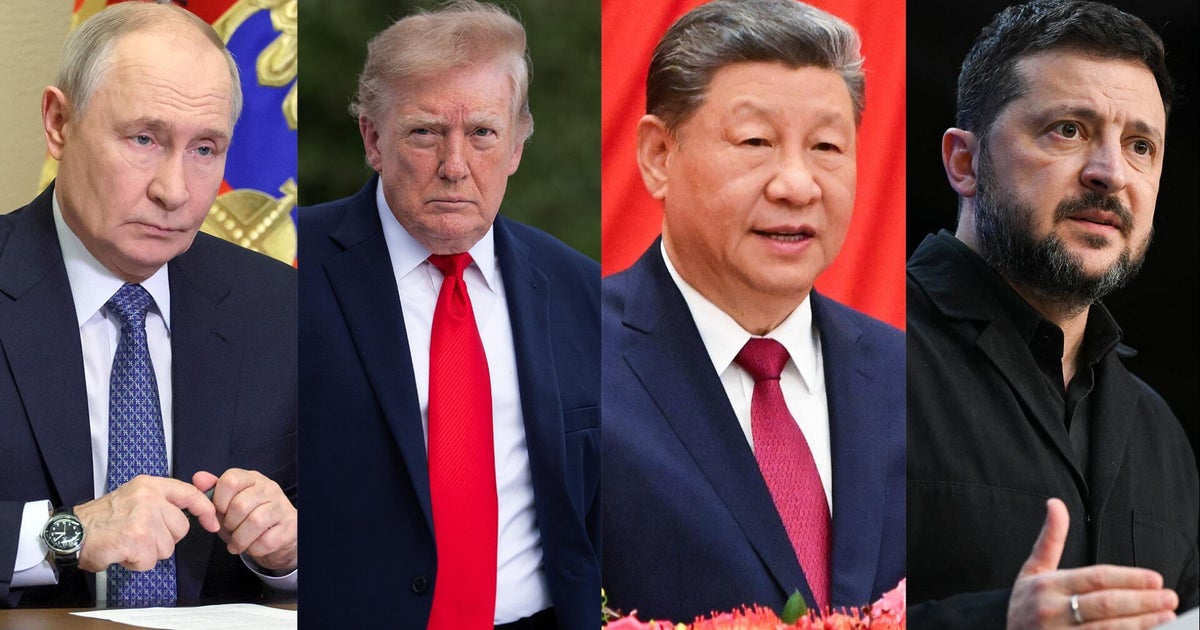
The administration of US President Donald Trump has stepped up diplomatic efforts this autumn to revive stalled negotiations aimed at ending Russia's war in Ukraine.
asserted
administration → step → Ukraine
Washington has increased pressure on Kyiv and its European partners while seeking to draw Moscow back to the negotiating table through a series of concessions, including a deal involving Russian diesel exports to the US and the temporary easing of some sanctions.
Yet the Kremlin appears in no hurry to resume meaningful peace talks.
asserted
Kremlin → increase → talks
Moscow is ready to hold negotiations with Ukraine at a technical level next month, the Kremlin said after the meeting between US special envoy Steve Witkoff and Russian President Vladimir Putin in St. Petersburg on November 21.
asserted
Kremlin → hold → November
Putin agreed to resume the peace talks mediated by Washington after November 10, his aide Yury Ushakov said after the meeting.
asserted
aide → agree → meeting
He added that the next round of negotiations could take place in Abu Dhabi and would focus on "building the security system for Russia and Ukraine after the end of the war."
uncertain
round → add → war
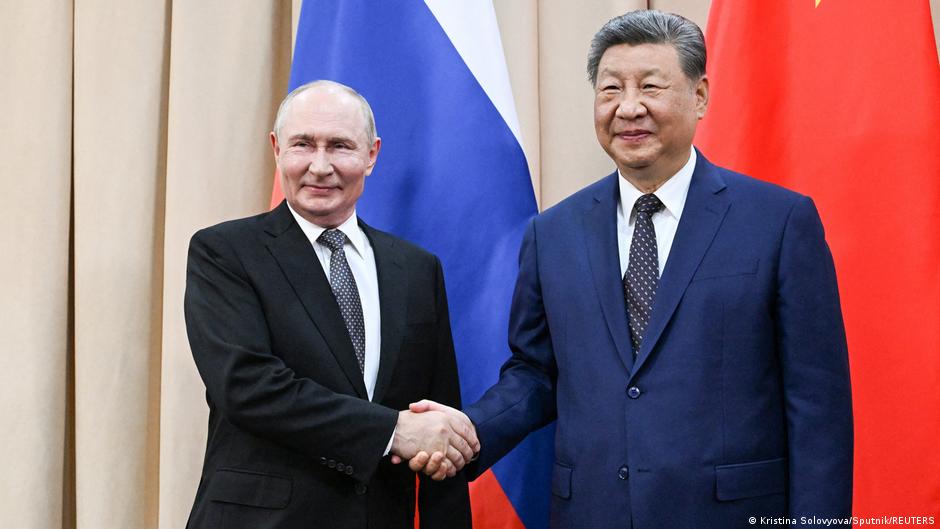
According to his aide, Putin also shared some thoughts with Witkoff on the possible trilateral summit involving US President Donald Trump and Chinese President Xi Jinping.
uncertain
Putin → accord → Trump
Ushakov pointed out that Beijing is already preparing the meeting.
asserted
Beijing → point → meeting
Trilateral summit in China without Ukraine
Moscow proposed to hold a three-way meeting on the sidelines of the Asia-Pacific Economic Cooperation (APEC) summit, scheduled for November 18-19 in Shenzhen, China, The Wall Street Journal reported earlier this week.
asserted
Journal → propose → Shenzhen
According to WSJ sources, Putin hopes to reach an agreement with Trump and Xi on ending the war in Ukraine on terms favorable to Russia.
uncertain
Putin → accord → Russia
Moscow's proposal for the three-way summit involving Russia, the United States and China — but excluding Ukraine and the European Union — offers a glimpse of the negotiating format the Kremlin would prefer.
asserted
Kremlin → involve → format
Russia insists that Ukraine must be prepared to make territorial concessions before negotiations can move forward.
asserted
negotiations → insist → concessions
Putin has also repeatedly stressed that he is willing to negotiate only if Russian interests are taken into account.
asserted
interests → stress → account
According to the WSJ, Putin views the proposed gathering in Shenzhen as a potential new Yalta Conference, referring to the 1945 meeting of the leaders of the United States, Great Britain and the Soviet Union to discuss the defeat of Nazi Germany and the postwar order in Europe.
uncertain
Putin → accord → Europe
The newspaper reported that Chinese officials had indicated through diplomatic channels that Beijing would not object to the three-way format if Trump agreed to participate.
asserted
Trump → report → format
Trump, whose relations with Kyiv have deteriorated significantly in recent weeks, has also expressed openness to such talks.
asserted
relations → deteriorate → talks
Ukraine's President Volodymyr Zelenskyy pointed out during his visit in Oslo on October 20 that talks concerning the future of his country will be acceptable only if Ukraine gets a seat at the negotiating table.
asserted
Ukraine → point → table
What does China stand to gain from the talks?
asserted
China → stand → talks
Temur Umarov, a researcher at the Carnegie Russia Eurasia Center in Berlin who specializes in China-Russia relations, is not surprised by the Kremlin's proposal.
asserted
who → specialize → proposal
He told DW that Moscow wants to feel respected by Washington and treated as a major international power.
asserted
Moscow → tell → power
The previous US administration was unwilling to discuss questions affecting Ukraine's sovereignty with Russia without Kyiv's participation.
asserted
administration → discuss → participation
Now, Umarov said, the Kremlin believes such negotiations may have become possible.
uncertain
negotiations → say → ?
Moscow apparently hopes that any agreement reached at the proposed meeting would prompt the White House to pressure Ukraine and the EU into accepting its terms.
asserted
agreement → hop → terms
But what role would China actually play?
asserted
China → play → role
Umarov believes Beijing would participate largely as a symbolic partner, rather than as an active mediator responsible for the outcome.
asserted
Beijing → believe → outcome
"Beijing has no intention of taking responsibility for Ukraine's future," he said.
asserted
he → have → future
Simply attending the summit would not impose any additional obligations on China.
asserted
attending → attend → China
"It is hardly surprising that the Kremlin insists on this format," Umarov explained.
asserted
Umarov → insist → format
"Russia wants to demonstrate that it is on an equal footing not only with the United States, but also with China.
asserted
it → want → China
Yet, objectively speaking, Moscow is not the senior partner in that relationship."
asserted
Moscow → speak → relationship
Umarov believes China has little direct interest in such negotiations.
asserted
China → believe → negotiations
Even if the leaders issued a joint statement, Beijing would seek language that was as vague and noncommittal as possible, he said.
asserted
he → issue → language
That would allow China to present almost any subsequent development in the war as consistent with the understanding reached at the summit.
asserted
China → allow → summit
However, Yurii Poita, a senior associate researcher at the Mercator Institute for China Studies (MERICS), offers a different assessment.
asserted
Poita → offer → assessment
He believes China and Russia have overlapping strategic interests, particularly in their efforts to promote an alternative security architecture across Eurasia.
asserted
China → believe → Eurasia
Both countries, he argues, would benefit from a reduction in Western military presence in Europe and Asia and from a weakening of NATO's influence.
asserted
he → argue → influence
"If Russia and China manage to convince the United States to reduce its military presence in Europe and military assistance to Ukraine, Russia would gain additional advantages on the battlefield," Poita told DW.
asserted
Poita → manage → DW
He added that such a development would further undermine the EU's confidence in the United States as a NATO ally.
asserted
development → add → ally
Poita believes Moscow and Beijing would seek precisely these outcomes in any negotiations with Washington.
asserted
Moscow → believe → Washington
Michael Kimmage, director of the Kennan Institute in the United States, also doubts that Beijing is preparing to take a more active diplomatic role in ending the war.
asserted
Beijing → doubt → war
Speaking to DW, Kimmage said China may see the conflict as destabilizing and would prefer to maintain trade relations with Ukraine and other countries in the region.
uncertain
China → speak → region
…and 15 more, not listed.
 The Aporia