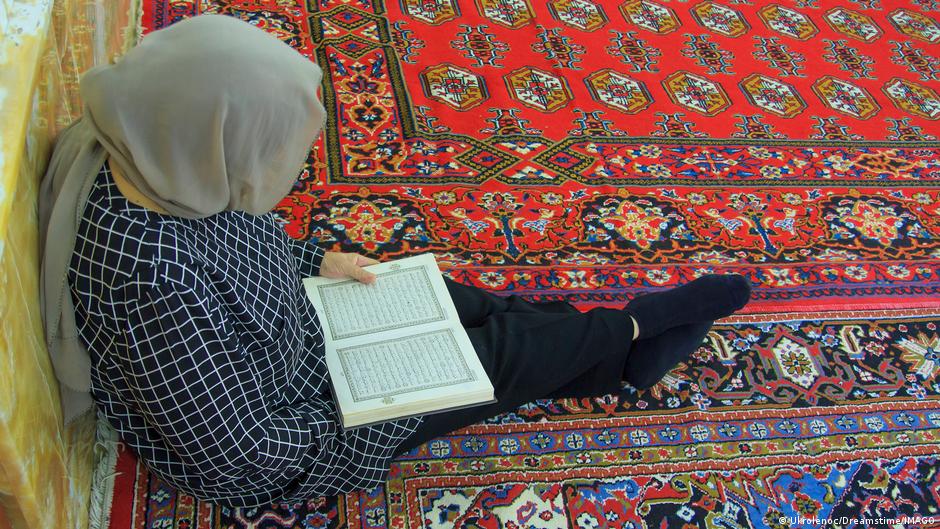
A dispute over Islamic headscarves in Azerbaijani schools has triggered protests at home and an unusual exchange of criticism between politicians in Azerbaijan and Turkey, two countries whose leaders routinely describe their relationship as that of "one nation, two states".
asserted
leaders → trigger → nation
The row has raised questions about religious freedom, sovereignty and the limits of Turkish and Iranian influence in the south Caucasian country.
asserted
row → raise → country
The unprecedented protests have been taking place across Azerbaijan for a nearly week.
asserted
protests → take → week
Children have demonstrated against the headscarf ban introduced at schools.
asserted
Children → demonstrate → schools
Among those rallying outside of schools are girls who wear Islamic headscarves; others, including boys, have joined classmates in solidarity.
asserted
others → rally → solidarity
Rallies in general are rare in a country where police routinely disperse any public protests.
asserted
police → disperse → protests
But demonstrations involving children are unprecedented in Azerbaijan.
asserted
demonstrations → involve → Azerbaijan
As the videos showing the protests started spreading on social media, access to Instagram and TikTok was disrupted in the country, indicating how seriously the authorities are taking the issue.
asserted
authorities → show → issue
Internet monitors documented blocks; the authorities have not explained their cause.
asserted
authorities → document → cause
School rules interpreted as a hijab ban
The dispute follows a series of legal changes.
asserted
dispute → interpret → changes
On July 7, Azerbaijan amended its general education law, reinforcing the principle of secular education and requiring pupils and teachers to comply with dress codes.
asserted
Azerbaijan → amend → codes
On September 21, the government adopted Resolution No. 309, tightening school uniform rules.
asserted
government → adopt → rules
The resolution prohibits additional clothing that disrupts the standard uniform or conflicts with secular education.
asserted
that → prohibit → education
It does not explicitly mention the hijab ― a Muslim headscarf covering the hair and neck ― or instruct schools to exclude pupils wearing one.
asserted
It → mention → one
But some school administrators have interpreted the rule as applying to hijabs and turned girls covering their heads away.
asserted
administrators → interpret → heads
The regulation gives each school's pedagogical council responsibility for resolving compliance issues.
asserted
regulation → give → issues
A separate decision on October 6 set dress requirements for teachers.
asserted
decision → set → teachers
Reports followed of women wearing headscarves being prevented from teaching.
asserted
women → follow → headscarves
Secular education and religious freedom
Azerbaijan is a predominantly Muslim country, but Article 18 of its constitution separates religion from the state and requires state education to be secular.
asserted
Article → separate → education
Articles 42 and 48 protect the right to education and freedom of conscience.
asserted
Articles → protect → conscience
Supporters of the schools' actions say the same dress rules should apply to all pupils.
asserted
rules → say → pupils
Critics argue that excluding girls because of religious clothing violates their rights.
asserted
excluding → argue → rights
The dispute cuts across conventional political divisions: some government critics support the restrictions, while some non-religious Azerbaijanis oppose them.
asserted
Azerbaijanis → cut → them
School headscarf restrictions also prompted protests in 2010 and subsequent years.
asserted
restrictions → prompt → 2010
Families and teachers describe the impact
A Baku literature teacher with 40 years of experience, said that girls wearing headscarves were not admitted to classes at the teacher's school.
asserted
girls → describe → school
Some removed their scarves; others went home or wanted to study at home.
asserted
others → remove → home
The teacher, who didn't want to be identified by name and provided only the initials M.C., supported enforcing the uniform rules, arguing that children were too young to make decisions about religious dress.
asserted
children → want → dress
A parent identified as D.A. told DW this was not a nationwide hijab ban, but a matter of school uniforms.
asserted
this → identify → uniforms
Another parent who opposed the restrictions withdrew an interview before publication.
asserted
who → oppose → publication
Facebook user Sarraf Cabbarov from Baku posted on his social media account that his daughter Sevil, a primary school teacher in Azerbaijan's capital, was dismissed for refusing to remove her headscarf.
asserted
daughter → post → headscarf
He also published a school order issuing her a written warning under the new dress regulations.
asserted
He → publish → regulations
Detentions and reactions in Azerbaijan
On October 12, the Interior Ministry said 37 people had been detained in connection with the protests.
asserted
people → say → protests
According to the ministry's statement, the group had confronted school staff, damaged property and attempted to obstruct school activities and traffic.
uncertain
group → accord → activities
A criminal case was opened under Article 233, concerning disruption of public order.
asserted
case → open → order
The ministry did not identify those detained or say whether they included children.
asserted
they → identify → children
Artist and activist Ilkin Huseynov went missing after launching a project linking volunteer tutors with pupils affected by the restrictions.
asserted
Huseynov → go → restrictions
Local media later reported, citing people close to him, that he had been given 30 days of administrative detention for allegedly disobeying police orders.
uncertain
he → report → orders
Some observers linked the introduction of the new rules for school uniform to the attempts by the Azerbaijani government to counter the influence of neighboring Iran and the growing strength of religious groups within the country.
asserted
observers → link → country
This interpretation is, in essence, echoed by government officials as well, although they stop short of explicitly naming Iran.
asserted
they → echo → Iran
Fazil Mustafa, who chairs the Committee for Public Associations and Religious Institutions at Azerbaijan's parliament, said the authorities were concerned about religious groups influenced from abroad and defended the school rules.
asserted
authorities → chair → rules
…and 9 more, not listed.
 The Aporia