North Korean workers treated as 'slaves' at Russian drone factory

Read the original at Deutsche Welle ↗
Cite

Ryall, J. (2026, October 20). North Korean workers treated as 'slaves' at Russian drone factory. Deutsche Welle. https://www.dw.com/en/north-korean-workers-treated-as-slaves-at-russian-drone-factory/a-79710877?maca=en-rss-en-world-4025-rdf

Dated from the outlet's own feed. Check the original for its byline.

Deutsche Welle · collected 2026-10-21 · by Julian Ryall

Quick Summary

A joint report by CSIS and the George W. Bush Institute reveals that up to 12,000 North Koreans working at a Russian drone factory in Yelabuga are subjected to severe labor exploitation, described as forced labor or slavery. The report details how Russia benefits from receiving over 5,500 drones monthly while North Korea retains up to 90% of the workers' wages, violating UN Security Council Resolution 2397. Human rights activists argue that international intervention is nearly impossible due to geographical and political factors involving Russia, China, and North Korea's border proximity and disregard for UN resolutions.
Written locally by qwen2.5:14b on 2026-10-21, using this article's own text rather than the other coverage of the same event (that is the story summary below).

AI analysis runs on qwen2.5:14b, locally

Story summary

A joint report published on October 14 by the Center for Strategic and International Studies (CSIS) and the George W. Bush Institute has revealed that up to 12,000 North Korean workers at a Russian drone factory in Yelabuga, Tatarstan, are subjected to "gross human rights abuses and human trafficking." The report details how Russia, North Korea, China, and Iran are involved in expanding unmanned aerial vehicle (UAV) production. While Moscow gains access to over 5,500 drones monthly for its conflict with Ukraine, North Korea retains up to 90% of the wages earned by these workers. Due to the geographical locations of these countries, international intervention is deemed impossible.

Written for “North Korean Workers In Russia” on 2026-10-21, grounded in this article and the 0 other(s) covering the same event.
Why this leaning score
The model judged this article politically coded and scored it -0.65, but none of the 4 quote(s) it offered could be found in the article text, so the score is not published.
Written under an earlier scoring contract, which gave a paragraph rather than checkable quotes. Re-analysing this article replaces it.
Leaning score withheld for article 96033: no verified evidence · logged 2026-10-21

Story

📰 North Korean Workers In Russia
World · 1 article(s) covering the same event.

Compared with similar articles

Nothing to compare against. No article is close enough to this one for the pipeline to have linked or judged the pair.
How this article was measured signals, leaning charts, publisher record, byline, topics and claims

Signals How these are calculated →

Claims extracted
30
sentences that state something as happening or true
Uncertain
10%
3 of 30 hedged ("reportedly", "may", "according to")
Leaning
withheld
no quote in the article backed the model's score
Publisher signals
95/100
Deutsche Welle's corrections and hedging, across everything collected from it. Not a measure of accuracy.
Outlets on this story
1
World
Same framing elsewhere
1
articles that frame the event the way this one does
Analyzed 2026-10-21 · how these are computed

How this is being covered How these are calculated →

Article leaning vs. publisher reliability
Source leaning vs. consistency

Publisher

Deutsche Welle · 486 article(s) · 0 correction(s) detected
No corrections detected for this publisher. That may mean careful reporting, or simply that nothing has been checked.

Who wrote this

Julian Ryall
26 article(s) here · 1 carrying a prediction
🔮 "The North Korean regime… is selling the labor of its citizens under a state-to-state arrangement, controlling whether they may leave and collecting most of their wages," it said.
🔮 Japan’s dilemma over frosty ties with Russia deepens after reporter’s arrest Given Japan’s lack of response to recent provocative Russian moves, Moscow could be emboldened to antagonise Tokyo further, analysts say The arrest of a Japanese journalist in Russia has finally woken Tokyo up to the fact that Moscow is playing hardball in their diplomatic relationship, and the country’s apparent unwillingness to push back with commensurate force could encourage the Kremlin to test its neighbour’s resolve, analysts say.
🔮 In September, Japan’s aviation authorities and airlines tightened check-in deadlines, including requiring passengers on domestic flights to complete travel procedures 30 minutes before their scheduled departure time, up from 20 minutes previously, which observers say may lead to more confrontations between airline staff and passengers in the future.
🔮 "Comrade Kim Jong Un expressed the expectation and belief that all the nation's missile forces would remain faithful to their missions of defending the sovereignty and security of the republic in a responsible combat posture," the KCNA reported.
🔮 "This is a serious situation because this incident is believed to have taken advantage of artificial intelligence, and if AI is used in phishing attacks, it could lead to secondary damage," Yonhap News quoted Han as saying at a Cabinet meeting.
🔮 Japan explores ‘ownership’ of nuclear submarines as regional rivalries worsen Proposed changes could allow research into developing a domestically built nuclear-powered submarine without a firm decision on acquiring a fleet Analysts acknowledge there will inevitably be pushback from some sectors of Japan – the only nation to have suffered a nuclear attack – but say there is a growing recognition that regional rivalries are worsening and Japan needs to do more to guarantee its own security. Quoting government sources, the Yomiuri newspaper reported on Wednesday that the expert panel set up to consider changes to the National Security Strategy and other key security documents would state that Japan was “considering ownership” of nuclear submarines.
🔮 Marine’s arrest for murder in Japan fuels anger over US military presence Residents say the killing of an Okinawan woman shows they are paying the price of shouldering Japan’s heaviest security burden The alleged murder of an Okinawan woman by a US marine has put newly elected Governor Genta Koja under intense pressure, raising questions about whether the incident could deepen opposition against the American military presence just as Okinawa assumes greater importance in Japan’s regional security strategy.
🔮 Campaigners and advocates have welcomed the change, but say it lacks teeth and came years too late, even as societal attitudes may have already moved ahead of it.
🔮 Viral lies about foreign crime are fuelling political division in a country desperate for workers, analysts say The trend is reportedly deepening divisions within Japanese society and creating a feedback loop that experts say will be difficult to break.
Also by Julian Ryall
Nothing else under this byline is closely related to this article, so these are simply their most recent.
All 26 articles by Julian Ryall →

Topics

China North Korea North Korean North Koreans Russia

Subjects

North Korea GPE · 7× Russia GPE · 7× North Korean NORP · 4× China GPE · 3× Pinkston PERSON · 3× Song PERSON · 3× Ukraine GPE · 3× Iran GPE · 2× Moscow GPE · 2× North Koreans NORP · 2×

Narrative

"And like everyone else, North Korea has been watching closely, 'learning-by-doing' and innovating its own drone capabilities," Pinkston said, adding that there are "serious implications" for the South Korean military as it also attempts to keep up its defensive capabilities against a new generation of drones in the North.
framing: assertive · carried by 1 article(s) · first seen 2026-10-21
🔮 "The North Korean regime… is selling the labor of its citizens under a state-to-state arrangement, controlling whether they may leave and collecting most of their wages," it said.
2026-10-21 · Deutsche Welle
North Korean workers treated as 'slaves' at Russian drone factory · assertive framing

Claims (30 extracted, 3 hedged)

As many as 12,000 North Koreans working at a Russian drone factory are victims of "gross human rights abuses and human trafficking," according to a new report. uncertain
Koreans → work → report
The figures were part of a joint report published on October 14 by the Washington-based Center for Strategic and International Studies (CSIS) and the Dallas-based George W. Bush Institute. asserted
figures → publish → Studies
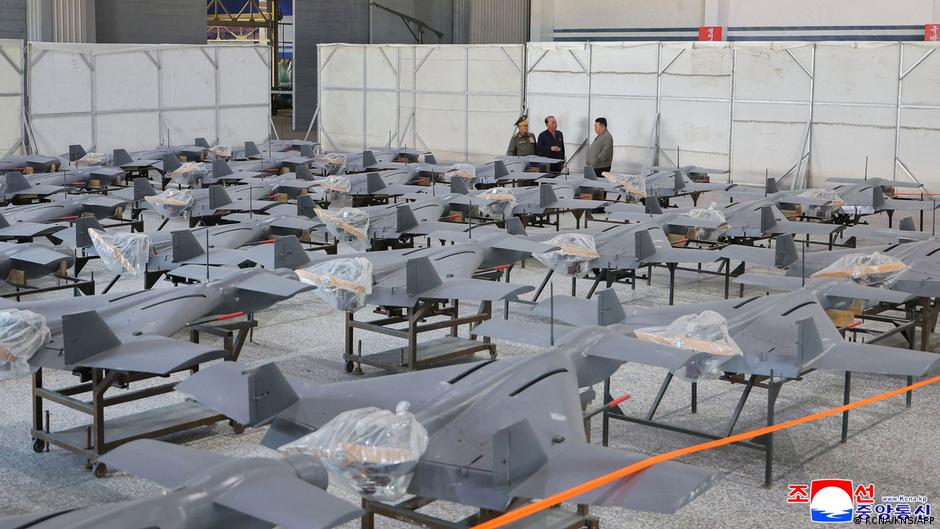
It analyzes how Russia, North Korea, China and Iran are involved in expanding unmanned aerial vehicle (UAV) production at the Yelabuga plant in Tatarstan, and what each country stands to gain. asserted
country → analyze → what
While Moscow gets access to more than 5,500 drones a month for its war against Ukraine, China benefits from being the main supplier of dual-use components, including batteries, internal electronics, engines and navigation systems. asserted
China → get → batteries
Iran has supplied Russia with Shahed drones, which has helped Moscow produce upgraded domestic variants, known as Geran. asserted
Moscow → supply → Geran
Meanwhile, North Korea is earning money by retaining as much as 90% of the wages of the laborers, the report stated. asserted
report → earn → laborers
"The geographical locations of these four countries… means that any kind of international interdiction is impossible," Dan Pinkston, a professor of international relations at the Seoul campus of Troy University, told DW. asserted
Pinkston → mean → DW
Russia and North Korea defy UN resolutions asserted
Russia → defy → resolutions
The joint report says Russia and North Korea are defying United Nations Security Council Resolution 2397, of December 2017, which requires any UN member state to send North Korean workers home within two years. asserted
which → say → years
"The North Korean regime… is selling the labor of its citizens under a state-to-state arrangement, controlling whether they may leave and collecting most of their wages," it said. uncertain
it → sell → wages
This, according to the report, "is the definition of forced labor." uncertain
This → accord → labor
Song Young-Chae, a Seoul-based academic and human rights activist with the Worldwide Coalition to Stop Genocide in North Korea, says Pyongyang is "effectively conducting slavery of its own people and for its own profit. asserted
Pyongyang → base → profit
" "This is just a terrible situation, and we know that it is not happening only at Yelabuga," he told DW. asserted
he → know → DW
"We know there are construction workers in the occupied Ukrainian territories, North Koreans in lumber camps and, of course, tens of thousands of soldiers have been sent to fight — and die — on the front lines in Ukraine," Song added. asserted
Song → know → Ukraine
"Life in North Korea is not easy, but these people are being sent to Russia as slaves, with no freedom, and they are only allowed to keep a fraction of the money they earn," he said. asserted
he → send → money
The challenge, he admits, is to find a way to halt this "trade in humanity. asserted
he → admit → humanity
How much can realistically be done? asserted
much → do → ?
"These countries share a border, so it is easy to transport workers, and no other agency can intervene," Song said. asserted
Song → share → workers
"Russia and China are both permanent members of the UN Security Council but are ignoring its resolutions on this issue. asserted
Russia → ignore → issue
There is very little that can be done." asserted
that → be → ?
Song's rights organization is attempting to highlight the plight of North Korean workers and to create a "coalition of like-minded nations and agencies" to protect laborers — although he admits to being "pessimistic." asserted
he → attempt → laborers
Pinkston shares those concerns, as well as fears over the emergence of a powerful bloc that appears to be "ripping up the post-World War II order on the rule of law and human rights" and is intent on taking a confrontational approach to other nations. asserted
that → share → nations
The weapons being manufactured at Yelabuga will assist in achieving those aims, he said. asserted
he → manufacture → aims
"UN Security Council resolutions on North Korean workers, on weapons proliferation, on the sale of dual-use technologies are all being ignored, so I think we can say that the UN's sanctions regime is pretty much dead," Pinkston added. asserted
Pinkston → ignore → technologies
North Korea developing its drone capabilities It is clear that both Russia and Ukraine have gained important insights into the modern battlefield through their ongoing conflict, Pinkston said, with the emergence of drone technology arguably one of the most critical advances. asserted
emergence → develop → advances
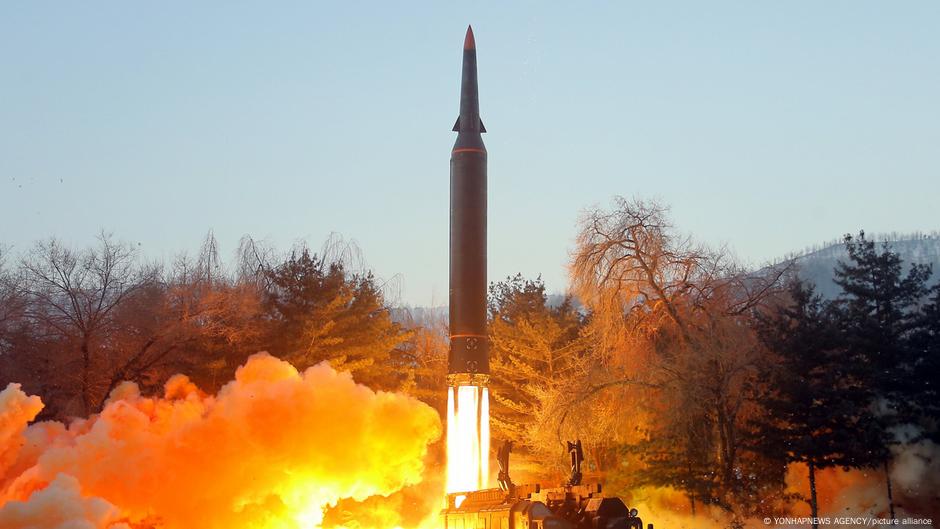
"And like everyone else, North Korea has been watching closely, 'learning-by-doing' and innovating its own drone capabilities," Pinkston said, adding that there are "serious implications" for the South Korean military as it also attempts to keep up its defensive capabilities against a new generation of drones in the North. asserted
it → watch → North
To curb the deployment of North Korean laborers to Russia and the proliferation of weapons, the joint report calls on the US State Department to work with other countries to disrupt human trafficking networks and sanction those responsible. asserted
report → curb → those
It also urges the UN to work multilaterally to investigate the Yelabuga complex and to catalogue the abuses that have taken place. asserted
that → urge → place
Moreover, it demands accountability for those who have carried out abuses and for victims to be protected. asserted
victims → demand → abuses
The report adds that foreign companies that are operating as part of the Yelabuga special economic zone — there are "several" European companies and at least one US firm with a presence at the site — should be pressured to leave. asserted
that → add → site

💬Give feedback
🕘History 🎫Support