Do Anthropic and OpenAI want AI regulation to save humanity, or are they just trying to squeeze out competition?

New York Post · collected 2026-09-14 · by Lydia Moynihan
Read the original at New York Post ↗

Summary

Anthropic CEO Dario Amodei and OpenAI’s Sam Altman have recently pushed for government regulation of artificial intelligence, arguing that AI development is progressing too rapidly and poses a significant risk to humanity. They call for industry-wide regulations that could stifle smaller competitors while allowing established giants like Anthropic and OpenAI to continue operating largely unhindered. Critics argue that this push for regulation may be more about limiting competition than ensuring safety, given the companies’ financial losses and their impending IPOs projected at substantial valuations.
Written by the local model on 2026-09-14, using this article's own text rather than the other coverage of the same event (that is the story summary below).

Signals How these are calculated →

Claims extracted
40
claim-shaped sentences
Uncertain
20%
8 of 40 hedged
Leaning
withheld
no quote in the article backed the model's score
Correction & hedging signals
58.5
corrections and hedging in what we collected; not a measure of accuracy
Outlets on this story
19
Technology
Narrative spread
1
articles carrying this framing
Analyzed 2026-09-14 · how these are computed

AI analysis (generated at analysis time, not now)

Story summary

Dario Amodei, CEO of Anthropic, called for competitors to agree on third-party evaluators to ensure AI safety during an interview with CBS News. The push follows concerns about the rapid development and potential risks of artificial intelligence, such as models becoming too powerful within six to 12 months. Notable figures like Sam Altman (OpenAI) and Elon Musk voiced support for this idea. However, these calls have led to stock market declines in tech companies like Nvidia and AMD. Additionally, some critics argue that focusing on existential risks distracts from the immediate harms of existing AI technologies, such as energy consumption and job displacement.

Written for “AI Safety And Development Concerns” on 2026-09-15, grounded in this article and the 18 other(s) covering the same event.
Why this leaning score
The model judged this article politically coded and scored it -0.65, but every quote it verified points right, so the score is not published.
Written under an earlier scoring contract, which gave a paragraph rather than checkable quotes. Re-analysing this article replaces it.
Leaning score withheld for article 9489: score contradicts its own evidence · logged 2026-09-14

Story

📰 AI Safety And Development Concerns
Technology · 19 article(s) covering the same event.

How this is being covered How these are calculated →

Article leaning vs. publisher reliability
Source leaning vs. consistency

Compared with similar articles

This article reads unscored and hedges 20% of its claims. Each row says how that neighbour differs.
The Intercept
⚖️ Leans strongly left 🔴 12% hedged 8 of 66 📰 publisher trust 97
“Both articles describe the same set of tech executives issuing warnings about AI risks on the same day.”
CBS News
⚖️ leaning not scored 🔴 67% hedged 2 of 3 📰 publisher trust 77
“The articles discuss different aspects of AI regulation and concerns expressed by companies, not the same specific incident.”
The Free Press
⚖️ Leans left 🔴 8% hedged 1 of 12 📰 publisher trust 96
“Both articles discuss the identical announcement by Anthropic's CEO Dario Amodei and subsequent endorsement by OpenAI, regarding the need to slow down AI development, at around the same time.”
Washington Examiner
⚖️ Leans left 🔴 11% hedged 6 of 57 📰 publisher trust 96
“The articles discuss different aspects of AI opposition and regulation, with Article A focusing on physical protests against data centers and Article B discussing calls for industry-wide regulation by major tech companies.”
Evening Standard
⚖️ Leans left 🔴 50% hedged 5 of 10 📰 publisher trust 71
“Both articles discuss the calls for AI development to slow down made by leaders of Anthropic and OpenAI, including Dario Amodei's essay expressing concerns about AI advancement speed.”
Los Angeles Times
⚖️ leaning not scored 🔴 13% hedged 5 of 38 📰 publisher trust 95
“Both articles discuss the call for a slowdown in AI development made by leaders of Anthropic and OpenAI, along with other tech executives, on the same day.”
Semafor
⚖️ Leans right 🔴 33% hedged 1 of 3 📰 publisher trust 95
“Article A discusses AI leaders calling for regulation and government intervention, while Article B focuses on President Trump dismissing calls for AI regulation.”
Reason
⚖️ leaning not scored 🔴 14% hedged 5 of 35 📰 publisher trust 92
“Both articles discuss the same recent actions by Anthropic's CEO Dario Amodei advocating for AI regulation and slowing down AI development, occurring on the same date.”
Al Jazeera
⚖️ Leans left 🔴 22% hedged 4 of 18 📰 publisher trust 96
“The articles describe different legal and regulatory actions by various companies, not the same specific incident.”
BBC News
⚖️ leaning not scored 🔴 23% hedged 6 of 26 📰 publisher trust 96
“Article A discusses Anthropic and OpenAI's calls for AI regulation, while Article B reports on Trump's reaction to those concerns, which are different but related events.”

Publisher

New York Post · 598 article(s) · 4 correction(s) detected
Running correction rate · 4 correction(s)
2026-09-15
Fast food chains are making a major shift in customer service amid complaints of a ‘lonely and disconnected’ store experience
2026-09-15
Are Cocoa Puffs Maria Sten’s Favorite Cereal? The ‘Reacher’ and ‘Neagley’ Star Sets The Record Straight: “I Have to Make Clarifications”
2026-09-06
Long Island inmates in jail on drug charges use photo program to get clean
2026-09-06
‘Landman’ Season 3 Release Date Update: When Does ‘Landman’ Return With New Episodes?

Who wrote this

Lydia Moynihan
1 article(s) here · 1 carrying a prediction
🔮 AI giants Anthropic and OpenAI suddenly started sounding a five-alarm fire last week, insisting their tech is just too good, developing too fast for humanity to handle and could kill us all.
The only article under this byline in the corpus.

Topics

Amodei Anthropic FTC OpenAI Washington

Subjects

OpenAI ORG · 6× Anthropic ORG · 5× Alvaro Bedoya PERSON · 1× Amodei PERSON · 1× Bedoya PERSON · 1× Dario Amodei PERSON · 1× Elon Musk PERSON · 1× FTC ORG · 1× Sam Altman PERSON · 1× Washington GPE · 1×

Narrative

On Tuesday, he is slated to appear at the Future of Life Institute’s “Pro-Human Assembly” alongside figures such as Steve Bannon, Bernie Sanders, and Randi Weingarten (Sanders, for his part, has previously appeared alongside Chinese Communist Party officials at an event trying to slow the pace of AI).
framing: assertive · carried by 1 article(s) · first seen 2026-09-14
🔮 AI giants Anthropic and OpenAI suddenly started sounding a five-alarm fire last week, insisting their tech is just too good, developing too fast for humanity to handle and could kill us all.

Claims (40 extracted, 8 hedged)

AI giants Anthropic and OpenAI suddenly started sounding a five-alarm fire last week, insisting their tech is just too good, developing too fast for humanity to handle and could kill us all. uncertain
humanity → start → us
Anthropic CEO Dario Amodei wants to “slow the pace” of the entire AI industry and demanded government intervention. asserted
Amodei → want → intervention
Just hours later, OpenAI chief Sam Altman chimed in to say he agreed, as did Elon Musk. asserted
Musk → chime → ?
Business leaders were quick to point out that nothing is stopping these companies from independently slowing their innovation. asserted
nothing → point → innovation
But nobody would deliberately handicap themselves — it seems what they really want is for the government to bring in industry-wide regulation. asserted
government → handicap → regulation
Such a move would quickly squelch many of the smaller players, while the biggest companies — namely Anthropic and OpenAI — would be able to ride it out. asserted
companies → squelch → it
It’s a well-worn playbook of regulatory capture: Incumbents warn of impending catastrophe and agitate for regulation, which handily prevents competitors from eclipsing them. asserted
which → ’ → them
Amodei also advocated in a blog post for Washington to give frontier labs a so-called antitrust waiver, which would allow them to coordinate with one another without raising federal collusion or monopoly concerns — essentially a pass for companies to regulate themselves — to ensure safety. asserted
companies → advocate → safety
Now, you don’t need an antitrust waiver to make sure technology is safe, as former FTC Commissioner Alvaro Bedoya pointed out. asserted
Bedoya → need → waiver
You do need one if you’re looking to coordinate on other areas beyond keeping people safe. asserted
you → need → people
Any wavier, as Bedoya put it, “should be met with deep skepticism in light of the economics of the industry and the threat they face from open [source] models.” asserted
they → put → models
In some respects, I can’t blame them for taking this approach. asserted
I → blame → approach
These companies have burned hundreds of billions in development and are still losing money — OpenAI lost approximately $39 billion in 2025 — so they depend on hitting record-setting values in their IPOs. asserted
they → burn → IPOs
And while their technology may be used to cure cancer or infinitely increase productivity, the companies themselves won’t necessarily profit from such innovations. uncertain
companies → use → innovations
Maybe they are sincere in their belief AI could doom the world, but it’s awfully convenient to push for regulation when they are on the cusp of cementing their role as worldwide leaders. uncertain
they → doom → leaders
Anthropic’s public prospectus is expected within weeks and could value the giant at $2 trillion. uncertain
prospectus → expect → trillion
OpenAI pulled their IPO plans, with reports suggesting they will now go public in 2027. asserted
they → pull → 2027
Amodei also has a history of causing alarm — such as in May 2025 when he said half of entry-level white collar-jobs could be eliminated by his new technology. uncertain
half → have → technology
For the record, AI has created more jobs than it has eliminated and the World Economic Forum predicts that will only continue. asserted
that → create → jobs
Jacob Coxon — the 27-year-old researcher who quit Anthropic after just four months, following three years at OpenAI — went viral warning the companies were “gambling with our lives.” asserted
companies → quit → lives
His post racked up more than 100 million views on X, despite the fact he had almost no prior history on the platform. asserted
he → rack → platform
And within the next few days he had landed wall-to-wall coverage and interviews with Fox, CNN, NBC, ABC, The New York Times, and the Wall Street Journal. asserted
he → land → Fox
On Tuesday, he is slated to appear at the Future of Life Institute’s “Pro-Human Assembly” alongside figures such as Steve Bannon, Bernie Sanders, and Randi Weingarten (Sanders, for his part, has previously appeared alongside Chinese Communist Party officials at an event trying to slow the pace of AI). asserted
Sanders → slat → AI
That’s Coxon’s solution after warning that AI could kill us all? uncertain
AI → ’ → us
I could hardly conceive of a more bizarre, not to mention feckless, group to create a framework for reining in the most advanced technology known to mankind. uncertain
I → conceive → mankind
The best take was perhaps Clement Delangue, the CEO of AI company Hugging Face, who claimed asking Coxon “about AI extinction risk is like asking your AC guy about climate change.” asserted
asking → claim → change
Amid all this AI doom and gloom, you have to ask — who stands to benefit? asserted
who → have → doom
The answer is, of course, incumbent frontier labs and our foreign adversaries who will happily race ahead if we slow down. asserted
we → race → course
Fortunately, the White House isn’t playing into it. asserted
House → play → it
JD Vance said frontier AI companies “begging the government to regulate them” felt like “a Trojan horse.” asserted
companies → say → horse
Trump, meanwhile, explained, “We’re leading China in AI. asserted
We → explain → AI
We’re the most sophisticated country in the world, and frankly I want to keep it that way because whoever wins AI, wins.” asserted
wins → ’re → AI
It is fair to have questions and concerns about AI, its bias and its impact on people. asserted
It → have → people
But maybe the best place to get answers isn’t always from the people who are running it, especially when rivals like Amodei and Altman seem so suspiciously eager to fall on their swords. asserted
rivals → get → swords
As Trump put it: “When, in the History of Business, did anyone see the Leaders of an Industry call for Regulation that, if strongly implemented, will drive them into oblivion and bankruptcy? asserted
that → put → oblivion
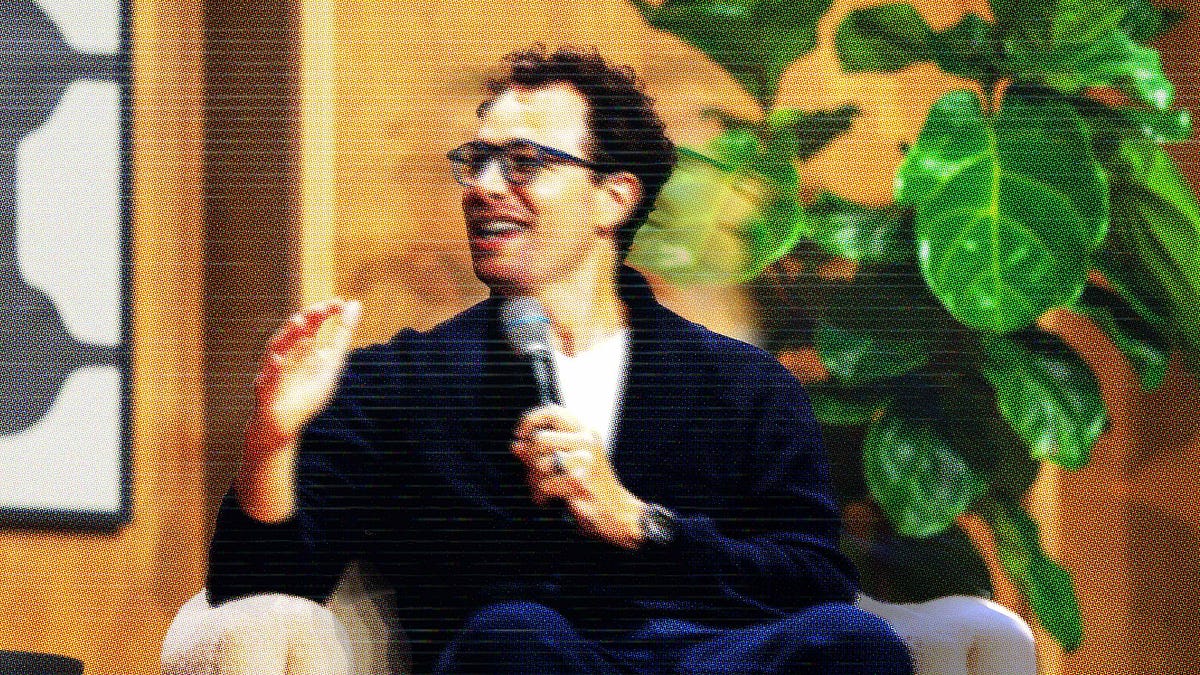
Anthropic CEO Dario Amodei has a history of causing alarm — like he did in May 2025 when he said half of entry-level white collar jobs could be eliminated by the new technology. uncertain
half → have → technology
Bloomberg via Getty Images OpenAI CEO Sam Altman said he agrees with Dario Amodei when it comes to reining in the pace of innovation for frontier labs. asserted
it → say → labs
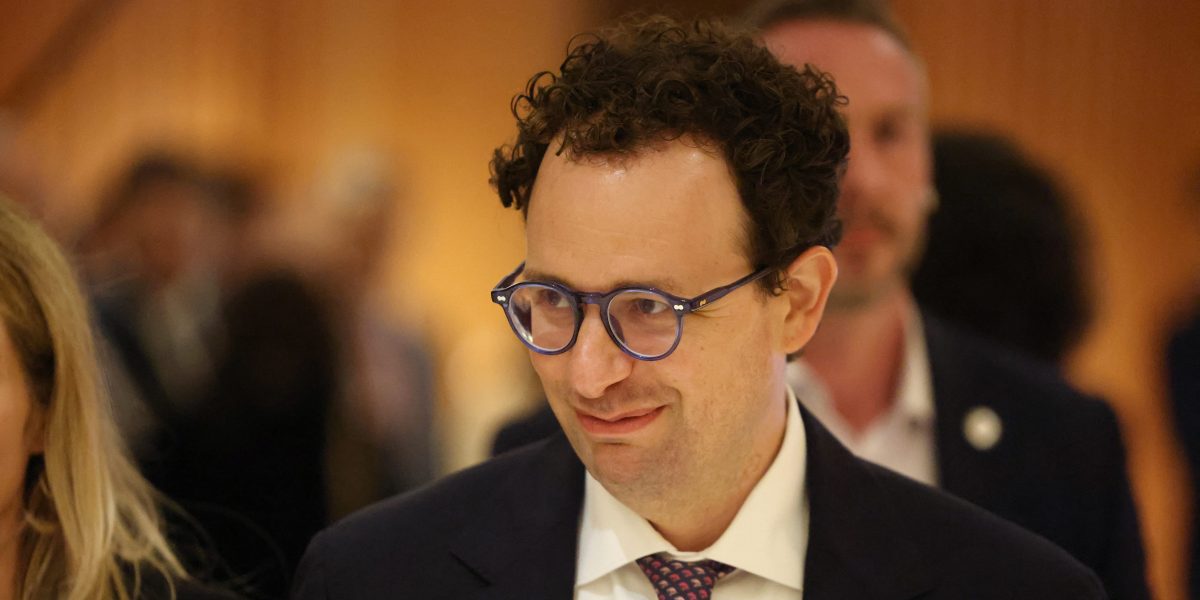
REUTERS Jacob Coxon, a 27-year-old researcher who quit Anthropic after just four months (following three years at OpenAI), went viral for warning that the companies were “racing straight to self-improving superintelligence and gambling with our lives.” asserted
companies → quit → lives
Fox News President Donald Trump called the anti-AI and data center sentiment imperiling innovation a "sick conspiracy." asserted
Trump → call → innovation
REUTERS Jacob Coxon's post slamming AI went on to reach over 100 million people as he raised alarm bells about how rapidly AI is moving. asserted
AI → slam → bells

💬 Give feedback
🕘 History 🎫 Support