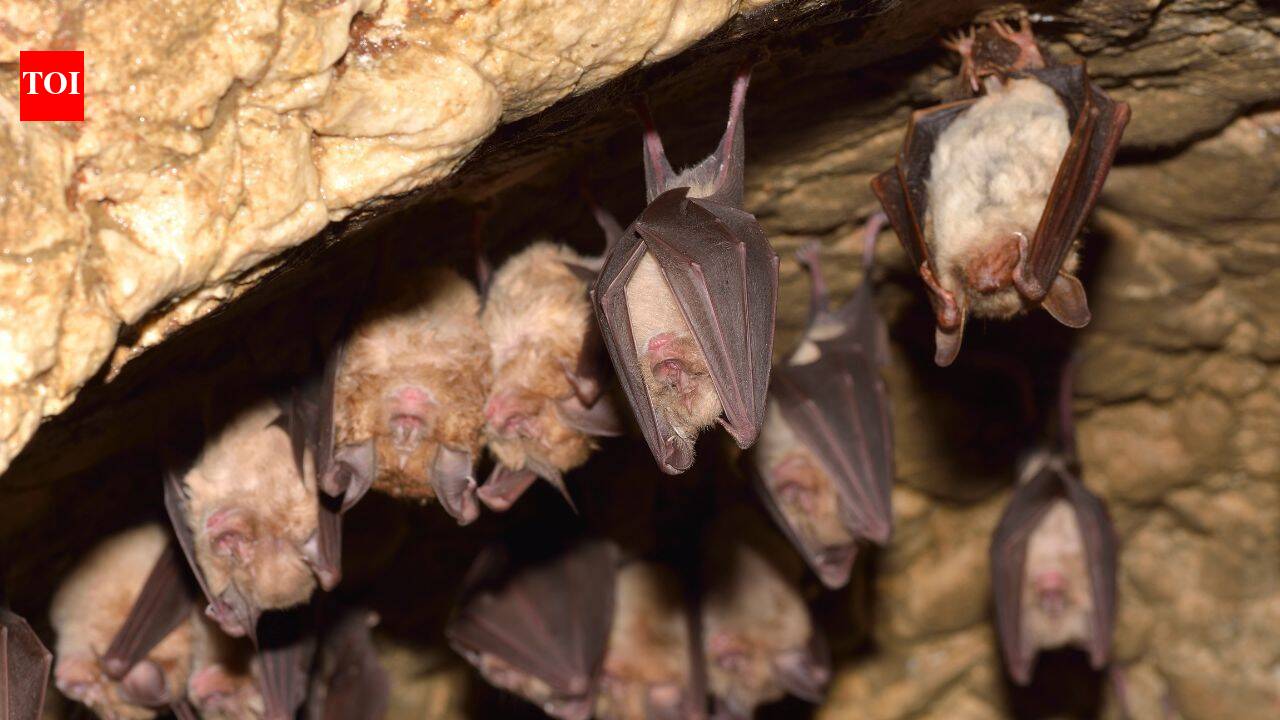
Scientists studying eight closely related bat species discovered a genetic overlap between longevity and resistance to cancer and viral diseases, suggesting that long-lived bats have evolved immune systems capable of fighting infections while removing damaged cells. The research, detailed in ScienceDaily, found that some Myotis species live nearly 50 years, despite typically weighing only a few grams—a stark contrast to other small mammals with much shorter lifespans. Through genome analysis, the study identified genetic changes linked to longer life spans and cancer resistance, indicating evolutionary adaptations specific to longevity within these bat lineages.
Written by the local model on 2026-09-14,
using this article's own text rather than the other coverage of the
same event (that is the story summary below).
A mouse-sized bat that lives for decades appears to have evolved some of the same biological protections that help it resist cancer and viral disease.
asserted
it → live → cancer
Researchers comparing eight closely related Myotis species found an extraordinary range of lifespans, from about seven years in some species to nearly 50 years in others.
asserted
Researchers → compare → others
Their genome analysis revealed that genes associated with longevity overlapped far more than expected with genes involved in virus interactions and cancer defence.
asserted
genes → reveal → interactions
As reported by ScienceDaily, the study suggests that long life in these bats may be connected to an immune system that can fight infection while also identifying and removing damaged cells.
uncertain
that → report → cells
The findings do not offer an immediate treatment for human ageing, but they give scientists a new way to investigate how some mammals remain healthy for decades despite their small size and demanding lives.
asserted
mammals → offer → size
A small mammal with a long life
In mammals, body size often provides a rough clue to lifespan.
asserted
size → provide → lifespan
Larger animals such as elephants and whales tend to live much longer than small mammals such as mice.
asserted
animals → tend → mice
Bats challenge that pattern.
asserted
Bats → challenge → pattern
Some bats weigh only a few grams but can live for several decades.
asserted
bats → weigh → decades
They fly, use large amounts of energy and face repeated exposure to viruses, yet certain species age slowly compared with similarly sized mammals.
asserted
species → fly → mammals
The little brown bat, Myotis lucifugus, is one of the longest lived members of the group studied by researchers.
asserted
bat → live → researchers
Close relatives in the same genus can have very different lifespans.
asserted
relatives → have → lifespans
Some Myotis species live only around seven years, while others can reach nearly 50.
asserted
others → live → 50
That contrast makes the genus an unusual natural experiment.
asserted
genus → make → ?
The species share a common evolutionary history, but their lifespans have diverged substantially.
asserted
lifespans → share → history
The scientists hoped to be able to identify the genetic changes linked to longer life by comparing their genomes.
asserted
scientists → hop → genomes
They were not searching for one “longevity gene.”
asserted
They → search → gene
Instead, they looked for patterns across many genes and biological pathways.
asserted
they → look → genes
Sequencing eight Myotis species
The research team generated near-complete genome assemblies for eight closely related Myotis species.
asserted
team → sequence → species
They also developed cell lines and conducted experiments using primary cells, allowing them to connect genetic patterns with cellular responses.
asserted
them → develop → responses
The genome comparisons looked for signs of positive selection -- genetic changes that appear to have been favored by natural selection because they boosted survival or reproduction.
asserted
they → look → survival
The researchers also looked at structural variation, including differences in gene copy number between species.
asserted
researchers → look → species
The findings suggested repeated adaptation in pathways related to longevity and cancer resistance.
uncertain
findings → suggest → longevity
Long-lived lineages had stronger evolutionary signals in genes that help protect cells from damage and prevent malignant changes.
asserted
that → live → changes
The study also found that many genes associated with lifespan are involved in interactions with viruses.
asserted
genes → find → viruses
Some of these genes help viruses infect cells, while others help the host detect or control infection.
asserted
host → help → infection
Their overlap suggests that immune defence and longevity may have evolved together rather than as completely separate biological systems.
uncertain
defence → suggest → systems
The connection between viruses and ageing
Viruses place a constant burden on an animal’s immune system.
asserted
Viruses → age → system
A bat that lives for decades may encounter many viral infections during its lifetime.
uncertain
that → live → lifetime
It needs to control those infections without creating excessive inflammation or damaging its own tissues.
asserted
It → need → tissues
The researchers found that Myotis bats have an unusually large number of genes encoding proteins that interact with DNA viruses, including herpes viruses.
asserted
that → find → viruses
Some of these proteins support viral replication, while others activate protective responses such as interferon production.
asserted
others → support → production
Rather than showing the same genome-wide enrichment, Myotis bats displayed greater copy number variation in genes involved in RNA virus interactions.
asserted
bats → show → interactions
Copy number variation means that individuals or species may carry different numbers of copies of a gene.
uncertain
individuals → mean → gene
One important example is EIF2AK2, also known as PKR.
asserted
example → know → PKR
This immune factor helps cells respond to viral genetic material and limit the production of proteins that viruses need.
asserted
viruses → help → that
Researchers found that Myotis species can have one, two or three copies of PKR, suggesting that gene duplication may provide additional flexibility in antiviral defence.
uncertain
duplication → find → defence
How cancer resistance enters the story
Long life creates a biological problem.
asserted
life → enter → problem
The more years an animal lives, the more opportunities its cells have to accumulate mutations.
asserted
cells → live → mutations
A long-lived species would therefore be expected to face increased cancer risk unless it also evolves stronger mechanisms to control damaged cells.
asserted
it → live → cells
…and 55 more, not listed.