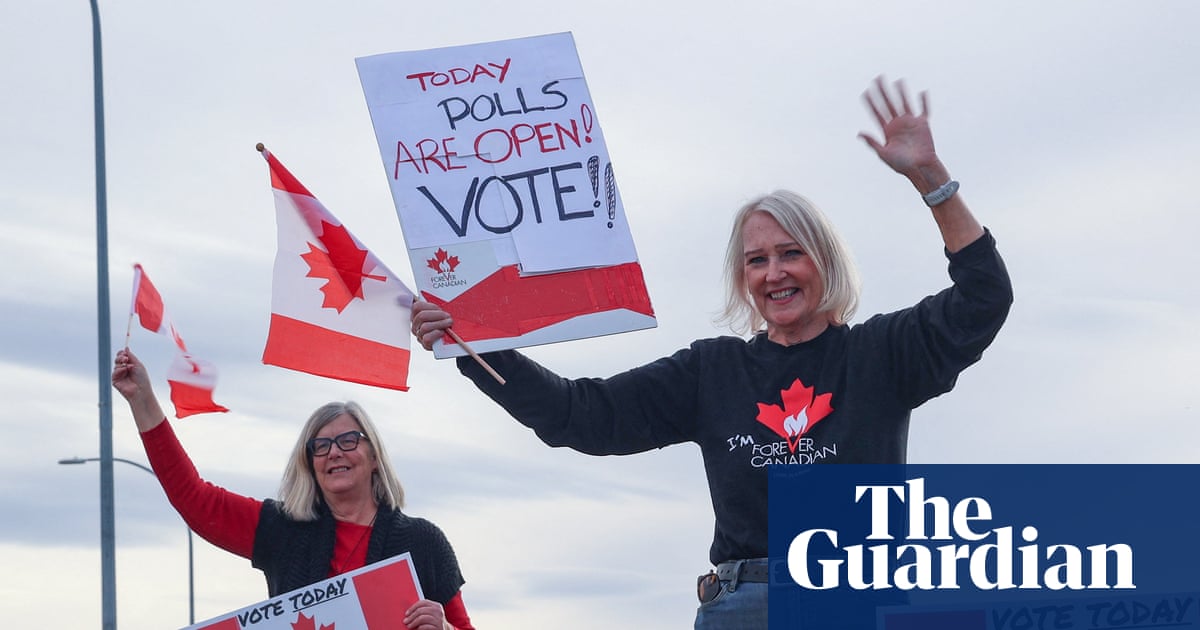
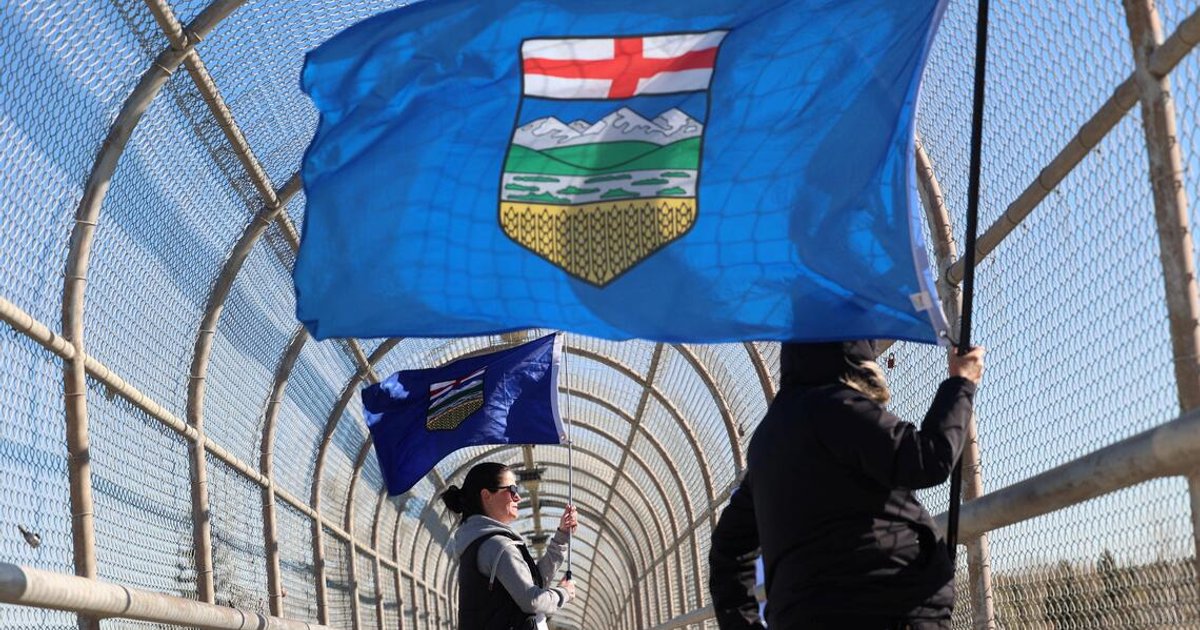
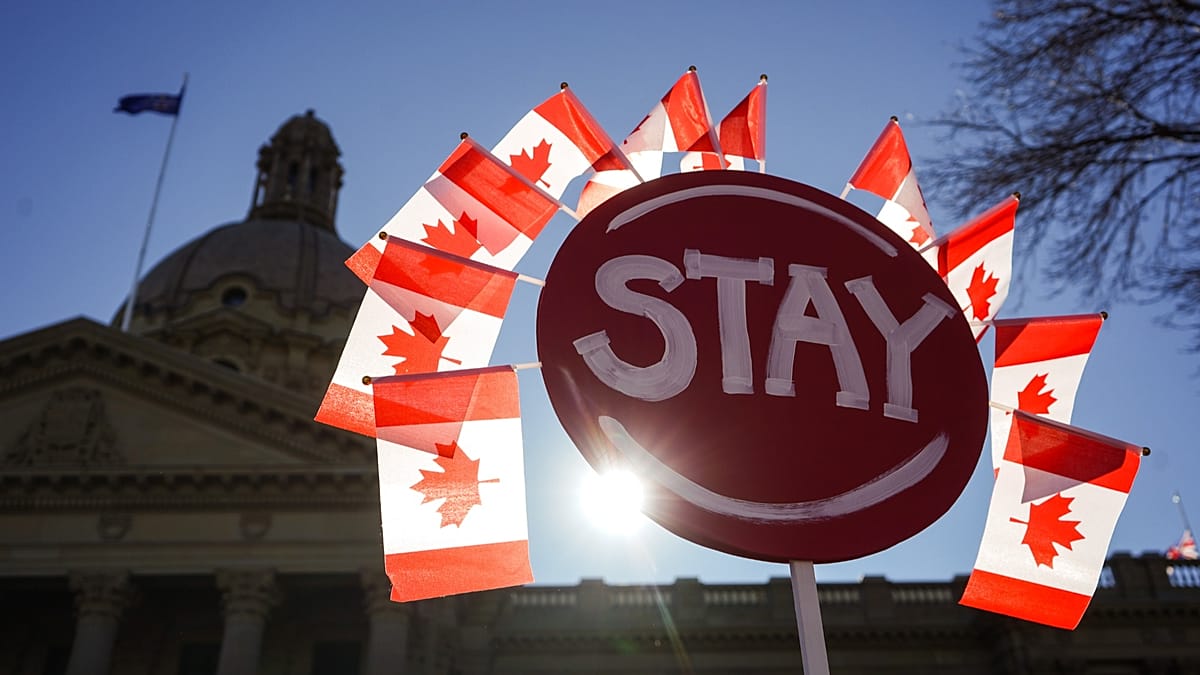
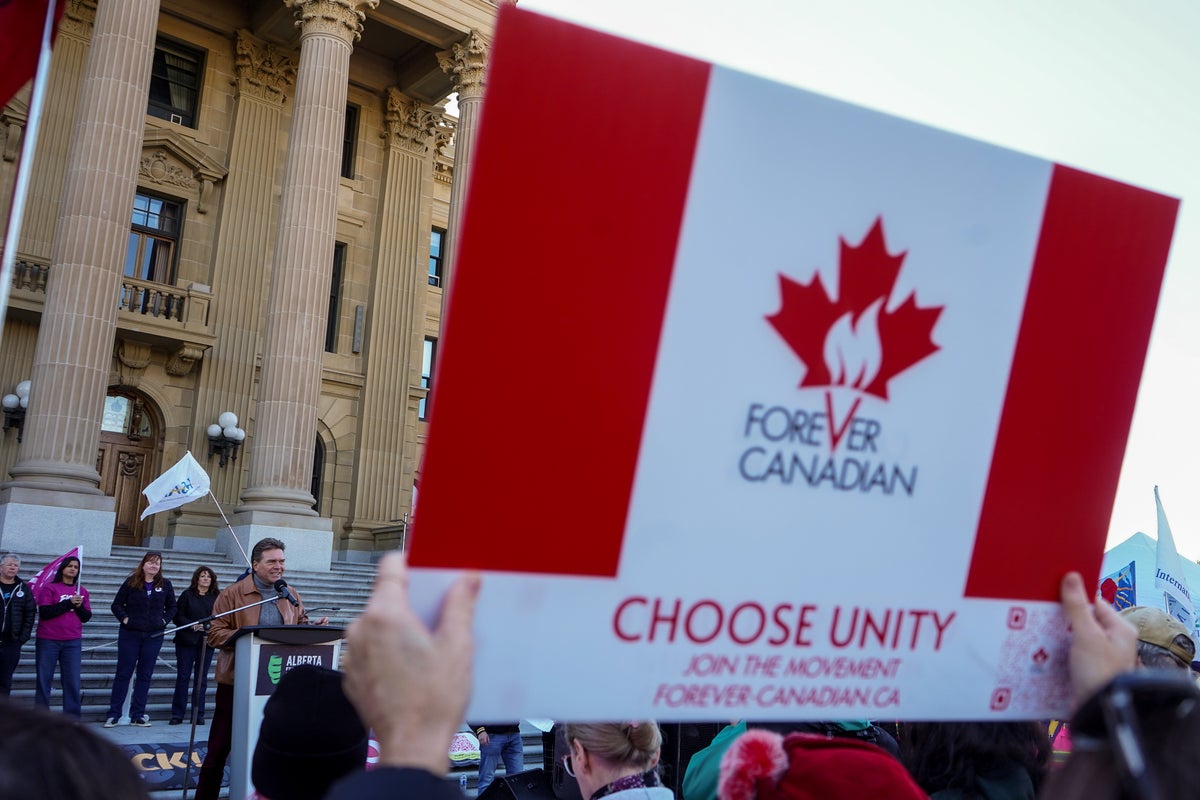
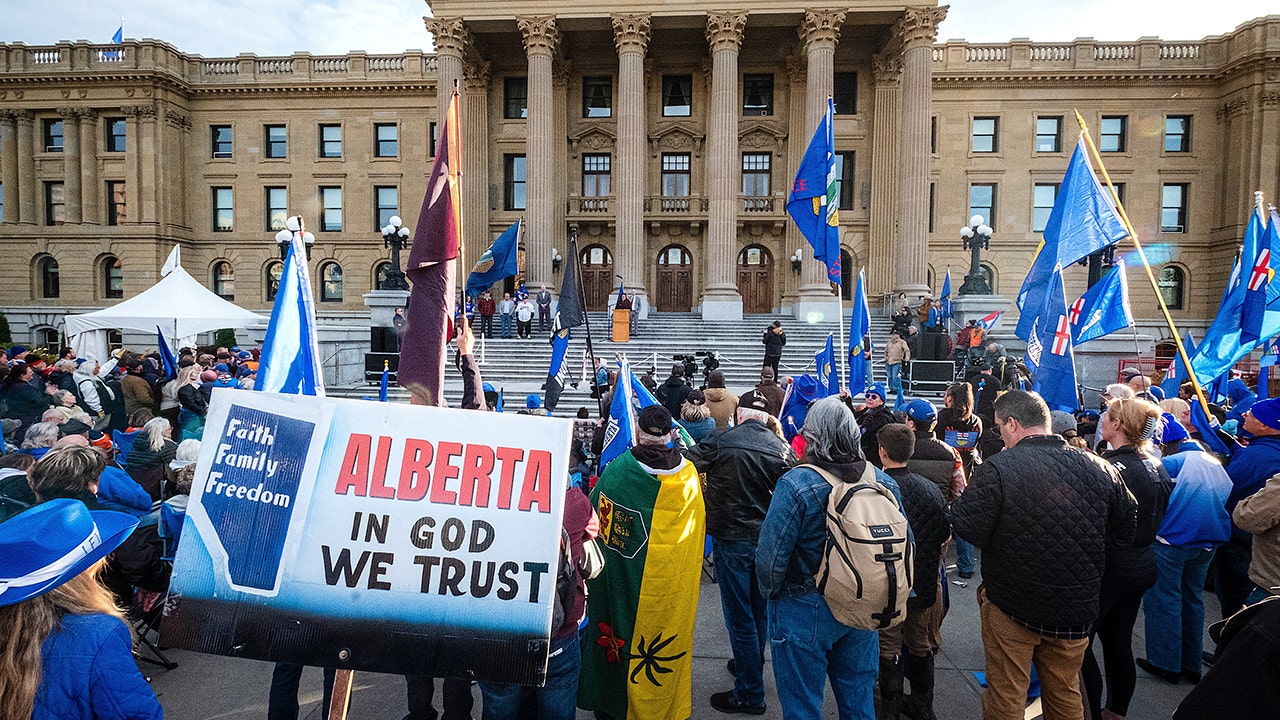
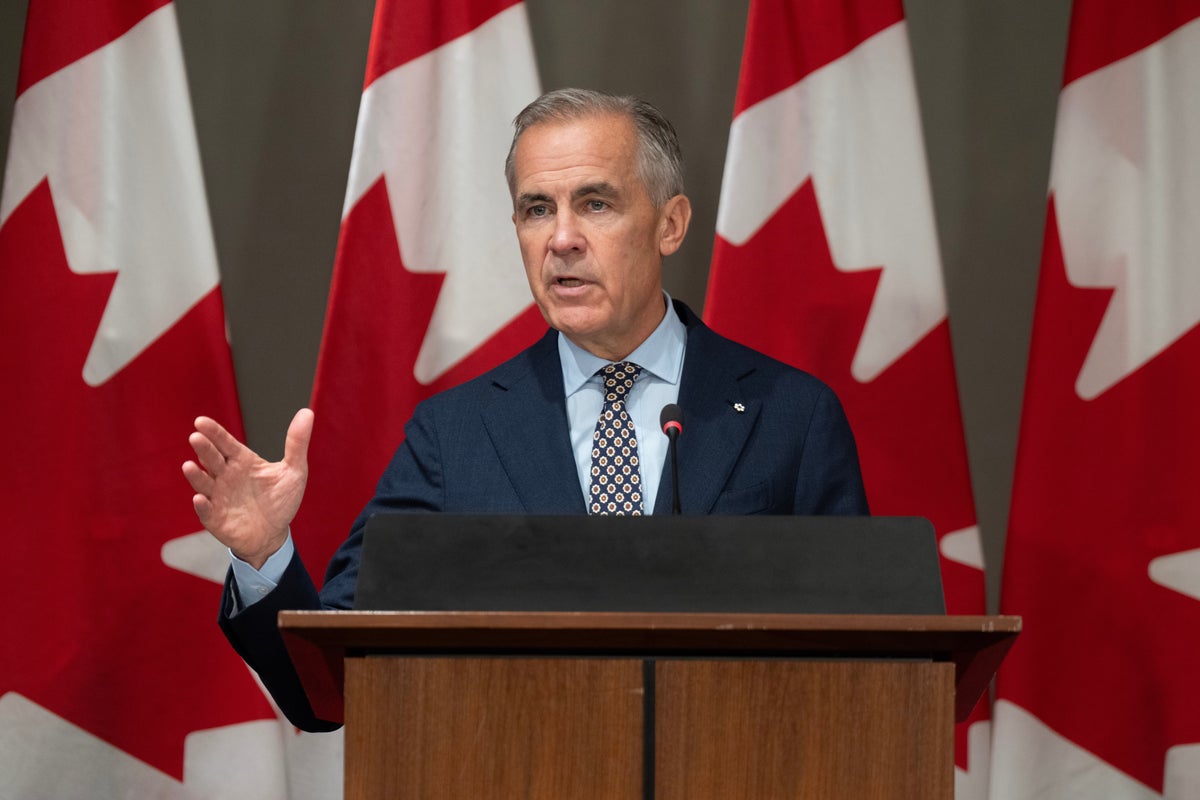
Voters in Canada’s oil-rich province of Alberta have rejected a move toward independence, the CBC projected early Tuesday.
asserted
CBC → reject → independence
The vote was not a direct referendum on independence; instead, Albertans were deciding whether to remain in Canada or begin a legal process that could lead to a second vote on separation.
uncertain
that → decide → separation
After more than one million votes were counted, about 76 percent supported remaining in Canada, while 23 percent backed beginning a process that could lead to separation.
uncertain
that → count → separation
More than 1.35 million Albertans, or 43 percent of eligible voters, had cast advance or special ballots.
asserted
Albertans → cast → ballots
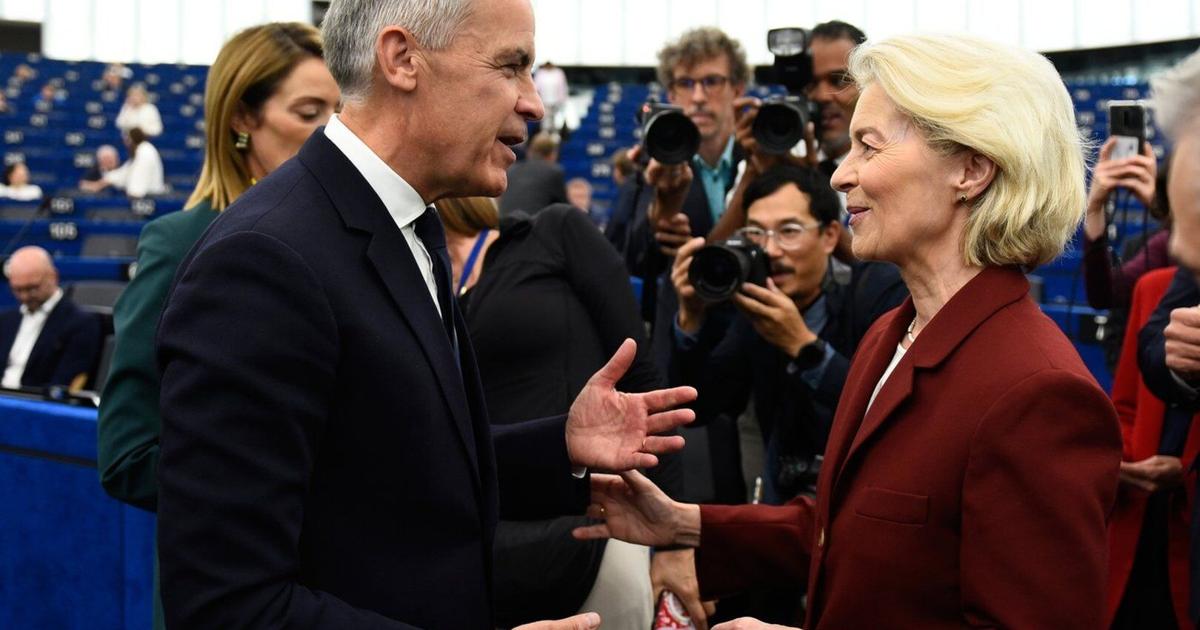
The results deliver a victory for Prime Minister Mark Carney and supporters of Canadian unity amid U.S. President Donald Trump’s trade war and annexation threats.
asserted
results → deliver → war
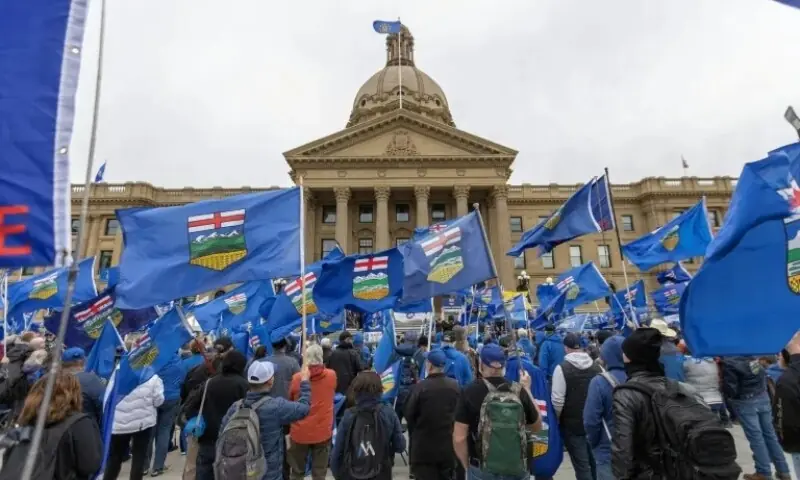
Alberta, home to the world’s fourth-largest proven oil reserves, is cowboy country and a conservative stronghold whose political culture has long had more in common with the American West than much of Canada.
asserted
culture → prove → Canada
Resentment toward Ottawa runs deep, but has not traditionally translated into widespread support for independence.
asserted
Resentment → run → independence
Dustin Degenhardt, a Wainwright voter, said Albertans have long been mistreated by Ottawa.
asserted
Albertans → say → Ottawa
“Alberta has essentially been treated as, you know, a colony,” he said after voting Monday.
asserted
he → treat → colony
“They want to take and take and take from us and not return anything.”
asserted
They → want → anything
Taylor MacIsaac, another Wainwright voter who backed separation, said: “I think it’ll be good for Alberta to separate personally, as a very conservative individual that grew up in rural Alberta.”
asserted
that → back → Alberta
Dave Malka, 59, of Edmonton, criticized spending money on a “referendum on a referendum” rather than health care.
asserted
Malka → criticize → referendum
Jake Graham, 35, of Calgary, attended a Carney rally wearing maple leaf pants and a Canada hockey jacket.
asserted
Graham → attend → pants
He hoped the vote would end the debate.
asserted
vote → hop → debate
“I hope this squashes this for a long time to come and that it’s clear and decisive, that these grumblings disappear for a while and we can be a united Canada,” he said.
asserted
he → hope → while
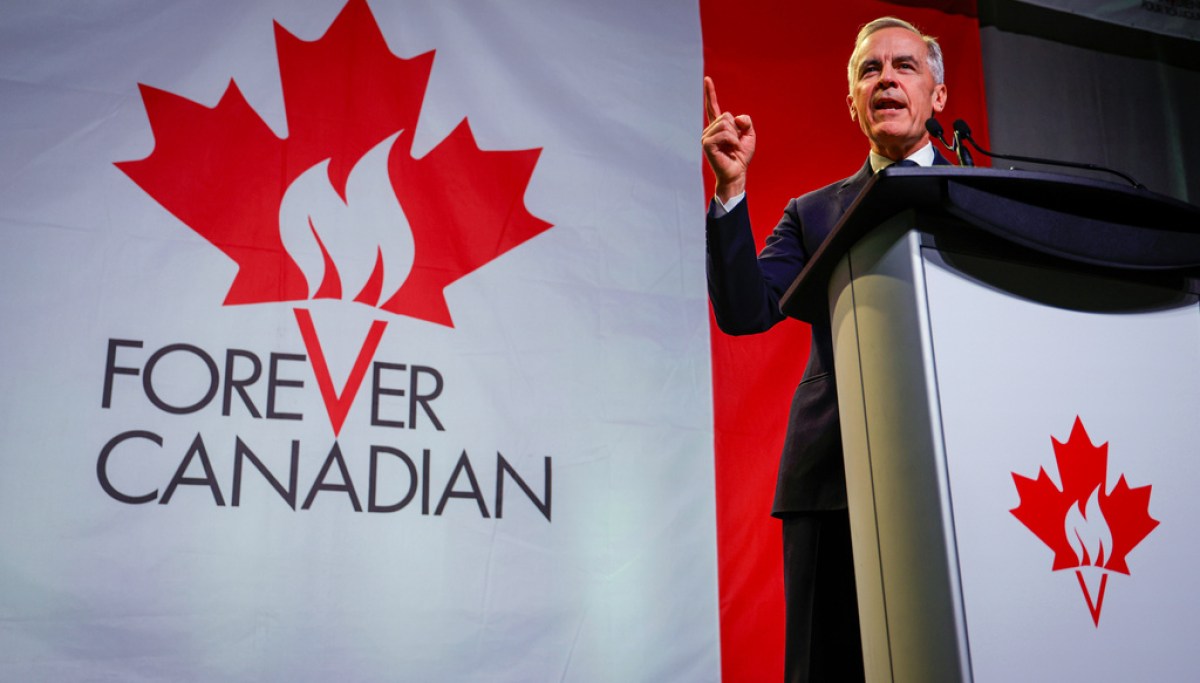
Carney earlier urged Albertans to deliver a decisive vote for unity.
asserted
Carney → urge → unity
“Vote like Canada’s future depends on it because it does,” he told a rally Friday in Edmonton, where he grew up.
asserted
he → vote → Edmonton
Alberta Premier Danielle Smith called the referendum amid pressure from separatists within her governing United Conservative Party, even though she opposes independence.
asserted
she → call → independence
She cited a poll showing just 22 percent support for separation, a figure she said was still too high.
asserted
she → cite → separation
Separatist parties traditionally attracted only 1 or 2 percent of the vote, former Premier Jason Kenney said.
asserted
Kenney → attract → vote
Anger over COVID-19 restrictions helped mobilize activists who later embraced the separatist movement, he said.
asserted
he → mobilize → movement
Trump’s trade war and threats to make Canada the 51st U.S. state have helped Carney rally support in Alberta, where Liberal prime ministers have historically been unpopular.
asserted
ministers → make → Alberta
Separatist advocate Jeff Rath said he would be thrilled if 30 percemt of Albertans voted to begin the separation process.
asserted
percemt → say → process
He wants Smith ousted as leader of her governing United Conservative Party and said the party could splinter, potentially creating a new pro-independence party.
uncertain
party → want → party
 The Aporia