Scientists might finally have an answer on the origins of your seasonal allergies

Read the original at The Independent ↗
Cite

Musto, J. (2026, October 19). Scientists might finally have an answer on the origins of your seasonal allergies. The Independent. https://www.independent.co.uk/news/health/seasonal-allergies-pollen-study-mice-b3069503.html

Dated from the outlet's own feed. Check the original for its byline.

The Independent · collected 2026-10-19 · by Julia Musto

Quick Summary

Scientists at Mass General Brigham Health Care System have discovered that nerve cells involved in sensing pain and itching develop a memory of allergens like pollen and dust mites after repeated exposure, leading to stronger allergic responses over time. In experiments with mice, they found these cells activate specific processes upon allergen contact, potentially explaining why sensitivity to one allergen can increase susceptibility to others. With 80 million Americans suffering from seasonal allergies, this finding could pave the way for new methods to prevent or treat allergy development as climate change worsens allergic conditions by altering blooming seasons and pollen levels.
Written locally by qwen2.5:14b on 2026-10-19, using this article's own text rather than the other coverage of the same event (that is the story summary below).

AI analysis runs on qwen2.5:14b, locally

Story summary

Scientists at the Mass General Brigham Health Care System have uncovered new insights into why people develop seasonal allergies. Their study, published recently, reveals that repeated exposure to common allergens like pollen and mold can exacerbate allergy symptoms in up to 80 million Americans. The researchers found that nerve cells responsible for sensing irritants form a memory of these allergens, leading to stronger allergic responses upon subsequent exposures. Senior author Dr. Caroline Sokol explains that understanding this mechanism could lead to new ways to prevent allergies from developing or worsening. This breakthrough could potentially offer relief to millions suffering from seasonal allergies each fall.

Written for “Seasonal Allergies Origins” on 2026-10-20, grounded in this article and the 0 other(s) covering the same event.

Story

📰 Seasonal Allergies Origins
Health · 1 article(s) covering the same event.

Compared with similar articles

Nothing to compare against. No article is close enough to this one for the pipeline to have linked or judged the pair.
How this article was measured signals, leaning charts, publisher record, byline, topics and claims

Signals How these are calculated →

Claims extracted
17
sentences that state something as happening or true
Uncertain
41%
7 of 17 hedged ("reportedly", "may", "according to")
Leaning
not political
takes no side on a contested political question
Publisher signals
59/100
The Independent's corrections and hedging, across everything collected from it. Not a measure of accuracy.
Outlets on this story
1
Health
Same framing elsewhere
1
articles that frame the event the way this one does
Analyzed 2026-10-19 · how these are computed

How this is being covered How these are calculated →

Article leaning vs. publisher reliability
Source leaning vs. consistency

Publisher

The Independent · 2632 article(s) · 6 correction(s) detected
Running correction rate · 6 correction(s)

Who wrote this

Julia Musto
27 article(s) here · 1 carrying a prediction
🔮 “Now that we know what may cause people to become allergic and pick up more sensitivities, we can design ways to stop it from happening,” senior author Dr. Caroline Sokol, a physician-scientist in the Mass General Brigham Department of Medicine, explained in a statement.
🔮 It’s about to get a lot colder across the U.S., with forecasters projecting a 40-degree temperature drop for the East Coast this weekend.
🔮 The findings reinforce what experts already know about gambling: it’s an addiction that is linked to poor mental health and substance abuse. Sports betting became legal in 39 states following a May 2018 Supreme Court ruling.
🔮 If you come across an animal that you suspect may have rabies, you should contact your local animal control department.
🔮 That findings could change the way hospitals respond to the pervasive illness, the doctors noted in a federal report.
🔮 Vaccination against measles has been proven effective and the virus was declared eliminated from the U.S. in 2000 after most Americans had been vaccinated. It’s likely that the U.S. will lose its elimination status this year, according to medical experts in Boston.
🔮 Although these rivers may still require restoration.
🔮 His doctor wrote him a prescription for a new inhaled medication to improve his breathing, but the prescription wasn’t filled immediately and he received an email from Walgreens explaining that there was an “insurance issue” causing the delay. "He was hopeful that it would work," Cindy told KFF Health News.
🔮 Just a few minutes after taking the drug, users may experience an increase in heart rate and blood pressure that gradually decreases over the next 10 to 20 minutes, according to the U.S. Drug Enforcement Agency.
Also by Julia Musto
Nothing else under this byline is closely related to this article, so these are simply their most recent.
All 27 articles by Julia Musto →

Topics

Americans Independent Mass General Brigham Department of Medicine Mass General Brigham Health Care System U.S.

Subjects

Americans NORP · 1× Caroline Sokol PERSON · 1× Climate Central ORG · 1× Independent NORP · 1× Mass General Brigham Department of Medicine ORG · 1× Mass General Brigham Health Care System ORG · 1× Sokol PERSON · 1× U.S. GPE · 1×

Narrative

They tested this idea in mice, finding that exposure to allergens including dust mites and a papaya-derived compound activated a specific process in the cells that led them to respond to allergens with similar activity but different molecular structures.
framing: mixed · carried by 1 article(s) · first seen 2026-10-19
🔮 “Now that we know what may cause people to become allergic and pick up more sensitivities, we can design ways to stop it from happening,” senior author Dr. Caroline Sokol, a physician-scientist in the Mass General Brigham Department of Medicine, explained in a statement.

Claims (17 extracted, 7 hedged)

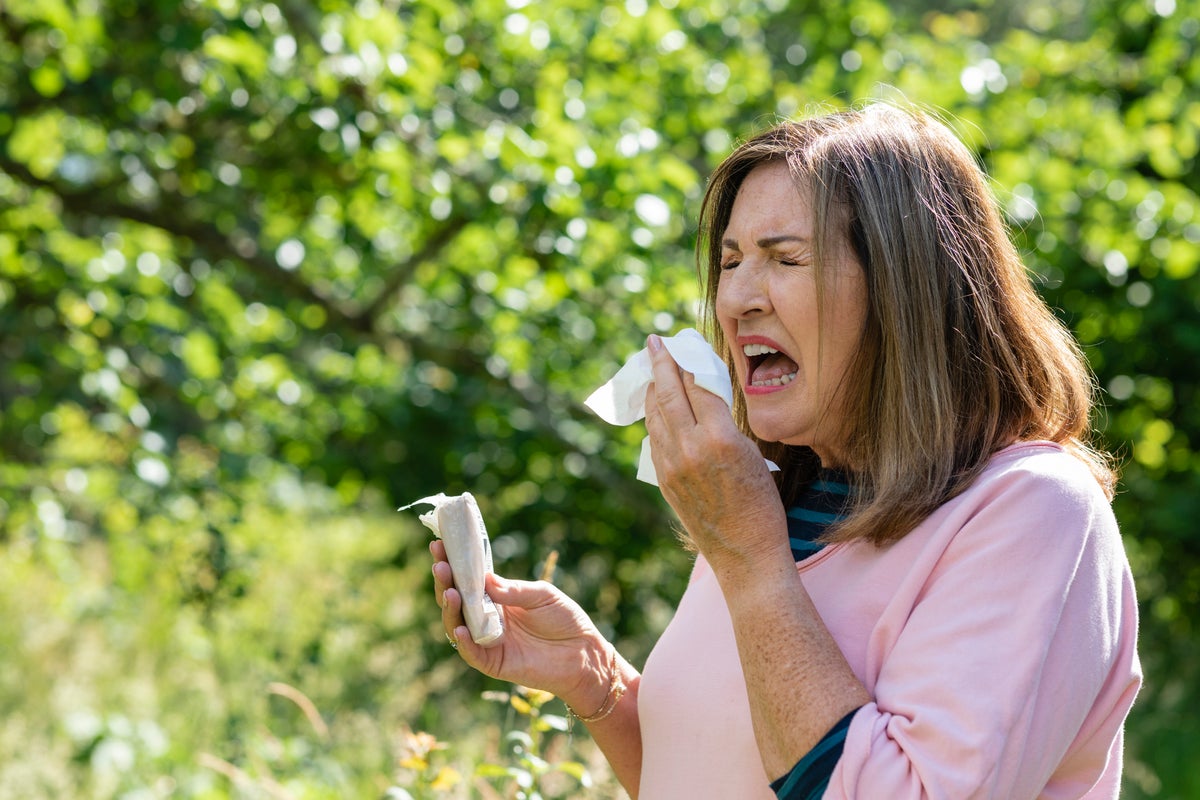
Some 80 million Americans suffer from seasonal allergies that leave them sneezing and tearing through the fall. asserted
that → suffer → fall
Now, researchers have further pulled back the curtain on the origin of our allergies, finding in a new study that repeated exposure to allergens, such as pollens and molds, can make allergies worse. asserted
allergies → pull → pollens
Nerve cells that work to help us feel sensations - a shooting pain or an itch - remember allergens humans come in contact with, Mass General Brigham Health Care System scientists say. asserted
scientists → work → contact
It’s this memory that allows the cells to respond more strongly to later exposures - even if the allergen is gone. asserted
allergen → ’ → exposures
“Now that we know what may cause people to become allergic and pick up more sensitivities, we can design ways to stop it from happening,” senior author Dr. Caroline Sokol, a physician-scientist in the Mass General Brigham Department of Medicine, explained in a statement. uncertain
Sokol → know → statement
The cells were known for their ability to form memories, but the researchers had wondered if allergens could leave one. uncertain
allergens → know → one
They tested this idea in mice, finding that exposure to allergens including dust mites and a papaya-derived compound activated a specific process in the cells that led them to respond to allergens with similar activity but different molecular structures. asserted
that → test → activity
That suggested to the researchers that the cells remembered a shared feature of these allergens: a possible explanation for why developing sensitivity to one allergen can raise susceptibility to others. uncertain
developing → suggest → others
The findings could help to better fight allergies, which are also worsening due to human-caused climate change. uncertain
which → help → change
Allergies form when the immune system is triggered by a substance it perceives as a threat, resulting in an allergic reaction. asserted
it → form → reaction
For many people, this is pollen, including from trees and weeds, though each season varies. asserted
season → include → trees
Unfortunately, warmer weather means earlier blooming seasons, more pollen and later freezes - which typically provide relief come fall. asserted
which → mean → fall
Close to 180 U.S. cities now see their first freeze an average of a dozen days later than in the early 1970s, according to the non-profit Climate Central. uncertain
cities → see → Central
This fall, the super El Niño climate pattern has exacerbated these effects, bringing wet conditions to the Southeast and southern Rockies that forecasters say help raise pollen levels. asserted
forecasters → exacerbate → levels
Fortunately, this research could help reduce allergy risk in the future - even as temperatures rise. uncertain
temperatures → help → future
For one, Sokol said they say the allergic memory in the cells fades with time. asserted
memory → say → time
“We are now investigating whether we can deliberately reset this memory, which could ultimately offer a way to reduce the risk of developing allergies,” she said. uncertain
she → investigate → allergies

💬Give feedback
🕘History 🎫Support