It’s about to get a lot colder very quickly. Here’s how to stay safe

Read the original at The Independent ↗
Cite

Musto, J. (2026, October 16). It’s about to get a lot colder very quickly. Here’s how to stay safe. The Independent. https://www.independent.co.uk/news/health/cold-weather-fall-frostbite-hypothermia-heart-health-b3068198.html

Dated from the outlet's own feed. Check the original for its byline.

The Independent · collected 2026-10-16 · by Julia Musto

Quick Summary

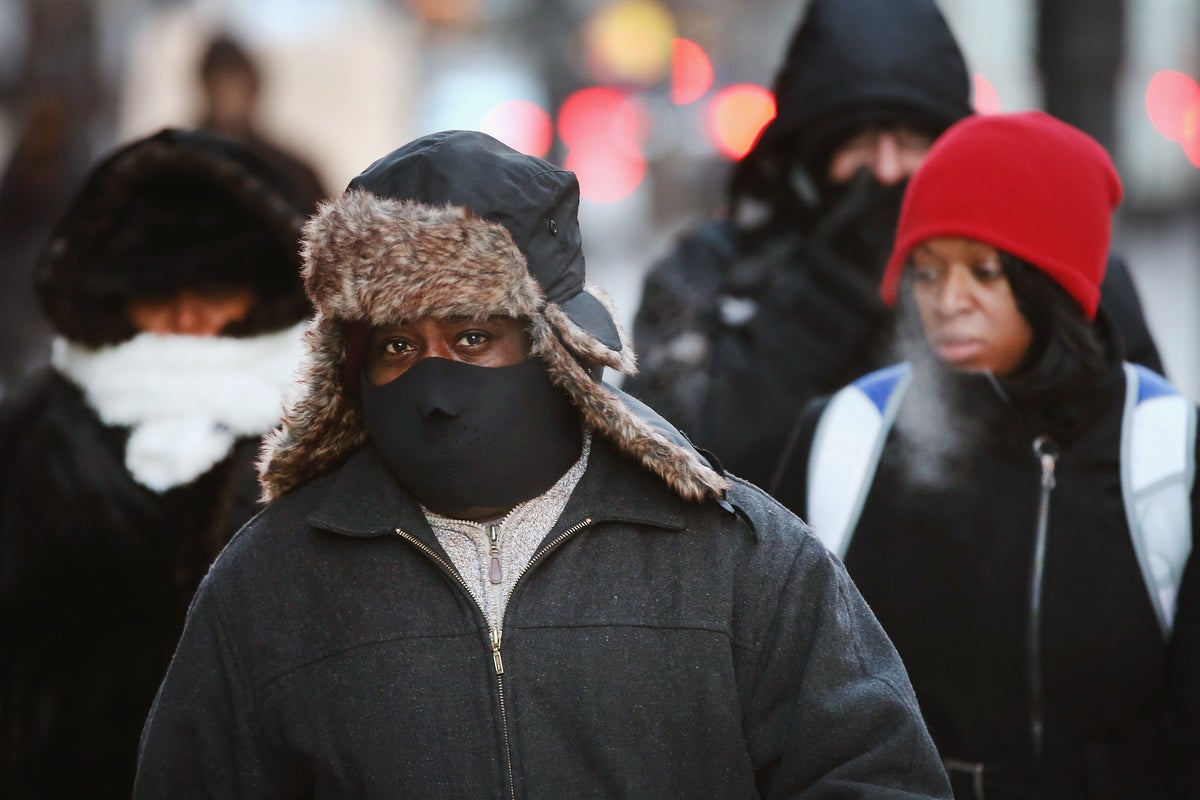
A significant cold front is moving across the U.S., with temperatures expected to drop by 40 degrees on the East Coast this weekend and freeze warnings issued for the central U.S. Cold-related weather events are a major cause of death in the country, responsible for more than 1,000 fatalities annually according to federal data. Experts advise staying indoors, being prepared, and taking weather warnings seriously to stay safe from hypothermia, frostbite, and increased blood pressure risks associated with cold temperatures.
Written locally by qwen2.5:14b on 2026-10-16, using this article's own text rather than the other coverage of the same event (that is the story summary below).

AI analysis runs on qwen2.5:14b, locally

Story summary

The U.S. is bracing for a significant temperature drop of 40 degrees this weekend on the East Coast, following a cold front moving southward from Canada. Freeze warnings have already been issued across the central U.S. Although El Niño is expected to bring warmer-than-average winter temperatures overall, extreme cold snaps can still be deadly; about 1,000 deaths per year are attributed to freezing weather conditions in the U.S. Dr. Stephen Cheung from Canada’s Brock University advises taking weather warnings seriously and planning ahead to mitigate risks like hypothermia and frostbite.

Written for “Winter Weather Warning” on 2026-10-16, grounded in this article and the 0 other(s) covering the same event.

Story

📰 Winter Weather Warning
Environment · 1 article(s) covering the same event.

Compared with similar articles

This article reads unscored and hedges 14% of its claims. Each row says how that neighbour differs.
The Independent
⚖️ leaning not scored 🔴 12% hedged 3 of 25 📰 publisher trust 59
“The articles describe different forecasts and warnings from different times.”
The Guardian
⚖️ leaning not scored 🔴 16% hedged 6 of 38 📰 publisher trust 68
“The articles describe different aspects of winter weather forecasts; one discusses a generally warmer and wetter winter due to El Niño, while the other focuses on an immediate cold front affecting parts of the U.S.”
How this article was measured signals, leaning charts, publisher record, byline, topics and claims

Signals How these are calculated →

Claims extracted
29
sentences that state something as happening or true
Uncertain
14%
4 of 29 hedged ("reportedly", "may", "according to")
Leaning
not political
takes no side on a contested political question
Publisher signals
59/100
The Independent's corrections and hedging, across everything collected from it. Not a measure of accuracy.
Outlets on this story
1
Environment
Same framing elsewhere
1
articles that frame the event the way this one does
Analyzed 2026-10-16 · how these are computed

How this is being covered How these are calculated →

Article leaning vs. publisher reliability
Source leaning vs. consistency

Publisher

The Independent · 2463 article(s) · 5 correction(s) detected
Running correction rate · 5 correction(s)

Who wrote this

Julia Musto
26 article(s) here · 1 carrying a prediction
🔮 It’s about to get a lot colder across the U.S., with forecasters projecting a 40-degree temperature drop for the East Coast this weekend.
🔮 The findings reinforce what experts already know about gambling: it’s an addiction that is linked to poor mental health and substance abuse. Sports betting became legal in 39 states following a May 2018 Supreme Court ruling.
🔮 If you come across an animal that you suspect may have rabies, you should contact your local animal control department.
🔮 That findings could change the way hospitals respond to the pervasive illness, the doctors noted in a federal report.
🔮 Vaccination against measles has been proven effective and the virus was declared eliminated from the U.S. in 2000 after most Americans had been vaccinated. It’s likely that the U.S. will lose its elimination status this year, according to medical experts in Boston.
🔮 Although these rivers may still require restoration.
🔮 His doctor wrote him a prescription for a new inhaled medication to improve his breathing, but the prescription wasn’t filled immediately and he received an email from Walgreens explaining that there was an “insurance issue” causing the delay. "He was hopeful that it would work," Cindy told KFF Health News.
🔮 Just a few minutes after taking the drug, users may experience an increase in heart rate and blood pressure that gradually decreases over the next 10 to 20 minutes, according to the U.S. Drug Enforcement Agency.
🔮 The condition typically goes away after the baby is born, but raises the risk of developing type 2 diabetes and may increase the risk of postpartum depression, the Centers for Disease Control and Prevention shows.
2026-10-01 · assertive framing · More new US moms are taking GLP-1 drugs
Also by Julia Musto
Nothing else under this byline is closely related to this article, so these are simply their most recent.
All 26 articles by Julia Musto →

Topics

Brock University Canada El Nino Independent U.S.

Subjects

U.S. GPE · 3× Canada GPE · 2× Brock University ORG · 1× Independent NORP · 1× Jennah Morgan PERSON · 1× Stephen Cheung PERSON · 1× The New York Times ORG · 1× The Ohio State University Wexner Medical Center ORG · 1× the Mayo Clinic ORG · 1× the New York Department of Health ORG · 1×

Narrative

Being in the cold can lead to hypothermia and frostbite, as well as raise blood pressure in just 20 minutes. Blood pressure is typically higher in the winter because low temperatures cause blood vessels to narrow, the Mayo Clinic says, with more pressure needed to force blood through veins and arteries.
framing: assertive · carried by 1 article(s) · first seen 2026-10-16
🔮 It’s about to get a lot colder across the U.S., with forecasters projecting a 40-degree temperature drop for the East Coast this weekend.
2026-10-16 · The Independent
It’s about to get a lot colder very quickly. Here’s how to stay safe · assertive framing

Claims (29 extracted, 4 hedged)

It’s about to get a lot colder across the U.S., with forecasters projecting a 40-degree temperature drop for the East Coast this weekend. asserted
forecasters → get → Coast
Freeze warnings were issued across the central U.S. Friday, as a cold front shifts southward from Canada. asserted
front → issue → Canada
Cold is one of the nation’s top weather-related killers, leading to more than 1,000 deaths each year, per federal data. asserted
Cold → relate → data
Though the strengthening El Nino climate pattern is expected to bring above-average temperatures throughout the U.S. this winter, that doesn’t mean there won’t also be life-threatening lows. asserted
that → strengthen → U.S.
Experts say people can protect themselves this year by staying indoors, being prepared and making informed decisions. asserted
people → say → decisions
“Take weather warnings seriously,” Stephen Cheung, a professor of kinesiology at Canada’s Brock University, told The New York Times earlier this year. asserted
Cheung → take → Times
“You can still do most things safely - just plan ahead, be prepared, know the risks.” asserted
You → do → risks
Being in the cold can lead to hypothermia and frostbite, as well as raise blood pressure in just 20 minutes. Blood pressure is typically higher in the winter because low temperatures cause blood vessels to narrow, the Mayo Clinic says, with more pressure needed to force blood through veins and arteries. asserted
pressure → lead → veins
This raises the risk of cardiovascular events, such as heart attack and stroke. asserted
This → raise → attack
The cold also increases the risk of hypothermia, a condition that occurs when core body temperature drops below 95 degrees Fahrenheit (35 degrees Celsius), affecting a person’s ability to think or move. asserted
temperature → increase → ability
And frostbite is an injury that occurs when body tissue freezes in low temperatures, leading to tissue death known as gangrene - and even amputations. asserted
tissue → occur → gangrene
How do you stay safe? asserted
you → stay → ?
“To prevent hypothermia, follow Grandma’s advice,” instructs Dr. Jennah Morgan, an emergency medicine physician at The Ohio State University Wexner Medical Center. asserted
Morgan → prevent → Center
And avoid going outside with wet hair or clothes, she says. asserted
she → avoid → hair
It can make you feel a lot colder. asserted
you → make → ?
It’s a sign that the body is losing heat and could be at risk, the New York Department of Health explains. uncertain
Department → ’ → Health
Much of the same advice works to stave off frostbite - but knowing the physical signs of the condition can help avoid a trip to the emergency room. asserted
knowing → work → room
In the first stages of frostbite, the skin is often red and painful before turning a grayish-yellow. asserted
skin → turn → yellow
Then, the area may start to feel waxy or numb. uncertain
area → start → ?
In the worst cases, the skin blisters and turns black as tissue dies. asserted
tissue → blister → cases
This is known as gangrene. asserted
This → know → gangrene
“In most cases, the person is unaware of frostbite because the frozen tissues are numb,” Johns Hopkins Medicine says. asserted
Medicine → say → frostbite
“The symptoms of frostbite may look like other health conditions or problems.” uncertain
symptoms → look → conditions
People who drink alcohol or smoke are more sensitive to the cold because the substances make blood vessels narrow. asserted
vessels → drink → cold
People with hypothermia or frostbite should seek out medical attention immediately. asserted
People → seek → attention
But if you can’t access medical attention right away, there are several quick ways to warm up a bit. asserted
you → access → attention
Using heater packs and heated blankets and drinking hot, non-alcoholic beverages can help raise body temperature, according to the Centers for Disease Control and Prevention. uncertain
Using → use → Control
So does skin-to-skin contact under loose, dry layers of blankets, clothing, towels or sheets. asserted
contact → do → blankets
“After body temperature has increased, keep the person dry and wrap their body, including their head and neck, in a warm blanket,” the CDC says. asserted
CDC → increase → blanket

💬Give feedback
🕘History 🎫Support