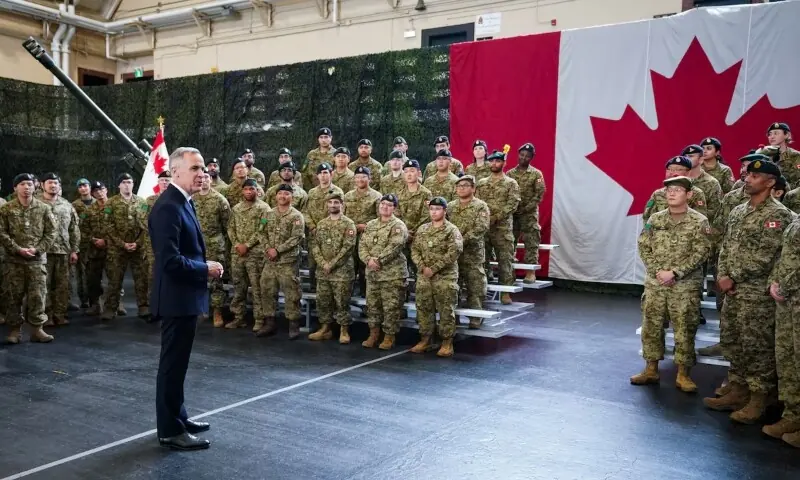
The army is expected to investigate the fire at the Canadian Forces base in Wainwright, Alberta, in which four soldiers were killed and 39 people injured, through a process known as a board of inquiry, which can compel evidence and is designed to make recommendations to prevent similar incidents.
asserted
which → expect → incidents
Boards of inquiry are used to investigate everything from misconduct involving Canadian Forces personnel to suicides and fatal incidents such as the one in Alberta.
asserted
Boards → use → Alberta
But they have come under criticism for a lack of transparency, particularly because neither the board’s hearings nor the final report and recommendations are automatically made public.
asserted
hearings → come → transparency
University of Ottawa law professor Ret. Colonel-Maître Michel W. Drapeau said it’s “absolutely essential” that the Forces and the federal government allow public and media access to the board of inquiry into the Wainwright fire.
asserted
Forces → say → fire
“Those members’ fatalities and those who are injured are our sons and daughters, and husbands and wives, so we the public have an interest to find out what happened and hopefully to find out also what measures may be taken to prevent recurrence,” Mr. Drapeau said.
uncertain
Drapeau → injure → recurrence
I think the public has a right to know.”
asserted
public → think → right
Mr. Drapeau said he’s represented families and military members at boards of inquiry, witnessing their frustration at having to wait five or six years to see the report and recommendations, which in many cases are abridged or redacted.
asserted
which → say → cases
The Department of National Defence said a fire fanned by high winds moved quickly into a training area at CFB Wainwright around 4 p.m. on Saturday.
asserted
fire → say → Saturday
A fire marshal team will determine the cause of the fire, while the Canadian Forces National Investigation Service, an independent investigative unit of the military police, and RCMP working alongside local military police, are also investigating what happened, said Major-General Wade Rutland, Commander of 1st Canadian Division.
asserted
Rutland → determine → Division
Maj.-Gen. Rutland declined to say whether the report’s findings would eventually be made public.
asserted
findings → decline → ?
He also cautioned that the process would not be quick.
asserted
process → caution → ?
“With this amount of casualties and complexities, it’s not going to take a day or a week,” Maj.-Gen. Rutland said, referring to when board of inquiry would convene.
asserted
board → go → inquiry
A board of inquiry, usually made up of three members, can depose witnesses to testify under oath.
asserted
board → make → oath
It’s purely investigative and designed to make recommendations, not find fault, said Ret. Master Seaman Gordon Scott Campbell, a military lawyer.
asserted
Campbell → ’ → fault
Mr. Scott said he expects the Canadian government to make the board of inquiry report public, as it eventually did for the 2004 submarine fire aboard HMCS Chicoutimi, which killed one man and injured nine others, though it took intense political pressure and calls for transparency.
asserted
it → say → transparency
Here, as I’ve heard there have been multiple deaths, I would anticipate probably it will be made public in the end,” he said.
asserted
he → hear → end
The circumstances of a tragedy at CFB Valcartier in 1974 that killed six teenaged reservists were almost never made public.
asserted
that → kill → reservists
Ultimately, a Quebec coroner held a full inquiry which found criminal liability, Mr. Scott said.
asserted
Scott → hold → liability
Former Canadian Armed Forces reservist Gerry Fostaty was an 18-year-old reservist at CFB Valcartier when he witnessed a horrific explosion that injured nearly 100 teenagers – killing six of them.
asserted
that → witness → them
And for decades, he said, he was told to never discuss what he saw.
asserted
he → say → what
“It was a passive cover up for sure – they told us not to speak about it, and then they ignored it,”Mr. Fostaty said.
asserted
Fostaty → tell → it
But many years later he ignored orders and published As You Were: The Tragedy at Valcartier.
asserted
You → ignore → Valcartier
The 2011 book is an eyewitness account of how CAF officials were teaching military tactics by passing around a box of inert “dummy” munitions to a group of 14 and 15 year old cadets jammed into a barrack.
asserted
officials → teach → barrack
But a live grenade was inadvertently in the mix – and it exploded.
asserted
it → explode → mix
“These guys are sitting shoulder to shoulder on the floor, you know, cross-legged,” Mr Fostaty said in an interview on Sunday.
asserted
Fostaty → sit → Sunday
He said he saw horrific deaths and injuries that altered people’s lives forever on that day.
asserted
that → say → day
In 1968, seven CAF paratroopers were killed when they drowned in the Ottawa River.
asserted
they → kill → River
The paratroopers jumped off of a transport aircraft expecting to land on the base near Ottawa.
asserted
paratroopers → jump → Ottawa
Instead, unexpected gusts of wind carried 22 of them into the nearby river, where they were tangled up and weighted down by their chutes.
asserted
they → carry → chutes
Rescuers saved most of the men, but seven drowned.
asserted
seven → save → men
In 1988, military officers training on explosives were blowing a five-metre-deep hole at CFB Chilliwack, near Vancouver.
asserted
officers → train → Vancouver
Six of them died when the bomb detonated unexpectedly.
asserted
bomb → die → them
The next year, in 1989, a Canadian C-130 transport aircraft with 18 people abroad crashed in Alaska en route to a Canada-U.S. military training exercise.
asserted
aircraft → crash → exercise
Seven soldiers were killed on impact and two later died in hospital.
asserted
two → kill → hospital
The nine-death tragedy occurred as the Hercules crashed just short of the runway at U.S. base at Fort Wainwright, which is near Fairbanks.
asserted
which → occur → Fairbanks
 The Aporia