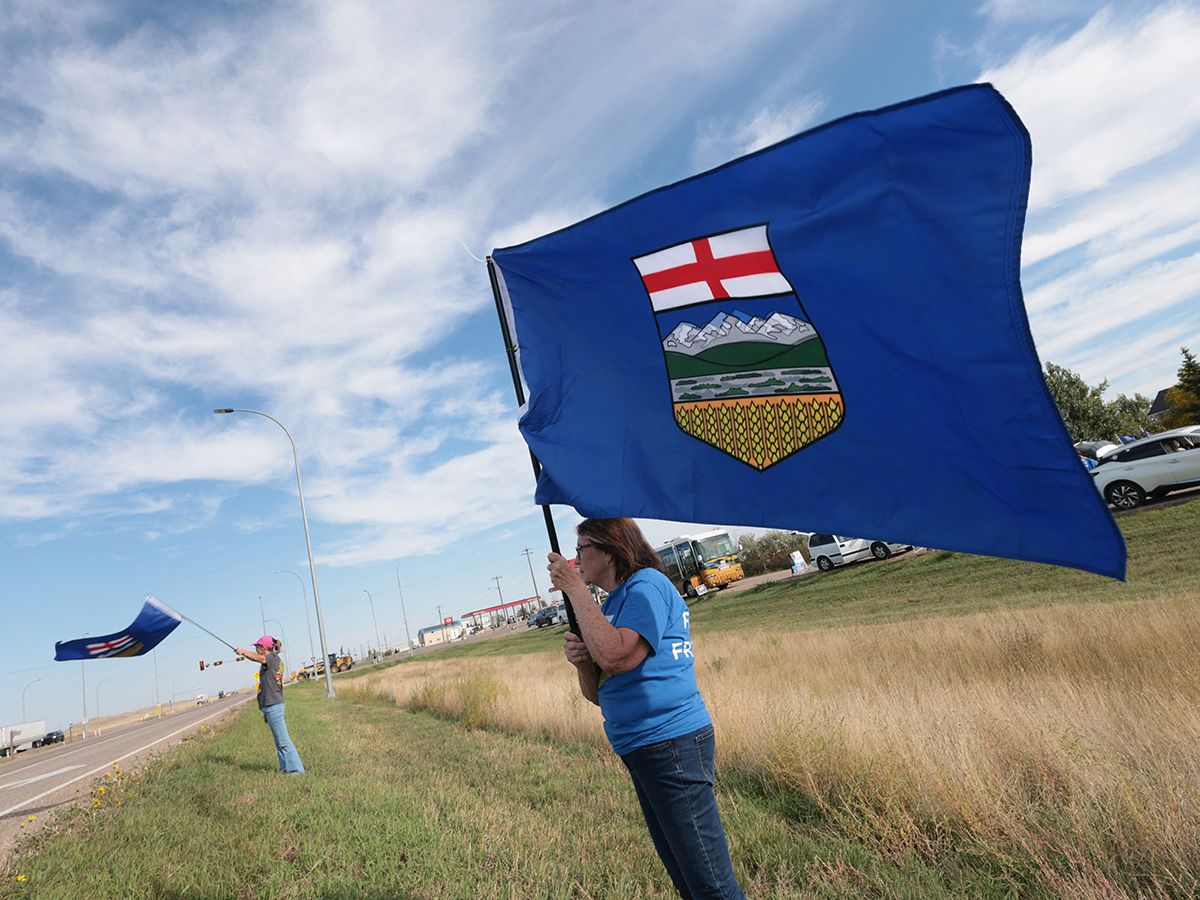
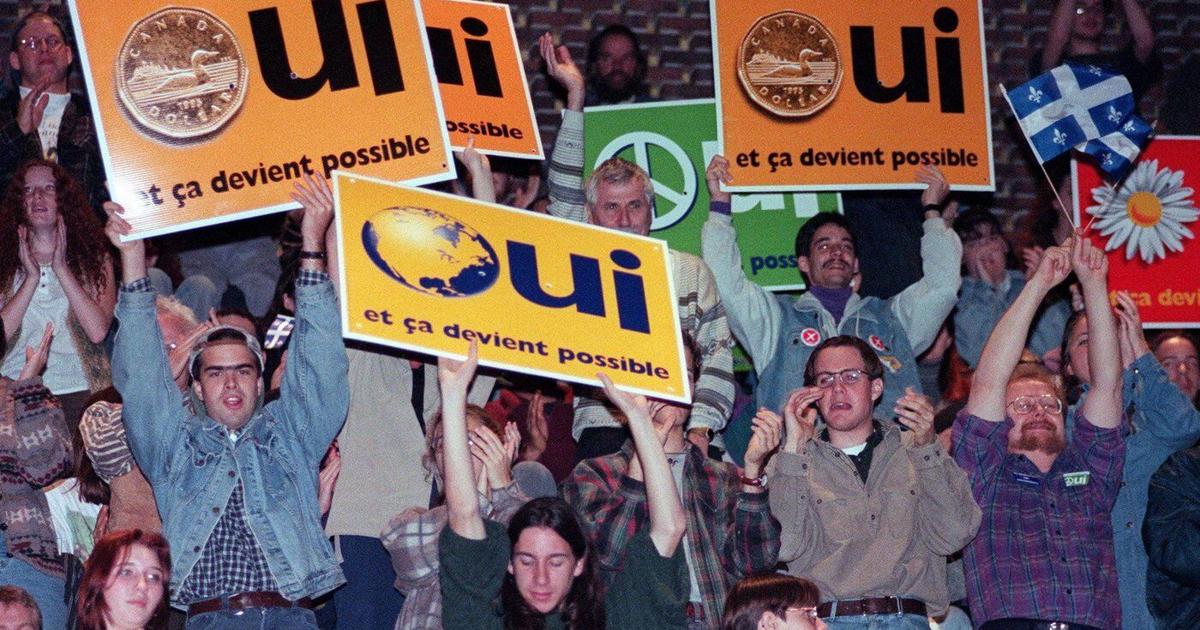
On Monday, Albertans will vote in a province-wide referendum on a series of questions about the province’s future, and the question drawing the most attention is whether to hold a second referendum on separation; Ipsos’ current polling suggests Albertans will reject that possibility, with only 23 per cent saying they will vote to trigger the second vote and 70 per cent saying they will vote to stay part of Canada.
uncertain
they → vote → Canada
Looking only at the immigration-related questions, Ipsos polling conducted in September found that a majority of Albertans supported giving their province greater control over immigration (65 per cent) and denying access to federally funded programs to people who do not have legal status in Canada (59 per cent).
asserted
who → look → cent
In our polling, we tested support for the concept, not the actual referendum question, so the results reflect how Albertans feel about these issues in general.
asserted
Albertans → test → issues
Most interestingly, however, Albertans aren’t the only ones who feel this way.
asserted
who → feel → ?
In fact, Canadians outside Alberta are more likely to support these proposals than Albertans.
asserted
Canadians → support → Albertans
As it stands, 74 per cent of Canadians outside of Alberta supported giving their province more control over immigration, and 67 per cent supported denying access to federal programs to those who do not have legal status.
asserted
who → stand → status
This suggests that Alberta Premier Danielle Smith has captured the public mood of both Albertans and the broader population.
uncertain
Smith → suggest → Albertans
A national debate on immigration will likely follow, especially if the Alberta referendum delivers majority support for some of these policy proposals.
asserted
referendum → follow → proposals
Indeed, former Alberta Premier Jason Kenney, an avowed federalist and one of the loudest voices for the “no” side on the separation question, is calling for such a debate, and there is increasing evidence that Canada’s consensus on immigration is becoming a ballot box issue.
asserted
consensus → call → immigration
Get breaking National news
This could put Alberta’s government at odds with Prime Minister Mark Carney’s government.
uncertain
This → get → government
The federal immigration minister recently signalled that Canada plans to open its immigration targets to allow more immigrants, despite housing affordability remaining a concern.
asserted
affordability → signal → immigrants
Other concerns remain, as polls consistently show that affordability is a major issue.
asserted
affordability → remain → ?
And Alberta is now proposing to wrest control over immigration from the federal government and create two classes of social support – one for those without status, and one for those with it.
asserted
Alberta → propose → it
Our poll suggests Canadians agree with both propositions.
uncertain
Canadians → suggest → propositions
Overall, people are thinking about how we should approach immigration – and the costs associated with it – amid a housing and affordability crisis.
asserted
we → think → crisis
For her part, Smith has urged Albertans to vote “yes to the nine,” arguing that immigration costs are prohibitively expensive, while Carney has called on Albertans to vote no.
asserted
Carney → urge → Albertans
While they are on the same side on Alberta’s future in Canada, they differ on how to approach immigration, despite finding common ground on issues such as pipelines and supporting the growth of Alberta’s energy industry.
asserted
they → differ → industry
Remarkably, especially for a Liberal prime minister in Alberta, Albertans view Carney most favourably, while they view Smith least favourably.
asserted
they → view → Smith
On immigration and provincial rights, though, Smith appears to share most Canadians’ view, not Carney.
asserted
Smith → appear → view
Whatever happens tomorrow, the Alberta referendum will shake up Canada.
asserted
referendum → happen → Canada
Alberta separatists have made it clear they will not let the issue go and will treat the “stay or leave” vote’s result as a permanent decision on their project, so that issue is unlikely to go away quickly, no matter the result.
asserted
issue → make → project
The debate over Alberta’s future within the federation has obscured how it might operate if it decides to remain.
uncertain
it → obscure → federation
If Smith wins a majority on some or all of the “other nine” questions, we might expect her to believe she has a mandate from the population to act.
uncertain
she → win → population
She may try to work with other premiers to raise these issues with the federal government and obtain more direct control over immigration and provincial rights from Carney.
uncertain
She → try → Carney
She will have an ally in Quebec premier-elect Paul St.-Pierre Plamondon, who has pledged to use the early days of his premiership as leader of an overtly separatist party to advance provincial interests, having deferred a referendum on separation until when President Trump leaves office.
asserted
Trump → have → office
During the recent Quebec provincial campaign, the incoming premier also promised to cut the number of immigrants being allowed into the province, seeking even more powers than what Quebec already enjoys through a 35-year-old agreement giving Quebec more control on immigration than most provinces have.
asserted
provinces → promise → immigration
These are powers Smith is seeking for Alberta as well.
asserted
Smith → seek → Alberta
Smith, too, has reason to pick a fight with Ottawa.
asserted
Smith → have → Ottawa
Some members of her own party feel she hasn’t gone far enough on separation.
asserted
she → feel → separation
They are opposing her vow to not revisit the issue if Monday ends with a vote for the status quo, and some separatist supporters vowing to oust her at the upcoming leadership review.
asserted
supporters → oppose → review
She has campaigned fiercely for a strong Alberta within a united Canada and said she voted “no” on that question.
asserted
she → campaign → question
But she has voted “yes” to the other nine.
asserted
she → vote → nine
If the separation question was designed to appease her base, the other nine may reveal her true ambitions: to secure more control for Alberta over immigration, control costs, and ensure that only those legally allowed in Alberta receive taxpayer-funded services.
uncertain
those → design → services
The results on those questions, not only for Albertans but for all Canadians and far more than Alberta’s future in Canada as a province, may be the most consequential issues to emerge from tomorrow’s election, and the ones that will shape debate across Canada for the next year and beyond.
uncertain
that → emerge → year
 The Aporia