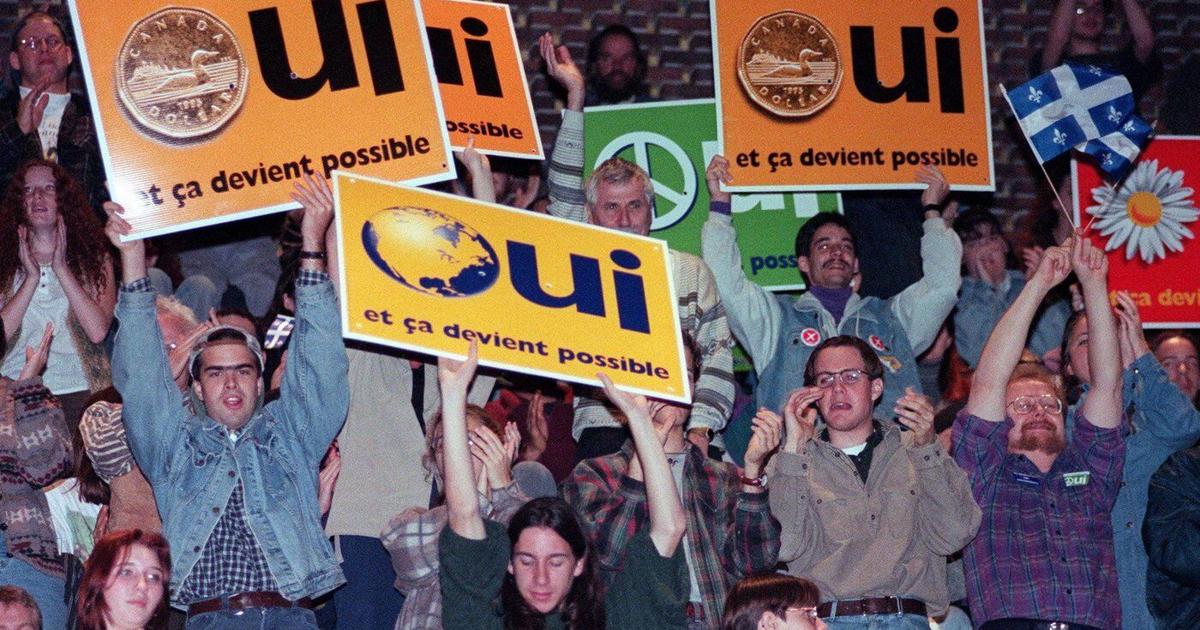
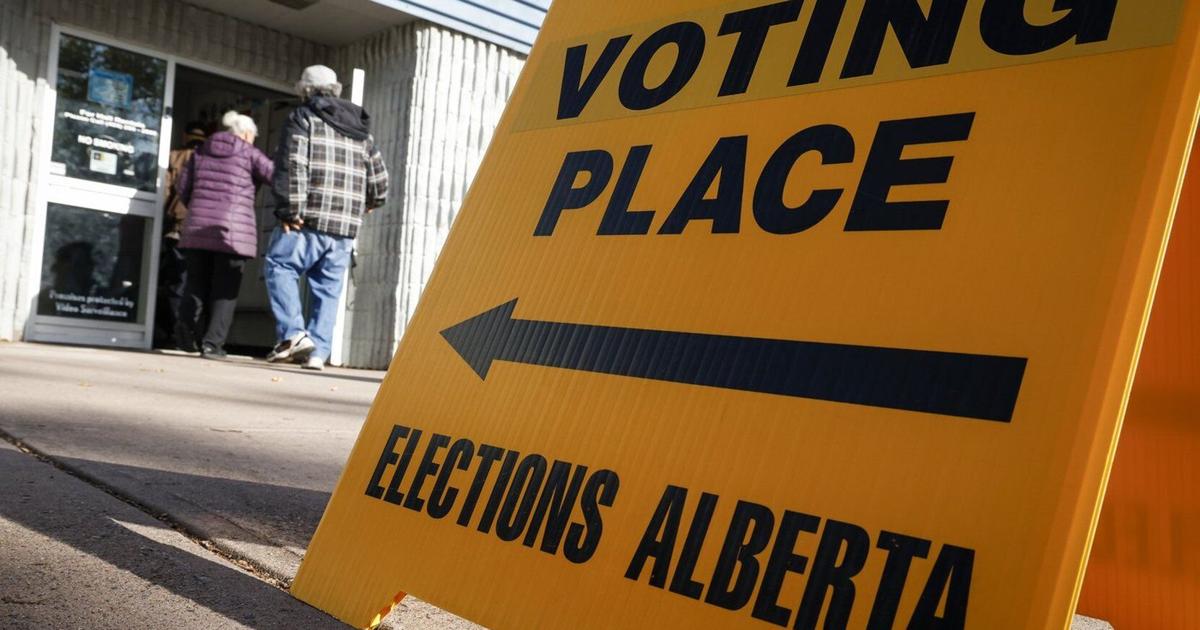
Quebec sovereigntists see fundamental rift with Alberta separatists

Read the original at The Globe and Mail ↗
Cite

Morris, E. (2026, October 16). Quebec sovereigntists see fundamental rift with Alberta separatists. The Globe and Mail. https://www.theglobeandmail.com/canada/alberta/article-quebec-sovereigntists-rift-alberta-separatists/

Dated from the outlet's own feed. Check the original for its byline.

The Globe and Mail · collected 2026-10-16 · by Erika Morris

Quick Summary

Longtime Quebec sovereigntists are distancing themselves from separatist movements in Alberta ahead of an upcoming referendum there on Monday. In contrast to Quebec's historical quests for sovereignty through referendums in 1980 and 1995, Marie-Anne Alepin of the Société St-Jean-Baptiste de Montréal views Alberta’s efforts as leverage rather than a genuine desire for separation. Some leaders in the Alberta separatist movement see potential alignment with Quebec's Parti Québécois (PQ), which recently won an election promising another independence referendum, while many Quebec sovereigntists view Alberta’s push as fundamentally different and not worth supporting.
Written locally by qwen2.5:14b on 2026-10-16, using this article's own text rather than the other coverage of the same event (that is the story summary below).

AI analysis runs on qwen2.5:14b, locally

Story summary

Quebec sovereigntists are distancing themselves from Alberta’s separatist movement ahead of Alberta's independence referendum, set for Monday with advance polls running until Saturday this week. Quebec recently elected the Parti Québécois (PQ) to a minority government on October 5th, which has promised another independence referendum. Longtime Quebec sovereigntists see fundamental differences between their movements: Marie-Anne Alepin of the Société St-Jean-Baptiste de Montréal argues that Alberta is using separatism as leverage for greater federal autonomy rather than genuinely seeking separation, contrasting with Quebec’s historical push for full independence from Canada.

Written for “Quebec And Alberta Separatist Rifts” on 2026-10-16, grounded in this article and the 1 other(s) covering the same event.
Why this leaning score
The article's own words the score was based on. Each is quoted verbatim and was checked against the article text before being stored, so you can find it in the original.
Reading Leans left (beta estimate) Confidence medium 4 quote(s) discarded as not found in the article
Leaning: leans left for article 84727 (medium confidence, 1 verified quote) · logged 2026-10-16

Story

📰 Quebec And Alberta Separatist Rifts
Politics · 2 article(s) covering the same event. See how they differ ↓

Compared with similar articles

This article reads leans left and hedges 6% of its claims. Each row says how that neighbour differs.
Toronto Star · 0.99 cosine similarity
⚖️ Leans left 🔴 6% hedged 3 of 52 📰 publisher trust 63
“Both articles report on the same day's news of Quebec sovereigntists distancing themselves from Alberta separatists ahead of an upcoming referendum, including identical details about the ballot question and advance polls.”
CBC News
⚖️ leaning not scored 🔴 0% hedged 0 of 1 📰 publisher trust 77
“The articles discuss different aspects of the Alberta referendum and its relationship to Quebec's history, but do not describe the same specific incident or occurrence.”
CBC News
⚖️ leaning not scored 🔴 3% hedged 1 of 34 📰 publisher trust 77
“Article A focuses on the opening of advance polling for Alberta's referendum, while Article B discusses the relationship between Quebec and Alberta separatist movements regarding the upcoming vote.”
CBC News
⚖️ Leans left 🔴 11% hedged 5 of 47 📰 publisher trust 77
“The articles describe different events related to separatist movements in Alberta and Quebec, not a single specific incident.”
CBC News
⚖️ leaning not scored 🔴 0% hedged 0 of 2 📰 publisher trust 77
“The articles cover different aspects of the Alberta referendum, not the same specific incident or moment.”
Toronto Star
⚖️ leaning not scored 🔴 0% hedged 0 of 2 📰 publisher trust 63
“The articles discuss different aspects of the situation in Alberta and Quebec, not the same specific incident.”
Global News
⚖️ Leans right further right than this 🔴 18% hedged 5 of 28 📰 publisher trust 64
“The articles discuss different aspects of separate events: one about scrutineer restrictions in Alberta's referendum and the other about Quebec sovereigntists distancing themselves from Alberta separatists.”
Global News
⚖️ leaning not scored 🔴 9% hedged 1 of 11 📰 publisher trust 64
“Article A focuses on a former election official's personal experience with mail-in ballot issues in Alberta, while Article B discusses the broader context and comparison of Quebec and Alberta separatist movements.”
Toronto Star
⚖️ Leans right further right than this 🔴 13% hedged 5 of 38 📰 publisher trust 63
“The articles discuss related topics about referendums but describe different aspects and contexts of separate events, one in Alberta and a reference to Quebec's past referendum.”
Al Jazeera
⚖️ leaning not scored 🔴 10% hedged 2 of 21 📰 publisher trust 60
“The articles discuss different aspects of separatist movements in Canada, but they do not describe the same specific incident or happening.”
How this article was measured signals, leaning charts, publisher record, byline, topics and claims

Signals How these are calculated →

Claims extracted
51
sentences that state something as happening or true
Uncertain
6%
3 of 51 hedged ("reportedly", "may", "according to")
Leaning
Leans left
of the writing, not the subject · beta estimate
Publisher signals
52/100
The Globe and Mail's corrections and hedging, across everything collected from it. Not a measure of accuracy.
Outlets on this story
2
Politics
Same framing elsewhere
1
articles that frame the event the way this one does
Analyzed 2026-10-16 · how these are computed

How this is being covered How these are calculated →

Article leaning vs. publisher reliability
Source leaning vs. consistency

Publisher

The Globe and Mail · 762 article(s) · 27 correction(s) detected
Running correction rate · 27 correction(s)

Who wrote this

Erika Morris
14 article(s) here · 1 carrying a prediction
🔮 Quebecers may have a sense of déjà vu after voting on a similar question in 1980, when René Lévesque’s Parti Québécois asked whether the province should begin negotiations to leave Confederation.
🔮 Fréchette said she would remain as premier until the premier-designate, PQ Leader Paul St-Pierre Plamondon, is sworn in.
2026-10-06 · assertive framing · Fréchette resigns as Coalition Avenir Québec leader
🔮 Although his party fell short of the 64 seats needed to form a majority in Quebec’s national assembly, St-Pierre Plamondon could be well positioned to work with the sovereigntist Québec solidaire party to plan a third referendum on independence in Quebec.
🔮 Just before this year’s electoral campaign period began, St-Pierre Plamondon said he would wait until American President Donald Trump is out of the White House to do so.
🔮 She added that she will speak with her American counterpart, Marco Rubio, after reviewing evidence of the allegations.
🔮 Speaking to journalists, he said he would make the plight of unhoused people his “top priority.”
🔮 Montreal city council adopts bylaw banning insults against police, municipal employees Residents who insult city staff would face fines between $300 and $1,000 for a 1st offence Montreal city council has adopted a bylaw to ban people from insulting police officers and other municipal employees.
🔮 MONTREAL - Montreal city council is set to debate a proposed bylaw this week that could ban people from insulting municipal employees, including police officers.
Also by Erika Morris
Nothing else under this byline is closely related to this article, so these are simply their most recent.
All 14 articles by Erika Morris →

Topics

Alberta Canada Parti Québécois Quebec Quebecers

Subjects

Alberta GPE · 16× Quebec GPE · 13× Quebecers NORP · 3× Canada GPE · 2× St-Pierre Plamondon PERSON · 2× Confederation ORG · 1× Lévesque PERSON · 1× Marie-Anne Alepin PERSON · 1× Parti Québécois ORG · 1× René Lévesque’s PERSON · 1×

Narrative

Quebec elected the PQ – which has promised a third independence referendum – to a minority government on Oct. 5, leading figures in the Alberta separatist movement to rally behind premier-designate Paul St-Pierre Plamondon and declare him a possible ally.
framing: assertive · carried by 1 article(s) · first seen 2026-10-16
🔮 Quebecers may have a sense of déjà vu after voting on a similar question in 1980, when René Lévesque’s Parti Québécois asked whether the province should begin negotiations to leave Confederation.
2026-10-16 · The Globe and Mail
Quebec sovereigntists see fundamental rift with Alberta separatists · assertive framing

Claims (51 extracted, 3 hedged)

With just days before Alberta’s vote on an independence referendum, longtime Quebec sovereigntists are distancing themselves from the western province’s separatists. asserted
sovereigntists → distance → separatists
Question 10 of 10 on Monday’s referendum ballot asks whether Alberta should remain in Canada or if the government should start the legal process to hold a subsequent, binding referendum on separation. asserted
government → ask → separation
Advance polls opened Tuesday and run until Saturday. asserted
polls → open → Saturday
Quebecers may have a sense of déjà vu after voting on a similar question in 1980, when René Lévesque’s Parti Québécois asked whether the province should begin negotiations to leave Confederation. uncertain
province → have → Confederation
A second referendum followed in 1995, narrowly won by the “No” side. asserted
referendum → follow → side
But ardent sovereigntists see profound differences in the two movements. asserted
sovereigntists → see → movements
Marie-Anne Alepin, president of the Société St-Jean-Baptiste de Montréal, a prominent Quebec nationalist group, believes Alberta is using the threat of separatism as leverage in negotiations with Ottawa. asserted
Alberta → believe → Ottawa
She sees the referendum as a means of pressure rather than a genuine desire to form a country. asserted
She → see → country
“They want a bigger role within Canada and we want to leave,” she said. asserted
she → want → Canada
“They want more control over their oil and gas … we don’t want pipelines.” asserted
we → want → pipelines
But that hasn’t stopped some leaders in the Alberta separatist movement from claiming common cause. asserted
that → stop → cause
Quebec elected the PQ – which has promised a third independence referendum – to a minority government on Oct. 5, leading figures in the Alberta separatist movement to rally behind premier-designate Paul St-Pierre Plamondon and declare him a possible ally. asserted
him → elect → Plamondon
“Quebec rejected the status quo today,” wrote columnist Cory Morgan – a founding member of the Alberta Independence Party in 2001 – on social media after the PQ’s victory. asserted
Morgan → reject → victory
“Alberta can do the same in two weeks by choosing to send a message with Option 2 on Question 10.” asserted
Alberta → do → Question
Alberta separatist Jeffrey Rath also took to social media the day after the provincial election, saying that “for the first time in history, Alberta Independence will have the support of the elected government of Quebec.” asserted
Independence → take → Quebec
He also congratulated St-Pierre Plamondon and “the country of Quebec.” asserted
He → congratulate → Quebec
The two, along with lawyer Keith Wilson, lamented that Quebec’s quest for independence is seen as legitimate while they say Alberta separatists are sneered at. asserted
separatists → lament → independence
During a visit to Calgary last year, St-Pierre Plamondon said he would recognize an independent Alberta should the province vote to separate. asserted
province → say → Alberta
Rath said he met with the PQ leader during that visit. asserted
he → say → visit
But while they believe in the democratic process of a referendum, many Quebec sovereigntists do not identify with the Alberta separatists. asserted
sovereigntists → believe → separatists
Former PQ leader Jean-François Lisée did not mince words when asked about Monday’s referendum. asserted
Lisée → mince → referendum
“It’s mostly a waste because defeat is certain,” he said. asserted
he → ’ → ?
It’s a feeling shared by other sovereigntists. asserted
It → ’ → sovereigntists
Louise Harel, who was a PQ minister during Quebec’s 1995 sovereignty referendum and later served as interim leader of the party, agrees with Lisée. asserted
who → serve → Lisée
Both say the Quebec and Alberta sovereigntist movements are fundamentally different. asserted
movements → say → ?
In their view, Quebec sovereigntists are motivated to preserve their cultural and linguistic identity, while Alberta separatists are motivated by the economy and political libertarianism. asserted
separatists → motivate → economy
They also see a desire for Alberta to get closer to the United States, while Quebecers are wary of talk of assimilation. asserted
Quebecers → see → assimilation
Alberta Premier Danielle Smith has repeatedly said she is against secession, while PQ leaders have openly called for sovereignty. asserted
leaders → say → sovereignty
“In Quebec, the idea is to give a unique historical nation in North America, which … has valiantly resisted assimilation, the powers it needs to survive in a globalized world,” said Harel. asserted
Harel → give → world
While sovereigntist Quebecers also feel economically disadvantaged within Canada, Lisée said, the sentiment isn’t at the core of the movement. asserted
sentiment → feel → movement
He also stressed that Quebec’s sovereigntist parties have historically been social-democrat, while the movement in Alberta seems tied to conservatism. asserted
movement → stress → conservatism
Daniel Turp, a Université de Montréal law professor who represented both the Bloc Québécois and the PQ, sees differences in the referendum process itself. asserted
who → represent → process
Quebec’s two independence referendums included a single question on sovereignty. asserted
referendums → include → sovereignty
Public support for independence also varies widely between the two provinces. asserted
support → vary → provinces
On the eve of the 1995 referendum, public opinion was split evenly in the polls. asserted
opinion → split → polls
Three days before Quebecers cast their ballots, Canadians from across the country made their way to Montreal to urge them to vote against independence. asserted
Canadians → cast → independence
Poll aggregator 338Canada shows less than 25 per cent support for Alberta to leave Canada as of Oct. 11. asserted
Alberta → show → Oct.
“There hasn’t been a love-in in Alberta yet,” Turp said. asserted
Turp → say → Alberta
“Maybe we’re not as worried because the polls show the option to remain will win.” asserted
option → ’re → ?
More than 90 per cent of registered voters cast a ballot in the 1995 referendum, which federalists won with 50.58 per cent of the vote. asserted
federalists → register → vote
…and 11 more, not listed.

💬Give feedback
🕘History 🎫Support