Melbourne should avoid trying to be “17 different things” and double down on its strengths as it looks to create a renewed sense of optimism and ambition focusing on finite resources, says the University of Melbourne’s new vice chancellor.
asserted
chancellor → avoid → Melbourne
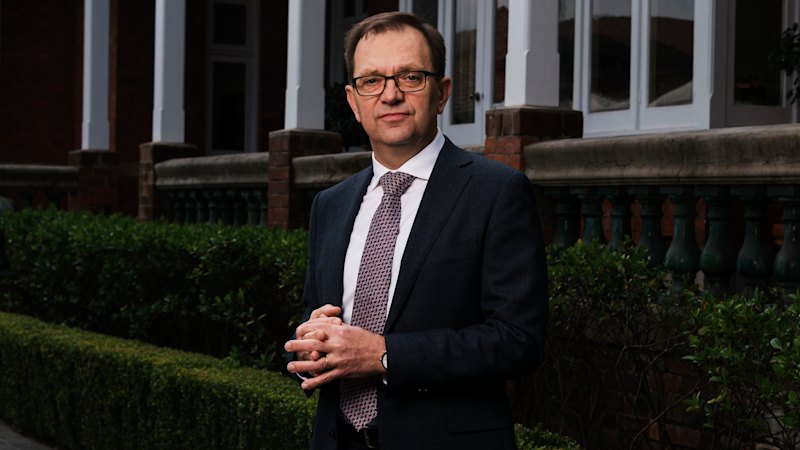
Professor Carolyn Evans, who started in the top job at the university this month, will make one of her first public appearances at The Age’s Melbourne Assembly on Monday.
asserted
who → start → Monday
Her vision for Melbourne and for the state’s oldest university is one and the same: to build on existing global advantages in health and wellbeing, and sport and culture, and build a pipeline of innovation as the employment landscape changes.
asserted
landscape → build → innovation
“There’s going to be limited resource in coming years, limited resource financially, but limited resource in terms of time, energy and effort for people,” Evans said.
asserted
Evans → go → people
“That doesn’t mean we should never do anything else, but we should be capable of building on a couple of areas that we are already globally renowned in.”
asserted
we → mean → that
“We will not necessarily be able to rely on the service industry jobs that have been the overwhelming majority of employment in this city to date.
asserted
that → rely → date
“To really try to say, we’re not just trying to get by, we’re not just trying to be liveable, we’re actually trying to become a city which has a global reputation for being outstanding …
asserted
which → try → reputation
That can’t be at 17 different things for a city of Melbourne’s size; that’s got to be a couple of things.
asserted
that → get → things
Melbourne Assembly, a civic forum presented in partnership with the University of Melbourne, will bring together industry leaders, key decision makers and the community to help shape the city’s future.
asserted
Assembly → present → future
The Parkville biomedical precinct surrounding the university is widely recognised as among the best in the world, but leaders in the precinct say that matching equivalent hubs such as in Boston or London would require securing greater capital and more collaboration.
asserted
matching → surround → capital
Evans points to the planned Australian Institute for Infectious Diseases, which could position the city as a world leader in the next pandemic or epidemic, as the kind of “big, ambitious play” born from university, philanthropic and government investment that she believes is reinforcing Melbourne’s strengths.
uncertain
she → point → strengths
“That’s the sort of thing that I think we can be doing more of into the future.”
asserted
we → ’ → future
The university is also focused on how its surrounding precinct can produce the next generation of innovations, including by raising its ambitions to have the university’s intellectual property translate into 20 start-ups a year by 2030, and 30 to 40 by 2035.
asserted
property → focus → 2035
“When people around the world think of Melbourne they need to think that was a place that invented a cure for this, or that was a place that was the home for this amazing company, as they did for a while,” Evans said.
asserted
Evans → think → while
“What’s the Cochlear implant of the next 10 years?”
asserted
implant → ’ → years
In sport and culture, Evans sees a need for cross-disciplinary research to explore and fine tune how these sectors support health and wellbeing in the city.
asserted
sectors → see → city
“Melbourne is very strong in the cultural precinct, and it’s helping to train the performers of the next generation, the artists, and those who think about culture,” she said.
asserted
she → help → culture
“But with both culture and performance and sport, we can bring a level of research and science and integration.”
asserted
we → bring → research
Evans spent nearly two decades at the university in several senior roles before moving to south-east Queensland as vice chancellor of Griffith University in 2019.
asserted
Evans → spend → 2019
She will measure her success by whether she can form deeper partnerships between the University of Melbourne, the city and the nation.
asserted
she → measure → Melbourne
Related Article
“I’d like to see start-ups that have had their birth here on campus becoming successful businesses, but maybe still being based in or near the university,” Evans said.
asserted
Evans → like → university
“I’d like to see our research partners joining in ever closer collaboration with us.
asserted
partners → like → us
I’d like to see our fine arts students in the art galleries.”
asserted
I → like → galleries
Cuts to international students
However, the ambitions of universities face a looming threat from duelling policies to reduce Australia’s intake of international students.
The federal government has pledged to curb overall migration by cutting net migration – including by reducing visas for family members of students – while the Coalition intends to reduce the share of international students in higher education to below 25 per cent of total enrolments.
asserted
Coalition → face → enrolments
Evans, also chair of Universities Australia, said the impact would be severe:
asserted
impact → say → Australia
“If we were to face the sorts of cuts that some of the political parties are suggesting, it would mean thousands of jobs would be lost at the University of Melbourne alone.
asserted
thousands → face → Melbourne
If you went to 25 per cent being a requirement across the country in each individual university, I see tens of thousands of jobs being lost.
asserted
thousands → go → jobs
“It won’t just be jobs in our sector; a lot of people rely on universities as anchor institutions.
asserted
lot → rely → institutions
If you look around Melbourne University, small business owners in cafes and hospitality.
asserted
you → look → cafes
All sorts of areas absolutely rely on those students,” she said.
asserted
she → rely → students
If international students were capped at 25 per cent, Evans said, the university would do everything it could to work with industry and philanthropists “to try and remain ambitious and world leading”.
uncertain
it → cap → industry
An increase in public funding for universities might also be needed, she said.
uncertain
she → need → universities
We would have to be more focused on where we can really pursue great outcomes.”
asserted
we → have → outcomes
The university recorded an operating deficit of $124 million in 2025 – higher than the $99 million in 2024 and the fourth consecutive operating deficit.
asserted
university → record → 2024
“We would really love political parties of all stripes to look to make those challenges easier, rather than continuing to make them harder,” Evans said.
asserted
Evans → love → stripes
At the University of Melbourne, the rise of artificial intelligence has forced the use of assessments such as oral tests and timed exams to ensure students are not offloading their thinking to AI.
asserted
students → force → AI
“Of course every one of our students will have to graduate with AI skills,” Evans said.
asserted
Evans → have → skills
“But I think we’ll also need to think about in a world where AI can do many of the tasks that graduates would have done, how important are other skills going to be?”
asserted
skills → think → that
Evans said there remained strong commitment to the fundamentals of the Melbourne Model, which since 2008 has seen students undertake a broad undergraduate degree before a discipline specific or professional graduate degree, but she believes the university needs to make sure it remains fit for the modern day.
asserted
it → say → day
“I don’t think [there will be changes] in terms of its fundamental architecture,” she said.
asserted
she → think → architecture
…and 12 more, not listed.
 The Aporia