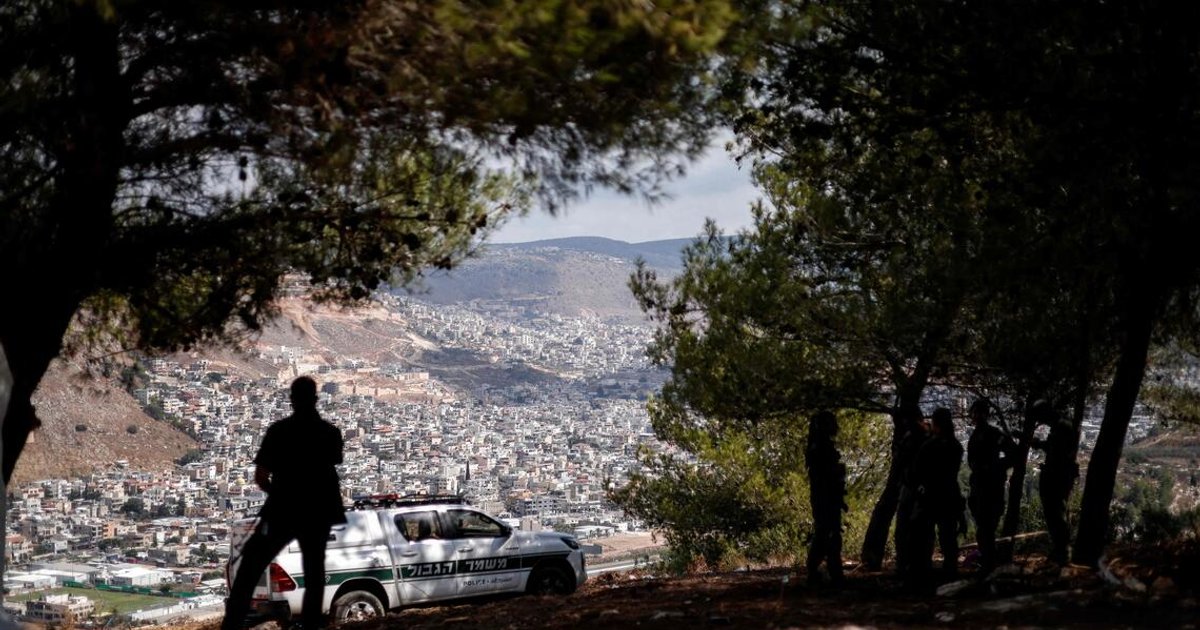
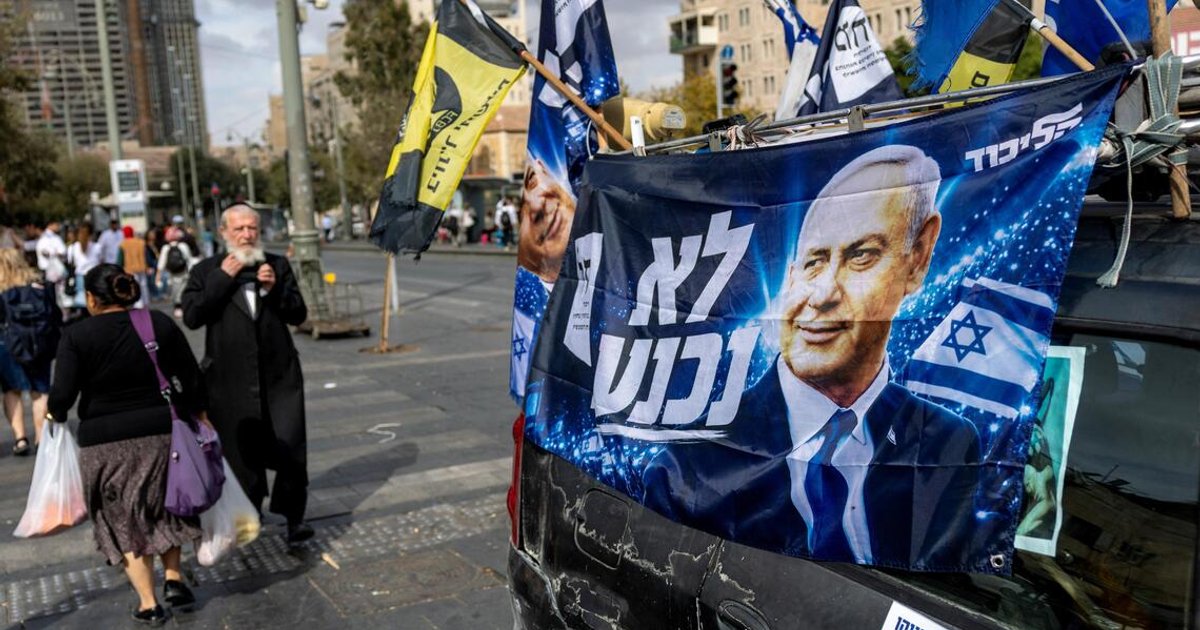
Keen for change, Israel’s Arab minority sees election as existential

Read the original at The Straits Times ↗
Cite

The Straits Times. (2026, October 18). Keen for change, Israel’s Arab minority sees election as existential. The Straits Times. https://www.straitstimes.com/world/middle-east/keen-for-change-israels-arab-minority-sees-election-as-existential

Dated from the outlet's own feed. Check the original for its byline.

The Straits Times · collected 2026-10-18 · by The Straits Times

Quick Summary

Israel's Arab minority, comprising about 21% of the country’s population, views the upcoming parliamentary election on October 27 as crucial for their future. After years of boycotts over perceived discrimination, many are now mobilizing to vote against a potential return of a right-wing government. Activists like Dana Salameh and ordinary citizens such as pharmacist Said Kabat from Majd al-Krum are urging increased participation to counter recent far-right policies that threaten Arab communities within Israel's borders.
Written locally by qwen2.5:14b on 2026-10-18, using this article's own text rather than the other coverage of the same event (that is the story summary below).

AI analysis runs on qwen2.5:14b, locally

Story summary

In Israel's upcoming parliamentary elections on October 27, Arab Israelis, who make up about 21% of the country’s population, are mobilizing to vote in higher numbers than ever before. This shift is driven by fears among Arab voters that a return of a right-wing government could exacerbate existing discrimination against them. For instance, Said Kabat, a 55-year-old pharmacist from Majd al-Krum who had boycotted elections his entire life, now plans to vote to voice concerns about the future under a potential far-right administration. Arab Israelis have long complained of unequal treatment compared to Israel’s Jewish majority and feel that their situation worsened during Prime Minister Benjamin Netanyahu's rule.

Written for “Israeli Arab Election Concerns” on 2026-10-18, grounded in this article and the 0 other(s) covering the same event.
Why this leaning score
The article's own words the score was based on. Each is quoted verbatim and was checked against the article text before being stored, so you can find it in the original.
Reading Leans left (beta estimate) Confidence high
Leaning: leans left for article 88100 (high confidence, 2 verified quotes) · logged 2026-10-18

Story

📰 Israeli Arab Election Concerns
Politics · 1 article(s) covering the same event.

Compared with similar articles

This article reads leans left and hedges 7% of its claims. Each row says how that neighbour differs.
Al Jazeera
⚖️ Centre further right than this 🔴 0% hedged 0 of 3 📰 publisher trust 60
“The articles discuss different perspectives on Israeli elections but describe distinct events related to Palestinian views versus Arab Israelis' voting behavior.”
Toronto Star
⚖️ Leans left 🔴 9% hedged 5 of 55 📰 publisher trust 63
“The articles discuss different aspects of Israel's election involving Arab citizens but describe separate events regarding individual voter attitudes and political leaders' actions.”
How this article was measured signals, leaning charts, publisher record, byline, topics and claims

Signals How these are calculated →

Claims extracted
30
sentences that state something as happening or true
Uncertain
7%
2 of 30 hedged ("reportedly", "may", "according to")
Leaning
Leans left
of the writing, not the subject · beta estimate
Publisher signals
60/100
The Straits Times's corrections and hedging, across everything collected from it. Not a measure of accuracy.
Outlets on this story
1
Politics
Same framing elsewhere
1
articles that frame the event the way this one does
Analyzed 2026-10-18 · how these are computed

How this is being covered How these are calculated →

Article leaning vs. publisher reliability
Source leaning vs. consistency

Publisher

The Straits Times · 2988 article(s) · 3 correction(s) detected
Running correction rate · 3 correction(s)

Who wrote this

The Straits Times
1959 article(s) here · 1 carrying a prediction
🔮 Keen for change, Israel’s Arab minority sees election as existential Majd al-Krum, Israel - After boycotting Israeli parliamentary elections his entire life, 55-year-old Said Kabat will head to the polls for the first time on Oct 27.
🔮 He could not check out a book from the school library because he had not yet returned his last book.
2026-10-18 · mixed framing · Can AI apps be a mum’s second brain?
🔮 Three years after suffering their deadliest single attack, Israelis will deliver their verdict on veteran Prime Minister Benjamin Netanyahu in an Oct 27 election that could decide if the country moves definitively into hard-right nationalism.
🔮 A spokeswoman for Canada's Department of National Defense said the government is closely monitoring the situation and will provide additional information as it becomes available.
🔮 He did not identify the driver or say whether charges would be filed.
🔮 Republican members of Congress blasted US President Donald Trump’s decision to waive a tariff law passed in September to restrict Russian energy exports, arguing that the move will help Moscow wage its war on Ukraine. The Trump administration has cast the waiver as a way to facilitate a deal with Russia on diesel exports – aimed at lowering prices ahead of the midterm elections – but critics said it was irresponsible to bypass the sanctions law passed in September that was championed by the late senator Lindsey Graham. Senator Ted Cruz, a Texas Republican closely allied to Trump, said the administration should have found other ways to lower fuel costs, such as importing more from Canada or waiving renewable-fuel requirements. “I wish the President hadn’t done it, I think it was a mistake,” Cruz said on Oct 17 on Fox News, referring to Trump’s executive order late on Oct 16 waiving the Graham law.
🔮 Trump has openly criticised the practice of mail-in voting, and opponents have expressed concern that the administration will attempt to undermine the results – especially if Republicans end up losing, as opinion polls show is likely.
🔮 WASHINGTON – US President Donald Trump’s decision to waive sanctions on Russia and tariffs on its goods days before they were to take effect will embolden Moscow to keep attacking Ukraine, Ukrainian President Volodymyr Zelensky said on Oct 17, predicting even more US sanctions relief. “The decision to undo all of this, to block all of it, seems wrong to me,” Zelensky wrote on X. “It definitely helps only the Russians.”
🔮 The interceptions came as the President of Egypt, which is also a member of the coalition, said he was willing to “carry out any measure to protect” Saudi Arabia if its leaders requested it.
🔮 European diplomats and a French mayor also were attacked in the occupied West Bank, Belgium's foreign minister said.
Also by The Straits Times
Can AI apps be a mum’s second brain?
2026-10-18 · The Straits Times
Nothing else under this byline is closely related to this article, so these are simply their most recent.
All 1959 articles by The Straits Times →

Topics

Arab Israel Israeli Jewish Majd al-Krum

Subjects

Israel GPE · 13× Arab NORP · 12× Majd al-Krum GPE · 6× Israeli NORP · 4× Arab Israelis NORP · 2× Jewish NORP · 2× Kabat PERSON · 2× Raam ORG · 2× Salameh PERSON · 2× West Bank GPE · 2×

Narrative

In the city of Tayibe in central Israel, around 40 members of the Abu Mtair family face the looming threat of displacement, waiting for a decision on demolition orders that have been temporarily frozen. “I cannot imagine this right-wing government returning,” said Akram Abu Mtair, 47, urging the city’s residents to vote.
framing: assertive · carried by 1 article(s) · first seen 2026-10-18
🔮 Keen for change, Israel’s Arab minority sees election as existential Majd al-Krum, Israel - After boycotting Israeli parliamentary elections his entire life, 55-year-old Said Kabat will head to the polls for the first time on Oct 27.
2026-10-18 · The Straits Times
Keen for change, Israel’s Arab minority sees election as existential · assertive framing

Claims (30 extracted, 2 hedged)

Keen for change, Israel’s Arab minority sees election as existential Majd al-Krum, Israel - After boycotting Israeli parliamentary elections his entire life, 55-year-old Said Kabat will head to the polls for the first time on Oct 27. asserted
Kabat → see → Oct
For him, the vote is existential – if a right-wing government is returned to power, he fears for the future of Israel’s Arab minority, to which he belongs. asserted
he → return → which
The pharmacist from the Arab village of Majd al-Krum in northern Israel told AFP he used to boycott elections “all the time”. asserted
he → tell → elections
“But now, I will go out and vote,” he said, concerned that a low turnout among the Arab population would embolden the far-right elements of the current ruling coalition. asserted
turnout → go → coalition
Arab Israelis, also known as Palestinian citizens of Israel, account for about 21% of the country’s population. asserted
Israelis → know → population
They are descendants of Palestinians who remained within Israel’s borders after the state’s creation in 1948, and have long complained of discrimination compared with Israel’s Jewish majority. asserted
who → remain → majority
The close-fought election is sparking calls for a mobilisation push among Israel’s Arab population, after their situation worsened under the outgoing government of Prime Minister Benjamin Netanyahu – one of the most right-wing in the country’s history. asserted
situation → fight → history
Driven by far-right ministers Itamar Ben Gvir and Bezalel Smotrich, settlement construction in the occupied West Bank has soared, and their attention is now turning to predominantly Arab areas inside Israel. asserted
attention → drive → Israel
In September, land belonging to Kabat’s family in Majd al-Krum was the site of a confrontation between residents and Jewish Israelis who came to establish an outpost – a tactic used by West Bank settlers to take control of land. asserted
who → belong → land
Israeli police eventually removed the outpost, which had garnered the backing of Smotrich, who held a rally at the site and in August unveiled a plan to “Judaise” Israel’s predominantly Arab regions. asserted
who → remove → regions
“In light of the events, whether in Majd al-Krum or other villages, I urge every young person and everyone with a vote to cast it,” Kabat said. asserted
Kabat → urge → it
In the last election in November 2022, turnout among Arab and Druze voters was around 53%, while the country’s overall figure stood at around 70%. asserted
figure → stand → %
In Majd al-Krum, activists like 31-year-old Dana Salameh were touring the village to explain the importance of voting. asserted
activists → tour → voting
“Everyone, even those boycotting and those unconvinced about voting, has begun to see the danger very close to them if this government remains in power,” Salameh said. asserted
Salameh → boycott → power
“They don’t want Arabs in this state at all... whether here or in Gaza or the West Bank,” she added. asserted
she → want → Gaza
On Oct 27, the Arab vote is expected to be split among four parties running on two lists. asserted
vote → expect → lists
The far-left Joint List brings together three parties, while Raam, or the United Arab List, is more open to negotiating with the right. asserted
Raam → bring → right
Raam became the first Arab party to join an Israeli government in a 2021-2022 coalition, and it could again play a kingmaker role this year. uncertain
it → become → role
A recent poll by Israel’s Channel 12 projected that the two lists would garner 13 seats in the next Israeli parliament. asserted
lists → project → parliament
They currently have 10 between them. asserted
They → have → them
For Salameh, the poll is evidence of a growing conviction among Israel’s Arab citizens that they are facing “a battle for existence”. asserted
they → grow → existence
Surging crime levels within the community could also push people towards the ballot box. Since the start of 2026, at least 175 Arab citizens have been killed in violent crime incidents, according to the Abraham Initiatives coexistence organisation. uncertain
citizens → surge → organisation
The violence is predominantly driven by criminal gangs, with Arab Israelis accusing the police – under the ministerial responsibility of Ben Gvir – of lax enforcement. “The state has completely withdrawn from the scene,” said criminologist Walid Haddad. asserted
Haddad → drive → scene
In Majd al-Krum, home to about 17,000 people, campaign billboards for the Joint List have popped up bearing the slogan “The change is in our hands”. asserted
change → pop → hands
Several homes in the village face the threat of demolition, reflecting the reality for Arab localities across the country. Israeli authorities say the houses were built without permits or on state-owned land, but Palestinians say permits are near impossible to obtain. asserted
permits → face → land
In the city of Tayibe in central Israel, around 40 members of the Abu Mtair family face the looming threat of displacement, waiting for a decision on demolition orders that have been temporarily frozen. “I cannot imagine this right-wing government returning,” said Akram Abu Mtair, 47, urging the city’s residents to vote. asserted
Mtair → face → residents
Further south, in the Negev desert, Israeli bulldozers recently demolished around 80 structures housing about 400 people in the Bedouin village of Al-Dahiya. asserted
bulldozers → demolish → Dahiya
For Adnan Abu Wadi, who was left homeless with his four children, the demolitions were nothing more than an election stunt. asserted
demolitions → leave → stunt
“People will turn out to vote in large numbers. asserted
People → turn → numbers
We will vote as Arabs to change the government and remove the extremists.” asserted
We → vote → extremists

💬Give feedback
🕘History 🎫Support