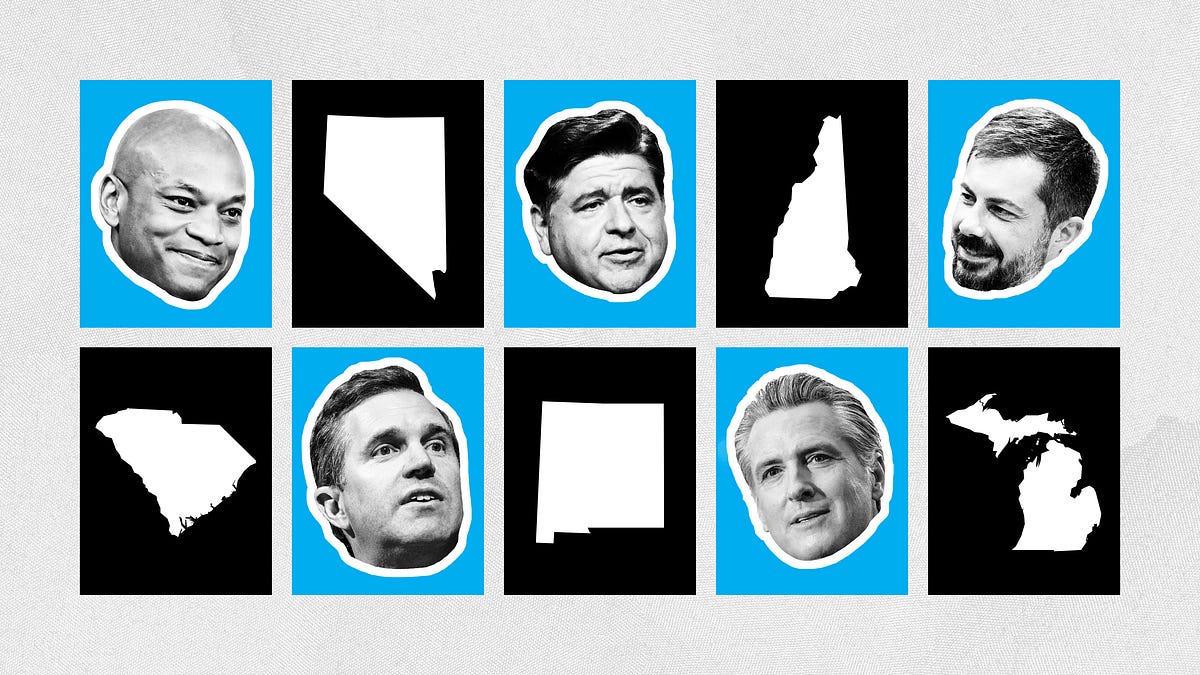
Since Kamala Harris's loss in the 2024 election, Democratic officials have struggled with how to broaden their appeal beyond college-educated and urban voters. The article suggests that recent strategies aimed at identifying what "real Americans" want from their elected officials have yielded unclear results, as Democrats grapple between embracing moderation or progressivism. However, it hints that a new approach might be emerging but stops short of detailing specifics due to paywall restrictions on the site.
Written by the local model on 2026-09-14,
using this article's own text rather than the other coverage of the
same event (that is the story summary below).
Claims extracted
12
claim-shaped sentences
Uncertain
0%
0 of 12 hedged
Leaning
Leans right
expected in commentary, which argues a position
Correction & hedging signals
not measured
these signals count newsroom corrections;
Commentary has none to count
Outlets on this story
1
Politics
Narrative spread
43
articles carrying this framing
Story summary
Since Kamala Harris's loss in the 2024 election, Democratic officials have grappled with how to rebuild their party as a broad coalition again. The loss highlighted the fragility of their current base, which had become increasingly reliant on college-educated and urban voters while working-class voters were moving rightward.
In response, Democratic strategists have proposed various strategies, including embracing either moderation or progressivism. Recent developments suggest that supporting progressive issues like Medicare for All and criticizing Israel might be effective ways to appeal to a broader base of Americans. This approach contrasts with more centrist positions that focus on social issues such as opposing transgender athletes in girls' sports.
This debate over the party's direction has intensified discussions about how Democrats can attract both moderate and progressive voters ahead of future elections.
Written for “Bernie Sanders Endorsement Controversy” on 2026-09-14,
grounded in this article and the 0 other(s) covering the same event.
Why this leaning score
The article's own words the score was based on. Each is quoted
verbatim and was checked against the article text before being
stored, so you can find it in the original.
Leaning score +0.35 for article 8792 (high confidence, 2 verified quotes) · logged 2026-09-14
SINCE THE 2024 ELECTION, an existential, albeit familiar, question has gripped Democratic officials: How do they become a “big tent” party again?
asserted
they → grip → officials
Kamala Harris’s loss exposed how fragile the coalition had become.
asserted
coalition → expose → ?
Working-class voters had continued moving steadily to the right, and Democrats were more reliant on college-educated and urban voters.
asserted
Democrats → move → voters
Since then, Democratic strategists and candidates have explored all sorts of ideas aimed at pinpointing what real Americans want from their elected officials.
asserted
Americans → explore → officials
Is it someone who is unafraid to say that trans girls shouldn’t participate in girls’ sports?
asserted
girls → say → sports
Or is it someone who rails against Israel and supports Medicare for All?
asserted
who → rail → All
Would it be better to embrace moderation or progressivism?
asserted
it → embrace → moderation
But in recent months, a pleasantly simple resolution to these seemingly intractable questions has emerged:
asserted
resolution → emerge → questions
Bulwark+ members get the whole story.
asserted
members → get → story
Join Bulwark+ to unlock the rest
Become a paying member of The Bulwark to get access to this post and other subscriber-only content.
asserted
Join → join → post
A subscription gets you:
- Unlimited access to articles and newsletters including The Triad by JVL and Receipts by Catherine Rampell.
- Ad-free editions of our shows (with transcripts) and member-only shows like The Secret Podcast.
- Plus community chats and commenting features.
asserted
subscription → get → chats
Your support helps keep our work sustainable and available to those who cannot afford a membership.
asserted
who → help → membership