Republicans Tried to Undercut Black Voters. It’s Blowing Up in Their Faces.

Read the original at The Bulwark ↗
Cite

Egan, L. (2026, October 29). Republicans Tried to Undercut Black Voters. It’s Blowing Up in Their Faces. The Bulwark. https://www.thebulwark.com/p/republicans-tried-to-undercut-black-voters-blowing-up-in-their-faces-redistricting-maps-early-vote-data

Dated from the outlet's own feed. Check the original for its byline.

The Bulwark · collected 2026-10-29 · by Lauren Egan commentary

Quick Summary

Democratic officials and strategists predicted earlier this year that attempts by Republicans to redraw electoral districts in a way that diminishes the voting power of Black voters could boost turnout among Black communities. Early data supports this theory, showing that as of mid-October, over 160,000 more ballots have been cast by Black voters compared to the same point four years ago. Notably, states like Louisiana and South Carolina are seeing significant increases in early voting among Black citizens, suggesting a higher engagement rate despite initial skepticism about whether younger generations would be motivated by these changes. Strategists caution that while this trend is promising, it’s still too early to draw definitive conclusions without complete election day data.
Written by AI on 2026-10-29, from this article's own text only (the story summary below draws on all the coverage).

AI analysis

Story summary

As Democrats strategized earlier this year, they predicted that the Supreme Court's ruling gutting Section 2 of the Voting Rights Act would motivate black voter turnout by increasing concerns over racial gerrymandering. Recent early vote data in South Carolina shows that about 30 percent of early votes have been cast by Black voters, compared to previous years. This trend is also evident in North Carolina, where black voters have already cast over 160,000 more ballots this year than at the same point in 2022. The increased turnout is thought to be a response to Republican efforts aimed at reducing the electoral power of Black voters. This surge in voter engagement could impact Senate races, with polls showing a narrowing gap between candidates.

Written for “Republicans Face Backlash Over Voting Laws” on 2026-10-29, grounded in this article and the 0 other(s) covering the same event.
Why this leaning score
The article's own words the score was based on. Each is quoted verbatim and was checked against the article text before being stored, so you can find it in the original.
Reading Leans left (beta estimate) Confidence medium 1 quote(s) discarded as not found in the article
Leaning: leans left for article 113284 (medium confidence, 2 verified quotes) · logged 2026-10-29

Story

📰 Republicans Face Backlash Over Voting Laws
Politics · 1 article(s) covering the same event.

Compared with similar articles

This article reads leans left and hedges 31% of its claims. Each row says how that neighbour differs.
ABC News (AU)
⚖️ Leans left Hedges 1 of 30 claims Outlet record 68/100
“The articles discuss different aspects of political events and outcomes related to voting patterns and election results, rather than the same specific incident.”
Silver Bulletin
Hedges 9 of 44 claims
“The articles discuss different topics related to voting and elections but do not describe the same specific incident.”
Mother Jones
⚖️ Leans strongly left further left than this Hedges 2 of 8 claims Outlet record 95/100
“The articles discuss related issues regarding voting rights and redistricting but do not describe the same specific incident or occurrence.”
The Guardian
⚖️ Leans left Hedges 1 of 4 claims Outlet record 67/100
“The articles discuss different aspects of Republican tactics for the midterms and do not describe the same specific incident.”
How this article was measured signals, leaning charts, publisher record, byline, topics and claims

Signals How these are calculated →

Claims extracted
36
sentences that state something as happening or true
Uncertain
31%
11 of 36 hedged ("reportedly", "may", "according to")
Leaning
Leans left
expected in commentary, which argues a position · beta estimate
Publisher signals
not measured
these signals count newsroom corrections; Commentary has none to count
Outlets on this story
1
Politics
Same framing elsewhere
1
articles that frame the event the way this one does
Analyzed 2026-10-29 · how these are computed

How this is being covered How these are calculated →

Article leaning vs. publisher reliability
Source leaning vs. consistency

Publisher

The Bulwark · 540 article(s) · 0 correction(s) detected
No corrections detected for this publisher. That may mean careful reporting, or simply that nothing has been checked.

Who wrote this

Lauren Egan
15 article(s) here · 1 carrying a prediction
🔮 AS DEMOCRATIC OFFICIALS AND STRATEGISTS mapped out their game plan for the midterms earlier this year, they speculated that the Supreme Court’s ruling gutting Section 2 of the Voting Rights Act—and the ensuing rush to carve up the electoral power of black voters in the South—could help drive black voter turnout.
🔮 The polls were largely correct, and maybe they even underestimated the party’s strength in a few races.
2026-10-25 · assertive framing · What a Blowout Dem Win in ’26 Would Mean for ’28
🔮 Democrats Test the Limits of a Blue Wave A recording from The Bulwark’s live video Could Democrats really flip Senate seats in deep-red states like Mississippi, South Carolina, and Florida?
🔮 Today, though, there’s reason to believe that the public’s earlier ambivalence has faded, and that Trump’s corruption is not only breaking through in a big way, but could sway the course of this year’s midterms.
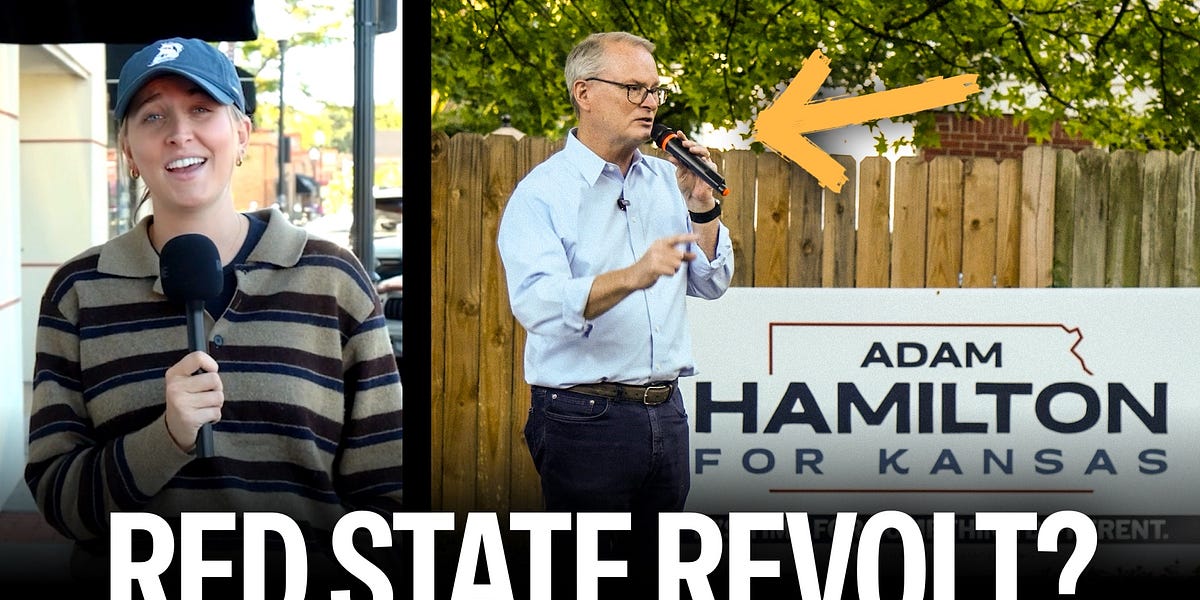
🔮 Lauren talks with Hamilton supporters about why they think Kansas could finally be ready to elect a Democrat to the Senate for the first time in nearly a century, and asks Hamilton how he plans to win over Republicans and voters who remain skeptical of the Democratic Party. Join Bulwark+ to unlock the rest Become a paying member of The Bulwark to get access to this post and other subscriber-only content.
2026-10-07 · assertive framing · Republicans Are Panicking Over the Kansas Senate Race
🔮 Prairie Village, Kansas STANDING IN FRONT OF A CROWD of roughly a hundred people on Friday evening, Adam Hamilton didn’t have the aura of a man whose entire life was about to be picked apart, whose political ambitions were set to be battered by millions of dollars of negative TV ads, whose campaign had become a vector of immodest hope for Democrats dreaming of an unfathomably successful midterm election.
2026-10-05 · assertive framing · Kansas Is in Play. Can Adam Hamilton Keep It That Way?
🔮 AS DEMOCRATIC OPERATIVES brace for the final weeks of the midterm campaign, they’ve been pleased to discover that they may not need to actually get above 50 percent of the vote to win in several key races.
2026-10-01 · assertive framing · Live Free or Die (Helping Dems Get Elected)
🔮 The mission at hand, he would tell them, is like landing a plane in a hurricane.
2026-09-28 · assertive framing · Could a Wave THIS Big Actually Happen?
🔮 WITH JUST OVER SIX WEEKS TO GO until Election Day, things couldn’t be going better for the Democrats.
2026-09-21 · assertive framing · The One Legit Reason for Dem Panic
🔮 Would it be better to embrace moderation or progressivism?
2026-09-14 · assertive framing · Bernie Dogs Could Teach Democrats a New Trick
Also by Lauren Egan
Nothing else under this byline is closely related to this article, so these are simply their most recent.
All 15 articles by Lauren Egan →

Topics

North Carolina’s Republicans Section 2 the Supreme Court’s the Voting Rights Act

Subjects

Democratic NORP · 3× Louisiana GPE · 2× Republicans NORP · 2× GOP ORG · 1× North Carolina’s GPE · 1× Raymond Smith PERSON · 1× South Carolina GPE · 1× Southern NORP · 1× Supreme Court ORG · 1× the Supreme Court’s ORG · 1×

Narrative

And Democrats attribute some of the tightening of the Senate race in South Carolina—a New York Times poll released Wednesday showed Republican Darline Graham leading Democrat Annie Andrews by less than a point—to black voter enthusiasm.1 “About 30 percent of the early vote [in South Carolina] has been black,” Jaime Harrison, the former chair of the Democratic National Committee and a South Carolina native, told me.
framing: mixed · carried by 1 article(s) · first seen 2026-10-29
🔮 AS DEMOCRATIC OFFICIALS AND STRATEGISTS mapped out their game plan for the midterms earlier this year, they speculated that the Supreme Court’s ruling gutting Section 2 of the Voting Rights Act—and the ensuing rush to carve up the electoral power of black voters in the South—could help drive black voter turnout.

Claims (36 extracted, 11 hedged)

AS DEMOCRATIC OFFICIALS AND STRATEGISTS mapped out their game plan for the midterms earlier this year, they speculated that the Supreme Court’s ruling gutting Section 2 of the Voting Rights Act—and the ensuing rush to carve up the electoral power of black voters in the South—could help drive black voter turnout. uncertain
ruling → map → turnout
They figured that Republicans’ gleeful race to eliminate majority-black congressional districts would motivate black voters who otherwise wouldn’t turn out in a non-presidential year. asserted
who → figure → year
Raymond Smith, a former state representative who is running to flip North Carolina’s 3rd Congressional District, told me back in June that while he was certain older black voters would be fired up over redistricting, he worried that the GOP’s efforts “could be lost on the younger generation.” uncertain
efforts → run → generation
But early-vote data suggests that black voters are turning out in big numbers. uncertain
voters → suggest → numbers
So far, black voters have cast over 160,000 more ballots this year than they had at the same point in the 2022 midterm elections. asserted
they → cast → elections
And while it’s impossible to say for sure what’s motivating the turnout, it’s notable that the biggest change from four years ago in the share of votes cast by black voters is largely occurring in Southern states, particularly Louisiana—where the Supreme Court case originated—as well as South Carolina. asserted
case → ’ → states
“If you look at the turnout patterns of African Americans—particularly the turnout pattern of more sporadic African-American [voters]—what you’re trying to figure out is if this turnout is a reflection of the typical electorate just coming in early, or is there something else going on?” asserted
electorate → look → voters]—what
said Cornell Belcher, a Democratic pollster working on the gubernatorial race in Georgia and closely tracking black turnout in the state. asserted
Belcher → say → state
“When you look at how more sporadic voters are turning out and are a part of the early-vote conversation, you do get a sense that something different is going on. asserted
something → look → sense
If that’s held fairly constant, you’re looking at a very different face of the electorate than you’ve typically seen in a midterm, for sure—and even than what you’ve seen in a presidential year. asserted
you → hold → year
” The fight over who gets a voice in American democracy won’t end on Election Day. asserted
who → get → Day
Become a Bulwark+ member and help us cover this election—and what comes next. asserted
what → become → election
Belcher and other strategists I spoke with cautioned that early-vote data provides an incomplete picture of the election. asserted
data → speak → election
They also noted that not every state includes racial demographics in their early-vote reports, which means operatives instead look at counties with large black populations to assess whether turnout is up. asserted
turnout → note → populations
Mississippi and Alabama, states with significant black populations, don’t even offer in-person early voting. asserted
Mississippi → offer → voting
Plus, it’s possible that white voter turnout could surge on Election Day, reducing the proportion of black votes overall. uncertain
turnout → ’ → votes
It’s important, they emphasized, not to overread the early numbers. asserted
they → ’ → numbers
But even with all those caveats in mind, Tom Bonier, a Democratic strategist and senior adviser to the data and polling firm TargetSmart, told me that with more than 30 million votes already cast nationwide, there’s a large enough sample size to draw some preliminary conclusions. asserted
votes → tell → conclusions
“When you break down the increase in black voter turnout, it’s overwhelmingly being driven by younger black voters, which is somewhat surprising or unexpected because we know that early voting tends to skew older,” Bonier told me, adding that it suggested younger voters may be more plugged into the recent erosion of voting rights than Democrats had initially thought. uncertain
Democrats → break → rights
Officials at the top Democratic campaign committees have been closely monitoring the turnout numbers to gauge whether high black voter turnout could put some unexpected seats in play. uncertain
turnout → monitor → play
When Republicans rushed to create new maps after Louisiana v. Callais, they drew districts based on assumptions about the breakdown of the white vote versus the black vote, which in the South tends to correlate with party affiliation. asserted
which → rush → affiliation
But if those assumptions don’t hold—because black residents become significantly more likely to vote this year than in the past—it could open up new opportunities for Democrats. uncertain
it → hold → Democrats
“There’s more of the South in play with this new energized and sort of awakening of that black and brown coalition,” said Belcher. asserted
Belcher → ’ → coalition
“It is a real challenge to Republicans—not only in this election, but moving forward. asserted
It → move → election
” Become a Bulwark+ member and help us keep reporting on the people threatening democracy—and the people fighting for it. asserted
us → become → it
Party officials whom I spoke with pointed to Tennessee’s Shelby County, which includes Memphis, as an example of how this dynamic could play out next week. uncertain
dynamic → speak → example
Tennessee Republicans divided it among three districts earlier this year, hoping to eliminate a Democratic seat in Congress. asserted
Republicans → divide → Congress
But early voting data shows turnout up by 8 percentage points in Shelby County compared to this point in 2022, giving some Democrats hope that Tennessee’s 5th and 9th districts—which Trump would have carried if the new boundaries had been in place in 2024 by 23 points and 21 points, respectively—could still be in play. uncertain
boundaries → show → play
(Memphis is an overwhelmingly black city, so higher voter turnout in general signals more Democratic votes.) asserted
turnout → signal → votes
On Tuesday, the Democratic Congressional Campaign Committee announced it was spending money for the first time in Tennessee’s 5th district. asserted
it → announce → district
Black voter turnout could also make a difference in Virginia, where Democrats are trying to flip three congressional districts. uncertain
Democrats → make → districts
According to Chaz Nuttycombe, the executive director of State Navigate, the blacker the precinct in Virginia, the higher the turnout compared to the 2025 gubernatorial election. uncertain
turnout → accord → election
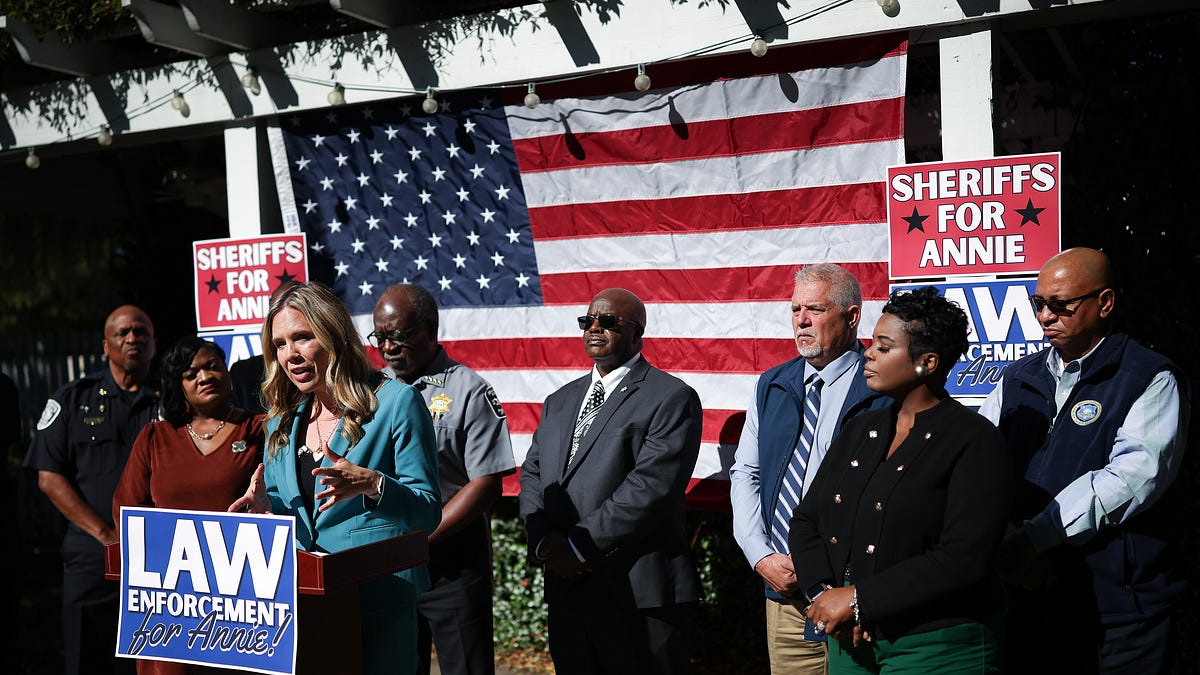
And Democrats attribute some of the tightening of the Senate race in South Carolina—a New York Times poll released Wednesday showed Republican Darline Graham leading Democrat Annie Andrews by less than a point—to black voter enthusiasm.1 “About 30 percent of the early vote [in South Carolina] has been black,” Jaime Harrison, the former chair of the Democratic National Committee and a South Carolina native, told me. asserted
Harrison → attribute → me
“Now the question is, if we can keep that number around 24 percent, and then if Annie [Andrews] can continue to get 35 percent of the white vote, we got a new senator from South Carolina. asserted
we → keep → Carolina
Although the Republican-led South Carolina legislature unexpectedly shot down a redistricting measure pushed by Donald Trump, it was a major controversy in the state earlier this spring. asserted
it → lead → state
A new map would have eliminated Rep. Jim Clyburn’s district, likely ending his 33 years in office. asserted
map → eliminate → office

💬Give feedback
🕘History 🎫Support