Germany's China calculation shifts as import pressures eclipse export benefits

Read the original at Deutsche Welle ↗
Deutsche Welle · collected 2026-10-13 · by Nik Martin

Quick Summary

Germany is reconsidering its cautious stance towards China, moving from fear of Chinese retaliation against German exporters to a willingness to confront unfair trading practices. Chancellor Friedrich Merz and French President Emmanuel Macron recently urged the European Commission to develop tools that could restrict access for countries engaging in such practices from the EU's single market. This shift comes as Germany faces significant challenges: its exports to China have declined sharply, with car exports plummeting by 66% between 2022 and 2025, making it harder for German automakers to compete globally due to increased rivalry from Chinese electric vehicle manufacturers.
Written locally by qwen2.5:14b on 2026-10-13, using this article's own text rather than the other coverage of the same event (that is the story summary below).

AI analysis runs on qwen2.5:14b, locally

Story summary

Germany is shifting its approach towards China as Chancellor Friedrich Merz and French President Emmanuel Macron wrote a joint letter to European Commission President Ursula von der Leyen seeking new tools to restrict trading partners like China from the EU's single market if they engage in unfair practices. This change follows years of Berlin blocking a tougher stance against Beijing due to fears of Chinese retaliation harming German exporters. However, recent developments have made Berlin more willing to escalate tensions with China, despite warnings from China’s Commerce Ministry that such actions could "suffer consequences." Noah Barkin, an adviser at Rhodium Group, noted that threats to Germany's export industry have convinced Merz and his advisers that the benefits of taking action now outweigh the risks.

Written for “China Germany Relations Shift” on 2026-10-13, grounded in this article and the 0 other(s) covering the same event.
Why this leaning score
The article's own words the score was based on. Each is quoted verbatim and was checked against the article text before being stored, so you can find it in the original.
Reading Leans right (beta estimate) Confidence high 3 quote(s) discarded as not found in the article
Leaning: leans right for article 76087 (high confidence, 2 verified quotes) · logged 2026-10-13

Story

📰 China Germany Relations Shift
Politics · 1 article(s) covering the same event.

Compared with similar articles

This article reads leans right and hedges 33% of its claims. Each row says how that neighbour differs.
South China Morning Post
⚖️ leaning not scored 🔴 20% hedged 1 of 5 📰 publisher trust 67
“The articles discuss different aspects of China-EU trade relations without describing the same specific incident.”
EU-China trade war looms closer different event · 30%
Semafor
⚖️ Leans right 🔴 25% hedged 1 of 4 📰 publisher trust 95
“The articles discuss related issues but describe different developments in EU-China trade relations over time.”
Daily Mail
⚖️ Leans right 🔴 10% hedged 6 of 62 📰 publisher trust 64
“The articles describe different aspects of the broader issue between the EU and China over trade deficits and practices.”
The Independent
⚖️ Leans left further left than this 🔴 21% hedged 3 of 14 📰 publisher trust 59
“The articles describe different aspects of tensions between China and the EU; one covers direct talks between envoys while the other discusses Germany's shifting approach to trade relations with China.”
The Straits Times
⚖️ Leans right 🔴 0% hedged 0 of 3 📰 publisher trust 59
“The articles discuss different aspects of EU-China trade relations and do not describe the same specific incident.”

Cite this article

Martin, N. (2026, October 13). Germany's China calculation shifts as import pressures eclipse export benefits. Deutsche Welle. https://www.dw.com/en/germany-s-china-calculation-shifts-as-import-pressures-eclipse-export-benefits/a-79571852?maca=en-rss-en-world-4025-rdf

Dated when The Aporia collected the article, usually within hours of publication. Check the original for its exact date and byline.

How this article was measured signals, leaning charts, publisher record, byline, topics and claims

Signals How these are calculated →

Claims extracted
36
sentences that state something as happening or true
Uncertain
33%
12 of 36 hedged ("reportedly", "may", "according to")
Leaning
Leans right
of the writing, not the subject · beta estimate
Publisher signals
95/100
Deutsche Welle's corrections and hedging, across everything collected from it. Not a measure of accuracy.
Outlets on this story
1
Politics
Same framing elsewhere
1
articles that frame the event the way this one does
Analyzed 2026-10-13 · how these are computed

How this is being covered How these are calculated →

Article leaning vs. publisher reliability
Source leaning vs. consistency

Publisher

Deutsche Welle · 402 article(s) · 0 correction(s) detected
No corrections detected for this publisher. That may mean careful reporting, or simply that nothing has been checked.

Who wrote this

Nik Martin
11 article(s) here · 1 carrying a prediction
🔮 In the last few months, that caution — a fear of Chinese retaliation that could hurt German exporters — has given way to a willingness to escalate.
🔮 Death toll expected to rise Sudan Doctors Network warned on Facebook of an expected increase in the number of casualties "due to the severity of some injuries and the difficulties in accessing medical care and essential services in the region." One survivor told the AFP news agency there were thousands of people working at the remote site when it was hit. "
🔮 But if Russians agree to an energy ceasefire, Ukraine will agree.
🔮 With an election due in April, the argument is no longer how much to cut, but which services, benefits and pensions will face the biggest cuts.
🔮 He called for more emphasis on safety and research before US Big Tech develops more advanced AI models "so that the occasional and inevitable human error does not open a door to disaster." Robinson, who oversaw safety reports for 12 frontier AI-model launches, said the recent errors were typical because tech giants are prioritizing "speed and flexibility." "An environment where things like this can happen is no place to grow artificial minds that could be smarter than we are and that might not do what we want them to."
🔮 Zelenskyy: We will need a 'winter package'
🔮 After meeting Witkoff and Kushner, Zelenskyy said talks were focusing on military aid, including Patriot missiles and other armaments Ukraine would need in the following months.
🔮 What will the referendum decide?
2026-08-31 · assertive framing · Guinea-Bissau votes to reshape presidency
🔮 A sharp correction, he warned, could potentially erase much of the massive wealth built up over the past 30 years.
Also by Nik Martin
Nothing else under this byline is closely related to this article, so these are simply their most recent.
All 11 articles by Nik Martin →

Topics

Berlin China Chinese German Germany

Subjects

China GPE · 11× Germany GPE · 7× Chinese NORP · 6× German NORP · 6× Beijing GPE · 4× Berlin GPE · 4× European NORP · 2× Rhodium Group ORG · 2× Friedrich Merz PERSON · 1× the European Union ORG · 1×

Narrative

Last week, Chancellor Friedrich Merz and French President Emmanuel Macron wrote jointly to European Commission President Ursula von der Leyen seeking a new tool to cut a trading partner off from the EU's single market if unfair practices continue. Clearly aimed at Beijing, the letter warned the measure was necessary against countries that "deliberately seek to undermine ... fair market conditions by political or economic means."
framing: mixed · carried by 1 article(s) · first seen 2026-10-13
🔮 In the last few months, that caution — a fear of Chinese retaliation that could hurt German exporters — has given way to a willingness to escalate.

Claims (36 extracted, 12 hedged)

Germany's cautious approach toward Beijing is cracking. asserted
approach → crack → Beijing
For years, Berlin blocked a harder line on what the European Union describes as China's unfair trade practices. asserted
Union → block → practices
In the last few months, that caution — a fear of Chinese retaliation that could hurt German exporters — has given way to a willingness to escalate. uncertain
that → hurt → willingness
Last week, Chancellor Friedrich Merz and French President Emmanuel Macron wrote jointly to European Commission President Ursula von der Leyen seeking a new tool to cut a trading partner off from the EU's single market if unfair practices continue. Clearly aimed at Beijing, the letter warned the measure was necessary against countries that "deliberately seek to undermine ... fair market conditions by political or economic means." asserted
that → write → means
China's Commerce Ministry warned Europe would "suffer the consequences" if it adopted such a "kill-switch" plan, which was timed to coincide with crucial EU-China trade talks in Beijing last week. asserted
which → warn → Beijing
The cost of standing still Noah Barkin, a senior adviser with research consultancy Rhodium Group's China practice, told DW that the threats to Germany's export powerhouse "have convinced Merz and his closest advisers that the benefits of action outweigh the costs of inaction." asserted
benefits → stand → inaction
Before the COVID pandemic, the two economies rose in tandem and German industry benefited from China's ascent. asserted
industry → rise → ascent
Since 2021, however, China has fallen from Germany's second-largest export market to its ninth, according to data from Germany Trade & Invest for the first half of 2026. uncertain
China → fall → 2026
Chinese competitors have quickly closed the technology gap and benefit from much lower costs and state subsidies. asserted
competitors → close → costs
That pressure is being felt especially in Germany's automaking, precision engineering and chemicals industries. asserted
pressure → feel → industries
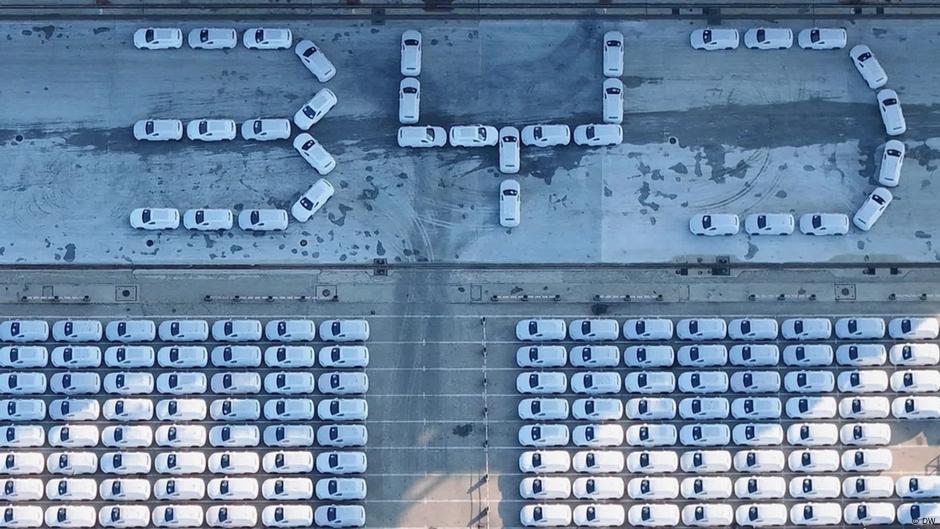
Why Berlin's China policy is changing German vehicle makers have suffered a large sales drop in China, which was once their second-largest market. asserted
which → change → China
According to data from Rhodium Group, German car exports to China plummeted by 66% between 2022 and 2025. uncertain
exports → accord → 2022
Big German brands now face heavy rivalry from a new wave of Chinese electric vehicle (EV) manufactures in other major markets, including Europe, which is forcing a wave of layoffs and possible factory closures. asserted
which → face → layoffs
In Germany alone, imports of new Chinese-made cars rose 121% in the first seven months of the year, according to Destatis, the federal statistics agency. uncertain
imports → make → Destatis
Overall, Chinese-made vehicles accounted for nearly 14% of total vehicle imports. asserted
vehicles → make → imports
"After continuously losing market share in China ... it [the rivalry] seems to be hitting their business within the European automotive market," Andreas Mischer, an associate fellow at the Berlin-based Mercator Institute for China Studies (MERICS), told DW. asserted
Mischer → lose → DW
Mischer said pressure from Germany's powerful automotive lobby was key to Berlin's "shifting attitude toward trade defense instruments." Industry pressure grows for trade defenses asserted
pressure → say → defenses
Among the many German business leaders who have demanded a more hard-line approach in recent months, Oliver Richtberg, head of foreign trade at VDMA, Germany's mechanical engineering association, was perhaps the most blunt: asserted
Richtberg → demand → VDMA
"We are currently being deindustrialized through unfair measures — and most companies are no longer willing to accept this," Richtberg told Welt am Sonntag newspaper in August. asserted
Richtberg → deindustrialize → August
According to Eurostat, the wider EU's goods deficit with China was around €360 billion ($402 billion) last year — effectively €1 billion per day — and widened again in the first half of 2026. uncertain
deficit → accord → 2026
While Brussels has been pushing back against the dumping of cheap Chinese goods, a separate industrial protection law and other anti-coercion measures are running into trouble from Beijing and at home. asserted
law → push → home
Business groups question industrial policy proposals asserted
groups → question → proposals
The EU's Industrial Accelerator Act, proposed in March, is meant to pull manufacturing investment back to Europe by favoring EU-based firms in public contracts and subsidies. asserted
Act → propose → contracts
Foreign investments in key sectors would only be approved if European partners keep majority control, which Beijing has framed as discriminatory. asserted
Beijing → approve → which
The European Automobile Manufacturers' Association (ACEA) warned last month that the draft act does little to counter the threat from cheaper Chinese rivals. asserted
act → warn → rivals
In a position paper, it said the incentive to produce within the bloc has to be large enough to "cancel out the extra cost of producing locally." asserted
incentive → say → cost
Berlin's chief concern was that China could place new export curbs on rare earth minerals and the magnets made from them. uncertain
China → place → them
China has a stranglehold on these elements, which are essential for German automotive, renewables and defense manufacturing. asserted
which → have → manufacturing
Bloomberg last week cited unnamed German officials as saying that a new EU kill-switch could be a "second-strike weapon" if Beijing blocked those exports. uncertain
Beijing → cite → exports
Brussels is also considering unilateral limits on the number of hybrid cars China can export to the EU, according to the same Bloomberg report. uncertain
China → consider → report
EU weights additional trade measures Perhaps to avoid such an open confrontation, the EU and China reached a "shared understanding" last week at the EU-China trade talks in Beijing that could cut Chinese exports of hybrid and plug-in hybrid vehicles to the European Union by more than half. uncertain
that → weight → half
That could affect several millions vehicle exports from China to the EU over the next few years, according to EU Trade Commissioner Maros Sefcovic, who headed the European delegation. uncertain
who → affect → delegation
Overall, new hybrid-electric cars in the EU reached nearly 37% of all new cars registered from January to August, according to ACEA data. uncertain
cars → reach → data
MERICS, meanwhile, calculated that the EU is a more critical export market for China than the US. asserted
EU → calculate → US
This could give EU negotiators a firmer hand as they seek to avoid a trade war while protecting Europe from China's latest export glut. uncertain
they → give → glut
"The EU has more leverage than it sometimes thinks," MERICS' Mischer told DW. asserted
Mischer → have → DW

💬Give feedback
🕘History 🎫Support