What Trump’s Waiver of New Russia Sanctions Means for Ukraine

Read the original at TIME ↗
Cite

Schneid, R. (2026, October 17). What Trump’s Waiver of New Russia Sanctions Means for Ukraine. TIME. https://time.com/article/2026/10/17/what-trump-s-waiver-of-new-russia-sanctions-means-for-ukraine/

Dated from the outlet's own feed. Check the original for its byline.

TIME · collected 2026-10-17 · by Rebecca Schneid

Quick Summary

President Donald Trump signed an executive order waiving new sanctions against Russia that were set to take effect on October 18, as part of a law aimed at restricting financial resources supporting Russia’s war in Ukraine. This decision comes after Trump announced a diesel deal with Russia and urged Ukraine to halt attacks on Russian fuel infrastructure. Legal experts argue this move undermines the intent of the sanctioning act, which was designed to limit Russian financial support for the conflict. The waiver blocks additional sanctions that were intended to pressure Russia further, highlighting growing tensions between the U.S. and Ukraine over Trump’s actions.
Written locally by qwen2.5:14b on 2026-10-18, using this article's own text rather than the other coverage of the same event (that is the story summary below).

AI analysis runs on qwen2.5:14b, locally

Story summary

On October 17, 2026, U.S. President Donald Trump signed an executive order waiving sanctions and tariffs imposed by the Lindsey Graham Act on Russia, citing national interest despite criticism from allies and Ukraine's president Volodymyr Zelensky. The waiver, set to take effect days later, was aimed at facilitating a deal with Russia to purchase diesel, purportedly to lower global energy prices ahead of the midterm elections but also criticized as aiding Moscow in its war against Ukraine. Republican Senator Ted Cruz and other party members called the move "irresponsible" and a mistake that benefits Russian President Vladimir Putin. Zelensky condemned Trump's decision, arguing it emboldens Russia to continue attacks on Ukraine. The waiver bypasses sanctions intended to pressure Russia for its invasion of Ukraine since 2022, leading to mounting criticism from both Republican allies in Congress and international partners concerned about the impact on Ukraine’s defense efforts.

Written for “Trump Waives Russia Sanctions” on 2026-10-18, grounded in this article and the 36 other(s) covering the same event.
Why this leaning score
The model judged this article politically coded and scored it -0.45, but every quote it verified points right, so the score is not published.
Written under an earlier scoring contract, which gave a paragraph rather than checkable quotes. Re-analysing this article replaces it.
Leaning score withheld for article 87778: score contradicts its own evidence · logged 2026-10-18

Story

📰 Trump Waives Russia Sanctions
Politics · 37 article(s) covering the same event. Compare every outlet's account →

Compared with similar articles

This article reads unscored and hedges 19% of its claims. Each row says how that neighbour differs.
Dawn · 0.86 cosine similarity
⚖️ Leans left 🔴 0% hedged 0 of 28 📰 publisher trust 71
“Both articles describe President Trump signing an executive order waiving new Russia sanctions on the same day, with similar context involving Ukraine and the Lindsey Graham Act.”
Al Jazeera · 0.85 cosine similarity
⚖️ Leans right 🔴 0% hedged 0 of 2 📰 publisher trust 60
“Both articles report on Trump signing an executive order waiving Russia sanctions, impacting relations with Ukraine and leading to condemnation.”
The Straits Times
⚖️ Leans left 🔴 0% hedged 0 of 7 📰 publisher trust 60
“Both articles describe President Trump signing an executive order to waive Russia-related sanctions and tariffs before they were set to take effect, on the same day and under the same legislation.”
The Hindu
⚖️ leaning not scored 🔴 0% hedged 0 of 4 📰 publisher trust 95
“Both articles describe President Trump issuing a waiver for sanctions and tariffs under the Lindsey O Graham Sanctioning Russia and Iran Act on October 16, 2026.”
South China Morning Post
⚖️ Leans right 🔴 0% hedged 0 of 4 📰 publisher trust 64
“Both articles describe President Trump signing an executive order to pause sanctions against Russia, specifically mentioning the Lindsey Graham Sanctioning Russia and Iran Act on the same date.”
The Sydney Morning Herald
⚖️ Leans left 🔴 0% hedged 0 of 23 📰 publisher trust 61
“Both articles describe President Trump signing an executive order to put new Russia sanctions on hold, on the same day and in the context of recent events including a deal with Russia for diesel.”
BBC News
⚖️ Leans right 🔴 8% hedged 1 of 12 📰 publisher trust 69
“Both articles describe President Trump's executive order waiving Russia sanctions that were set to take effect on October 18, 2026.”
NBC News
⚖️ Leans right 🔴 0% hedged 0 of 12 📰 publisher trust 95
“Both articles describe President Trump's signing of an executive order to waive new Russia sanctions on the same day and under similar circumstances.”
Toronto Star
⚖️ Leans left 🔴 3% hedged 1 of 30 📰 publisher trust 63
“Both articles describe President Trump signing an executive order to waive new Russia sanctions on October 17, 2026.”
Washington Examiner
⚖️ Leans right 🔴 0% hedged 0 of 2 📰 publisher trust 68
“Both articles describe President Trump signing an executive order waiving sanctions against Russia, specifically referencing the Lindsey O. Graham Sanctioning Russia and Iran Act on the same date.”
How this article was measured signals, leaning charts, publisher record, byline, topics and claims

Signals How these are calculated →

Claims extracted
63
sentences that state something as happening or true
Uncertain
19%
12 of 63 hedged ("reportedly", "may", "according to")
Leaning
withheld
no quote in the article backed the model's score
Publisher signals
60/100
TIME's corrections and hedging, across everything collected from it. Not a measure of accuracy.
Outlets on this story
37
Politics
Same framing elsewhere
1
articles that frame the event the way this one does
Analyzed 2026-10-18 · how these are computed

How this is being covered How these are calculated →

Article leaning vs. publisher reliability
Source leaning vs. consistency

Publisher

TIME · 619 article(s) · 1 correction(s) detected
Running correction rate · 1 correction(s)

Who wrote this

Rebecca Schneid
22 article(s) here · 1 carrying a prediction
🔮 The law, which was set to take effect Oct. 18, called for sanctions targeting Russian officials, financial institutions, and other entities, alongside tariffs of up to 100% on goods imported into the U.S. from major buyers of Russian crude oil or natural gas.
🔮 Why Trump’s wealth and the economy could matter in the midterms La Raja argues that the amount that constituents care about a politician’s enrichment or find it “unethical” often depends on how the country is doing overall.
🔮 Attendees wore purple ribbons and held signs that asked questions such as “Cornell, can you hear us now?” and “When will we start protecting survivors?”
🔮 “I began to understand that art could do more than inspire—it could preserve history and expand the way we see the world.”
🔮 President Donald Trump announced on Oct. 2 that 20.8 million eligible Medicare enrollees will receive a one-time $90 premium rebate from the government.
🔮 The Group of Seven (G7) countries said Friday that the nations would release 100 million barrels of oil and fuel products in the coming months, starting with “substantial” amounts of diesel.
🔮 Her attorney has separately criticized authorities’ handling of the criminal investigation, although observers say what’s known as the “voluntary intoxication loophole” in state law could limit what prosecutors are able to charge.
🔮 Ocone added that the men remain in custody and will be questioned by police.
🔮 Using a controversial move known as a “pocket rescission,” Trump said he wanted to nullify $810 million in spending that Congress had approved for programs and agencies, much of which would serve immigrants, minorities, and children.
🔮 “Go talk to the parents, talk to the teachers, talk to the administrators, and talk at the systems level because you could create all the content and it’s going to sit in a drawer.
Also by Rebecca Schneid
Nothing else under this byline is closely related to this article, so these are simply their most recent.
All 22 articles by Rebecca Schneid →

Topics

Russia Russian U.S. Ukraine Ukrainian

Subjects

Russia GPE · 9× Russian NORP · 8× Trump PERSON · 7× U.S. GPE · 5× Ukraine GPE · 5× Ukrainian NORP · 3× American NORP · 2× Congress ORG · 1× Donald Trump PERSON · 1× U.K. GPE · 1×

Narrative

Darline Graham, the late senator’s sister who was appointed to fill his seat in South Carolina and is running for election this November to keep it, said at a campaign stop on Saturday that the decision was Trump’s to make; however, she voiced disapproval, saying that she would prefer to “keep the pressure on Russia.” “I don’t trust Putin and I don’t trust Russia,” she said.
framing: assertive · carried by 1 article(s) · first seen 2026-10-18
🔮 The law, which was set to take effect Oct. 18, called for sanctions targeting Russian officials, financial institutions, and other entities, alongside tariffs of up to 100% on goods imported into the U.S. from major buyers of Russian crude oil or natural gas.
2026-10-18 · TIME
What Trump’s Waiver of New Russia Sanctions Means for Ukraine · assertive framing

Claims (63 extracted, 12 hedged)

President Donald Trump signed an executive order Friday that waives many of the sanctions in the Lindsey O. Graham Sanctioning Russia and Iran Act, which Congress passed in the late senator’s name last month. asserted
Congress → sign → name
The waiver, coming a week after Trump announced a diesel deal with Russia, also underscores fraying relations between the U.S. and Ukraine. asserted
Trump → come → U.S.
The law, which was set to take effect Oct. 18, called for sanctions targeting Russian officials, financial institutions, and other entities, alongside tariffs of up to 100% on goods imported into the U.S. from major buyers of Russian crude oil or natural gas. asserted
which → set → oil
Those measures were intended to restrict the financial resources supporting Russia’s war against Ukraine. asserted
measures → intend → Ukraine
Read More: Lawmakers Argue Trump's Russia Diesel Deal 'Violates' the Law. asserted
Deal → read → Law
Here's What Legal Experts Say asserted
Experts → say → What
The U.K.’s Foreign, Commonwealth & Development Office estimated in June 2025 that international sanctions had deprived the Russian state of at least $450 billion in war funds since February 2022, including through lost oil tax revenues and immobilized central-bank reserves. asserted
sanctions → estimate → revenues
While Trump’s waiver leaves existing sanctions in place, it blocks the additional pressure the new measures were intended to exert. asserted
measures → leave → pressure
Trump has also pushed Ukraine to scale back its own campaign against Russia’s energy sector, repeatedly urging Kyiv to halt strikes on Russian fuel infrastructure and suggesting that those attacks are driving up U.S. fuel prices. asserted
attacks → push → prices
But Ukrainian strikes are only one factor affecting fuel prices; disruptions linked to the war with Iran are largely responsible for constraining global supplies, while reduced Russian refinery activity has added pressure to diesel markets. asserted
activity → affect → markets
On Oct. 11, Trump claimed that Russia and Ukraine had agreed to an “energy ceasefire.” asserted
Russia → claim → ceasefire
But Ukrainian officials reported Russian strikes on energy infrastructure hours after his announcement, and Zelensky said the purported agreement was news to him. asserted
agreement → report → him
That same day, Trump called for Ukraine to replace President Volodymyr Zelensky. asserted
Ukraine → call → Zelensky
Withdrawing sanctions within a week of those statements, and thereby improving Russia’s financial position, points to an increasingly uneven display of support from the U.S. Jeff Colgan, a professor of political science at Brown University, tells TIME that the decision is basically “is like trading [Ukrainian] democracy for diesel.” asserted
decision → withdraw → diesel
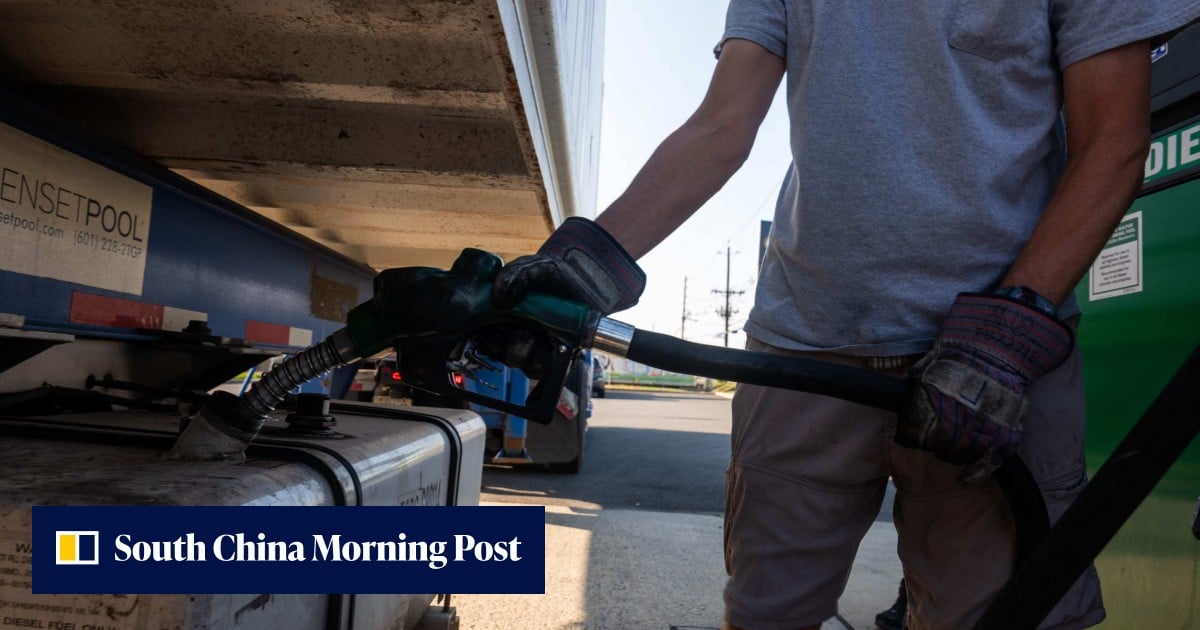
A diesel deal with Russia, announced Oct. 9, is one of the many recent actions Trump has taken in an effort to reduce fuel prices for Americans ahead of midterm elections on Nov. 3. asserted
Trump → announce → Nov.
The deal came with an easing of sanctions as the Treasury Department issued a temporary license authorizing transactions involving Russian diesel, including imports into the U.S., through April 7, 2027. asserted
Department → come → April
In his announcement of the deal on Truth Social, Trump said that Russia had agreed to supply global markets with more than 4.8 million tons of diesel, claiming that it would bring diesel prices down “IN RECORD NUMBERS.” asserted
it → say → NUMBERS
But experts question whether the deal would actually have any material impact on the price of fuel for American consumers. asserted
deal → question → consumers
“There could be a modest short-term effect on wholesale prices, but only a small and delayed benefit, if any, would reach consumers at the pump,” says Tatiana Mitrova, a fellow at Columbia University's Center on Global Energy Policy. uncertain
Mitrova → reach → Policy
The waiver signed Friday, in comparison, could potentially prevent additional disruption to the global energy market. uncertain
waiver → sign → market
It allows Russian oil to continue flowing to importers like China and India, preventing further market volatility. asserted
oil → allow → volatility
“The broader sanctions waiver may prevent additional market disruptions, but it does not itself create new supply,” Mitrova says. uncertain
Mitrova → prevent → supply
“The potential economic benefit to American consumers looks rather modest compared with the geopolitical cost of weakening sanctions pressure.” asserted
benefit → look → pressure
Reducing that pressure—which has widely been interpreted as a component of the diesel deal, though it has not been explicitly identified as such—likely benefits Russia more than the monetary value of the diesel deal itself, Mitrova points out. asserted
Mitrova → reduce → deal
“The much bigger financial benefit for Moscow is avoiding additional sanctions that could have undermined its much larger crude oil export revenues,” she says. uncertain
she → avoid → revenues
And while Trump has touted the benefits of the deal, Colgan questions whether they will be tangible to any country other than Russia itself. asserted
they → tout → Russia
“Easing the sanctions probably won't move global prices very much (big market), but could mean substantial extra revenue for Russia,” he says. uncertain
he → ease → Russia
But the potential consequences extend beyond Russia’s balance sheet. asserted
consequences → extend → sheet
The waiver also raises questions about Washington’s commitment to Ukraine as relations between the two countries deteriorate. asserted
relations → raise → countries
How might the sanctions waiver affect Ukraine? uncertain
waiver → affect → Ukraine
Beyond its impact on global diesel prices, Trump’s sanctions waiver could deepen a growing rift between the U.S. and Ukraine—raising further questions about Washington’s support for Kyiv. uncertain
waiver → deepen → Kyiv
Konstantin Sonin, a Russian economist and a professor at the University of Chicago Harris School of Public Policy, reads the move as a symbolic gesture of support for Russian President Vladimir Putin. asserted
Sonin → read → Putin
He suggests that it could send a message to U.S. allies that extends beyond economic considerations. uncertain
that → suggest → considerations
“I think this will be read by Ukraine and Ukraine leadership—and European leadership—as another step in the United States withdrawing from being an active European player,” he tells TIME. asserted
he → think → TIME
In addition to bolstering Russia’s finances and giving it latitude in its invasion of Ukraine, Sonin says that the waiver of additional sanctions could also “boost morale” for Putin. uncertain
waiver → bolster → Putin
“It’s another bit of signaling that the United States is not as supportive of Ukraine as they were historically,” he adds. asserted
he → ’ → ?
“You still cannot say that the United States is on Putin's side, but it is another bit of diminishing support for Ukraine.” asserted
it → say → Ukraine
Mitrova agrees that the biggest benefit to Russia might be more strategic than financial. uncertain
benefit → agree → Russia
“For Putin, the most valuable outcome may not be additional diesel revenues but the perception that Washington is increasingly prioritizing domestic energy prices over sustained pressure on Russia,” she says. uncertain
she → prioritize → Russia
“That could reinforce the Kremlin’s belief that it can outlast Western support rather than make meaningful concessions.” uncertain
it → reinforce → concessions
…and 23 more, not listed.

💬Give feedback
🕘History 🎫Support