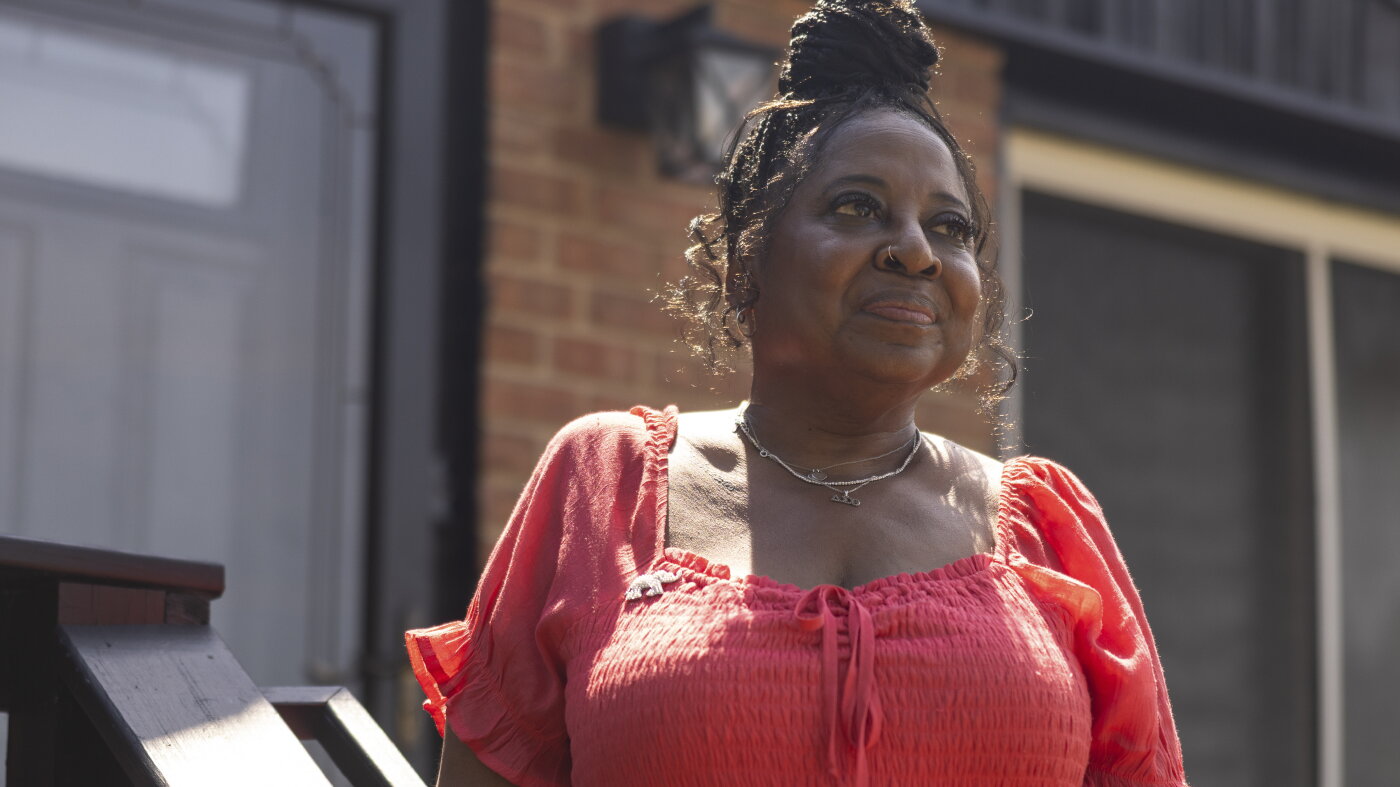
This city led the way on reparations for Black people.
asserted
city → lead → people
Trump is trying to stop it
EVANSTON, Ill. —
asserted
Trump → try → it
As a child in the 1960s, Allie Zemtseff saw how her mother, a Black woman, was turned away by landlords while apartment hunting in white neighborhoods.
asserted
mother → see → neighborhoods
So she was incredulous when the Trump administration this summer accused the city of racial discrimination because of a program it created to compensate Black residents for past housing segregation.
asserted
it → accuse → segregation
"I thought, 'How ridiculous,'" said Zemtseff.
asserted
Zemtseff → think → ?
Through Evanston's reparations program, the first in the U.S. to compensate Black people for historical discrimination, Zemtseff got an apology from the city for its role in keeping Black people out of white neighborhoods decades ago, and $25,000, which she used to renovate her kitchen.
asserted
she → compensate → kitchen
"Of course it's only for Black people," she said, "because we were the ones affected by the discrimination."
asserted
we → say → discrimination
Since the city approved reparations payments in 2021, it has given $25,000 grants to more than 300 people and injected new life into the long-stalled movement to pay African Americans reparations for slavery and other forms of discrimination.
asserted
it → approve → discrimination
But now the Trump administration, which has vowed to eliminate government programs that promote racial equity, is trying to kill Evanston's program before similar ones take hold in other cities.
asserted
ones → vow → cities
In June, the Justice Department announced it would join a conservative group's lawsuit alleging that the city's plan is racially discriminatory because only Black people qualify.
asserted
people → announce → lawsuit
It's a stark illustration of how the Trump administration is trying to radically reshape the role that government plays in fighting discrimination and addressing long-standing racial inequities.
asserted
government → try → inequities
"What's happening in Evanston is the most important civil rights story that no one has heard of," said Alvin Tillery, a professor of race and politics at Northwestern University.
asserted
Tillery → happen → University
"To believe that white people have to get all of the same benefits of people of color when you're trying to fix the harms that white people did to people of color, either actively or in the past — it's just an abomination," Tillery said.
asserted
Tillery → believe → past
The Justice Department, however, argues that Evanston is violating the Constitution's equal protection clause, which prohibits government discrimination based on race.
asserted
which → argue → race
"Simply handing out money based on race ... is not the answer," Harmeet Dhillon, the Justice Department's civil rights chief, said in a June statement announcing the department's plan to join the lawsuit by Judicial Watch, the conservative legal group.
asserted
Dhillon → hand → Watch
In an appearance on a conservative talk radio show days later, she said allowing Evanston to continue paying reparations to Black people would create "a slippery slope," adding, "We're going to put a stop to it."
asserted
We → say → it
The Justice Department did not respond to NPR's requests for comment.
asserted
Department → respond → comment
The idea for Evanston's reparations program took root in 2019, when Robin Rue Simmons, then a councilmember representing the city's historic Black neighborhood, the 5th Ward, was researching why its Black population was shrinking.
asserted
population → take → neighborhood
She saw a link between the affordability problems Black families faced and a zoning law the city adopted in 1921 to steer Black people to a single neighborhood, where for decades local banks refused to approve mortgages, limiting the ability to build family wealth.
asserted
banks → see → wealth
"And so I knew that we had to have targeted redress," Rue Simmons said.
asserted
Simmons → know → redress
"As targeted as the harmful zoning that reinforced redlining."
asserted
that → reinforce → redlining
A report that the City Council commissioned from Morris Robinson, a local historian, pinned much, though not all, blame for segregation in Evanston on past city policies.
asserted
Council → commission → policies
The City Council acknowledged the harm, apologized and committed $20 million collected from the city's tax on cannabis sales and real estate transfers to pay reparations of $25,000 per person.
asserted
Council → acknowledge → person
Applicants had to be Black and prove that they or one of their ancestors had lived in Evanston between 1919 and 1969, during the height of housing segregation.
asserted
they → have → segregation
"It's meant to build wealth, ultimately," Rue Simmons said.
asserted
Simmons → mean → wealth
"And that allows us to stay here.
asserted
us → allow → ?
Testing the limits of a race-based program
Laurice Bell runs the Shorefront Legacy Center, a community archive that collects papers and objects documenting Evanston's Black history.
asserted
that → test → history
During the reparations program's application window in 2021, she said, people started coming to the church basement that houses the archive and asking for help.
asserted
that → say → help
"They were looking for proof that their families had been here during that time period," Bell said.
asserted
Bell → look → period
Michael Bekesha, the attorney who filed Judicial Watch's lawsuit in 2024, said that's precisely the problem with Evanston's program.
asserted
that → file → program
"There is no requirement that somebody prove that they were discriminated against or one of their relatives was discriminated against," he said.
asserted
he → be → relatives
"It's simply that you lived in Evanston for a certain time period and what the color of your skin is."
asserted
color → live → skin
The six plaintiffs in Judicial Watch's suit "do not identify as Black," he said, but have ties to Evanston and would have qualified for a $25,000 payment "but for the color of their skin."
Supreme Court precedent has held that race-based programs must generally be designed to remedy specific, documented discrimination, and Bekesha believes Evanston's program violates that requirement.
"Under the Constitution, everyone has to be treated equally when it comes to the color of their skin," he said.
asserted
he → identify → skin
Evanston Mayor Daniel Biss rejects the claim that the city is handing out money based only on race.
uncertain
city → reject → race
"Deliberate decisions were made that sent property values of property owned by white folks up, and property values owned by Black folks down.
asserted
that → make → folks
And that created a wealth gap that is felt today," Biss said.
asserted
Biss → create → gap
"This is a program that is trying to undo the consequences of racial discrimination.
asserted
that → try → discrimination
Reparations experts say the Trump administration, with its legal challenge, is trying to undermine the viability of reparations efforts themselves.
asserted
administration → say → efforts
"There are huge implications as to whether or not this is something that is going to be seen as unconstitutional," said Justin Hansford, a Howard University law professor who founded the Ogletree Reparative Bar Association, a coalition of lawyers supporting dozens of local reparations efforts across the country.
asserted
who → be → country
The American reparations movement is premised on the idea that African Americans deserve compensation and other types of repair because the legacies of slavery and historical anti-Black discrimination are so ingrained and widespread that the harm continues to this day.
asserted
harm → premise → day
…and 19 more, not listed.