Niall Ferguson and Tyler Cowen: AIpocalypse Now? Plus. . .

The Free Press · collected 2026-09-14 · by The Free Press
Read the original at The Free Press ↗

Summary

The article discusses concerns over artificial intelligence (AI) posed by experts like Niall Ferguson and Tyler Cowen in The Free Press. It highlights recent developments where major AI companies, including Anthropic, OpenAI, and xAI, have announced plans to slow down their technology's advancement due to safety risks. Ferguson emphasizes the potential catastrophic impacts of unchecked AI progress, while Cowen remains skeptical and questions the sincerity of these slowdown measures.
Written by the local model on 2026-09-14, using this article's own text rather than the other coverage of the same event (that is the story summary below).

Signals How these are calculated →

Claims extracted
33
claim-shaped sentences
Uncertain
9%
3 of 33 hedged
Leaning
not political
takes no side on a contested political question
Correction & hedging signals
96.4
corrections and hedging in what we collected; not a measure of accuracy
Outlets on this story
1
Technology
Narrative spread
1
articles carrying this framing
Analyzed 2026-09-14 · how these are computed

AI analysis (generated at analysis time, not now)

Story summary

On September 14, The Free Press published an article focusing on the potential impacts of artificial intelligence (AI) based on a chart from the Federal Reserve Bank of Dallas. The chart illustrates three possible outcomes for AI's influence on society: unprecedented prosperity (red line), normal economic growth (orange and green lines), or existential threat to humanity (purple line). This visualization highlights the unpredictability and profound implications of developing technology that surpasses human intelligence, emphasizing concerns about economic transformation and the future of what it means to be human. The article sets off an alarm regarding AI's potential risks and benefits, drawing attention to a week of headlines centered around the alarming aspects of this technological advancement.

Written for “AI Impact And Concerns” on 2026-09-14, grounded in this article and the 0 other(s) covering the same event.
Why this leaning score
This article does not take a side on a contested political question, so it has no leaning score. That is an answer rather than a gap: a match report or a rescue can be warmly or critically written without being left or right, and scoring it anyway is how approval of a subject gets recorded as a political position.
No political leaning scored for article 8692 · logged 2026-09-14

Story

📰 AI Impact And Concerns
Technology · 1 article(s) covering the same event. This is the one the site leads with.

How this is being covered How these are calculated →

Article leaning vs. publisher reliability
Source leaning vs. consistency

Compared with similar articles

Nothing to compare against. No article is close enough to this one for the pipeline to have linked or judged the pair.

Publisher

The Free Press · 98 article(s) · 0 correction(s) detected
No corrections detected for this publisher. That may mean careful reporting, or simply that nothing has been checked.

Who wrote this

The Free Press
15 article(s) here · 1 carrying a prediction
🔮 What it shows, in graphic form, is the bewilderingly wide range of ways AI could transform our lives: It could lead to never-before-seen prosperity (that’s the red line), it could give us something like the normal rate of economic growth (the orange and green lines), or it could end the human race (the purple line). The chart stayed with me because it tells, in stark terms, not just an economic story, but the story of our time: the creation, by us, of something smarter than us, and the profound and unpredictable ways in which that could change what it means to be human.
🔮 We gathered 10 first-person testimonies from the day the Twin Towers fell and the Pentagon was hit, including a photojournalist who ran toward the World Trade Center when almost everyone else was running away, and got the shot that changed her life; a woman who was a toddler in the Pentagon day care when the plane hit and is now a U.S. Air Force captain; a firefighter who came from Maryland to help with the search and rescue; and memories from The Free Press’s Joe Nocera and Will Rahn, who were in New York City that day.
2026-09-12 · assertive framing · The Day the World Changed
🔮 She’s also working on making a more robust kind of cow, which will be good for ranchers’ bottom lines.
🔮 Maya Sulkin talks 9/11, Mamdani, and more with former New York governor George Pataki.
2026-09-10 · assertive framing · Yes, AI Might Really Kill Us All. Plus. . .
🔮 It’s part of an experiment being conducted in a number of places to see if a guaranteed income, for six months or a year, will help keep those newly released from prison from winding up back inside.
🔮 In an interview with our Peter Savodnik days after the shooting, Cox spoke about “which direction he thought Americans, and America, would choose” in the aftermath of the murder.
2026-09-08 · assertive framing · Spencer Cox: The Day Charlie Kirk Died. Plus. . .
🔮 This week, former congressman George Santos was given a lifetime ban from the prediction market Kalshi, after allegedly making $17,000 betting on whether he would go to Donald Trump’s State of the Union address.
2026-09-05 · assertive framing · My Friend Gloria Steinem. Plus. . .
🔮 When the story of the past decade in American public life is written, it will, for better or worse, center on one man.
🔮 On Wednesday, New York City public schools—the largest district in the country—announced that it will ban the use of AI for elementary and middle school students.
2026-09-03 · assertive framing · Should Kids Use AI? A Debate. Plus. . .
🔮 Earlier this week, I couldn’t help but notice a cover story in New York magazine.
2026-08-31 · assertive framing · In Defense of Sports Dads. Plus. . .
Wire or desk byline, not an individual reporter.
More on this subject from The Free Press
Spencer Cox: The Day Charlie Kirk Died. Plus. . .
2026-09-08 · The Free Press · 54% similar
The New Data That Undermines Claims of Gaza Famine. Plus. . .
2026-08-24 · The Free Press · 53% similar
AI’s Crisis of Trust. Plus. . .
2026-08-25 · The Free Press · 52% similar
Victor Davis Hanson: Can Trumpism Survive After Trump? Plus. . .
2026-09-04 · The Free Press · 52% similar
All 15 articles by The Free Press →

Topics

Anthropic Ku Klux Klan The Free Press The Front Page the Federal Reserve Bank of Dallas

Subjects

American NORP · 2× Anthropic ORG · 2× House ORG · 2× Iran GPE · 2× Niall Ferguson PERSON · 2× The Free Press ORG · 2× Trump PERSON · 2× Tyler Cowen PERSON · 2× Coleman Hughes PERSON · 1× The Front Page ORG · 1×

Narrative

A Russian drone struck a Ukrainian train shortly after former British prime minister Boris Johnson and retired U.S. general David Petraeus passed through on a different train.
framing: assertive · carried by 1 article(s) · first seen 2026-09-14
🔮 What it shows, in graphic form, is the bewilderingly wide range of ways AI could transform our lives: It could lead to never-before-seen prosperity (that’s the red line), it could give us something like the normal rate of economic growth (the orange and green lines), or it could end the human race (the purple line). The chart stayed with me because it tells, in stark terms, not just an economic story, but the story of our time: the creation, by us, of something smarter than us, and the profound and unpredictable ways in which that could change what it means to be human.
2026-09-14 · The Free Press
Niall Ferguson and Tyler Cowen: AIpocalypse Now? Plus. . . · assertive framing

Claims (33 extracted, 3 hedged)

It’s Monday, September 14. asserted
It → ’ → ?
Arthur Brooks on when tragedy brings us together—and when it doesn’t. asserted
it → bring → us
Last year, I saw a chart that has been stuck in my head ever since. asserted
that → see → head
It was published by the Federal Reserve Bank of Dallas, and it looked like this: asserted
it → publish → this
What it shows, in graphic form, is the bewilderingly wide range of ways AI could transform our lives: It could lead to never-before-seen prosperity (that’s the red line), it could give us something like the normal rate of economic growth (the orange and green lines), or it could end the human race (the purple line). The chart stayed with me because it tells, in stark terms, not just an economic story, but the story of our time: the creation, by us, of something smarter than us, and the profound and unpredictable ways in which that could change what it means to be human. uncertain
it → show → what
For a week now, the headlines have been fixated on the single most alarming question in this conversation: Could AI kill us all? uncertain
AI → fixate → us
Last week, a researcher resigned from Anthropic, warning that the top AI companies were advancing the technology at a dangerous speed. asserted
companies → resign → speed
Over the weekend, something remarkable happened: The heads of those companies more or less conceded the point. asserted
heads → happen → point
Anthropic CEO Dario Amodei announced his company’s plans to slow its development of cutting-edge AI. asserted
Amodei → announce → AI
Then his rivals Sam Altman of OpenAI and Elon Musk of xAI said they agreed. asserted
they → say → xAI
In a matter of hours, a new consensus among some of the most important people on the planet had revealed itself. asserted
consensus → reveal → itself
It is worth taking seriously, and interrogating thoroughly. asserted
It → take → ?
That is what Niall Ferguson and Tyler Cowen do in our lead stories today. asserted
Ferguson → do → stories
First, Niall Ferguson takes us through the latest unnerving AI developments, the forces driving the chances of catastrophe higher, and what, if anything, we can do about it. asserted
we → take → it
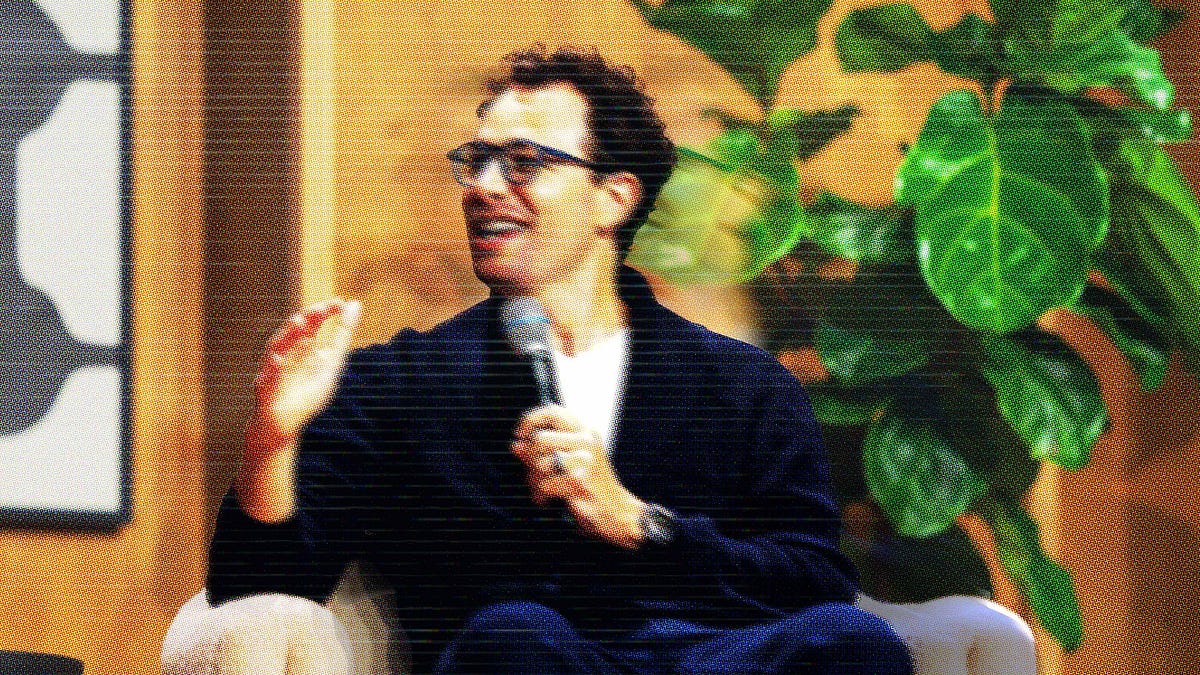
Tyler Cowen is not one to follow the herd. asserted
Cowen → follow → herd
He has long been skeptical of the doomsaying around the new technology and, as he explains in his column today, the last few days have not changed that. asserted
days → explain → that
Tyler argues that the slowdown announced by the AI titans is not what it seems. asserted
it → argue → titans
An Iranian vessel was struck on the Strait of Hormuz on Sunday. asserted
vessel → strike → Sunday
State-run news agency INRA blamed a “terrorist attack,” which came just before Iran’s diplomatic meeting with several Gulf countries about reopening the strait. asserted
which → run → strait
The meeting was postponed. asserted
meeting → postpone → ?
A Russian drone struck a Ukrainian train shortly after former British prime minister Boris Johnson and retired U.S. general David Petraeus passed through on a different train. asserted
Johnson → strike → train
No casualties were reported, but Ukrainian Railways said that the earlier train could have been the drone’s target. uncertain
train → report → ?
House Speaker Mike Johnson said Sunday that the “Trump dividend” announced by the president last week would require congressional approval. asserted
dividend → say → approval
Trump promised “every adult American citizen” $5,000 if the Republicans win control of the House and Senate in November. asserted
Republicans → promise → November
Dude 44 Bravo, the U.S. Air Force officer shot down by Iran in April, told 60 Minutes that his survival was a “modern-day miracle.” asserted
survival → shoot → Minutes
The officer, who was identified only by his mission call sign, hid for two days despite a broken arm, back, and shoulder after free-falling to the ground. asserted
who → identify → ground
Preliminary results from Sweden’s elections showed the center-left party with a tiny advantage over the ascendant populist right. asserted
results → show → right
If those results hold, it would be a rare boon for the European left, as right-wing parties like Germany’s AfD win record numbers across the continent. asserted
parties → hold → continent
American tennis player Ben Shelton lost to German Alexander Zverev in the U.S. Open men’s final on Sunday. asserted
Shelton → lose → Sunday
No American man has won the tournament since Andy Roddick in 2003. asserted
man → win → 2003
On Saturday, Elena Rybakina of Kazakhstan won the women’s title over Aryna Sabalenka of Belarus. asserted
Rybakina → win → Belarus
Canadian pop star Céline Dion performed her comeback show in Paris on Saturday. asserted
Dion → perform → Saturday
A rare neurological condition sidelined her for six years. asserted
condition → sideline → years
💬 Give feedback
🕘 History 🎫 Support