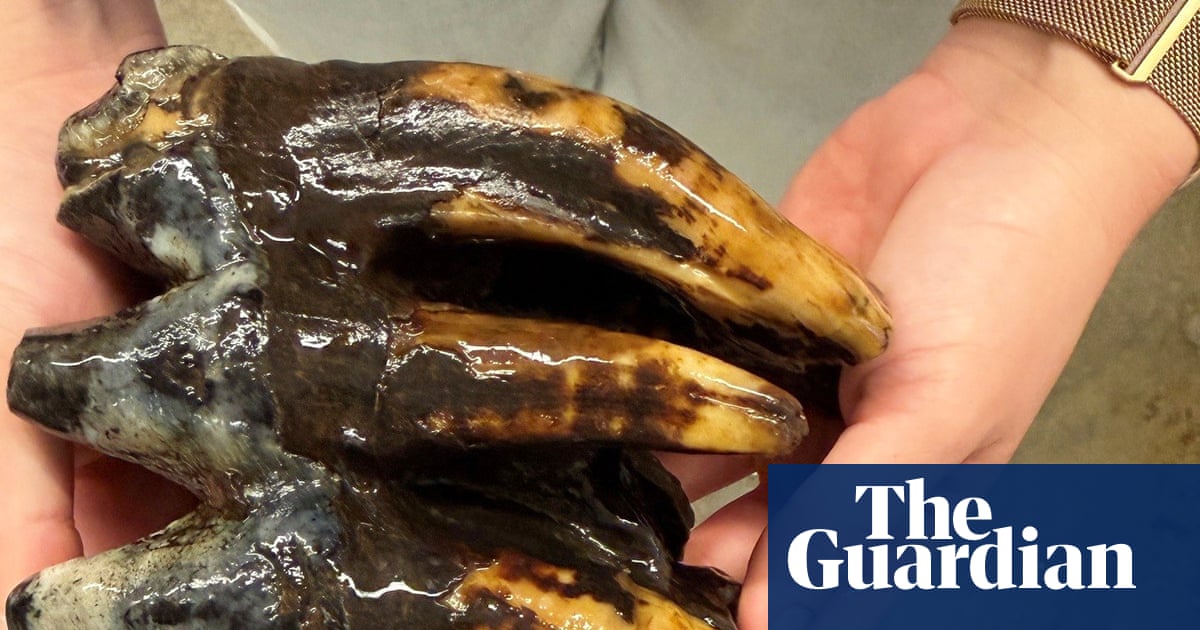
Brigid Lynch, a geomorphologist working at a preserve in San Mateo County, California, discovered an intact 10,000-year-old molar from a Pacific mastodon, a large herbivorous mammal that lived during the Ice Age. Paleontologists confirmed its significance and noted it is one of the best-preserved examples found in the region. The fossilized tooth has been donated to Stanford University for further study, including carbon dating to determine its exact age.
Written by the local model on 2026-09-13,
using this article's own text rather than the other coverage of the
same event (that is the story summary below).
Story summary
A geomorphologist named Brigid Lynch discovered a remarkably well-preserved molar from an ancient Pacific mastodon while surveying a creek in San Mateo County, California. Initially mistaken for a rock, the fossil was later confirmed by paleontologists to be at least 10,000 years old. This tooth belongs to Mammut pacificus, a giant herbivore that once roamed parts of western North America and is now extinct. The fossil will be studied further at Stanford University's Doerr School of Sustainability, where researchers aim to use carbon dating to determine its exact age. Paleontologist Wayne Thompson noted the molar is in "immaculate condition" and provides valuable insights into Ice Age ecosystems. Lynch was conducting a habitat enhancement project for threatened California red-legged frogs when she made the discovery.
Written for “Ancient Mastodon Fossil Discovery” on 2026-09-14,
grounded in this article and the 1 other(s) covering the same event.
Why this leaning score
This article does not take a side on a contested political
question, so it has no leaning score. That is an
answer rather than a gap: a match report or a rescue can be warmly
or critically written without being left or right, and scoring it
anyway is how approval of a subject gets recorded as a political
position.
No political leaning scored for article 8615 · logged 2026-09-13
A 10,000 year-old tooth in remarkable condition from an ancient Pacific mastodon, a large mammal that once inhabited North America, was recently discovered by a California scientist.
asserted
that → inhabit → scientist
Brigid Lynch, a geomorphologist, was working at a preserve in San Mateo county, when she stumbled across a peculiar rock.
asserted
she → work → rock
Paleontologists later confirmed it was not a stone, but an adult Pacific mastodon molar, according to a Wednesday news release from the Midpeninsula regional open space district (Midpen).
“The tooth itself is in immaculate condition.
uncertain
tooth → confirm → condition
It’s the most complete mastodon molar from our area, and the most spectacular mastodon molar that I’ve ever seen.
asserted
I → ’ → that
I had chills and shivers up and down my spine,” said paleontologist Wayne Thompson in a statement.
asserted
Thompson → have → statement
“It’s another puzzle in the Ice Age saga that we can put into place.”
asserted
we → ’ → place
The pacific mastodon, related to modern-day elephants, were most prominent in the American west including what is now California, Oregon, the northern Rocky Mountain region and parts of Mexico.
asserted
what → relate → Mexico
The herbivore mammal, which dates back about 2.5m years ago in North America, went extinct more than 10,000 years ago due to the climate crisis’s effects on their habitat coupled with overhunting from humans.
asserted
which → date → humans
The fossilized tooth has been donated to Stanford University, where researchers at the school of sustainability will employ carbon dating to determine the molar’s exact age, according to Midpen.
uncertain
researchers → donate → Midpen
“Fossils are our only opportunity to see into past biodiversity,” said Christine Garcia, a curator and manager of the geoscience specimen collection at Stanford.
asserted
Garcia → see → Stanford
“We can study fossils to better understand Earth’s past, past wildlife and the ecosystem they were a part of, and to help us make better predictions and better decisions about how to help our ecosystems and biodiversity thrive into the future.”
Several ancient mastodon fossils have surfaced in recent years.
In 2024, a New York state resident found a mastodon jaw under the surface of their lawn.
asserted
resident → study → lawn
A year prior to that, a woman stumbled across a foot-long ancient mastodon tooth sticking out of the sand on a beach near California’s central coast.
asserted
woman → stumble → coast