Iran: When 'honor' becomes a death sentence for women

Read the original at Deutsche Welle ↗
Cite

Gholami, N., & Hein, S. v. (2026, October 16). Iran: When 'honor' becomes a death sentence for women. Deutsche Welle. https://www.dw.com/en/iran-when-honor-becomes-a-death-sentence-for-women/a-79681977?maca=en-rss-en-world-4025-rdf

Dated from the outlet's own feed. Check the original for its byline.

Deutsche Welle · collected 2026-10-16 · by Niloofar Gholami, Shabnam von Hein
Content note This article describes sexual violence.

Quick Summary

On October 5, 2026, Maryam Yarmohammadi, a 28-year-old mother from Qeshm Island, Iran, was killed by her brother and husband who attacked her with knives after mutilating her genitalia. Both perpetrators were arrested following protests from about 50 relatives outside the hospital where she died. The incident reflects a pattern of so-called honor killings driven by familial beliefs that men must punish perceived dishonors to maintain social standing, often resulting in severe violence against women without any chance for defense. Women's rights activists have established support networks to protect at-risk individuals but face limitations in conservative regions like Khuzestan where Maryam lived.
Written locally by qwen2.5:14b on 2026-10-16, using this article's own text rather than the other coverage of the same event (that is the story summary below).

AI analysis runs on qwen2.5:14b, locally

Story summary

On October 5, 2026, Maryam Yarmohammadi, a 28-year-old mother of two from Qeshm Island in southern Iran, was brutally attacked with knives by her brother and husband. She died shortly after the attack in hospital following genital mutilation. Both perpetrators were arrested. Around 50 relatives protested outside the hospital, arguing that death was the "least severe punishment" Maryam deserved, though they did not specify what she had allegedly done to warrant such a reaction.

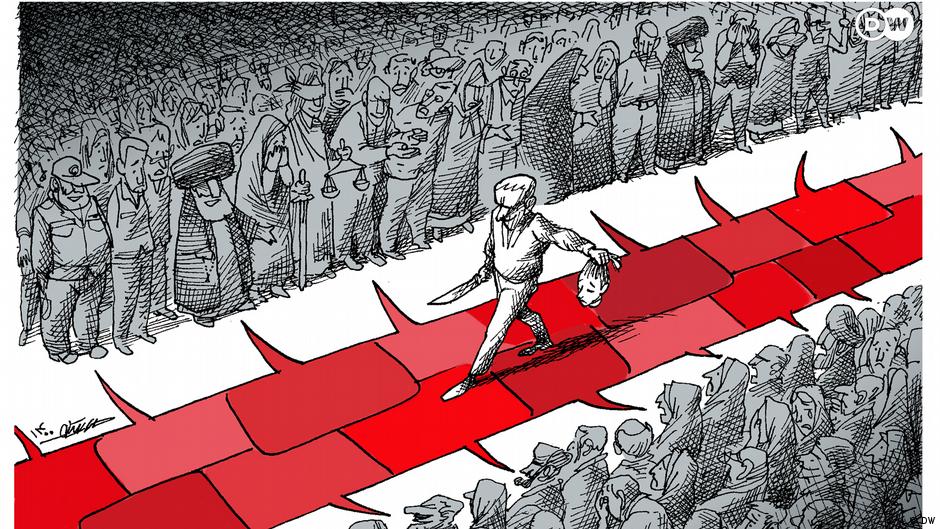
This incident is part of a pattern known as honor killings, where family members believe that a man must erase perceived dishonor brought upon them by a female relative. Failure to do so can result in social exclusion and humiliation within the community. Sociologist Atefeh Rangriz highlighted that such femicides have deep historical roots, from forced unveiling under Reza Shah Pahlavi in the 1930s to current oppressive practices. The exact nature of Maryam's actions remains unclear, but her case underscores the extreme violence often involved and the lack of opportunity for women to defend themselves against unfounded accusations.

Written for “Honor Killings In Iran” on 2026-10-16, grounded in this article and the 0 other(s) covering the same event.
Why this leaning score
The article's own words the score was based on. Each is quoted verbatim and was checked against the article text before being stored, so you can find it in the original.
Reading Leans left (beta estimate) Confidence high 1 quote(s) discarded as not found in the article
Leaning: leans left for article 85141 (high confidence, 1 verified quote) · logged 2026-10-16

Story

📰 Honor Killings In Iran
Crime & Law · 1 article(s) covering the same event.

Compared with similar articles

Nothing to compare against. No article is close enough to this one for the pipeline to have linked or judged the pair.
How this article was measured signals, leaning charts, publisher record, byline, topics and claims

Signals How these are calculated →

Claims extracted
53
sentences that state something as happening or true
Uncertain
13%
7 of 53 hedged ("reportedly", "may", "according to")
Leaning
Leans left
of the writing, not the subject · beta estimate
Publisher signals
95/100
Deutsche Welle's corrections and hedging, across everything collected from it. Not a measure of accuracy.
Outlets on this story
1
Crime & Law
Same framing elsewhere
1
articles that frame the event the way this one does
Analyzed 2026-10-16 · how these are computed

How this is being covered How these are calculated →

Article leaning vs. publisher reliability
Source leaning vs. consistency

Publisher

Deutsche Welle · 437 article(s) · 0 correction(s) detected
No corrections detected for this publisher. That may mean careful reporting, or simply that nothing has been checked.

Who wrote this

Niloofar Gholami
2 article(s) here · 1 carrying a prediction
🔮 Failure to do so may expose him to rejection, humiliation or social exclusion within his community.
2026-10-16 · assertive framing · Iran: When 'honor' becomes a death sentence for women
🔮 Under the version advanced on Sunday, contacts with foreign media, cooperation with overseas universities and research institutions, communication with foreign embassies and organizations, and the receipt of foreign financial support could be banned, require prior authorization or carry criminal penalties.
Also by Niloofar Gholami
Nothing else under this byline is closely related to this article, so these are simply their most recent.
Shabnam von Hein
6 article(s) here · 1 carrying a prediction
🔮 Failure to do so may expose him to rejection, humiliation or social exclusion within his community.
2026-10-16 · assertive framing · Iran: When 'honor' becomes a death sentence for women
🔮 Lawmaker Hossein-Ali Haji-Deligani also said parliament could use its oversight powers, including impeachment proceedings.
🔮 In an interview with the conservative US broadcaster Fox News, he signaled a willingness to make concessions in the nuclear dispute with the United States.
🔮 Many politicians are supporting a new bill which would introduce significantly stricter punishments for women violating the hijab order in public places.
2026-09-15 · assertive framing · Iran: 'Woman, Life, Freedom' lives on despite war
🔮 He also promised that oil prices would fall as soon as the US had won the war.
2026-09-12 · assertive framing · Iran pursues cautious escalation ahead of US midterms
🔮 The United States has warned numerous countries that their companies, banks and private-sector actors could face penalties if they help Iran bypass restrictions.
2026-09-03 · assertive framing · Iran bets on shadow networks to evade US sanctions
Also by Shabnam von Hein
Nothing else under this byline is closely related to this article, so these are simply their most recent.
All 6 articles by Shabnam von Hein →

Topics

Iran Islamic Khuzestan Shariah the Campaign to End Honor Killings

Subjects

Iran GPE · 8× Maryam Yarmohammadi PERSON · 3× Maryam Yarmohammadi's PERSON · 2× Iranian NORP · 1× Islamic NORP · 1× Khuzestan GPE · 1× Moghaddam PERSON · 1× Police Academy ORG · 1× Rezvan Moghaddam PERSON · 1× the Campaign to End Honor Killings ORG · 1×

Narrative

Women's struggle for self-determination Atefeh Rangriz, a sociologist and women's rights activist, told DW: "Femicides have always existed, and their political manifestations can be traced throughout history, from forced unveiling [under Reza Shah Pahlavi in the 1930s] to the slogan 'Either the headscarf or blows to the head' in the Islamic Republic."
framing: assertive · carried by 1 article(s) · first seen 2026-10-16
🔮 Failure to do so may expose him to rejection, humiliation or social exclusion within his community.
2026-10-16 · Deutsche Welle
Iran: When 'honor' becomes a death sentence for women · assertive framing

Claims (53 extracted, 7 hedged)

In the early hours of Monday, October 5, 2026, the life of Maryam Yarmohammadi came to a violent end. asserted
life → come → end
The 28-year-old mother of two was attacked with knives by her brother and husband on Qeshm Island in southern Iran. asserted
mother → attack → Iran
Her genitalia were mutilated. asserted
genitalia → mutilate → ?
She died shortly afterward in hospital. asserted
She → die → hospital
Both her husband and brother were arrested. asserted
husband → arrest → ?
According to media reports, around 50 relatives gathered outside the hospital to protest the arrests. uncertain
relatives → accord → arrests
They reportedly believed that death had been the "least severe punishment" Maryam Yarmohammadi deserved. uncertain
Yarmohammadi → believe → ?
What exactly the young woman had done, and why her relatives considered her guilty, remains unknown. asserted
her → do → What
Yet both the circumstances of the case and the extreme violence involved follow a familiar pattern seen in so-called honor killings. asserted
circumstances → involve → killings
In such cases, the underlying belief is often that a man must erase a perceived "dishonor" brought upon the family by a sister, daughter, or wife. asserted
man → underlie → sister
Failure to do so may expose him to rejection, humiliation or social exclusion within his community. uncertain
Failure → expose → community
No opportunity to defend themselves What constitutes "honor" or "proper conduct" is often defined by family expectations or local social and cultural norms. asserted
constitutes → defend → expectations
In some traditionally conservative regions, even laughing loudly or engaging in a friendly conversation with an unrelated man may be viewed as a violation of these norms. uncertain
laughing → laugh → norms
Women accused of such transgressions are frequently denied any meaningful opportunity to defend themselves against the allegations. asserted
Women → accuse → allegations
For years, women's rights activists in Iran have sought to establish nationwide support networks offering counseling and protection to women at risk. asserted
activists → seek → risk
One such initiative is the Campaign to End Honor Killings. asserted
initiative → end → Killings
Rezvan Moghaddam, a spokesperson for the campaign, told DW that there appeared to be no activist or local group in the region capable of supporting Maryam Yarmohammadi. asserted
Moghaddam → tell → Yarmohammadi
Through civil society networks, the campaign has in some cases succeeded in relocating threatened women to safe locations and securing shelter for them. asserted
campaign → succeed → them
Moghaddam stressed that Maryam Yarmohammadi's death should not be interpreted as criticism of women's rights activists in those regions: "I myself come from Khuzestan in southern Iran and am fully aware of the restrictions that exist there." asserted
that → stress → restrictions
Failure of the justice system Iran's laws, based on the interpretations of Shariah, or Islamic law, do not treat women as equal citizens in many areas of life. asserted
laws → base → life
Their ability to make decisions about education, employment or travel may depend on the consent of their fathers or, later, their husbands. uncertain
ability → make → fathers
Even after a woman's death, male relatives can, under certain legal provisions, influence the course of criminal proceedings. asserted
relatives → influence → proceedings
Iranian criminal law applies the principle of retribution in certain offenses, including murder. asserted
law → apply → murder
In homicide cases, the victim's relatives may choose either to demand retribution, which can result in the death penalty, or to pardon the perpetrator. uncertain
which → choose → perpetrator
These provisions raise particular concerns in cases of honor killings. asserted
provisions → raise → killings
When an alleged perpetrator is also among the relatives empowered to influence decisions on punishment or forgiveness, a serious conflict of interest emerges. asserted
conflict → allege → interest
Such situations expose the protection gaps critics say exist within Iran's justice system regarding violence against women. asserted
critics → expose → women
According to a 2020 study by Iran's Police Academy, honor killings — defined as the murder of a woman by male relatives such as her father, brother or uncle for allegedly violating social norms of modesty and family honor — accounted for up to 45% of all murders in some traditionally conservative provinces in western and southern Iran. uncertain
killings → accord → Iran
In March 2025, the UN Special Rapporteur on human rights in Iran reported that at least 179 women were murdered by men within their family circles in 2024. These cases were recorded as femicides. asserted
cases → report → femicides
When violence is socially legitimized In Maryam Yarmohammadi's case, it was above all the extraordinary brutality of the crime that shocked the public. asserted
that → legitimize → public
The murder triggered a wave of grief and outrage on social media. asserted
murder → trigger → media
Many women reacted strongly to what they saw as a femicide driven by hatred in the name of "honor" and "shame." asserted
they → react → honor
At the same time, numerous comments focused on victim-blaming, holding the victim responsible for her own death. asserted
victim → focus → death
Others described the killing as the "punishment of an unfaithful woman" or attempted to justify it by "understanding the men's anger." asserted
Others → describe → anger
Psychoanalyst Saba Alaleh argues that, for years, men have been socialized to believe they are responsible for controlling women and monitoring their behavior and decisions. asserted
they → argue → behavior
Male identity, she said, is simultaneously tied to a woman's "obedience. asserted
she → say → obedience
" Violence becomes normalized when beliefs, social approval and silence reinforce one another within this structure, Alaleh explained. asserted
Alaleh → normalize → structure
"When cultural, social, political, economic, legal and educational factors are closely intertwined, they acquire enormous power. asserted
they → intertwine → power
Under such conditions, women are also highly economically dependent and lack sufficient social support. asserted
women → lack → support
All of this increases the risk of violence." asserted
All → increase → violence
…and 13 more, not listed.

💬Give feedback
🕘History 🎫Support