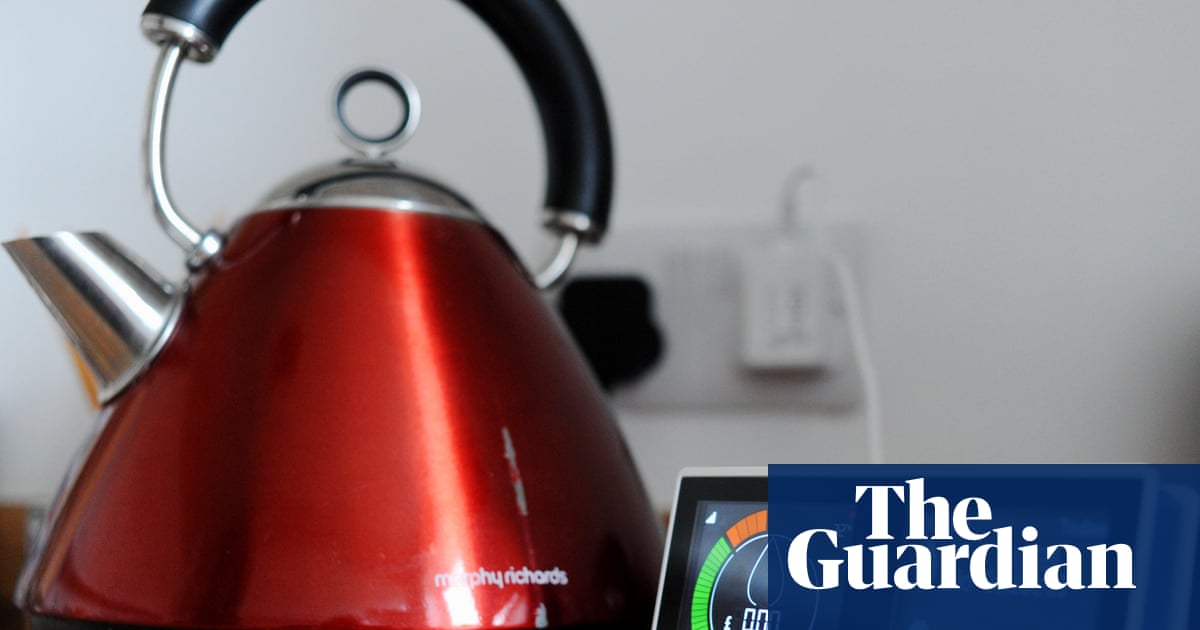
Ofgem planning action to cushion energy firms from wholesale price swings

Read the original at Evening Standard ↗
Cite

Williams, H. (2026, October 16). Ofgem planning action to cushion energy firms from wholesale price swings. Evening Standard. https://www.standard.co.uk/business/money/martin-lewis-ofgem-ukraine-russia-iran-b1301107.html

Dated from the outlet's own feed. Check the original for its byline.

Evening Standard · collected 2026-10-16 · by Holly Williams

Quick Summary

Ofgem, Britain’s energy watchdog, is considering reviving a market stabilisation charge to protect energy suppliers from sharp declines in wholesale prices. This measure would ensure that companies gaining new customers through switching pay compensation to those losing customers if wholesale prices drop significantly. Ofgem claims this will not directly increase customer bills but rather manage financial risks for suppliers. Critics argue the move could reduce competition and shield profitable firms, while supporters see it as necessary to maintain market stability during volatile conditions.
Written locally by qwen2.5:14b on 2026-10-16, using this article's own text rather than the other coverage of the same event (that is the story summary below).

AI analysis runs on qwen2.5:14b, locally

Story summary

Ofgem, the UK’s energy market regulator, has launched a consultation on plans to reintroduce the Market Stabilisation Charge (MSC) to prevent energy suppliers from collapsing due to sharp declines in wholesale prices. This measure was previously activated between April 2022 and March 2024 during Russia’s invasion of Ukraine, which caused more than 30 energy companies to go bankrupt. The proposal aims to protect consumers by ensuring that a supplier gaining new customers through cheaper deals pays a charge to the one losing them, thereby stabilizing market conditions amid ongoing conflicts in the Middle East and Iran's war. Neil Kenward, interim director general of markets at Ofgem, emphasized that reactivating the MSC would help safeguard households from volatile energy prices this winter without immediately raising customer bills.

Written for “Ofgem Energy Market Regulations” on 2026-10-16, grounded in this article and the 2 other(s) covering the same event.
Why this leaning score
The model judged this article politically coded and scored it -0.25, but 1 quote(s) could not be found in the article and the other 1 are attributed speech rather than the article's own narration, so the score is not published.
Written under an earlier scoring contract, which gave a paragraph rather than checkable quotes. Re-analysing this article replaces it.
Leaning score withheld for article 84904: no verified evidence · logged 2026-10-16

Story

📰 Ofgem Energy Market Regulations
Economy/Business · 3 article(s) covering the same event. See how they differ ↓

Compared with similar articles

This article reads unscored and hedges 18% of its claims. Each row says how that neighbour differs.
Evening Standard · 1.00 cosine similarity
⚖️ Leans left 🔴 20% hedged 2 of 10 📰 publisher trust 67
“Both articles describe Ofgem launching a consultation on plans to reintroduce market stabilisation measures for energy firms, with identical content and context.”
The Guardian · 0.87 cosine similarity
⚖️ Leans left 🔴 15% hedged 3 of 20 📰 publisher trust 67
“Both articles discuss Ofgem's consultation to reintroduce the market stabilisation charge due to concerns over volatile energy prices linked to geopolitical conflicts, referring to the same time frame and issue.”
How this article was measured signals, leaning charts, publisher record, byline, topics and claims

Signals How these are calculated →

Claims extracted
17
sentences that state something as happening or true
Uncertain
18%
3 of 17 hedged ("reportedly", "may", "according to")
Leaning
withheld
no quote in the article backed the model's score
Publisher signals
67/100
Evening Standard's corrections and hedging, across everything collected from it. Not a measure of accuracy.
Outlets on this story
3
Economy/Business
Same framing elsewhere
2
articles that frame the event the way this one does
Analyzed 2026-10-16 · how these are computed

How this is being covered How these are calculated →

Article leaning vs. publisher reliability
Source leaning vs. consistency

Publisher

Evening Standard · 5535 article(s) · 45 correction(s) detected
Running correction rate · 45 correction(s)

Who wrote this

Holly Williams
72 article(s) here · 1 carrying a prediction
🔮 Suppliers can be left vulnerable when they have bought energy in advance at a high price and could then suffer financial losses if prices later tumble sharply and high numbers of customers switch to other firms in search of cheaper deals.
🔮 The boss of the Trades Union Congress (TUC) backed the move, saying the tax rise on the “bumper profits” of bank would raise £2.25 billion a year, but the trade body for the banking sector, UK Finance, warned it would “weaken the UK’s competitiveness”.
🔮 Suppliers can be left vulnerable when they have bought energy in advance at a high price and could then suffer financial losses if prices later tumble sharply and high numbers of customers switch to other firms in search of cheaper deals.
🔮 US activist investor Ancora Holdings – which owns a 4% stake in Big Yellow – earlier this week urged the company to launch a strategic review, saying it believed a sale would be the best outcome for shareholders.
🔮 Water firms set to return £240m to customers by 2030 for poor performance The water watchdog said it was proposing to hit a raft of firms across the sector with penalties for not meeting targets on environmental and customer service in the 2025-26 financial year, which will be returned to households and businesses through their bills.
🔮 It cautioned pre-tax underlying profits are set to come in lower than a year earlier, but kept its full-year guidance unchanged as it put faith in recovery plans to boost trading over its peak season and second half.
🔮 The water watchdog said it was proposing to hit a raft of firms across the sector with penalties for not meeting targets on environmental and customer service in the 2025-26 financial year, which will be returned to households and businesses through their bills.
🔮 Water firms set to return £240m to customers by 2030 for poor performance The water watchdog said it was proposing to hit a raft of firms across the sector with penalties for not meeting targets on environmental and customer service in the 2025-26 financial year, which will be returned to households and businesses through their bills.
🔮 The water watchdog said it was proposing to hit a raft of firms across the sector with penalties for not meeting targets on environmental and customer service in the 2025-26 financial year, which will be returned to households and businesses through their bills.
Also by Holly Williams
Nothing else under this byline is closely related to this article, so these are simply their most recent.
All 72 articles by Holly Williams →

Topics

Britain Energy UK Iran Ofgem

Subjects

Ofgem ORG · 5× Britain GPE · 1× Ed Rees PERSON · 1× Energy UK ORG · 1× Iran GPE · 1× Lewis PERSON · 1× Neil Kenward PERSON · 1×

Narrative

Britain’s energy watchdog has launched a consultation on plans to reintroduce a measure to help protect suppliers from big swings in gas and electricity prices as the Iran war continues to impact wholesale markets.
framing: assertive · carried by 2 article(s) · first seen 2026-10-16
🔮 Suppliers can be left vulnerable when they have bought energy in advance at a high price and could then suffer financial losses if prices later tumble sharply and high numbers of customers switch to other firms in search of cheaper deals.
2026-10-16 · Evening Standard
Ofgem planning action to cushion energy firms from wholesale price swings · assertive framing
2026-10-16 · Evening Standard
Ofgem planning action to cushion energy firms from wholesale price swings · assertive framing

Claims (17 extracted, 3 hedged)

Britain’s energy watchdog has launched a consultation on plans to reintroduce a measure to help protect suppliers from big swings in gas and electricity prices as the Iran war continues to impact wholesale markets. asserted
war → launch → markets
Ofgem said it was looking at activating its market stabilisation charge, which is designed to help prevent energy suppliers from collapsing when wholesale energy prices fall back sharply amid volatile markets. asserted
prices → say → markets
Suppliers can be left vulnerable when they have bought energy in advance at a high price and could then suffer financial losses if prices later tumble sharply and high numbers of customers switch to other firms in search of cheaper deals. uncertain
numbers → leave → deals
It works by ensuring the supplier which gains a customer through switching pays a charge to partially compensate the provider that lost the customer. asserted
that → work → customer
Ofgem said reactivating it would not automatically create charges or push up customer bills, stressing that payments between suppliers would only be made if wholesale prices fell sharply enough. asserted
prices → say → suppliers
He said: “In a nutshell, it means if wholesale energy prices drop sharply, the cheap fixes and switchers’ deals offered will be a lot more expensive, in order to protect energy firms’ profits. asserted
fixes → say → profits
“That’s because any firm taking on a new customer, including on a cheap fix or other specialist tariff, will have to pay compensation to that customer’s old supplier, if they switch. asserted
they → ’ → supplier
It’s basically a form of switching penalty.” asserted
It → ’ → penalty
Households have already been hit with a 4% hike to Ofgem’s energy price cap from October 1, with forecasters warning power bills could soar by almost another £300 from January. uncertain
bills → hit → January
Neil Kenward, interim director general of markets, said: “We’re preparing for what is likely to be a difficult winter for many households. asserted
what → say → households
“While the energy market is stronger than it was during the energy crisis, volatility remains and the market stabilisation charge helps to protect consumers from that volatility.” asserted
charge → remain → volatility
Read More He added: “In volatile market conditions, it’s important that suppliers can continue to secure the energy their customers need without taking unsustainable risks. asserted
customers → read → risks
“By acting now, we can help maintain a stable and resilient energy market and protect consumers from the costs and disruption that can arise when markets become unstable.” asserted
markets → act → costs
But Mr Lewis said: “This is a ‘market stabilisation charge’ but the supplier market is pretty stable, and I doubt we are at the domino risk of suppliers going bust in the way they did in the early 2020s. asserted
they → say → 2020s
“A good few energy firms have made large profits since then, and protecting them over winter by effectively dampening competition because it’s ‘not their fault’ feels raw.” asserted
’s → make → competition
Ed Rees, head of retail policy at Energy UK, said it was right for Ofgem to look at using the stabilisation measure again. asserted
Ofgem → say → measure
He said: “While Ofgem has brought in measures to strengthen the financial resilience of suppliers to help withstand volatile wholesale price swings, it remains the case that these are out of suppliers’ control and when the sector is carrying a record amount of customer debt – expected to reach £7 billion by the end of the year – the risks certainly haven’t disappeared. “Suppliers have returned to making small profits after years of losing money – but an expected £5-£6 profit per customer across the sector last year could hardly be described as large.” uncertain
profit → say → sector

💬Give feedback
🕘History 🎫Support