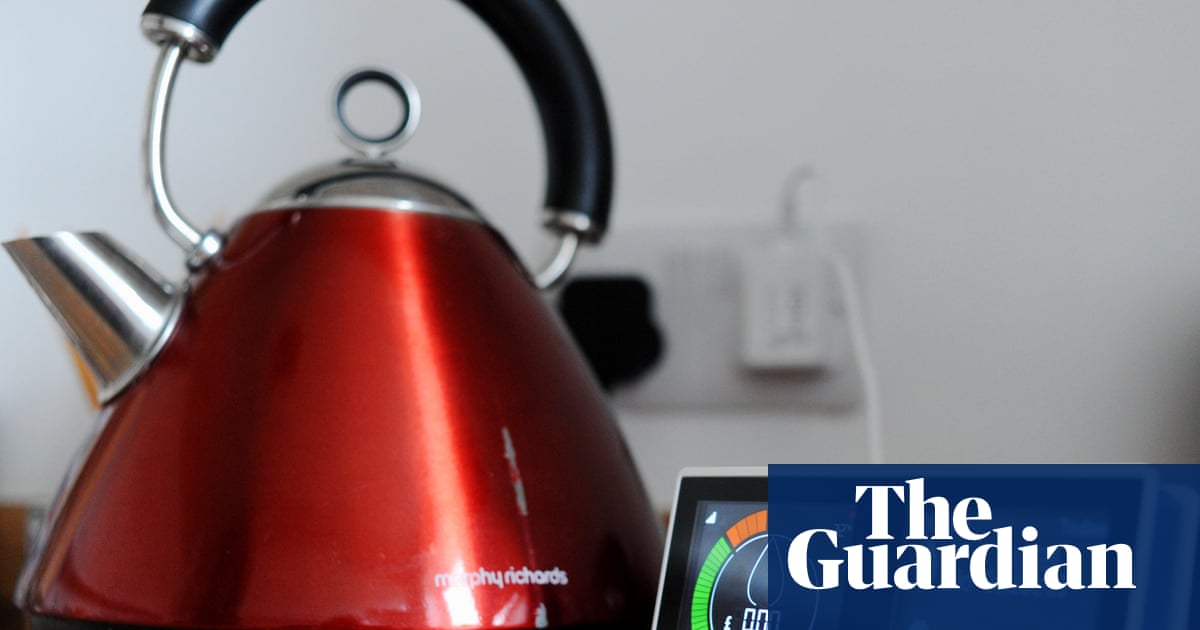
Ofgem planning action to cushion energy firms from wholesale price swings

Read the original at Evening Standard ↗
Cite

Williams, H. (2026, October 16). Ofgem planning action to cushion energy firms from wholesale price swings. Evening Standard. https://www.standard.co.uk/news/uk/ofgem-martin-lewis-russia-ukraine-iran-b1301107.html

Dated from the outlet's own feed. Check the original for its byline.

Evening Standard · collected 2026-10-16 · by Holly Williams

Quick Summary

Ofgem has started a consultation to potentially activate its market stabilisation charge in response to volatile wholesale gas and electricity prices influenced by tensions with Iran. This charge aims to safeguard energy suppliers against financial losses caused by sudden drops in wholesale prices after having purchased energy at higher rates earlier, which can lead to customer churn as people seek cheaper deals. Ofgem emphasized that this measure would not necessarily increase bills for households but could help maintain market stability and protect consumers from price volatility during a challenging winter period following recent hikes in the energy price cap.
Written locally by qwen2.5:14b on 2026-10-16, using this article's own text rather than the other coverage of the same event (that is the story summary below).

AI analysis runs on qwen2.5:14b, locally

Story summary

Britain’s energy watchdog, Ofgem, has launched a consultation on plans to reintroduce its market stabilisation charge. This measure aims to protect energy suppliers from significant price swings in the volatile wholesale markets exacerbated by the ongoing Iran war. The proposed mechanism would involve a charge for the supplier gaining a customer through switching, partially compensating the provider that lost the customer. Ofgem emphasizes this would not automatically increase customer bills but rather ensure stability within the energy sector to prevent financial losses and market instability when prices drop sharply after initial high-cost purchases by suppliers. Households already faced a 4% hike in the energy price cap from October 1, with further increases expected.

Written for “Ofgem Energy Firm Protection Plan” on 2026-10-16, grounded in this article and the 0 other(s) covering the same event.
Why this leaning score
The article's own words the score was based on. Each is quoted verbatim and was checked against the article text before being stored, so you can find it in the original.
Reading Leans left (beta estimate) Confidence high 1 quote(s) discarded as not found in the article
Leaning: leans left for article 84331 (high confidence, 2 verified quotes) · logged 2026-10-16

Story

📰 Ofgem Energy Firm Protection Plan
Economy/Business · 1 article(s) covering the same event.

Compared with similar articles

This article reads leans left and hedges 20% of its claims. Each row says how that neighbour differs.
Evening Standard
⚖️ leaning not scored 🔴 18% hedged 3 of 17 📰 publisher trust 67
“The articles discuss different regulatory measures: one about heating oil regulation to protect households, and another about energy market stabilisation for wholesale price swings.”
The Guardian · 0.87 cosine similarity
⚖️ Leans left 🔴 15% hedged 3 of 20 📰 publisher trust 67
“Both articles discuss Ofgem's plans to reintroduce a market stabilisation charge but describe different aspects and mechanisms of the proposed measure.”
How this article was measured signals, leaning charts, publisher record, byline, topics and claims

Signals How these are calculated →

Claims extracted
10
sentences that state something as happening or true
Uncertain
20%
2 of 10 hedged ("reportedly", "may", "according to")
Leaning
Leans left
of the writing, not the subject · beta estimate
Publisher signals
67/100
Evening Standard's corrections and hedging, across everything collected from it. Not a measure of accuracy.
Outlets on this story
1
Economy/Business
Same framing elsewhere
1
articles that frame the event the way this one does
Analyzed 2026-10-16 · how these are computed

How this is being covered How these are calculated →

Article leaning vs. publisher reliability
Source leaning vs. consistency

Publisher

Evening Standard · 5470 article(s) · 45 correction(s) detected
Running correction rate · 45 correction(s)

Who wrote this

Holly Williams
69 article(s) here · 1 carrying a prediction
🔮 Suppliers can be left vulnerable when they have bought energy in advance at a high price and could then suffer financial losses if prices later tumble sharply and high numbers of customers switch to other firms in search of cheaper deals.
🔮 US activist investor Ancora Holdings – which owns a 4% stake in Big Yellow – earlier this week urged the company to launch a strategic review, saying it believed a sale would be the best outcome for shareholders.
🔮 Water firms set to return £240m to customers by 2030 for poor performance The water watchdog said it was proposing to hit a raft of firms across the sector with penalties for not meeting targets on environmental and customer service in the 2025-26 financial year, which will be returned to households and businesses through their bills.
🔮 It cautioned pre-tax underlying profits are set to come in lower than a year earlier, but kept its full-year guidance unchanged as it put faith in recovery plans to boost trading over its peak season and second half.
🔮 The water watchdog said it was proposing to hit a raft of firms across the sector with penalties for not meeting targets on environmental and customer service in the 2025-26 financial year, which will be returned to households and businesses through their bills.
🔮 Water firms set to return £240m to customers by 2030 for poor performance The water watchdog said it was proposing to hit a raft of firms across the sector with penalties for not meeting targets on environmental and customer service in the 2025-26 financial year, which will be returned to households and businesses through their bills.
🔮 The water watchdog said it was proposing to hit a raft of firms across the sector with penalties for not meeting targets on environmental and customer service in the 2025-26 financial year, which will be returned to households and businesses through their bills.
🔮 “The real test now will be next week when we’ll see whether more investors are prepared to back its growth story and if this long-awaited flotation can help restore confidence in London as a place for ambitious businesses in other sectors to list.”
🔮 It insisted the extra savings would not impact its workforce.
Also by Holly Williams
Nothing else under this byline is closely related to this article, so these are simply their most recent.
All 69 articles by Holly Williams →

Topics

Britain Iran Ofgem

Subjects

Ofgem ORG · 3× Britain GPE · 1× Iran GPE · 1× Neil Kenward PERSON · 1×

Narrative

Britain’s energy watchdog has launched a consultation on plans to reintroduce a measure to help protect suppliers from big swings in gas and electricity prices as the Iran war continues to impact wholesale markets.
framing: assertive · carried by 1 article(s) · first seen 2026-10-16
🔮 Suppliers can be left vulnerable when they have bought energy in advance at a high price and could then suffer financial losses if prices later tumble sharply and high numbers of customers switch to other firms in search of cheaper deals.
2026-10-16 · Evening Standard
Ofgem planning action to cushion energy firms from wholesale price swings · assertive framing

Claims (10 extracted, 2 hedged)

Britain’s energy watchdog has launched a consultation on plans to reintroduce a measure to help protect suppliers from big swings in gas and electricity prices as the Iran war continues to impact wholesale markets. asserted
war → launch → markets
Ofgem said it was looking at activating its market stabilisation charge, which is designed to help prevent energy suppliers from collapsing when wholesale energy prices fall back sharply amid volatile markets. asserted
prices → say → markets
Suppliers can be left vulnerable when they have bought energy in advance at a high price and could then suffer financial losses if prices later tumble sharply and high numbers of customers switch to other firms in search of cheaper deals. uncertain
numbers → leave → deals
It works by ensuring the supplier which gains a customer through switching pays a charge to partially compensate the provider that lost the customer. asserted
that → work → customer
Ofgem said re-activating it would not automatically create charges or push up customer bills, stressing that payments between suppliers would only be made if wholesale prices fell sharply enough. asserted
prices → say → suppliers
Households were hit with a 4% hike to Ofgem’s energy price cap from October 1, with forecasters warning power bills could soar by almost another £300 from January. uncertain
bills → hit → January
Neil Kenward, interim director general of markets, said: “We’re preparing for what is likely to be a difficult winter for many households. asserted
what → say → households
“While the energy market is stronger than it was during the energy crisis, volatility remains and the market stabilisation charge helps to protect consumers from that volatility.” asserted
charge → remain → volatility
He added: “In volatile market conditions, it’s important that suppliers can continue to secure the energy their customers need without taking unsustainable risks. asserted
customers → add → risks
“By acting now, we can help maintain a stable and resilient energy market and protect consumers from the costs and disruption that can arise when markets become unstable.” asserted
markets → act → costs
💬Give feedback
🕘History 🎫Support