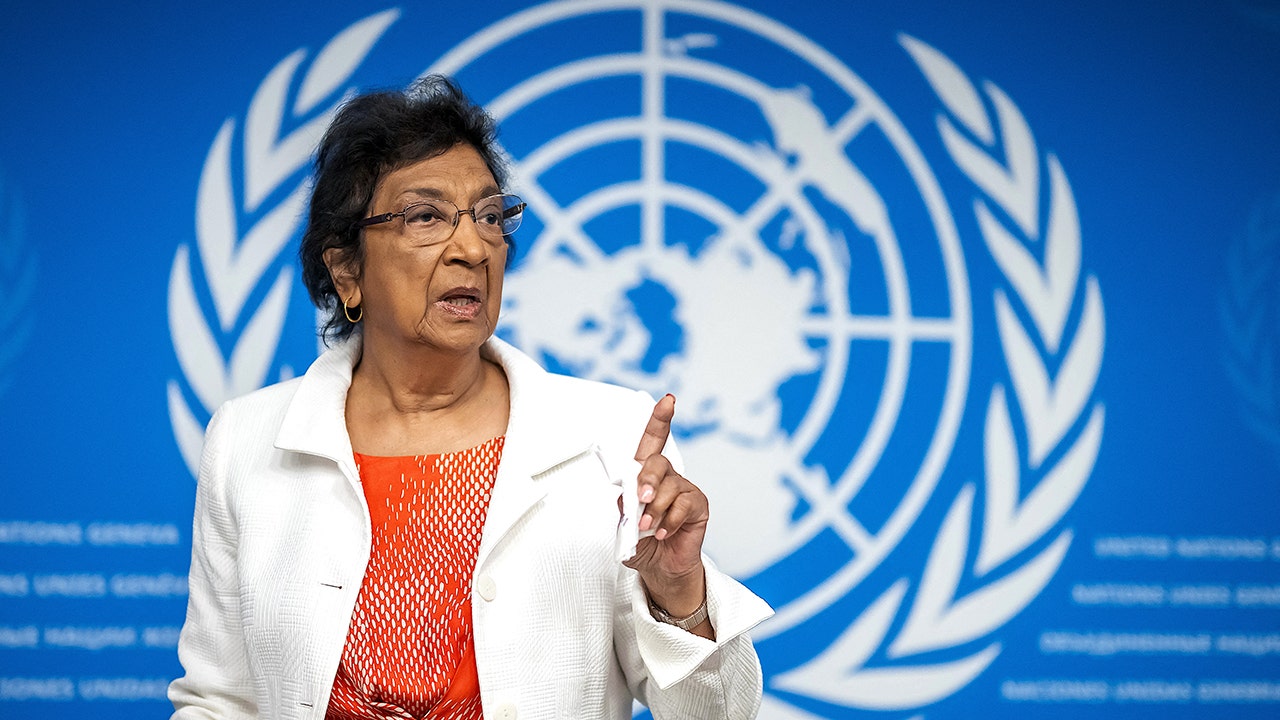
Nobel Peace Prize: the message behind Navi Pillay’s win

Read the original at South China Morning Post ↗
Cite

Bhaskar, C. U. (2026, October 16). Nobel Peace Prize: the message behind Navi Pillay’s win. South China Morning Post. https://www.scmp.com/opinion/world-opinion/article/3370866/nobel-peace-prize-message-behind-navi-pillays-win?utm_source=rss_feed

Dated from the outlet's own feed. Check the original for its byline.

South China Morning Post · collected 2026-10-16 · by C. Uday Bhaskar analysis

Quick Summary

In 2026, South African jurist Navanethem "Navi" Pillay received the Nobel Peace Prize, an award that aimed to restore the prize’s credibility and reject the notion that might makes right among major powers. The committee highlighted the previous year's controversial decision to give the prize to Venezuelan opposition leader Maria Corina Machado, who then gave it to US President Donald Trump, undermining the prize's integrity as per Alfred Nobel’s will for promoting peace.
Written locally by qwen2.5:14b on 2026-10-16, using this article's own text rather than the other coverage of the same event (that is the story summary below).

AI analysis runs on qwen2.5:14b, locally

Story summary

The 2026 Nobel Peace Prize was awarded to South African jurist Navanethem "Navi" Pillay on October 9 in Oslo, Norway. The Norwegian Nobel Committee honored Pillay for her efforts to promote peace and international law. This year's prize announcement came amid speculation that US President Donald Trump might react strongly due to his previous claims of deserving the award. However, experts dismissed Trump as ineligible given his controversial policies, including the war with Iran and territorial disputes like those over Greenland.

The committee received 287 nominations this year, reflecting ongoing global conflicts and crises. Pillay's selection aims to restore credibility to the prize after last year’s contentious decision that saw Venezuelan opposition leader María Corina Machado gift her award to Trump, undermining its integrity. This year’s choice highlights a commitment to international law and human rights, signaling a rejection of aggressive power politics by major nations like Israel.

Written for “Navi Pillay Wins Nobel Peace Prize” on 2026-10-16, grounded in this article and the 54 other(s) covering the same event.
Why this leaning score
The article's own words the score was based on. Each is quoted verbatim and was checked against the article text before being stored, so you can find it in the original.
Reading Leans strongly left (beta estimate) Confidence high
Leaning: leans strongly left for article 84861 (high confidence, 4 verified quotes) · logged 2026-10-16

Story

📰 Navi Pillay Wins Nobel Peace Prize
Politics · 55 article(s) covering the same event. Compare every outlet's account →

Compared with similar articles

This article reads leans strongly left and hedges 10% of its claims. Each row says how that neighbour differs.
Fox News
⚖️ leaning not scored 🔴 9% hedged 4 of 43 📰 publisher trust 67
“Both articles discuss the awarding of the 2026 Nobel Peace Prize to Navi Pillay and its implications, clearly referring to the same specific event.”
How this article was measured signals, leaning charts, publisher record, byline, topics and claims

Signals How these are calculated →

Claims extracted
10
sentences that state something as happening or true
Uncertain
10%
1 of 10 hedged ("reportedly", "may", "according to")
Leaning
Leans strongly left
of the writing, not the subject · beta estimate
Publisher signals
64/100
South China Morning Post's corrections and hedging, across everything collected from it. Not a measure of accuracy.
Outlets on this story
55
Politics
Same framing elsewhere
1
articles that frame the event the way this one does
Analyzed 2026-10-16 · how these are computed

How this is being covered How these are calculated →

Article leaning vs. publisher reliability
Source leaning vs. consistency

Publisher

South China Morning Post · 2428 article(s) · 6 correction(s) detected
Running correction rate · 6 correction(s)

Who wrote this

C. Uday Bhaskar
1 article(s) here · 1 carrying a prediction
🔮 Second, it rejects in unambiguous terms the Thrasymachian doctrine that might is right, which has become the operating philosophy of major powers.
The only article under this byline in the corpus.

Topics

South African Thrasymachian Venezuelan the Norwegian Nobel Committee

Subjects

Venezuelan NORP · 2× Alfred Nobel’s PERSON · 1× Donald Trump PERSON · 1× Machado PERSON · 1× Maria Corina Machado PERSON · 1× Navanethem “Navi” Pillay PERSON · 1× South African NORP · 1× Thrasymachian NORP · 1× the Norwegian Nobel Committee ORG · 1×

Narrative

Whatever one’s view of Venezuelan politics, that act made a mockery of an institution founded on Alfred Nobel’s will: that the prize go to the person who has done the most for fraternity between nations, for the abolition or reduction of standing armies, and for the promotion of peace congresses.
framing: assertive · carried by 1 article(s) · first seen 2026-10-16
🔮 Second, it rejects in unambiguous terms the Thrasymachian doctrine that might is right, which has become the operating philosophy of major powers.
2026-10-16 · South China Morning Post
Nobel Peace Prize: the message behind Navi Pillay’s win · assertive framing

Claims (10 extracted, 1 hedged)

matters for reasons that go well beyond the laureate herself. asserted
that → matter → laureate
The award does three things at once. asserted
award → do → things
First, it restores credibility to the prize. asserted
it → restore → prize
Second, it rejects in unambiguous terms the Thrasymachian doctrine that might is right, which has become the operating philosophy of major powers. uncertain
which → reject → powers
Third, it highlights a warning of what happens when a hegemon decides it is above the law. asserted
it → highlight → law
Last year, the Norwegian Nobel Committee gave the Peace Prize to Venezuelan opposition leader Maria Corina Machado, in what was widely read as a political signal. asserted
what → give → signal
Machado, however, then gave her prize to US President Donald Trump. asserted
Machado → give → Trump
Whatever one’s view of Venezuelan politics, that act made a mockery of an institution founded on Alfred Nobel’s will: that the prize go to the person who has done the most for fraternity between nations, for the abolition or reduction of standing armies, and for the promotion of peace congresses. asserted
who → make → congresses
A Nobel Prize cannot be re- asserted
Prize → re → ?
As the organisers made clear, “a medal can change owners, but the title of a Nobel Peace Prize laureate cannot”. asserted
title → make → laureate
💬Give feedback
🕘History 🎫Support