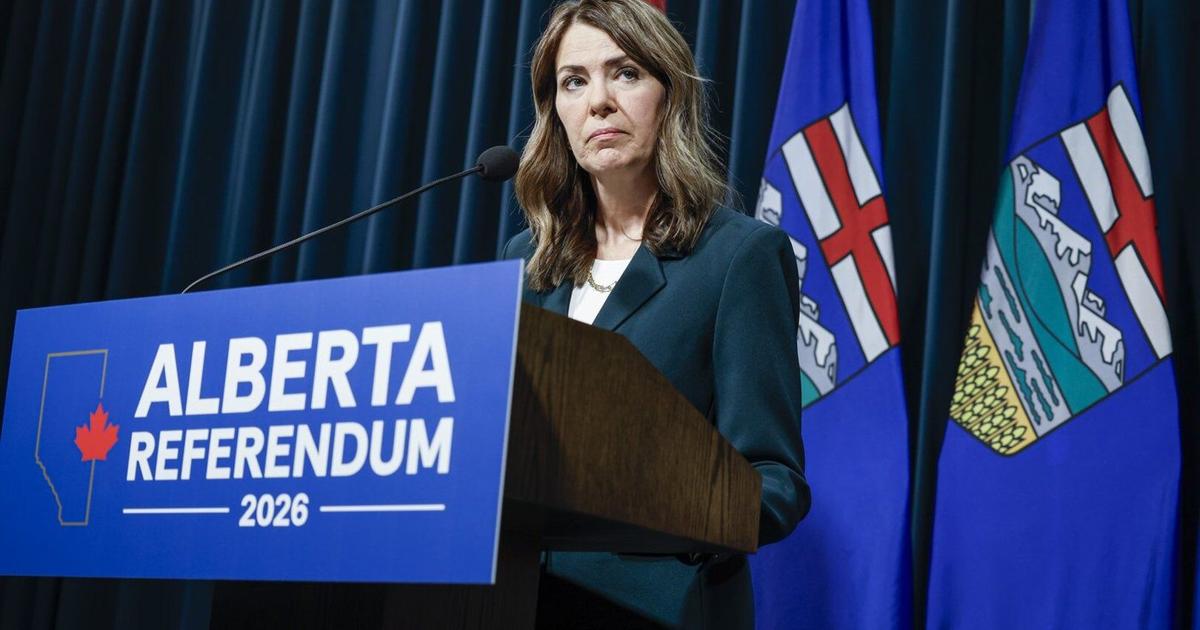
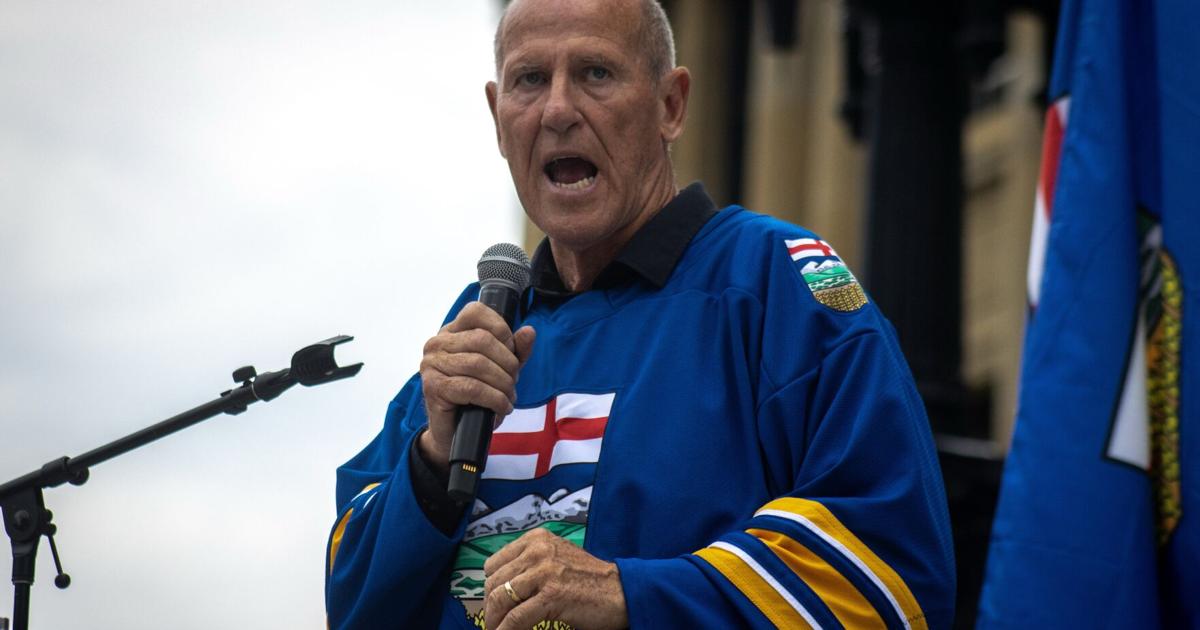
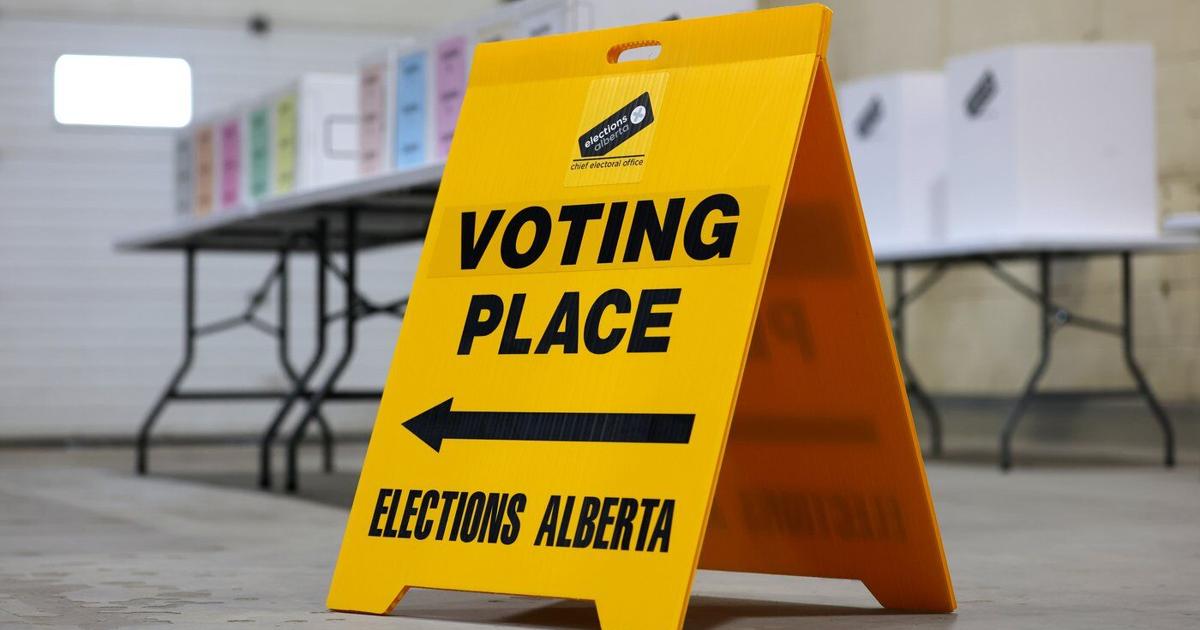
Alberta is to vote on holding a separation referendum. A timeline on how we got here

Read the original at Toronto Star ↗
Cite

The Canadian Press. (2026, October 16). Alberta is to vote on holding a separation referendum. A timeline on how we got here. Toronto Star. https://www.thestar.com/business/alberta-is-to-vote-on-holding-a-separation-referendum-a-timeline-on-how-we-got-here/article_abf36e20-9571-5f43-8485-ff1544742f26.html

Dated from the outlet's own feed. Check the original for its byline.

Toronto Star · collected 2026-10-16 · by The Canadian Press

Quick Summary

Alberta is holding a vote on whether the province should stay in Canada or hold another referendum specifically on separation from Canada. The current push for this referendum follows decades of strained relations between Alberta and the federal government, notably highlighted by events such as the National Energy Program in 1980 and more recent political movements emphasizing greater provincial independence since 2019. Premier Danielle Smith has approved a petition calling for a binding separation vote, which garnered over 223,000 signatures. The article provides historical context leading up to this pivotal moment, tracing the roots of western alienation back several decades.
Written locally by qwen2.5:14b on 2026-10-16, using this article's own text rather than the other coverage of the same event (that is the story summary below).

AI analysis runs on qwen2.5:14b, locally

Story summary

Alberta is holding a vote on whether to hold a second referendum that would be binding for separation from Canada, with the ballot set for Monday, October 16, 2026. This decision comes after years of growing tensions between Alberta and the federal government in Ottawa, particularly over oil and gas policies. In 1980, the National Energy Program sparked widespread discontent when it restricted domestic oil prices below world levels to ensure Canadian energy security and increase federal revenue shares. More recently, Jason Kenney's United Conservative Party capitalized on this sentiment by winning power in Alberta in 2019. The current vote reflects decades of western alienation and seeks Albertans’ input on the province's future within Canada.

Written for “Alberta Separation Referendum Vote” on 2026-10-16, grounded in this article and the 0 other(s) covering the same event.
Why this leaning score
The article's own words the score was based on. Each is quoted verbatim and was checked against the article text before being stored, so you can find it in the original.
Reading Leans right (beta estimate) Confidence high
Leaning: leans right for article 84499 (high confidence, 4 verified quotes) · logged 2026-10-16

Story

📰 Alberta Separation Referendum Vote
Politics · 1 article(s) covering the same event.

Compared with similar articles

This article reads leans right and hedges 8% of its claims. Each row says how that neighbour differs.
The Globe and Mail
⚖️ leaning not scored 🔴 0% hedged 0 of 1 📰 publisher trust 52
“Article A reports on the start of advanced voting for the upcoming referendum, while Article B provides historical context and timeline leading up to the referendum vote.”
Toronto Star
⚖️ leaning not scored 🔴 16% hedged 11 of 67 📰 publisher trust 63
“Article A discusses the expected loss in an upcoming referendum and the separatists' response, while Article B provides a historical context leading up to the referendum vote.”
The Globe and Mail
⚖️ Leans left further left than this 🔴 6% hedged 2 of 34 📰 publisher trust 52
“Article A discusses the current advance polls for the Alberta referendum with involvement of former premiers promoting federalism, while Article B provides historical context leading up to the upcoming vote.”
The Hindu
⚖️ leaning not scored 🔴 6% hedged 1 of 17 📰 publisher trust 95
“While both articles discuss the upcoming referendum in Alberta on Monday, Article A focuses on Prime Minister Carney's speech warning against separation due to U.S. influence, while Article B provides a historical context for western alienation and details about the referendum process.”
Toronto Star
⚖️ leaning not scored 🔴 0% hedged 0 of 27 📰 publisher trust 63
“While both articles discuss the upcoming referendum in Alberta, Article A provides a historical context and timeline leading up to the vote, whereas Article B focuses on practical details for voters on how to participate in the specific event happening on Monday.”
Al Jazeera
⚖️ leaning not scored 🔴 10% hedged 2 of 21 📰 publisher trust 60
“Article A reports on Prime Minister Carney's call for unity regarding an upcoming secession vote in Alberta, while Article B provides a timeline of events leading up to the referendum and describes the referendum itself.”
Global News
⚖️ leaning not scored 🔴 0% hedged 0 of 27 📰 publisher trust 64
“Article A discusses voting procedures for the referendum starting on Oct 19, while Article B provides historical context and mentions voting day as Monday (Oct 16), indicating different times.”
How this article was measured signals, leaning charts, publisher record, byline, topics and claims

Signals How these are calculated →

Claims extracted
38
sentences that state something as happening or true
Uncertain
8%
3 of 38 hedged ("reportedly", "may", "according to")
Leaning
Leans right
of the writing, not the subject · beta estimate
Publisher signals
63/100
Toronto Star's corrections and hedging, across everything collected from it. Not a measure of accuracy.
Outlets on this story
1
Politics
Same framing elsewhere
2
articles that frame the event the way this one does
Analyzed 2026-10-16 · how these are computed

How this is being covered How these are calculated →

Article leaning vs. publisher reliability
Source leaning vs. consistency

Publisher

Toronto Star · 7551 article(s) · 21 correction(s) detected
Running correction rate · 21 correction(s)
2026-10-07
Correction
2026-09-24
Correction

Who wrote this

The Canadian Press
362 article(s) here · 1 carrying a prediction
🔮 Over 1,400 polling stations will be open Monday from 9 a.m. to 8 p.m. Here’s what to expect when you go to vote: How long will it take?
🔮 He is set to visit Red Deer with Premier Danielle Smith today and later rally in Edmonton with the federalist group Forever Canadian.
🔮 May 5, 2025 — Smith announces a panel to discuss Alberta’s future in Canada.
🔮 She said in February that a “normal” and “sustainable” level of immigration would represent less than one per cent of the population, or about 50,000 newcomers per year.
🔮 The party says Vancouver-Strathcona candidate Jordan McIntosh is no longer a Conservative candidate and if elected he would not sit in the caucus.
🔮 Ostapenko improved to 2-0 against Fernandez and will next face Russia’s Diana Shnaider at the WTA 1000 event.
🔮 The Supreme Court of Canada will hear a case about a First Nation’s claim to title over a swath of Nootka Island.
🔮 Canada also held the world No. 2 ranking from May 2024 until April 2026, and is currently third behind England and New Zealand.
🔮 Public school officials in Burnaby, B.C., say hackers may have obtained student and parental information in a recent cyberattack.
🔮 Doerkson said his plan would benefit British Columbians with the lowest incomes Doerkson said he would pay down the forecasted provincial deficit of $13.8 billion by supercharging the economy without introducing new taxes or raising existing ones.
Wire or desk byline, not an individual reporter.
Also by The Canadian Press
Nothing else under this byline is closely related to this article, so these are simply their most recent.
All 362 articles by The Canadian Press →

Topics

Alberta Albertans Canada Canadian Ottawa

Subjects

Alberta GPE · 11× Smith PERSON · 10× Canada GPE · 8× Albertans NORP · 5× Kenney PERSON · 3× Ottawa ORG · 3× Canadian NORP · 2× Lukaszuk PERSON · 2× EDMONTON GPE · 1× the National Energy Program ORG · 1×

Narrative

2019 — The anti-Ottawa mood ramps up as the United Conservative Party under Jason Kenney wins power in Alberta, capitalizing on discontent over federal rules and policies deemed to impair Alberta’s ability to create wealth, particularly in oil and gas.
framing: assertive · carried by 2 article(s) · first seen 2026-09-19
🔮 May 5, 2025 — Smith announces a panel to discuss Alberta’s future in Canada.

Claims (38 extracted, 3 hedged)

EDMONTON - Albertans vote Monday in a referendum asking whether they want the province to stay in Canada or to have a second, binding referendum on separating from Canada. asserted
province → vote → Canada
Strains of western alienation go back decades. asserted
Strains → go → alienation
Here’s a look at some key events: asserted
look → ’ → events
1980 — The federal government ignites widespread alienation in Alberta with the National Energy Program, which keeps domestic oil prices below world levels to promote Canadian energy security and increase the federal share of oil revenues. asserted
which → ignite → revenues
Alberta views it as an unjustified attack and a federal money grab. asserted
Alberta → view → attack
The issue is later settled, but discontent with Ottawa continues. asserted
discontent → settle → Ottawa
1982 — Separatism enjoys a brief heyday. asserted
Separatism → enjoy → heyday
Gordon Kesler of the Western Canada Concept Party wins a provincial byelection in central Alberta on a separatist platform. asserted
Kesler → win → platform
Later that year in the general election, he loses a spot in the legislature. asserted
he → lose → legislature
The party receives 12 per cent of the vote but no seats. asserted
party → receive → vote
2019 — The anti-Ottawa mood ramps up as the United Conservative Party under Jason Kenney wins power in Alberta, capitalizing on discontent over federal rules and policies deemed to impair Alberta’s ability to create wealth, particularly in oil and gas. asserted
Party → ramp → oil
Premier Kenney fights for more independence from Ottawa but remains a staunch advocate for the province staying in Confederation. asserted
province → fight → Confederation
2022-23 — Kenney is replaced by Danielle Smith, who wins government in the 2023 election on a platform of further asserting independence from Ottawa. asserted
who → replace → Ottawa
Unlike Kenney, Premier Smith, while stressing her preference for a “sovereign Alberta within a united Canada,” refuses to characterize separatists as fringe extremists, saying they have valid grievances that deserve to be aired. asserted
that → stress → grievances
April 28, 2025 — Mark Carney and the Liberals defeat the federal Conservatives to win a minority government. asserted
Carney → defeat → government
May 5, 2025 — Smith announces a panel to discuss Alberta’s future in Canada. uncertain
Smith → announce → Canada
She says her government won’t itself put separation on a ballot but would honour a successful citizen petition seeking such a vote. asserted
government → say → vote
At the same time, her government takes steps to eventually pass rules to lower thresholds for citizen-led petitions. asserted
government → take → petitions
June 2025 — Former Alberta Progressive Conservative deputy premier Thomas Lukaszuk launches a “Forever Canadian” petition to affirm the province stays in Canada. asserted
province → launch → Canada
It eventually collects more than 400,000 names — enough to validate the petition. asserted
It → collect → petition
But by the spring of 2026, the petition is tied up in a legislature committee as Smith questions whether Lukaszuk gathered the names for a referendum or as a trigger for a vote among legislature members. asserted
Lukaszuk → tie → members
January 2026 — Mitch Sylvestre of the separatist Alberta Prosperity Project is given the green light by election officials to launch a petition asking whether Alberta should leave Canada. asserted
Alberta → give → Canada
Months later, the petition is deemed successful, having gathered about 223,000 signatures. asserted
petition → deem → signatures
Feb. 19, 2026 — Smith announces nine referendum questions about immigration and constitutional concerns will be put to Albertans in an Oct. 19 referendum. asserted
questions → announce → referendum
An Alberta Court of King’s Bench judge quashes the separatist petition, ruling Smith’s government didn’t properly consult First Nations as required in the Constitution. asserted
government → quash → Constitution
Smith later promises to challenge the ruling, and it remains in legal limbo. asserted
it → promise → limbo
Smith announces a 10th referendum question asking whether Alberta should stay in Canada or hold a binding vote on separation. asserted
Alberta → announce → separation
Smith cites the legal uncertainty of the court decision on the separatist petition as the driving force, saying it unduly deprives thousands of Albertans of having a say. asserted
it → cite → say
Smith later cites Lukaszuk’s petition, too, as a reason. asserted
Smith → cite → reason
She says both show hundreds of thousands of Albertans want the issue decided. asserted
issue → say → Albertans
The Alberta government launches a $4-million advertising campaign for the referendum and urges citizens to vote to stay in Canada. asserted
government → launch → Canada
The move comes as polls suggest a broad majority of Albertans want to stay. asserted
majority → come → Albertans
Sept. 14, 2026 — Smith’s UCP loses a byelection to the Opposition NDP in their conservative stronghold of Calgary-Shaw. asserted
UCP → lose → Shaw
Critics across the political spectrum say the referendum was a factor in punishing Smith’s UCP. asserted
referendum → say → UCP
Her office says the party lost due to right-centre vote splitting. asserted
party → say → splitting
Sept. 16, 2026 — Smith’s government publishes a report it commissioned from the University of Calgary to determine what fiscal challenges and benefits an independent Alberta could see. uncertain
Alberta → publish → challenges
It estimates an initial five-year price tag of $50 billion to $170 billion, noting that figures could swing sharply depending on factors outside Alberta’s control. uncertain
figures → estimate → control
This report by The Canadian Press was first published Oct. 16, 2026. asserted
report → publish → Press

💬Give feedback
🕘History 🎫Support