‘It will be us’: Former Australian of the Year is building her answer to OpenAI

Read the original at The Sydney Morning Herald ↗
Cite

Swan, D. (2026, October 16). ‘It will be us’: Former Australian of the Year is building her answer to OpenAI. The Sydney Morning Herald. https://www.smh.com.au/technology/it-will-be-us-former-australian-of-the-year-is-building-her-answer-to-openai-20261016-p61649.html?ref=rss&utm_medium=rss&utm_source=rss_feed

Dated from the outlet's own feed. Check the original for its byline.

The Sydney Morning Herald · collected 2026-10-16 · by David Swan

Quick Summary

Michelle Simmons, founder and CEO of Silicon Quantum Computing (SQC), announced at a recent event that her company is establishing an atomic-scale chip manufacturing plant in Sydney, aiming to compete with companies like OpenAI. The federal government's National Reconstruction Fund has invested $60 million into SQC this year alongside other ventures. The new facility will produce quantum chips, including the Watermelon product, which enhances conventional AI predictions and already counts five paying customers.
Written locally by qwen2.5:14b on 2026-10-16, using this article's own text rather than the other coverage of the same event (that is the story summary below).

AI analysis runs on qwen2.5:14b, locally

Story summary

Michelle Simmons, founder and chief executive of Silicon Quantum Computing (SQC), announced during the John Monash Foundation oration on Thursday evening in Sydney that her company is building an atomic-scale chip manufacturing plant, which she claims will be the first of its kind globally. When asked if Australia could produce a quantum equivalent to companies like OpenAI or Anthropic, Simmons confidently replied, “Yes, it will be us.” The SQC spokesman confirmed they are expanding their manufacturing capabilities but declined to disclose details about the location, timeline, or cost of this new facility. Quantum computers have the potential to solve complex problems that conventional machines cannot handle, such as simulating molecules for designing new drugs and materials, though no company has yet created a quantum computer capable of error correction at a practical scale.

Written for “Building Aussie Answer To OpenAI” on 2026-10-17, grounded in this article and the 0 other(s) covering the same event.

Story

📰 Building Aussie Answer To OpenAI
Technology · 1 article(s) covering the same event.

Compared with similar articles

Nothing to compare against. No article is close enough to this one for the pipeline to have linked or judged the pair.
How this article was measured signals, leaning charts, publisher record, byline, topics and claims

Signals How these are calculated →

Claims extracted
34
sentences that state something as happening or true
Uncertain
9%
3 of 34 hedged ("reportedly", "may", "according to")
Leaning
not political
takes no side on a contested political question
Publisher signals
61/100
The Sydney Morning Herald's corrections and hedging, across everything collected from it. Not a measure of accuracy.
Outlets on this story
1
Technology
Same framing elsewhere
1
articles that frame the event the way this one does
Analyzed 2026-10-16 · how these are computed

How this is being covered How these are calculated →

Article leaning vs. publisher reliability
Source leaning vs. consistency

Publisher

The Sydney Morning Herald · 3950 article(s) · 10 correction(s) detected
Running correction rate · 10 correction(s)

Who wrote this

David Swan
15 article(s) here · 1 carrying a prediction
🔮 Michelle Simmons, founder and chief executive of Silicon Quantum Computing, was asked at the John Monash Foundation oration on Thursday evening whether Australia could produce a quantum equivalent of OpenAI or Anthropic.
🔮 If no better offer emerges, the company has told the court its platform “will be wound down”.
🔮 Telstra’s nationwide mobile outage in July wiped an estimated $552 million from the Australian economy, according to new modelling that consumer advocates will put before senators this week.
🔮 OpenAI, Anthropic, Microsoft, and Google all put Canberra on notice – Australia’s copyright rules will dictate whether they train their flagship models on local soil.
🔮 The data centre start-up withdrew its $43.7 billion sharemarket float, which would have been the largest on the ASX since Telstra in 1997, after big investors refused to pay its price.
🔮 OpenAI, Anthropic, Microsoft, and Google all put Canberra on notice - Australia’s copyright rules will dictate whether they train their flagship models on local soil.
🔮 Aylo, the Montreal-based company behind Pornhub, said on Wednesday that age-verified iOS users in Australia would now be served “a standard adult user experience”.
🔮 Her team’s research, released in August, found that in Instagram videos where women appeared not to know they were being filmed, about 60 per cent of the interactions could be classed as potential harassment.
🔮 As proposed, that would put Anthropic’s own Australian data centre plans under the rules it saw in draft.
🔮 The FBI declined to comment to Reuters on any arrest abroad, but said it had already worked with partners to arrest multiple subjects and would “spare no resource in bringing each of the responsible individuals to justice”.
Also by David Swan
Nothing else under this byline is closely related to this article, so these are simply their most recent.
All 15 articles by David Swan →

Topics

Australia SQC Sydney Telstra Watermelon

Subjects

SQC ORG · 8× Australia GPE · 5× Simmons PERSON · 4× Sydney GPE · 4× CBA ORG · 3× Telstra ORG · 3× France GPE · 2× Schneider ORG · 2× Australian NORP · 1× Michelle Simmons PERSON · 1×

Narrative

Hugo Rourke, a former scholar who studied at Harvard on a CBA-funded scholarship and is now chief financial officer of health company Navigator Group, said the government too often compared Australia with countries such as France and Britain, when the real competition for founders was the US.
framing: assertive · carried by 1 article(s) · first seen 2026-10-16
🔮 Michelle Simmons, founder and chief executive of Silicon Quantum Computing, was asked at the John Monash Foundation oration on Thursday evening whether Australia could produce a quantum equivalent of OpenAI or Anthropic.
2026-10-16 · The Sydney Morning Herald
‘It will be us’: Former Australian of the Year is building her answer to OpenAI · assertive framing

Claims (34 extracted, 3 hedged)

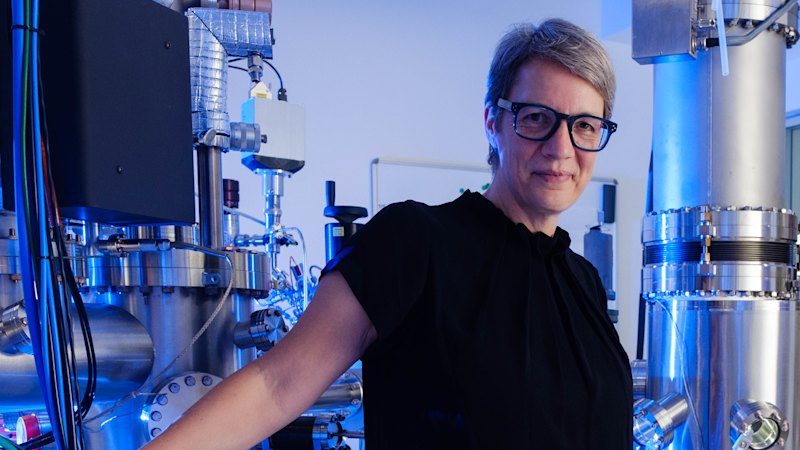
A former Australian of the Year is establishing what she calls a world-first atomic-scale chip plant in Sydney in a bid to make her company Australia’s answer to OpenAI. asserted
company → establish → OpenAI
Michelle Simmons, founder and chief executive of Silicon Quantum Computing, was asked at the John Monash Foundation oration on Thursday evening whether Australia could produce a quantum equivalent of OpenAI or Anthropic. uncertain
Australia → ask → OpenAI
“Yes, it will be us,” she said. asserted
she → say → ?
“We are establishing an atomic-scale manufacturing plant in Sydney. asserted
We → establish → Sydney
It’s the first one in the world,” she told the audience at the Commonwealth Bank’s Sydney offices. asserted
she → ’ → offices
An SQC spokesman said the company was expanding its manufacturing with “a new facility to be announced”, but would not say where it would be, when it would open or what it would cost. asserted
it → say → what
Ordinary computer chips store information as ones and zeros. asserted
chips → store → ones
Quantum computers store it in the quantum states of individual atoms or particles, which in theory lets them solve problems beyond any conventional machine, such as simulating molecules to design new drugs, batteries and materials. asserted
them → store → drugs
Those quantum states are fragile, and no company has yet built a quantum computer that can correct its own errors at a useful scale. asserted
that → build → scale
SQC makes its chips by placing individual phosphorus atoms in silicon, a technique Simmons and her team spent 25 years developing at UNSW. asserted
Simmons → make → UNSW
The federal government’s $15 billion National Reconstruction Fund has put $60 million into SQC this year, alongside London venture firm Firgun Ventures and Tin Alley Ventures. asserted
Fund → put → Ventures
The spokesman said that money had “played a key role” in the new facility. asserted
money → say → facility
The plant comes as SQC’s first product, a chip called Watermelon, starts to find buyers. asserted
product → come → buyers
It works alongside conventional AI models to sharpen their predictions, and Simmons said tests with energy multinational Schneider Electric had improved the accuracy of next-day energy network forecasts by an average of 20 per cent. asserted
tests → work → cent
She said Watermelon had five paying customers: Schneider, Telstra, the Commonwealth Bank, the Defence Department and a high-frequency trading firm that has not been announced. asserted
that → say → customers
A CBA spokesman described the bank’s use more cautiously, saying it had been experimenting with the chip “to see where the technology might be of benefit”. uncertain
technology → describe → benefit
Simmons said demand was outstripping what SQC could make. uncertain
SQC → say → what
“Since the announcements of both Telstra and Schneider, we have literally tens of customers trying to get in there,” she said. asserted
she → have → customers
“The challenge we’ve got now is how to make more of that product quickly so we can get it out into the hands of more customers.” asserted
we → get → customers
She said SQC was standing by its target of a full, error-correcting quantum computer by 2033. asserted
SQC → say → 2033
The company has modelled its timeline on conventional computing, which took from the first transistor in 1947 to the arrival of personal computers in the early 1980s. asserted
which → model → 1980s
SQC built its first single-atom transistor in 2012. asserted
SQC → build → 2012
“The error-corrected processor, the 2033, is the 1981 equivalent,” Simmons said. asserted
Simmons → correct → ?
“I’m standing by that because I’m pretty confident on that, but I’m hoping we’ll get it sooner.” asserted
we → stand → it
She said the new plant would make Sydney “the home of atomic-scale manufacturing”, and that much of its supply chain was already in Australia. asserted
much → say → Australia
The oration is the annual dinner of the General Sir John Monash Foundation, which since 2001 has awarded $41.1 million in scholarships to 300 Australians to study at leading overseas universities. asserted
which → award → universities
Hugo Rourke, a former scholar who studied at Harvard on a CBA-funded scholarship and is now chief financial officer of health company Navigator Group, said the government too often compared Australia with countries such as France and Britain, when the real competition for founders was the US. asserted
competition → study → founders
“It’s pretty clear that most founders in Australia go to the US,” he said. asserted
he → ’ → US
“If France is our competitor for talent, then we’re not shaping up the way we need to.” asserted
we → shape → way
Rourke said Sydney property prices were part of the problem. asserted
prices → say → problem
“If you leave university today and you want to buy a house in Sydney, it is incredibly attractive to go and stick in a professional services firm and make money as fast as possible,” he said. asserted
he → leave → money
Simmons said talent was also flowing the other way, with about 70 per cent of SQC’s staff coming from overseas, increasingly from the US. asserted
cent → say → US
“Australia is a great place to be to build companies,” she said. asserted
she → build → companies
David Swan moderated a fireside chat at the event, which was hosted by the Commonwealth Bank, an investor in Silicon Quantum Computing. asserted
which → moderate → Computing

💬Give feedback
🕘History 🎫Support