‘I love it when children ask questions’: How the ABC’s Nas Campanella handles daycare dropoff

Read the original at The Sydney Morning Herald ↗
Cite

Law, B. (2026, October 16). ‘I love it when children ask questions’: How the ABC’s Nas Campanella handles daycare dropoff. The Sydney Morning Herald. https://www.smh.com.au/national/i-love-it-when-children-ask-questions-how-the-abc-s-nas-campanella-handles-daycare-dropoff-20261016-p612vu.html?ref=rss&utm_medium=rss&utm_source=rss_feed

Dated from the outlet's own feed. Check the original for its byline.

The Sydney Morning Herald · collected 2026-10-16 · by Benjamin Law

Quick Summary

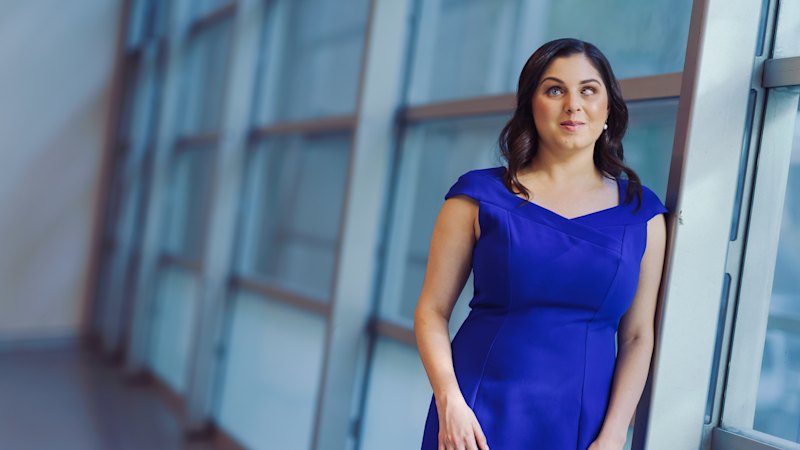
Benjamin Law interviews Nas Campanella, ABC's national disability affairs reporter and the world’s first blind newsreader, about her role and experiences with disability awareness. Campanella discusses instances of both progress and ongoing issues in how people interact with those who have disabilities, particularly praising parents for educating their children on respectful communication. She emphasizes that encouraging children to ask questions rather than discouraging them is key to fostering understanding.
Written locally by qwen2.5:14b on 2026-10-16, using this article's own text rather than the other coverage of the same event (that is the story summary below).

AI analysis runs on qwen2.5:14b, locally

Story summary

Nas Campanella, the ABC's national disability affairs reporter and the world’s first blind newsreader, discussed her experiences in an interview with Benjamin Law. Campanella highlighted the progress made regarding disability rights but noted persistent challenges, such as when she and her husband were asked about her order at a cafe despite being present. She also mentioned her role was created due to the Disability Royal Commission and that she aims to cover issues related to disability affairs nationally. Campanella is co-author of an accessible children's book titled "All the Ways I See."

Written for “Nas Campanella Daycare Encounter” on 2026-10-16, grounded in this article and the 0 other(s) covering the same event.
Why this leaning score
This article does not take a side on a contested political question, so it has no leaning score. That is an answer rather than a gap: a match report or a rescue can be warmly or critically written without being left or right, and scoring it anyway is how approval of a subject gets recorded as a political position.
No political leaning scored for article 83765 · logged 2026-10-16

Story

📰 Nas Campanella Daycare Encounter
Other · 1 article(s) covering the same event.

Compared with similar articles

Nothing to compare against. No article is close enough to this one for the pipeline to have linked or judged the pair.
How this article was measured signals, leaning charts, publisher record, byline, topics and claims

Signals How these are calculated →

Claims extracted
64
sentences that state something as happening or true
Uncertain
0%
0 of 64 hedged ("reportedly", "may", "according to")
Leaning
not political
takes no side on a contested political question
Publisher signals
61/100
The Sydney Morning Herald's corrections and hedging, across everything collected from it. Not a measure of accuracy.
Outlets on this story
1
Other
Same framing elsewhere
1
articles that frame the event the way this one does
Analyzed 2026-10-16 · how these are computed

How this is being covered How these are calculated →

Article leaning vs. publisher reliability
Source leaning vs. consistency

Publisher

The Sydney Morning Herald · 3813 article(s) · 10 correction(s) detected
Running correction rate · 10 correction(s)

Who wrote this

Benjamin Law
3 article(s) here · 1 carrying a prediction
🔮 I’m ever the optimist, but there are still circumstances where I’ll go to a cafe with my husband [fellow journalist Thomas Oriti] and my son [Lachie, 4], and my husband will be asked, “What does she want to order?”
🔮 At your age, it looked like it was going to go on forever: there was this horizon you could barely make out.
🔮 I was 24, working as a social worker, couldn’t take leave without pay, so had to let everything else go in my life to go on MasterChef.
Also by Benjamin Law
Nothing else under this byline is closely related to this article, so these are simply their most recent.

Topics

ABC Australia Catholic Sydney the Disability Royal Commission

Subjects

Catholic NORP · 5× ABC ORG · 3× Australia GPE · 1× Benjamin Law PERSON · 1× Eliza Hull PERSON · 1× Joey PERSON · 1× Lachie PERSON · 1× Nas Campanella PERSON · 1× Thomas Oriti PERSON · 1× the Disability Royal Commission ORG · 1×

Narrative

I’m ever the optimist, but there are still circumstances where I’ll go to a cafe with my husband [fellow journalist Thomas Oriti] and my son [Lachie, 4], and my husband will be asked, “What does she want to order?”
framing: assertive · carried by 1 article(s) · first seen 2026-10-16
🔮 I’m ever the optimist, but there are still circumstances where I’ll go to a cafe with my husband [fellow journalist Thomas Oriti] and my son [Lachie, 4], and my husband will be asked, “What does she want to order?”

Claims (64 extracted, 0 hedged)

Each week, Benjamin Law asks public figures to discuss the subjects we’re told to keep private by getting them to roll a die. asserted
them → ask → die
The numbers they land on are the topics they’re given. asserted
they → land → ?
This week, he talks to Nas Campanella, the ABC’s national disability affairs reporter and the world’s first blind newsreader to operate the studio while delivering live broadcasts. asserted
he → talk → broadcasts
She’s also co-author of the accessible children’s book All the Ways I See. asserted
I → ’ → book
You’re the ABC’s first national disability affairs reporter. asserted
You → ’re → ?
Did you have to lobby to create that role? asserted
you → have → role
It came about because of the Disability Royal Commission. asserted
It → come → Commission
I knew that I wanted to cover it, so I went to the ABC, pitching that we have a national disability affairs reporter. asserted
we → know → reporter
Obviously, I had myself in mind [Laughs]. asserted
I → have → mind
In the role, are you struck by how far Australia’s come – or by how far we’ve still to go? asserted
we → strike → role
I’m ever the optimist, but there are still circumstances where I’ll go to a cafe with my husband [fellow journalist Thomas Oriti] and my son [Lachie, 4], and my husband will be asked, “What does she want to order?” asserted
she → ’m → What
It happens less and less, but it still happens. asserted
it → happen → ?
But what I’ve also noticed – particularly now I have a child – is how wonderful parents are at talking to their children about disability. asserted
parents → notice → disability
I’ve had children at daycare come up to me, tap me on the shoulder and say, “Hi, my name’s Joey! asserted
name → have → shoulder
Can I show you this?” asserted
I → show → this
It’s very clear their parents are having smart, educated conversations with them about how to interact and communicate with me – and about the fact I’m a mum like any other parent. asserted
I → ’ → parent
The dangerous thing is to say to your children, “Don’t ask” or “Look away.” asserted
thing → say → children
I love it when children ask questions. asserted
children → love → questions
Don’t tell them they’re being naughty by noticing that someone’s different. asserted
someone → tell → them
Ask the person – if they’re comfortable with questions – what words they like to use to describe their disability. asserted
they → ask → disability
I just tell people that I’m blind: I can’t see. asserted
I → tell → people
I see with my hands instead of my eyes. asserted
I → see → hands
To what extent do you feel like the children’s book you’ve co-written [with Eliza Hull] is an act of advocacy for kids with disabilities? asserted
you → feel → disabilities
I don’t see myself as an advocate: first and foremost, I’m a journo. asserted
I → see → advocate
What I wanted to create was a story with a central character who’s blind, because I didn’t get to read stories with people like me in them growing up. asserted
I → want → them
I wanted to create a story that shows that people with disabilities go to the beach just like anyone else. asserted
people → want → anyone
They just experience it in a slightly different way. asserted
They → experience → way
RELIGION You grew up in western Sydney in a big, Italian-Australian family. asserted
You → grow → family
Does that also mean Catholic? asserted
that → mean → Catholic
Yeah, I grew up in a Catholic family with a very Catholic nonna and nonno, and had 13 years of Catholic education. asserted
I → grow → education
My grandmother would constantly have her rosary beads on the go. asserted
grandmother → have → go
Personally, I’m on the fence about what’s out there, although I still have the Catholic guilt thing. asserted
I → ’m → thing
You have to self-flagellate! asserted
You → have → ?
Yes, otherwise something bad will happen! asserted
something → happen → ?
Is it true that you’ve had strangers get on their knees and pray for you? asserted
strangers → have → you
I’ve lost count of the number of people who’ve pulled me aside in a food court, shopping centre or while I’m on the train going to work to pray for me. asserted
I → lose → me
When I was in my late teens and early 20s, it would happen a lot. asserted
it → happen → teens
People would say they wanted to pray for a cure for my blindness. asserted
they → say → blindness
This is one of the things that I take issue with when it comes to religion. asserted
it → take → religion
For some people, we – as disabled people – are seen as needing to be cured, to be fixed. asserted
we → see → people
…and 24 more, not listed.

💬Give feedback
🕘History 🎫Support