In this interview, Michael Pollan discusses his 50-year marriage to his wife, sharing that their relationship remains physically and intellectually engaging despite its longevity. At age 71, Pollan also reflects on sexuality later in life, dispelling the myth of diminished sexual activity past a certain age by confirming he and his wife remain sexually active. Additionally, Pollan touches upon his thoughts about death, noting it has become more prominent in his mind as he approaches his seventh decade but expresses less fear towards dying itself than towards suffering.
Written locally by qwen2.5:14b on 2026-10-02,
using this article's own text rather than the other coverage of the
same event (that is the story summary below).
Each week, Benjamin Law asks public figures to discuss the subjects we’re told to keep private by getting them to roll a die.
asserted
them → ask → die
The numbers they land on are the topics they’re given.
asserted
they → land → ?
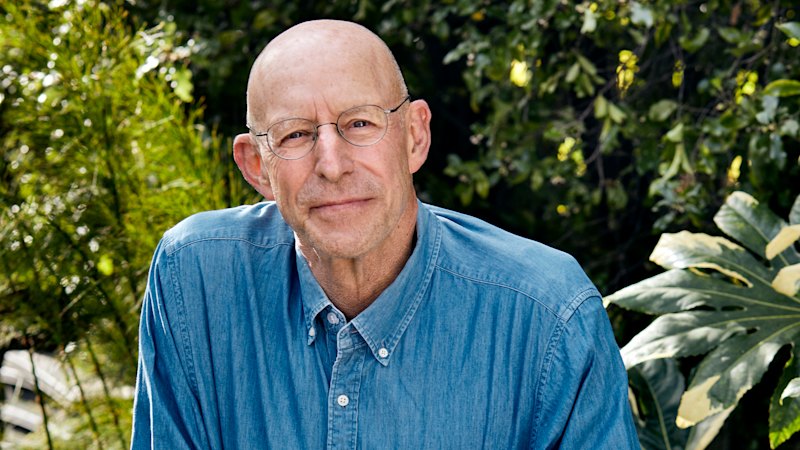
This week, he talks to Michael Pollan.
asserted
he → talk → Pollan
The US journalist, 71, is the author of 10 books, including The Omnivore’s Dilemma, In Defence of Food and How to Change Your Mind.
asserted
journalist → include → Mind
His latest book is A World Appears: A Journey into Consciousness.
asserted
World → appear → Consciousness
Where did you get your sex education from?
asserted
you → get → education
In the late ’60s – when I was 13 – there were conversations among boys about sex, but it wasn’t frank conversation: just guys boasting, and there was a lot of misinformation.
asserted
guys → be → misinformation
Girls taught me a lot later.
asserted
Girls → teach → lot
I got into long-term relationships pretty early.
asserted
I → get → relationships
In high school, I had a serious relationship that lasted a couple of years, another one in college, and then I met my wife.
asserted
I → have → wife
What attracted you to her?
asserted
What → attract → her
There was a strong physical attraction, but she also seemed a somewhat mysterious person who wasn’t putting all her cards on the table.
asserted
who → be → table
What keeps you attracted to her?
asserted
What → keep → her
We also have so much to talk about – and she edits all my work.
asserted
she → have → work
Nothing leaves the house that she hasn’t read and commented on.
asserted
she → leave → that
She’s a painter and I regularly go to her studio to look at her work and offer suggestions, too.
asserted
I → ’ → suggestions
When you’re with someone that long, you’re either going to grow together or grow apart because you’re going to change.
asserted
you → ’re → someone
I feel very fortunate in that we’ve grown together and changed in all sorts of ways we find compelling.
asserted
we → feel → ways
When it comes to sex in your 70s, what should I expect?
asserted
I → come → what
Well, when I was your age, I didn’t imagine people in their 70s had sex.
asserted
people → imagine → sex
I thought it was over at 65 or something.
asserted
it → think → 65
And you’re telling me it’s not … which is making me optimistic.
asserted
me → tell → me
I’m telling you it’s not.
asserted
it → tell → you
That’s good to know.
asserted
That → ’ → ?
But I’m not going into any more detail!
asserted
I → go → detail
You’re in your 70s now.
asserted
You → ’re → 70s
When I turned 70, it came into view in a way it hadn’t when I turned 50 or 60.
asserted
I → turn → way
It wasn’t so much the prospect of dying as the limits on the time remaining.
asserted
It → die → time
At your age, it looked like it was going to go on forever: there was this horizon you could barely make out.
uncertain
you → look → age
Now I can see the horizon.
asserted
I → see → horizon
So when I’m deciding on my next book project – which could be my last – I want to be very careful that it’s important and worth doing.
uncertain
it → decide → project
I also have a 97-year-old mum, and have been through the death of my father.
asserted
I → have → father
When you lose your parents, you have this sense that you’re up against the cosmos: you no longer have these people standing between you and eternity.
asserted
people → lose → you
You’re up next.
asserted
You → ’re → ?
Does the concept of death scare you?
asserted
concept → scare → you
Suffering scares me, dying not so much.
asserted
Suffering → scar → me
I’m not a believer in an afterlife.
asserted
I → ’m → afterlife
I’m interested in the moment of death: what there might be to learn from it, what actually happens.
uncertain
what → ’m → it
I have an intellectual curiosity about it.
asserted
I → have → it
You’ve written extensively about psychedelics and the way that people use them – sometimes to meet their death … And rehearse their death.
asserted
people → write → death
…and 29 more, not listed.
 The Aporia