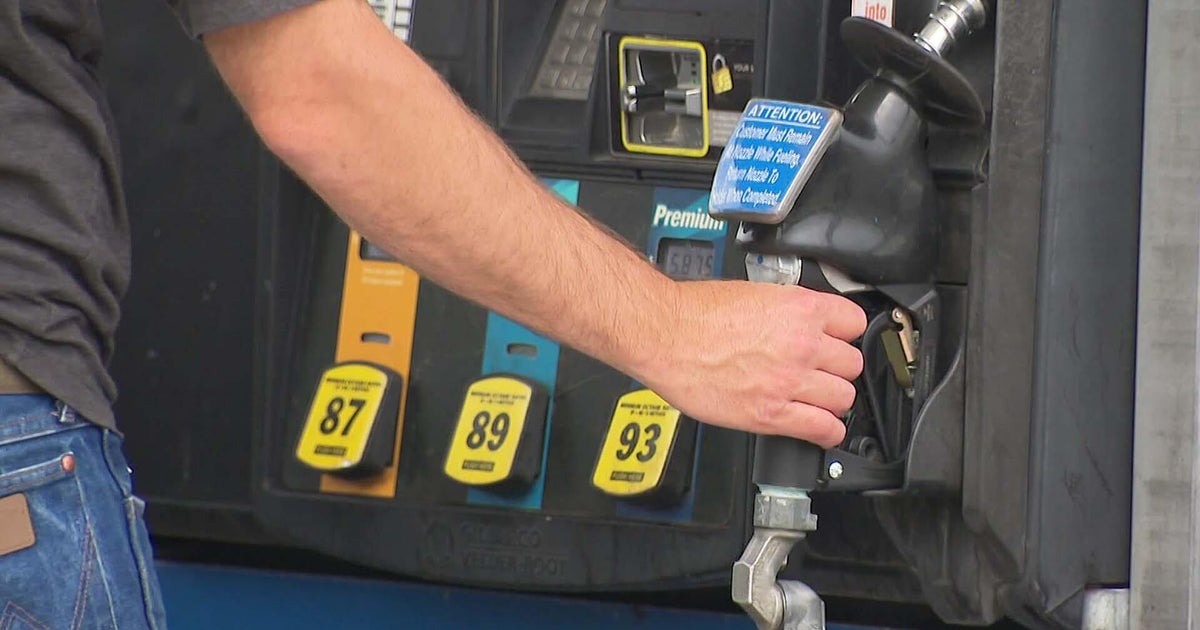
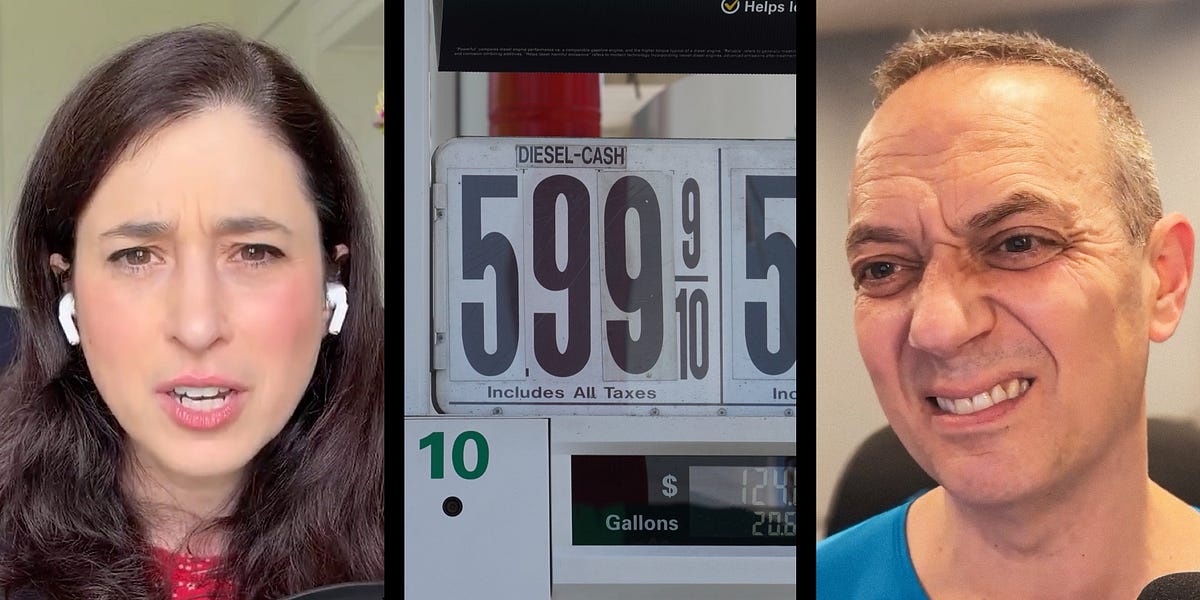
Diesel prices in the U.S. soared past $6 a gallon Friday for the first time ever, and experts predict the costs will fall back on the consumer through steeper prices for everyday staples.
asserted
costs → soar → staples
The U.S.-Iran war has severely disrupted the flow of oil, with the national average of diesel now $6.06 a gallon according to the American Automobile Association, up from $5.85 last week, as renewed hostilities persist.
uncertain
hostilities → disrupt → 5.85
The spike in fuel prices has been driven by higher oil prices.
asserted
spike → drive → prices
The price of benchmark Brent crude oil, a key ingredient in diesel, spiked to $109 per barrel Thursday, amid widening regional instability.
asserted
price → spike → instability
The active hostilities between Washington and Tehran are largely focused on the Strait of Hormuz, but the advances of Yemen’s Iran-backed Houthis pose fresh risks for the Bab el-Mandeb Strait, another key shipping route.
asserted
advances → focus → Strait
Continued disruption of the Red Sea chokepoint would be “devastating to the global supply of energy,” says Shuting Pomerleau, director of energy and environmental policy at the American Action Forum.
asserted
Pomerleau → continue → Forum
A surge in Ukrainian strikes on Russian oil refineries have also significantly impacted production, she adds, bringing daily exports of diesel fuel down significantly compared to last year and therefore pushing up global prices.
asserted
she → impact → prices
President Donald Trump told an interviewer this week that he has no regrets over the Iran conflict.
asserted
he → tell → conflict
But the majority of Americans appear to disagree, with increased living costs, driven up by the war, proving to be a sticking point ahead of the November midterms.
asserted
costs → appear → midterms
64% of U.S. adults surveyed in late July said that the conflict with Iran has been “not worth fighting,” according to a poll conducted by the Associated Press.
uncertain
conflict → survey → Press
Furthermore, a Reuters/Ipsos survey of American adults conducted between Aug. 21-24 found that 74% of respondents felt their cost of living was moving on the wrong track.
asserted
cost → conduct → track
The surge in diesel prices has sparked fresh concerns.
asserted
surge → spark → concerns
While only around 3% of passenger cars on American roads use diesel, it’s relied upon for heavy transport, construction, farming, and military vehicles.
asserted
it → use → transport
Around 75% of all diesel consumption in the U.S. came from the transportation sector in 2025, according to the U.S. Energy Information Administration.
uncertain
% → come → Administration
Pomerleau says that diesel's wider range of performance in terms of efficiency and safety makes it more desirable for heavy vehicles.
asserted
it → say → vehicles
“Diesel fuel has greater energy density than other liquid fuels, so it provides more useful energy per unit of volume,” she explains.
asserted
she → have → volume
Higher diesel prices undoubtedly make an impact at the pump.
asserted
prices → make → pump
In California, the average price climbed to $7.98 on Friday, the highest average of any state in the country.
asserted
price → climb → country
Estimating that prices in California could go beyond $8 per gallon, Patrick De Haan, head of petroleum analysis at GasBuddy, has warned: “Some pumps aren't even built to display what could come next.”
But with diesel a key component for several industries, American consumers can expect to experience steeper prices elsewhere too, experts say, and that’s on top of cost of living increases they’ve already experienced this year.
uncertain
they → estimate → increases
Here are three key ways the rise in diesel prices could impact you directly:
uncertain
rise → impact → you
Foods that require refrigeration and are transported long distances ahead of landing on the grocery store shelves are most likely to see price increases.
asserted
that → require → increases
U.S. Department of Agriculture data suggests that energy, transport, and storage costs contribute to over 7% of total food costs.
uncertain
costs → suggest → costs
If these costs rise due to higher diesel prices, experts say perishable goods stand to be most impacted.
asserted
goods → rise → prices
“The goods that need lots of refrigeration and are on long routes of transport that are perishable, so the vegetables, meat and dairy, those are more exposed to [diesel costs],” Bernhard Dalheimer, assistant professor in food economics at Purdue University, tells TIME.
asserted
Dalheimer → need → TIME
Price increases could take a while to be seen at the grocery store, though, as Dalheimer notes shifts in costs can travel “very slowly through the food pipeline.”
uncertain
shifts → take → pipeline
But when they do trickle down, the increase is more likely to impact lower income families.
asserted
increase → trickle → families
“These could be small price changes, but people with lower incomes spend a higher proportion of their income on food,” he explains.
uncertain
he → spend → food
A cost tracking system from Brown University's Watson School of International and Public Affairs has found an extra $789.75 per U.S. household has been spent on gasoline and diesel since the war began.
asserted
war → track → gasoline
Consumers can expect higher rises in grocery prices during longer periods of higher fuel costs, data shows.
asserted
data → expect → costs
A sustained 10-15% increase in fuel prices could result in a 2-4% increase in retail food prices, according to the Independent Grocers Alliance.
uncertain
increase → result → Alliance
The increased costs will also likely impact farmers and their margins.
asserted
costs → increase → farmers
Dalheimer describes farmers as “price takers” who have little influence in determining market prices.
asserted
who → describe → prices
“Their margins are being squeezed quite dramatically right now.
asserted
margins → squeeze → ?
They're under a lot of pressure,” says Dalheimer, explaining that producers have little alternatives than to take on the higher energy costs.
asserted
producers → say → costs
“Combine harvesters, tractors and heavy transport trucks, they all need lots of energy and there isn’t an alternative to diesel,” he explains.
asserted
he → combine → diesel
“Farmers need to move all of their products from the farm to the grocery store shelves, so they have to pay for that extra cost, no matter how much that is,” adds Pomerleau, stressing that farmers still need to use diesel for agricultural machinery and transporting produce, regardless of fuel costs.
asserted
farmers → need → costs
Shipping and mailing charges
Approximately 76% of the 17 million commercial vehicles in the U.S. are powered by diesel engines, according to the Engine Technology Forum.
uncertain
% → power → Forum
As such, a lot of mail and shipping couriers have already passed on rising costs this year to consumers.
asserted
lot → pass → consumers
“Not everyone drives on diesel, but everyone consumes on diesel,” says Pomerleau, pointing toward how integral the fuel is to shipping and transportation.
asserted
fuel → drive → shipping
Shipping and logistics provider UPS has introduced fuel surcharges on shipping since late June.
asserted
UPS → introduce → June
…and 13 more, not listed.
 The Aporia